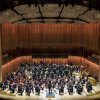
During his pre-concert comments at Jacobs Music Center Friday night, Peruvian composer Jimmy López — best known for his 2015 Lyric Opera of Chicago commission, Bel Canto — suggested a nice linking theme for the three very different works filling out the San Diego Symphony’s penultimate 2025–2026 program: “how we [composers] approach an external source.”
López’s 2012 Perú negro is inspired by Afro-Peruvian folk music. Alban Berg’s violin concerto uses two musical themes — one folkloric, the other a Bach chorale — to memorialize an “angel” dead at 18; and Felix Mendelssohn’s final symphony, the “Scottish,” remembered a tour he’d made of “primitive” Scotland when he was twenty.
As part of López’s two-year residency, the Symphony, which performed his impressive “Ephemerae” piano concerto last October, looked backward in the May 15 concert to his early Perú negro (2012), which is López’s second-most performed piece after “Fiesta!” Fellow Peruvian Miguel Harth-Bedoya had commissioned López to compose a work to celebrate Peru’s African heritage, anchored in slavery as in the U.S.
Perú negro is not only the first orchestral piece inspired by Afro-Peruvian rhythms, but, according to Harth-Bedoya, it’s “the first orchestral work that includes three Peruvian cajones in the percussion section.” Cajón means box, of course, and that’s literally what the Symphony’s percussion section used, among 14 other percussion instruments (including the quijado — a donkey’s jawbone often substituted, as tonight, with a vibraslap), to give Perú negro its distinctively raw rhythmic flavor.
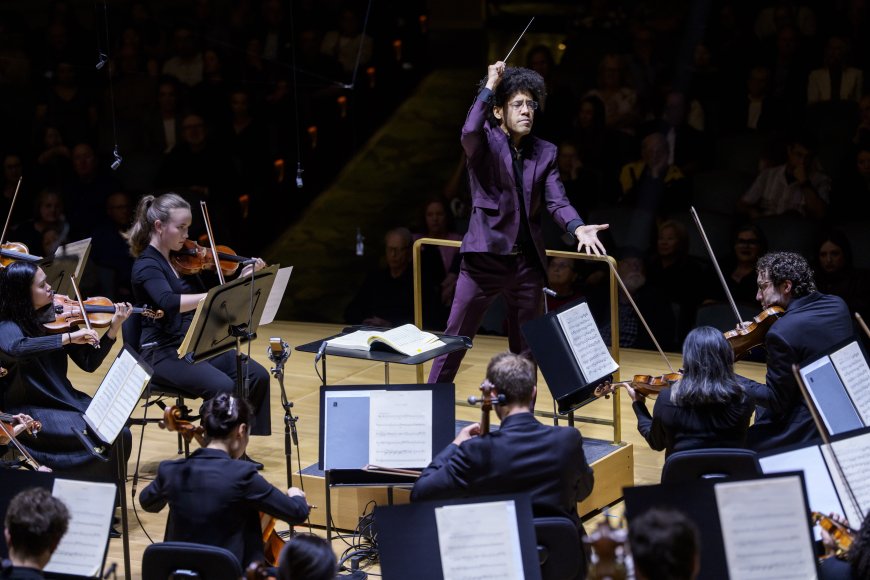
Both in listeners’ expectations and musical and instrumental innovation, Perú negro startles. “I love being able to surprise,” López has said. Based on six traditional Afro-Peruvian songs, it summons an aggressively animated world of lurching rhythms, whooping brass, pummeling timpani, and slashing or dancing strings. López’s writing for brass would make Mahler proud. Perú negro teems with muscular, eruptive life, but where López pointed to the “joy always piercing all of those songs,” this listener heard less exultation than unpent brawn, even primordial violence. If they ever make a third Fantasia, Perú negro could inspire a visual spectacle. When the tumult subsided, the patron next to me said, “That was a cooker.” Exactly.
Just as López used E, B, B-flat, and G (representing Harth-Bedoya’s initials) to impose a strict intervallic and harmonic discipline on Perú negro, so in his violin concerto Berg attempted to fashion a deeply felt requiem for Manon Gropius (killed by polio) out of the cerebral 12-tone strictures of Berg’s mentor, Arnold Schoenberg. While some attacked him for committing the “serious error” (Pierre Boulez’s donnish rebuke) of blending contradictory languages — atonal and tonal — most have seen it for the triumph it is: arguably the most meticulously graphic musical description of suffering, struggle against death, and release/transfiguration ever composed.
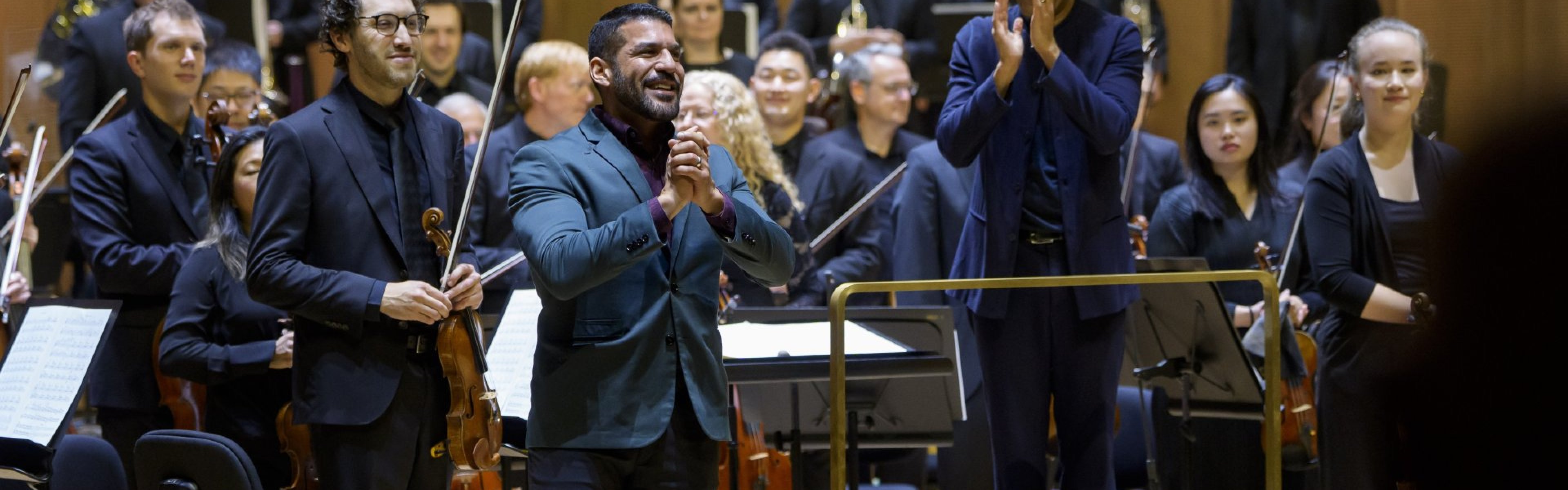
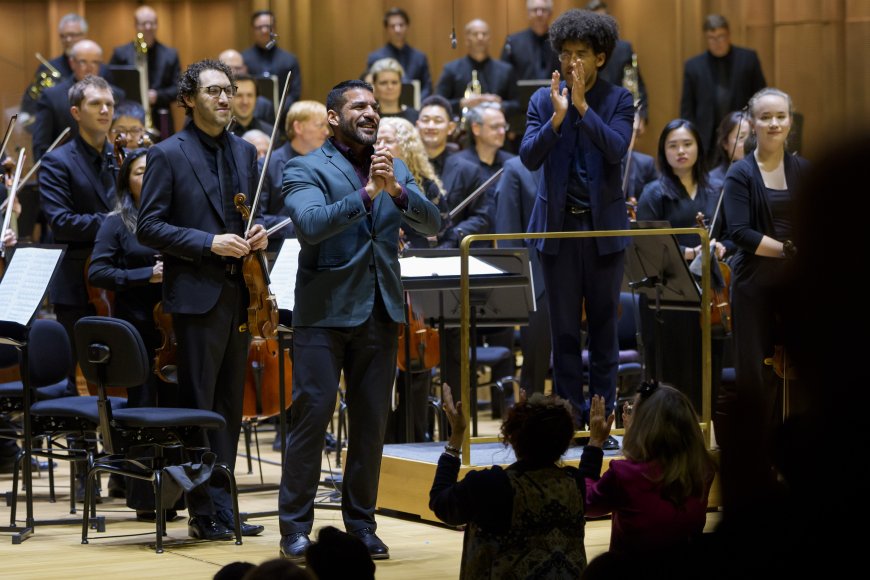
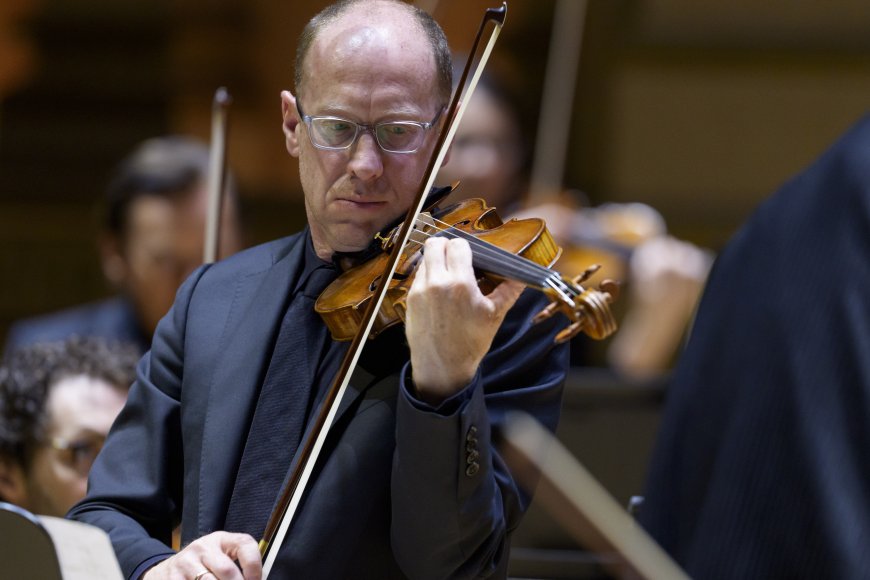
Jeff Thayer, the orchestra’s concertmaster and soloist in the concerto, had the full measure of the concerto’s many demands — maintaining intonation in atonal terrain, navigating its intricate rhythms, and projecting the piece’s range of colors and emotional vocabulary. In the climactic soloistic passage before the Adagio’s Bach chorale (“Es ist genug”), Thayer vividly transmuted his part’s shrieking high-register lines, jagged leaps, multiple stops, and frantic figurations into the sickness and terror Berg’s score captures. Though luxuriating in the spotlight is not Thayer’s thing, he fully earned his ovation.
No orchestra gets to heaven playing Mendelssohn. Even this listener would have bet the unfairly patronized German’s “Scottish” symphony would not be the evening’s highlight. The very elegance and lucid polish of his music (along with anti-Semitism) have sometimes relegated Mendelssohn to the second rank. Playing with refinement, urgency, and unity, the San Diego Symphony put Mendelssohn back on the pedestal pulled out from under him when he died at 38. Music director Raphael Payare’s well-judged tempi, superb sense of orchestral balance, and eye for the score’s dramatic peaks set up his orchestra, California’s oldest, to strut and shine.
Forget the supposedly effete Mendelssohn of A Midsummer Night’s Dream and its elfin lightness. Under Payare’s regal and monumental conception, the orchestra built Brucknerian crescendos then deftly balanced them with excursions into luxurious string sheen and characterful woodwind color, the brass and timpani keeping all ends neatly tucked. With a virtuosic orchestra purring on all cylinders, it was easy to forget that some have called the final movement’s sudden A-major coda a “sham triumph” (Otto Klemperer disliked it so much he revised it).
But seeing is believing; the Jacobs Music Center crowd rose to its feet hooting and hollering