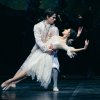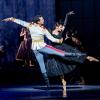
A San Francisco Ballet season would hardly be complete without a work by the company’s choreographer-in-residence since 2006, Yuri Possokhov. The internationally renowned artist has created 14 works for the company, including some of his most famous pieces, like Magrittomania (2000) and RAkU (2011). This weekend, the company is leading off its 2026 Repertory Season with the world premiere of Possokhov’s Eugene Onegin, a full-length story ballet (his first full-length for the company since 2003’s Don Quixote) with music by his favored collaborator Ilya Demutsky.
Principal dancer Wei Wang has worked with the choreographer on multiple projects, including Swimmer (2015) and The Rite of Spring (2013) as well as on the revival of Magrittomania. He is dancing the role of Vladimir Lensky, the title character’s best friend. He describes the production as “very Yuri.”
Asked what that means, he says it’s pretty much constant motion, which Wang thinks is a more contemporary way of telling a story in dance.
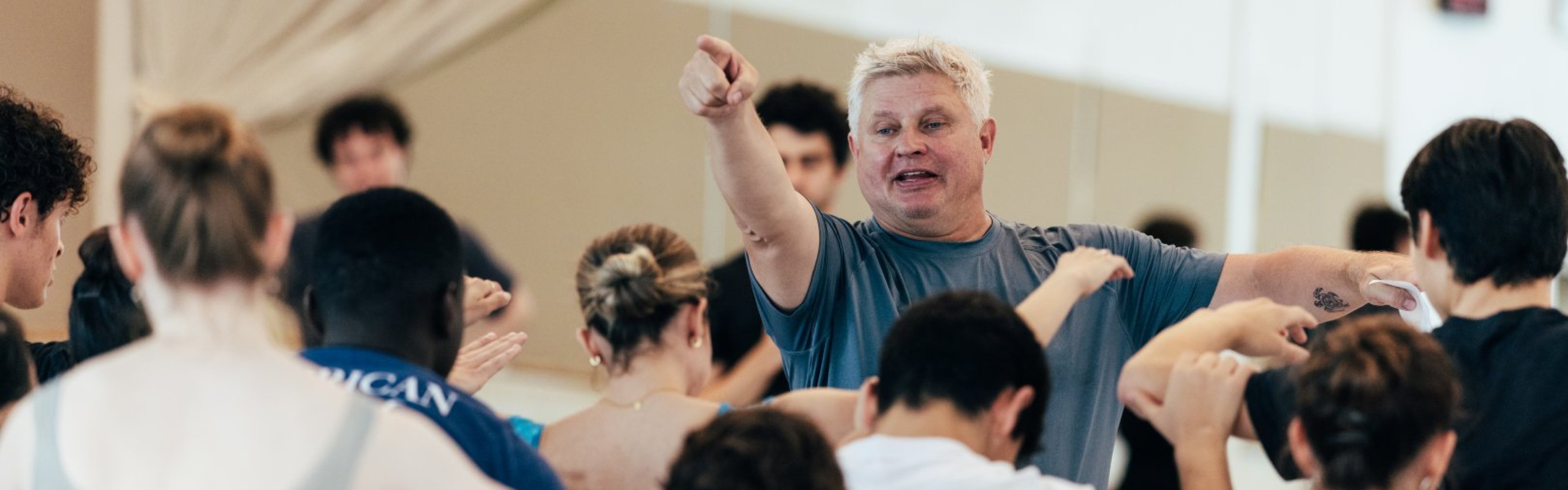
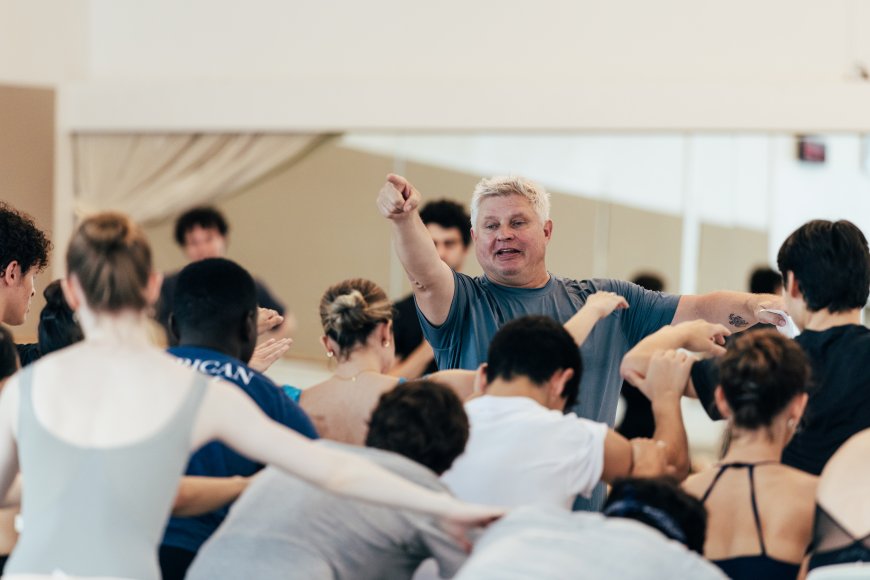
“More and more, [ballet]’s becoming about movement, about body and expression,” Wang said. “Yuri's way is more the modern way of usage of [the] body and less about the picture that he's trying to paint for the audience. It's like watching action in that the movement never stops.”
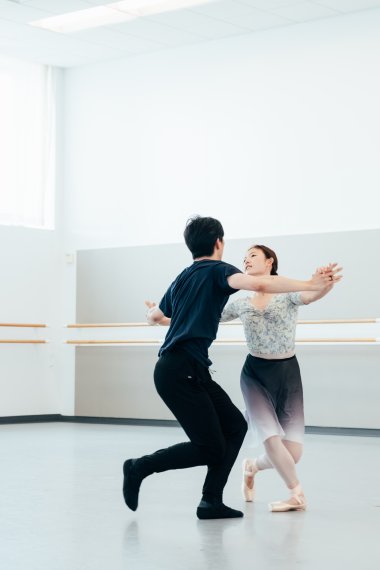
Possokhov’s commitment to fluid, continuous movement is so strong that he told Wang that he doesn’t want a rehearsal photographer to be able to catch him in a pose.
It may be exhausting, but Wang loves it.
“It's amazing to move in that style. His choreographic way of telling a story is within the movements,” he said. “You just [have to] be present within his style, and then you are telling the story of Eugene Onegin, which is amazing.”
The new work is based on Alexander Pushkin’s famous novel in verse, published serially from 1825 to 1832. One early critic called it an “encyclopedia of Russian life,” and its story has inspired various adaptations, including Tchaikovsky’s opera of the same name, a film starring Ralph Fiennes, and another ballet with choreography by John Cranko and music drawn from Tchaikovsky’s opera.
Eugene Onegin tells of a cynical aristocrat, the poetic dreamer Lensky, Lensky’s spirited girlfriend, Olga Larin, and her quiet, sincere sister, Tatiana, who falls in love with Onegin and writes him a letter expressing that love, only to have it rejected.
Possokhov, who danced the role of Lensky in Cranko’s ballet, has wanted to create his own version of Eugene Onegin for years.
“When I became a choreographer so many ballets in my mind became kind of against what I saw,” Possokhov said in an interview published on SF Ballet’s website. “[With] this ballet actually, my idea is to show it in a different way. I disagree with what Cranko did. It was very important for me to approach this book from a different side.”
The choreographer has said in a previous SF Classical Voice interview that his creative process is largely intuitive. “I don’t like to talk about how you should be educated to [choreograph a piece], how you should [create] roles, or how you should combine ideas and everything. The more I start to think, the less it happens.”
“It’s not so hard for me to find steps on phrases to show what I really think,” he said in the SF Ballet interview. “Sometimes I think even my dance shows much more clearly what I want to say that my speech.”
Because of the novel’s sacrosanct status and its musical associations, the composer Ilya Demutsky felt immense pressure at the thought of composing his new score.
In an email to SF Classical Voice, Demutsky wrote that dramaturg Valeriy Pecheykin helped him by creating a clear structure in his adaptation, translating the novel into the language of ballet without trying to imitate either Pushkin or Tchaikovsky.
The composer’s previous work with Possokhov covers six ballets, including Nureyev (2017, Bolshoi Ballet) and Anna Karenina (2019, co-produced by the Joffrey Ballet and the Australian Ballet).
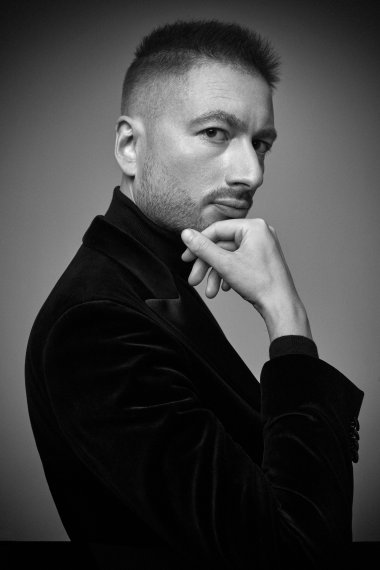
“From the first project, I felt that we were on the same wavelength,” Demutsky wrote. “[We have] a shared love for experimentation combined with a belief in beauty and emotional sincerity. Yuri never interferes with orchestration or musical form. He often says that the freedom of my musical ideas should inspire him rather than adapt to him. If any changes happen, they are practical — making a section slightly longer or shorter — but never conceptual. For me he is the ideal co-author. I enjoy attending rehearsals, watching how movement gives the music a physical life, while he trusts the internal logic of the score.”
Demutsky builds the score around the inner world of the characters and emotional turning points. “I like that literature already contains layers of meaning,” he explained. “But in ballet those layers must be translated into purely musical and visual terms. It is a fascinating transformation: words disappear, yet their emotional energy remains.”
“At its heart, Onegin is a story about missed chances, pride, and the irreversible passage of time,” he wrote. “The characters are psychologically complex but not overloaded with external events. Ballet does not need long plots; it needs strong inner tension. Onegin provides exactly that.”
Like Wang, Wona Park, in the role of Olga, loves working with Possokhov.
“I really like his movements, and he gives us a freedom with his style,” she said. “His ballets are really challenging and technical, and it feels so good to dance.”
Park particularly enjoys something that Possokhov does that she thinks sets him apart from other choreographers — movement of the upper body and arms, which she thinks is fitting in a dramatic ballet like this one.
Wang calls himself a practical person, the opposite of Lensky. He says his way of tapping into the character is through the relationships onstage with Park as well as Joseph Walsh as Onegin and Katherine Barkman as Tatiana.
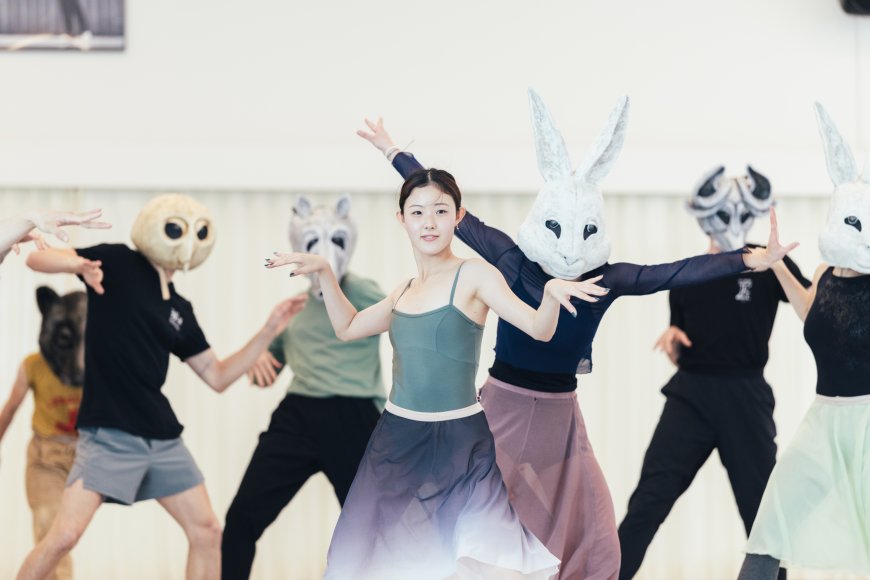
“I call it our little dream team,” he said. “Everyone just gives, and then I respond in my movements to others.”
For Possokhov, the humanity of the Russian novel gives him solace.
“It doesn't matter if people live in the 18th century, the 19th century, or the 20th century. Now it's the 21st century, and everything that happens in the book, it's so beautiful, and it's [still] so close to what we're thinking through the many years. We still love, we still hate, we still betray — everything,” he said. “Sometimes I'm doing ballet, and I'm thinking about pleasing someone, pleasing the audience, but [with] this ballet, I decided I want to be myself. I decided that I have to be who I am and express what I feel without any pressure from outside.”