It’s a small world after all. News from Baarn, The Netherlands, resounds in San Francisco, on the corner of Van Ness Ave. and Grove St.
In Baarn — a historic, picturesque town in the province of Utrecht — classical-music recording label Pentatone celebrates its 25th anniversary, “marking a quarter century of dedication to artistic excellence, technological innovation, and a deeply curated approach to classical music recording.”
In San Francisco, at the SF Conservatory of Music (SFCM), which owns Pentatone, students are composing music in the school’s Technology and Applied Composition Studios, to be published by the label in November.
“We believe composers shape the future we hope to see. The project with SFCM celebrates fresh perspectives and the next generation of musical creativity,” Pentatone Managing Director Sean Hickey told SF Classical Voice.
Described as “a small four-year, private, not-for-profit school,” SF Conservatory of Music has obtained three international artist management companies in unprecedented business deals. Besides Pentatone, the Conservatory owns artist management firms Askonas Holt and Opus 3 Artists.”
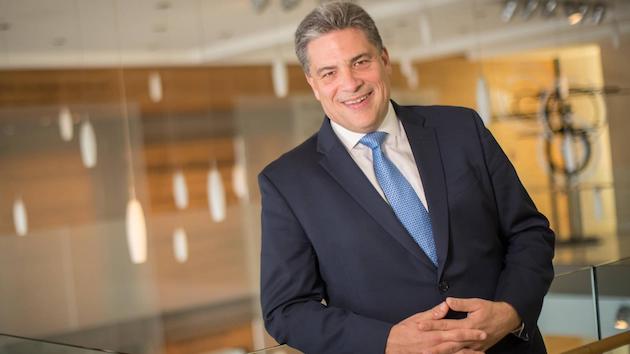
On the occasion of the Pentatone anniversary, SFCV interviewed SF Conservatory President David H. Stull, under whose leadership, the acquisitions took place. He serves as chairman of the alliance and directs “a joint leadership team charged with providing resources for collaboration, creative production, and the sustenance of healthy economic models.”
The president provided statistics about the school — 476 students, 29 full time and 185 part-time faculty; annual budget of $48 million, total assets of $395 million — but not about the subsidiaries, all private companies whose finances are not public.
For comparison, The Juilliard School’s budget is over $200 million; New England Conservatory’s is about $80 million. The Juilliard also has an endowment of $1.4 billion. They and other large music schools have strategic partnerships, but no subsidiaries.
Stull says the finances of the subsidiaries are different from businesses or performing arts organizations: “Resources pay our managers, investment goes into production, the recording platforms are net neutral.”
What are the advantages of the association?
“It's working very well for us, providing education and opportunities for the students, who would not otherwise have such prominent recording publications. For the platforms, the Conservatory provides excellent recording facilities and important collaboration,” Stull says.
When the Conservatory’s $200 million Bowes Center for Performing Arts opened on Van Ness in 2021, it featured world-class recording studios, used by students, faculty, and the associated recording platforms.
Another aspect of the Conservatory’s "internationalism" is its continued support for foreign students and faculty at a time of the U.S. Administration’s resistance to immigration and travel from many countries.
“About 40% of our students are from other countries,” Stull says, “mainly from mainland China and Taiwan, Germany, and France. Even now, there is only a slight reduction in the number of international students. They still want to come and stay in the welcoming city of San Francisco — and we want gifted young people here, wherever they come from.”
Bringing Pentatone in–house, Stull said at the time of acquisition, “creates an extraordinary backdrop to explore new ideas for performing, recording and distributing music,”
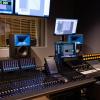
Pentatone has been using Studio G, adjacent to the Conservatory’s multipurpose, black box Technology Hall.
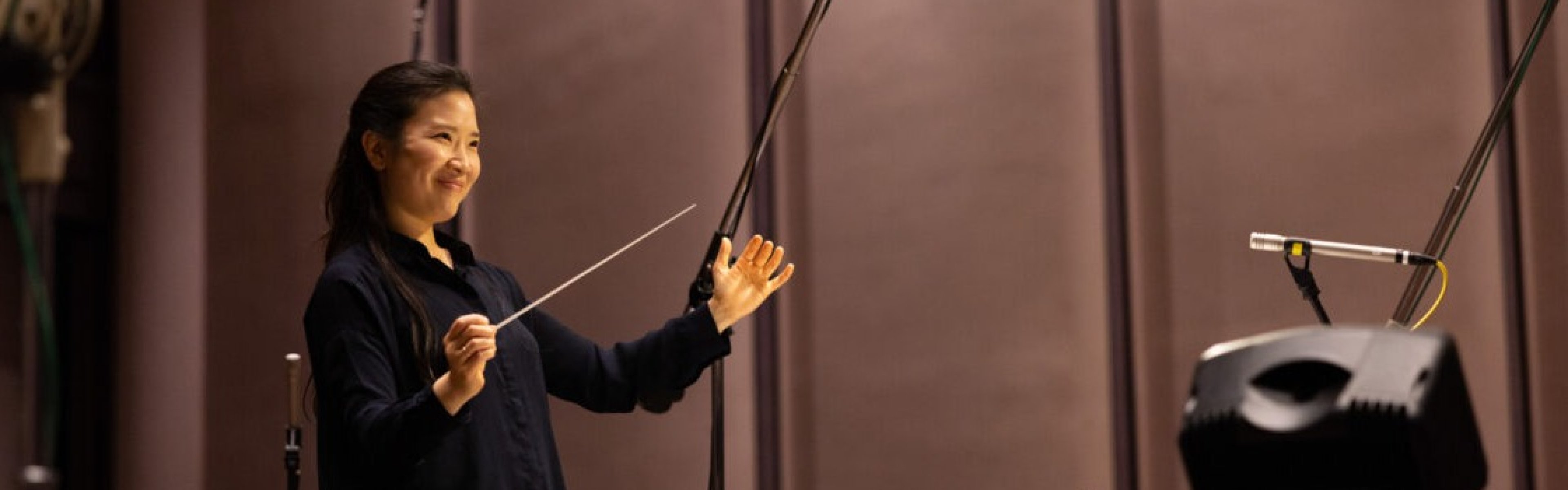
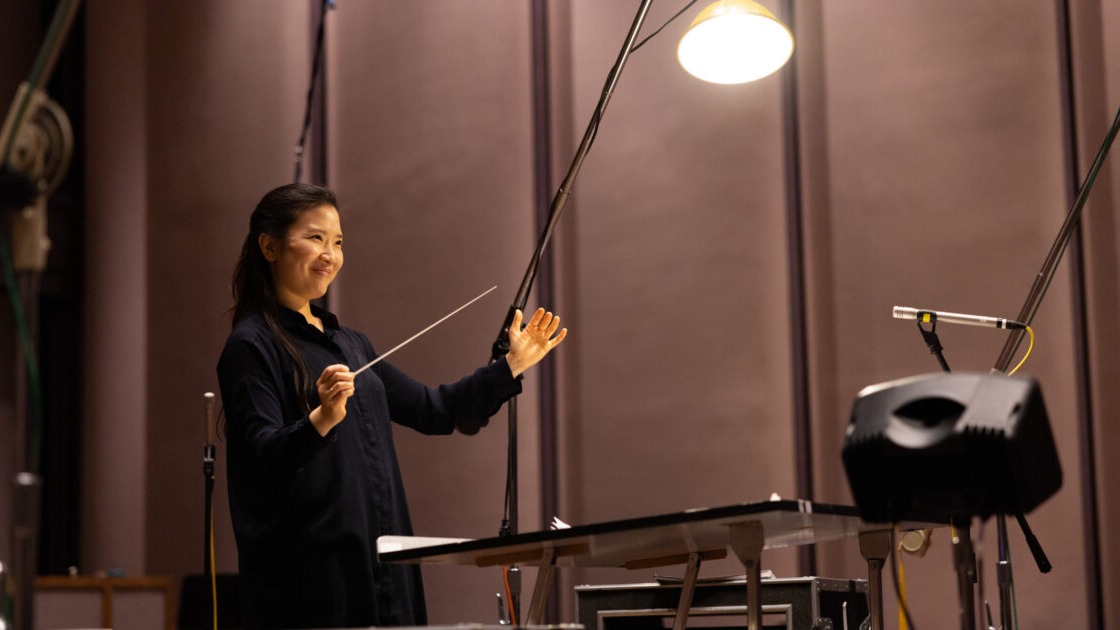
As one of its first collaborations with SFCM, Pentatone recorded and released a performance by the National Brass Ensemble (for which Stull serves as executive director) during Summer@SFCM’s National Brass Ensemble Academy. The performance was conducted by SF Opera Music Director Eun Sun Kim in the Louise M. Davies Symphony Hall.
The recording included the debut of a commission by Jonathan Bingham, a winner of the Emerging Black Composers Project sponsored by SFCM and SF Symphony.
Collaboration between SFCM and the subsidiaries includes sharing engineers, orchestral talent, educational resources, masterclasses and professional development sessions.