Reviews in this article: Jellicle Ball, Masquerade, Schmigadoon, and La Cage aux Folles.
CATS: The Jellicle Ball, the best and most innovative show on Broadway this season, will close on Aug. 8 after only 164 performances. Is Black, Brown, and Queer joy — which the production centers — unpalatable to the masses? Definitely not.
Jellicle Ball regularly filled more than 90% of its seats and grossed close to $1 million per week — it was not a flop. So what went wrong?
It’s no secret that the Broadway model is damaged. Amid inaccessible ticket prices, the shallow yet ever-present jukebox musical, calls to reevaluate the eight-show week, and stunt-casting intended to, as the thespians say, “put butts in seats,” there is indeed much to criticize about Broadway’s present-day operations. But the true problem is the exorbitant cost required to keep a show running, as controlled by private theater owners. In a country that neither acknowledges artmaking as an essential service nor subsidizes the arts, this is a recipe for theatrical disaster.
What’s the result? Fewer innovative, risk-taking, thought-provoking shows on Broadway that are homegrown, like Jellicle Ball.
As the Tony Award’s host, Pink, noted during this year’s ceremony, the 2025-2026 Broadway season uniquely met our ever-weary sociopolitical moment. Though most theaters today are filled with commercial machines, she was right. There are a handful of innovative shows playing today that uniquely tap into the zeitgeist.
In order to have a transformative experience in the theater, sometimes the theater piece itself must be transformed. This is the strategy the most interesting New York theater pieces are employing today, including but not limited to Jellicle Ball.
At a time when Queer, BIPOC, and immigrant communities are under attack, not to mention universities and the free press, the reinvention of our democracy is on the political docket in 2026. It is no coincidence that Jellicle Ball comes at a time when we are confronting these attacks head on, reckoning with our past mistakes, craving safe spaces for disenfranchised communities, and seeking solutions for a better way forward.
During a recent visit to New York, every revival I saw transformed its source material to reflect our current times and speak to urgent issues. These pieces use that which is old and familiar to attract general audiences, then deliver an experience that is surprisingly boundary-pushing — a strategy deployed in direct defiance of our current political moment.
Today, we're reckoning with our past, asking ourselves, “how did we get here?” and hoping to chart a better path forward, all while looking for reassurance that we can still smile through the strife. This year’s revivals place these exact meditations centerstage.
If the theater community continues to fight for these bold, brave works, perhaps the story will end differently when the next Jellicle Ball comes around.
Jellicle Ball
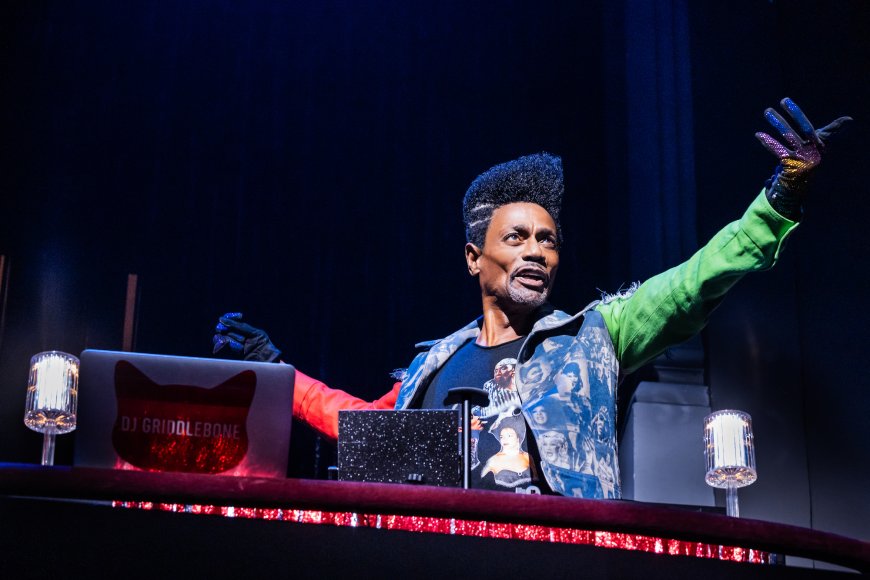
Even though Ragtime is my all-time favorite musical, Jellicle Ball should have won best revival at the 2026 Tony Awards. This reimagined version of Andrew Lloyd Webber’s Cats stole my heart and yes, I’ll whip my claws out to defend it.
It’s no secret that Cats is odd, confusing, and meaningless. Sure, Gillian Lynne’s original choreography mesmerizes, but Webber’s music can fall flat and there is virtually no story or meaning to speak of.
The original Cats aimed to embrace those who had been discarded by society, but that message needed an anchor. Jellicle Ball is what happens when that intention is finally executed properly.
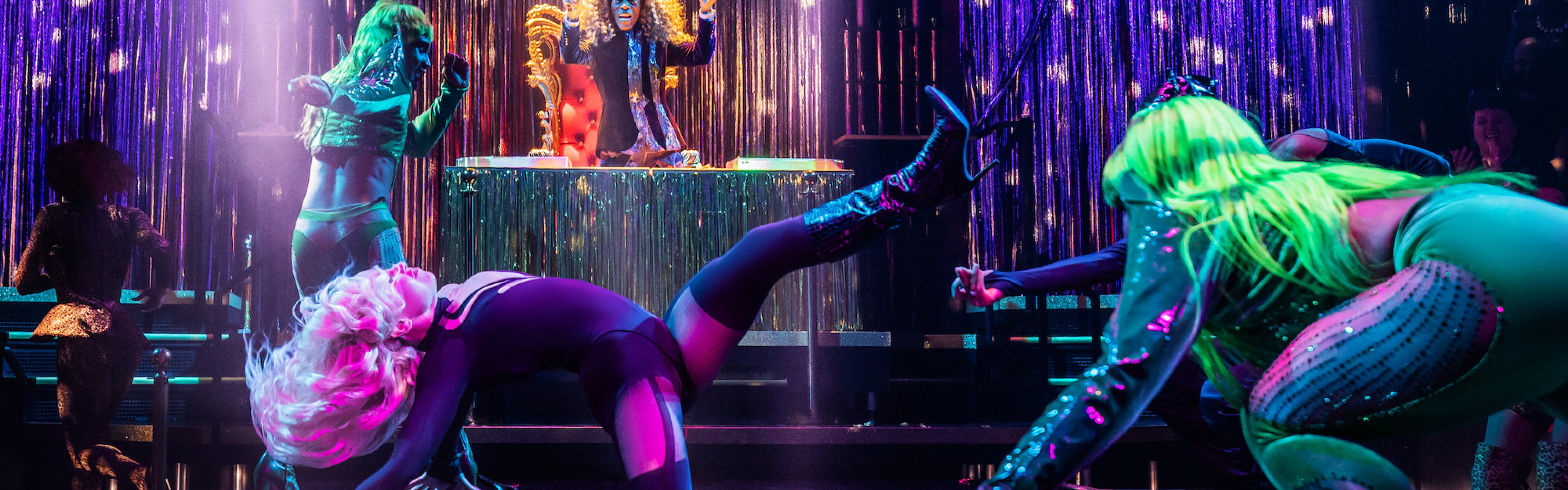
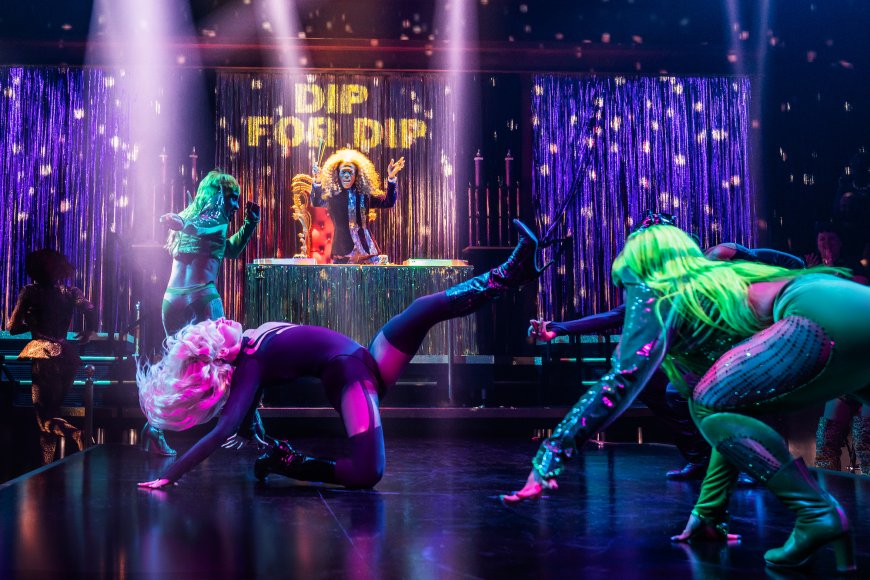
Conceptually, Jellicle Ball draws from ballroom, a historically underground subculture of the LGBTQ+ community. For a ball, chosen families come together under “Mothers” in “Houses” and dance or catwalk to compete for trophies and clout. In Jellicle Ball, everything “cat” is queer, turning a show that for decades lacked any substantive story or meaning into a smart allegory for queerness in the contemporary.
In Jellicle Ball cats must vogue for their life in order to enter heaven. In a way, it’s as simple and fun as that. But there’s so much more built into this reimagining.
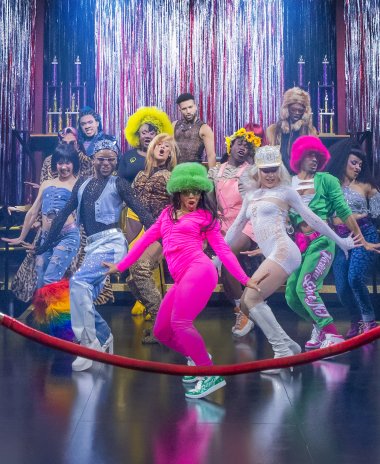
The audience is immersed in a party environment, with Webber’s iconic songs remixed to booming beats and vibrant, definitively human performers lighting up the catwalk — the type of experience found only in gay clubs, now brought to the Broadway stage.
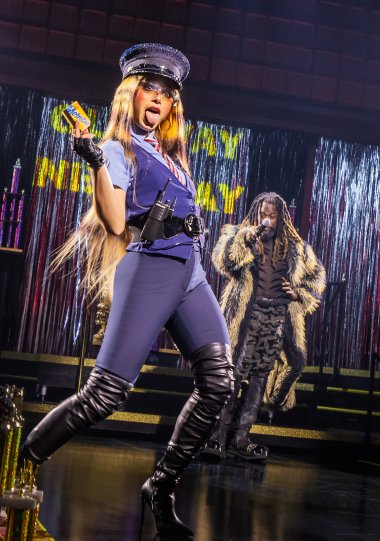
The way these performers “slay the house down boots” with mediocre source material is a power move in itself. They’re saying “We know Cats is weird. We’re in on the joke and making it camp.” But they also take the work seriously and turn it into something that matters.
Under a BIPOC queer vision, lyrics that never held weight are imbued with significance. “Jellicle Cats come out tonight” the ensemble sings while holding signs that read “Come out.” “Jellicle's do and Jellicle’s can” they sing, repurposing the opening number as an anthem for Black, Brown, and Queer people — this community can do and be anything they want. They can thrive unapologetically, especially in a space built for and by them. They can care for their loved ones and receive unconditional love in return.
Although this is a competition, it is free of cattiness. The primary goal of the challenge is to find your chosen family and be true to yourself.
An example: the audience is set up to believe Skimbleshanks the Railway Cat will win the “new way” competition. When Rumpleteaser prevails, you expect Skimbleshanks to throw a fit. But he congratulates Rumpleteaser and the two vogue together in celebration. This is a breath of fresh air within a musical theater culture that often encourages performers to fit neatly within boxes and battle for roles.
The show’s creators use Cats’ fame and cult following to focus attention on ballroom culture. Simultaneously, they demonstrate how this subculture makes the source material notably better. And that’s a genius move.
For people with a knowledge of ballroom, Jellicle Ball honors the form they know and love — best executed at the start of Act 2 when real-life ballroom pioneers are honored in the form of an in-memoriam. For people who aren’t familiar, the show is an accessible way to learn. You either bring the party, or you’re thrilled to be in support of the party.
Jellicle Ball is a blueprint for what a revival should do. While theater can’t change laws or institutions, it wields the power of empathy to reckon with the past, assert better values, and paint a new vision for the future. By holding old and new in tandem, it carves our way forward. [Return to top]
Masquerade
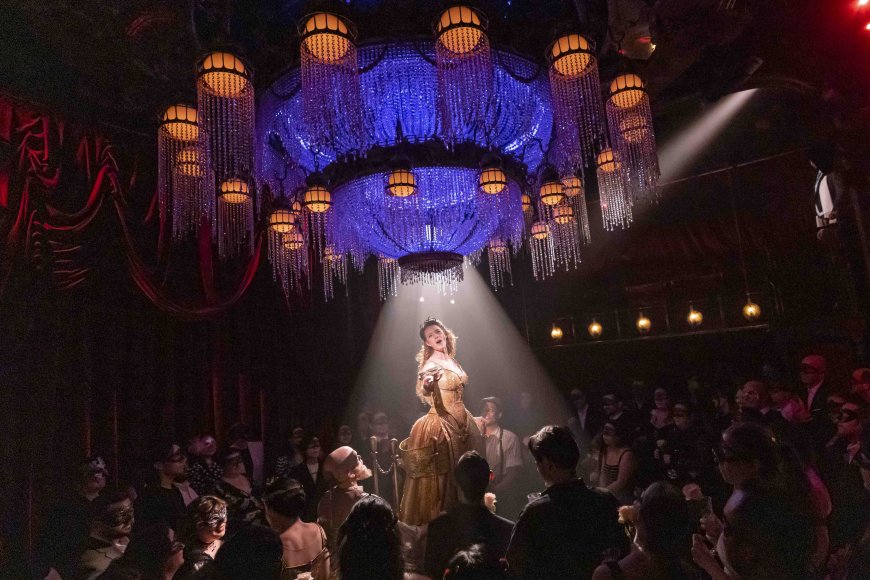
Billed as the “first immersive musical,” Masquerade guides a traveling audience through Andrew Lloyd Webber’s The Phantom of the Opera.
As a lifelong Phantom fan, this production was built for people like me. The production team transformed the entire building at 218 West 57th Street into a maze of rooms that are perfectly ornamented for scenes in the musical — the Phantom’s lair, Christine’s dressing room, backstage at the opera house, etc.
You navigate this maze with a group of approximately 40 other audience members, up and down stairs, down dimly lit passageways, until it’s nearly impossible to keep track of where you are in the converted space. A new audience begins this journey once every 15 minutes with a different set of leading actors performing.
Creating this illusion of a walking dream must be a stage manager’s worst nightmare, not to mention how many years this extravagant production must run in order to recoup its investment. So what is the end result of all this effort?
This production is a novelty. It’s exciting to have a reason to dress up, wear a mask, and step into the world of an iconic musical — to walk into Christine’s dressing room and glance at your friends when the opera house owners and Carlotta sing beside you in all their glamor and ridiculousness, to be blinded by theater lights as actors in artfully gilded attire breeze past and welcome you to the tune of Lloyd Webber’s memorable anthem, “Masquerade."
However, it takes a few scenes to adjust to the form. Some shuffling occurs as members of the stage crew whisper in your ear to make way for an actor or moving set piece. Also, seeing fellow audience members backdropping a scene with Christine and Phantom can, paradoxically, make Masquerade feel less immersive than a proscenium-based production might. But after navigating the initial sequence of rooms, you learn to flow with the experience.
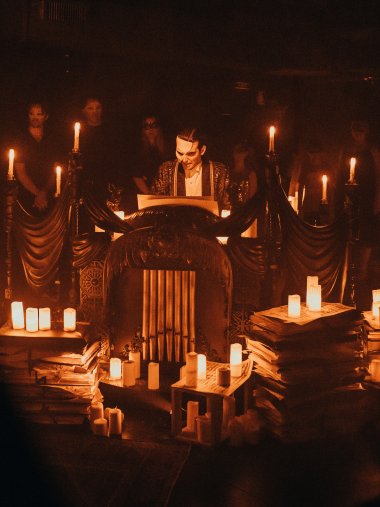
This staging dials up the creepiness factor of Phantom. Though the Phantom, as a character who lures Christine into his lair, has always been problematic, his predatory nature has been romanticized since the musical’s London debut in 1986. Not here.
Masquerade places you in the bedroom where the Phantom prays on an unconscious Christine — in close quarters, she lies on a bed as the Phantom’s hands emerge from the headboard and mattress to stroke her cheek. The audience is complicit to his behavior, which is a deeply uncomfortable experience. In a post #MeToo era, one hopes this is done with the intention of encouraging fans to reckon with the problematic nature of the Phantom’s actions, perhaps for the first time. (Since this Phantom is still painted in a sympathetic light, there’s no guarantee that this will be every viewer’s takeaway.)
Though there is no intermission, the production’s most successful elements occur in the second half. The Phantom’s tragic backstory at a gruesome circus is expanded here, and it was one of the most powerful scenes (not only because I won a tequila shot via the ring toss). There’s new material here. Rather than being told to stand along the walls, the audience is encouraged to participate in the circus, speak with the actors, and physically explore this corner of the Phantom’s world. For the next immersive musical, more of this please.
The production’s most magical moment was “All I Ask of You” on the building’s rooftop. Ironically, this was the least “produced” scene, but the most true-to-life since, in the original musical, Christine and Raul run to the roof of the Paris Opera House for this scene. In the warm summer night air, with the Phantom perched on a nearby chimney, you’re fully transported by the beautiful simplicity of the surroundings paired with Lloyd Webber’s romantic tune.
While this staging feels less like a reworking of the source material for modern audiences, and more like an escapist amusement park for musical theater fans, it delivers an entirely unique post-COVID theatrical experience.
Indeed, Masquerade holds its own in this landscape of transformative adaptations. [Return to top]
Schmigadoon
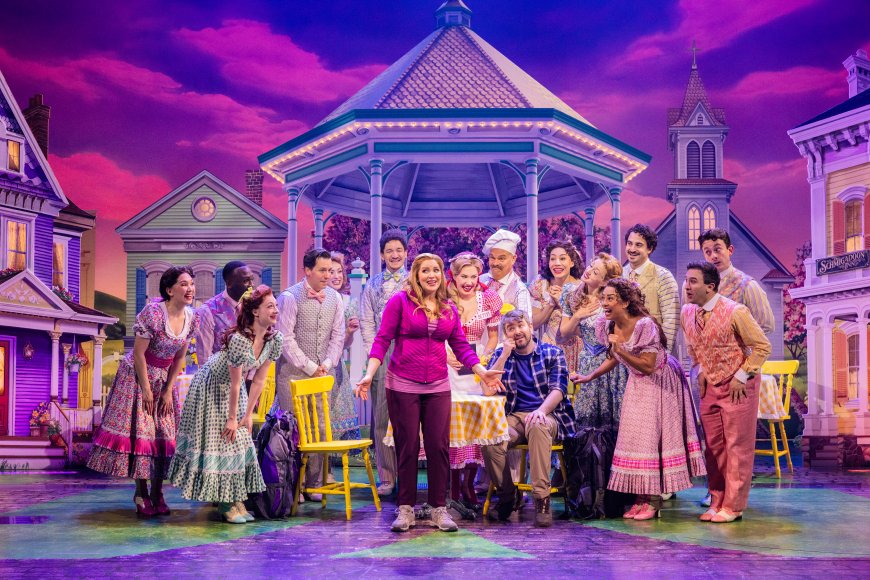
Those who love the music and style of Golden Age musicals must also grapple with the regressive stereotypes and values the genre tends to perpetuate. The heroines of this genre are definitely out of step with modern values, and some audience members may feel cognitive dissonance while swooning over the charm of these musical scores.
Schmigadoon is the antidote to this quandary. Indeed, the production deserved its Best New Musical win at the 2026 Tony Awards. Based on the Apple TV show of the same name, the Broadway production is a colorful explosion of fun. Though the filmed version feels phony and forced, its story flourishes on a stage.
Schmigadoon centers on a present-day couple who stumbles into a town that’s living inside a classic musical. While struggling with modern relationship issues, this couple gets lulled by the quirky, romantic atmosphere of the town before ultimately choosing to prioritize each other. The musical uses this structure to parody and pay homage to the classics.
Sure, all of this can be dismissed as entertainment. But this show also contains an intelligent underlying awareness of our culture’s preoccupations. We are concerned about those who weaponize traditional values as a means of oppressing anyone who isn’t a cisgender heterosexual man. And yet we still aspire to the quaint depictions of community and love present in the classics, visions that streamline and simplify the multifaceted nature of the world outside.
Delivering a classic-style musical that is imbued with contemporary sensibilities is exactly the type of “old” musical we need. Because Schmigadoon makes fun of the genre’s absurdity, the show appeals to those who enjoy contemporary musical theater but resist the classic musicals, without offending those who love them.
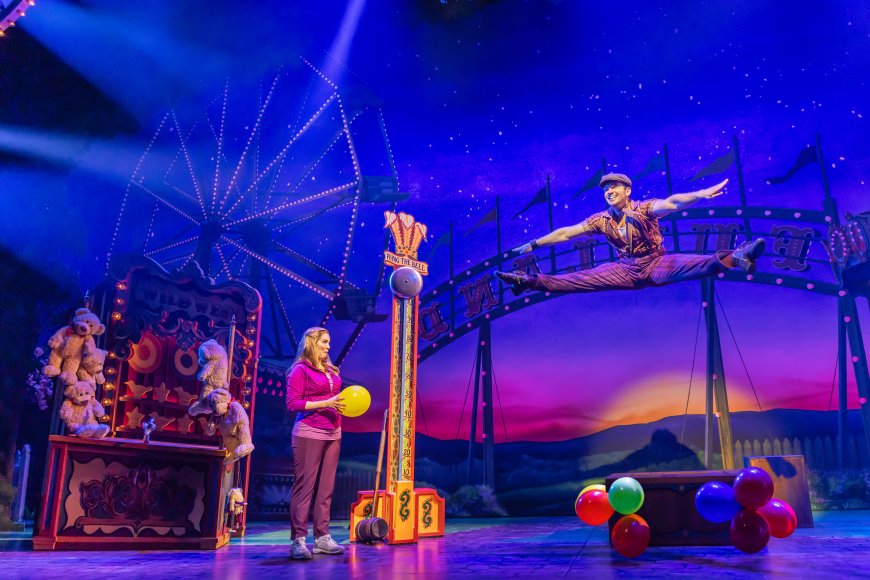
Through countless references to Golden Age musicals, Schmigadoon relishes the era’s wardrobe, promise of romance, and high octane song and dance, allowing contemporary viewers to enjoy the style made all the more impactful by laughs at the expense of stereotypes.
Among the caricatured characters, Danny Bailey — a Billy Bigelow-inspired role — delivers “I Can’t Be Tamed” which, through carnival-inspired song and dance, draws attention to the ridiculousness of bullheaded masculinity from that era. In this role, the addictive Max Clayton might as well be the next Gene Kelly. Betsy, Danny’s female counterpart, in a perfectly calibrated performance by McKenzie Kurtz, is an Ado Annie-like farmer’s daughter possessed by the demon of musical-theater cheese. You guessed it — she learns to love herself instead of a man.
Niche tropes are brought to light, adding to the humor. There’s a brilliant little boy (Ayaan Diop) who “always must announce everything happening in town,” a featured dancer (Lyrica Woodruff) who must execute a penché just a bit higher than the rest, and so on.
But it is Melissa Gimble, a musical theater nerd from the “real world,” played with grounded prescience by Sara Chase, who ultimately peels back the charming facade and overtly outlines all that is wrong with the town.
This parody both celebrates how far we’ve come as a culture, but also brings to light problems and preoccupations we still face. Through winks and nudges, Schmigadoon creates space for likeminded people to grapple with their own contradictions, together. [Return to top]
La Cage Aux Folles
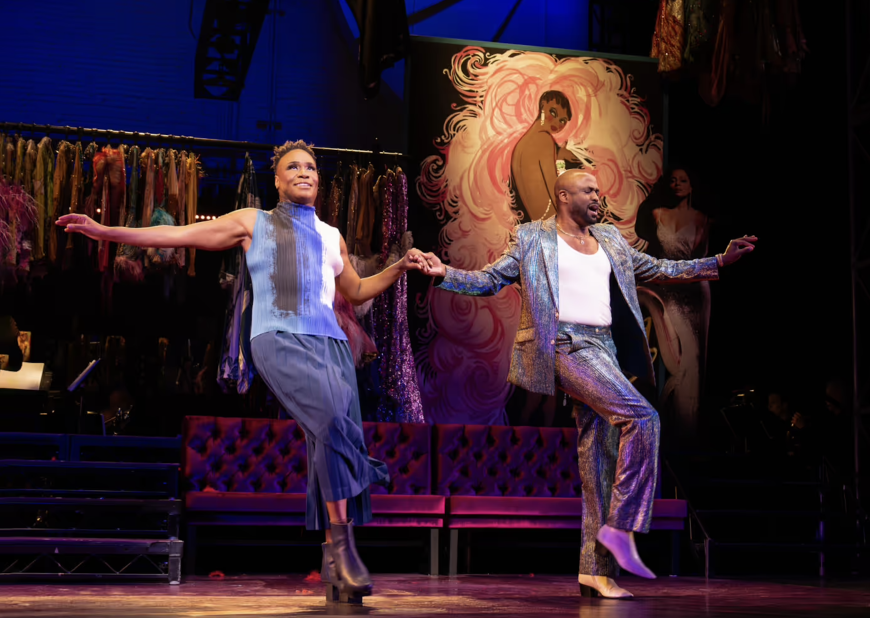
New York City Center staged La Cage Aux Folles as part of its Encores! summer series. Though billed as a “concert” version, this was no run-of-the-mill La Cage. Highly produced with fly-in sets, major stars, and complex choreography, director Robert O’Hara set this La Cage vaguely in the present, acknowledging the historical significance of this landmark work while ensuring it makes a statement in 2026.
First staged in 1983, with music and lyrics by Jerry Herman and a book by Harvey Fierstein, the musical ushered Broadway into a new era of storytelling. A show about two gay drag club owners who pretend to be a straight couple in order to appease their future conservative in-laws, its edginess has aged. .
La Cage should be treated with reverence since it built the foundation that made it possible for Jellicle Ball to exist. But can La Cage wield the power to make a Jellicle Ball-level smash today?
Almost. Staged with an all-Black cast, this production felt like a bridge connecting the original La Cage to Jellicle Ball.
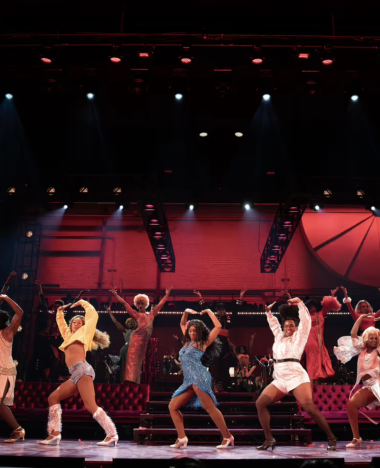
Opening the show with “We Are What We Are,” Black and Brown queens dressed as major icons of today — a pregnant Rhianna at the Super Bowl, Beyonce at Coachella — resonated immediately, proving the source material’s main anthem is both timeless and timely.
A natural standout, Billy Porter brings his signature style to Albin, the father who pretends to be a cisgender woman for his son. This confident diva leaves no stone unturned, adding ecstatic flair and groove to the material, especially when sprinkling in contemporary jargon (period!). The result is a show that stars “Porter as Albin” rather than a Porter who transforms into the role.
This is a show in which conservatives attempt to oppress a palace of Black queer joy — how relevant. We watch family members conceal their true identity, engage in in-fighting, and appease the oppressor before realizing that conforming is not the answer. In a way, this production re-shares intergenerational wisdom.
I left the theater humming “Make this moment last, because the best of times is now.” Though these lyrics were written 40 years ago, the message is urgent: Choose to be joyful and connect with your community, despite (or perhaps in spite of) the oppressive forces knocking at your door. Those lyrics would not have stuck with me if not for this revival's approach. [Return to top]
If La Cage transfers to Broadway, who knows how long it will last. No individual could have prevented the fate that befell Jellicle Ball, just as no individual can fix the rundown Broadway machine alone. But widespread outcry flooded social media after the production’s closure was announced, and that’s a step.
The meaningful impact Jellicle Ball had on Queer BIPOC communities, the sheer fun it delivered countless theatergoers, and the precedent it has set for homegrown innovation on Broadway is enough to call the production an overwhelming success. If only that success translated to the box office.