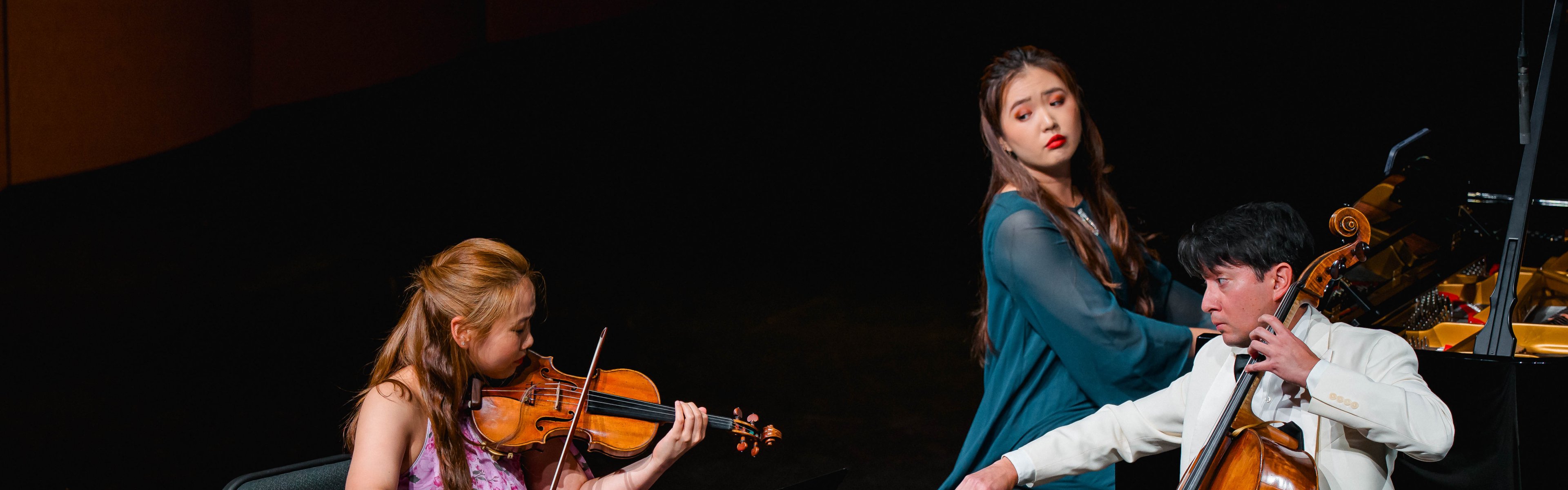
Music@Menlo Artistic Directors David Finckel and Wu Han have crafted an incredible final festival, capping their 25-year tenure, and the festival's musicians brought it to life in vivid tonal color. Saturday's Resonance concert, in the Spieker Center presented music that mattered deeply to its composers and still speaks to listeners. Each piece had a character so strong, so distinct, it seemed almost human.
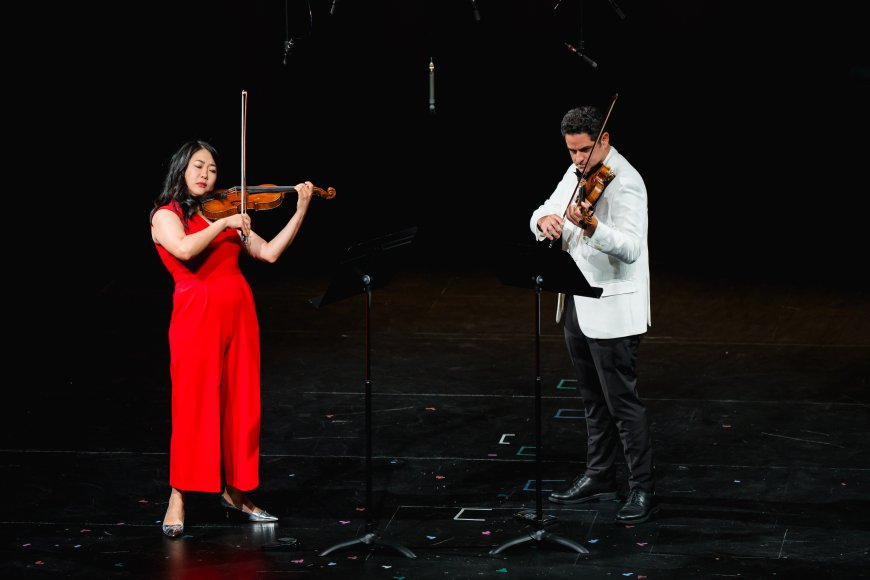
The first piece, Georg Philipp Telemann’s Gulliver Suite, was delivered with technical prowess and slapstick silliness in equal measure by violinists Kristin Lee and Arnaud Sussmann. Composed as a violin duo inspired by Jonathan Swift’s Gulliver’s Travels (his scathing satire of contemporary European socio-politics), the piece captured the over-the-top zaniness of Swift's novel with character pieces inspired by the various fictional races the protagonist encounters along the way.
The “Chaconne of the Lilliputians” was a hilariously brief chaconne — normally a lengthy set of variations — played at a teeny tiny pianissimo. The “Gigue of the Brobdingnagians” was an uncharacteristically giant gigue, a cheeky inversion of the joke behind the previous movement. The “Daydreams of the Laputians” was stuffy and aimless like Swift’s sky-dwelling scholars, and the finale, the “Loure of the Well-Mannered Houyhnhnms and Wild Dance of the Untamed Yahoos,” saw Lee play a polite, courtly dance over which Sussmann delightfully soloed in outrageously exaggerated fashion, his part written to lag, breathlessly, an eighth-note behind.
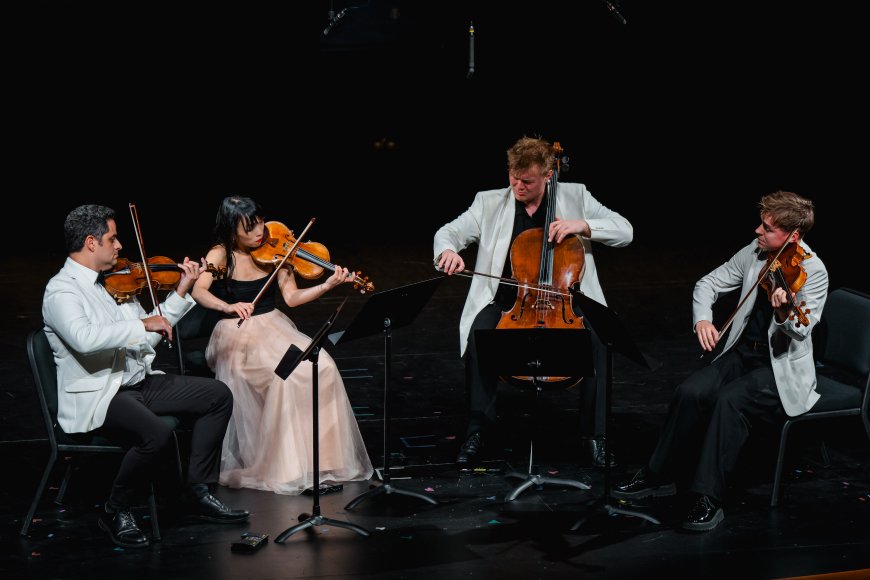
Next was Czech composer Josef Suk’s exquisite Meditation on an Old Czech Hymn “St. Wenceslas” for string quartet. The titular hymn had been used by several Czech composers prior, including Suk’s teacher Dvořák; its use in this piece served to invoke Czech nationalism during Austrian rule. Suk had a particular love of the viola, and the most sumptuous segments of the hymn melody are played in the instrument’s rich tenor register. Violist Matthew Lipman was a standout player throughout the evening, but Suk’s quartet, as with the rest of the program, breathed with a collective synergy allowing everyone to bring out the best in each other. The quartet’s overt political origins and its sensitively played, densely layered contrapuntal lines deeply embodied the collaborative humanism at the heart of the night’s program: many voices striving, even crying, as one.
Contrasting with Suk’s somber lyricism, David Serkin Ludwig’s Three Yiddish Dances (2010) for piano trio was a set of deliciously disjointed dances drawing from different Jewish musical genres. “Crooked Dance” was a raucously aggressive Balkan groove in 13/8 time. The comparably chaotic “Slow Hora” began with pianist Hyeyeon Park playing inside the piano, imitating a cimbalom, while violinist James Thompson and cellist Jonathan Swensen quivered out an anxious, squealing soli. The finale, the Klezmer-inspired “Bulgar” started with a literal bang as the pianist smashed her fists on the keys, a la Sofia Gubaidulina, while the string players traded wailing, melismatic melodies, only for it all to end with an abrupt, crushing crash.
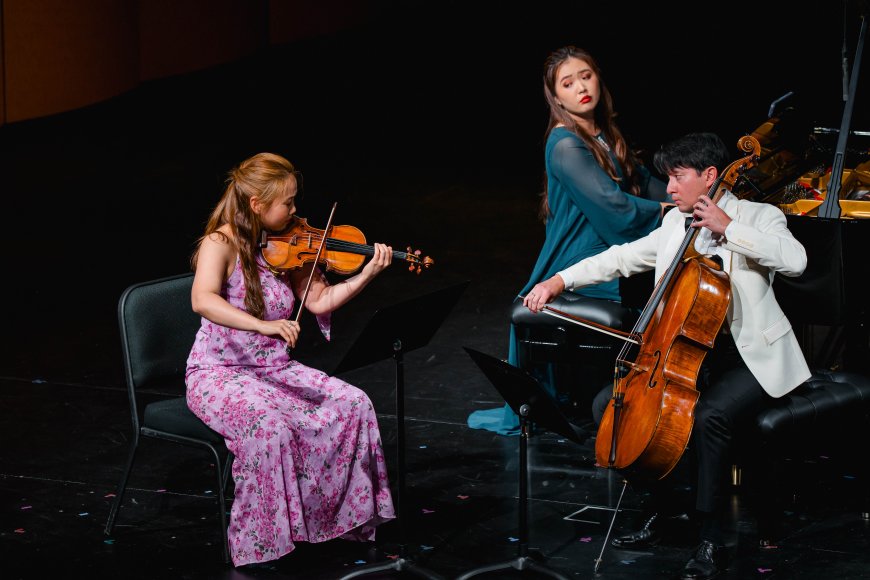
Closing out the first half was Franz Liszt’s unusual Tristia after Vallée d’Obermann, which was originally written as a solo piano work as the composer fled Paris following the scandalous reveal of his years-long affair with the married aristocrat Marie d'Agoult. Liszt’s student, August Göllerich, recounted how the composer could scarcely hear the Tristia performed without dissolving into inconsolable sobbing.
The piece is harmonically adventurous in its depiction of Liszt's profoundly melancholic landscape. Every note felt bittersweet, weighted with the complications of a passionate relationship, the music drifting between sparse, wandering recitative and a recurring love theme that appears first as nostalgic, then insistent, then ecstatic in the work's explosive finale. Pianist Chelsea Wang, violinist Stella Chen, and cellist David Requiro brought refreshing immediacy to a piece that, in less assured hands, might have felt purely cerebral.
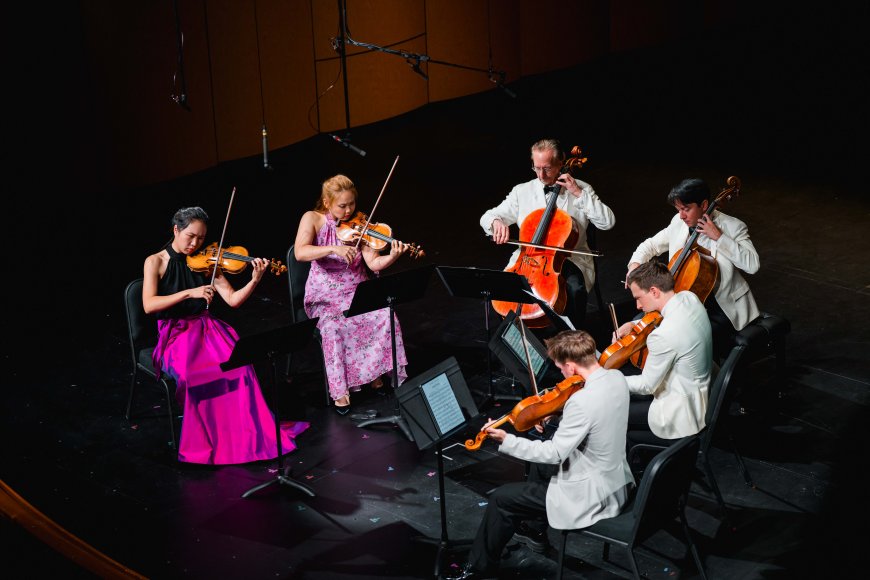
The program’s second half consisted of a fabulous rendition of Tchaikovsky’s beloved Souvenir de Florence for string sextet. Danbi Um was joined by violinist Stella Chen, violists Matthew Lipman and James Thompson, and cellists David Requiero and David Finkel (the festival’s co-artistic director). The coordination and chemistry of this group were off the charts.
The first movement is an undeniable delight in and of itself, but this group brought an accuracy and a vivaciousness that was infectious. Movement two truly felt bel canto, the players each having moments to sing out. The final two movements saw the players dig in, their tightly controlled sound swelling with momentum, peaking in the thrilling fugato of the Allegro vivace. The audience was left with a sense of triumph—a victory borne on many voices resonating as one. There is no doubt that the future of Music@Menlo will be in good hands.