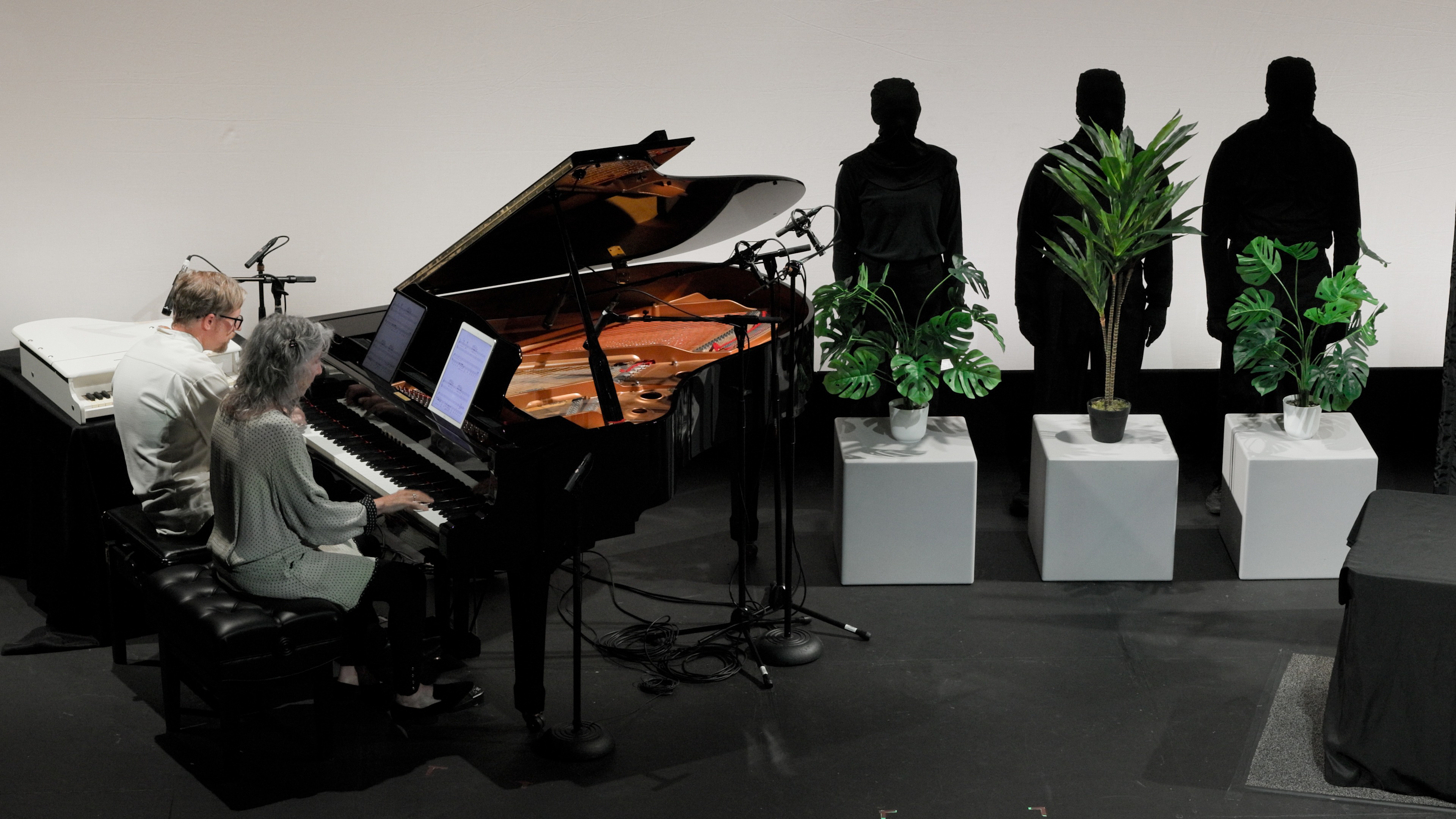
After three years and 30 commissions, Piano Spheres' "The Satie Project" culminated Saturday and Sunday at the Boston Court in Pasadena, a fitting celebration to mark the company's 30th anniversary.
The concert interleaved Erik Satie's works for piano-four-hands with seven commissioned works inspired by his compositions. The featured composers were: TJ Cole, Mikhail Johnson, Jihyun Kim, Veronika Krausas, Celka Ojakangas, Nathan Schram, and Dale Trumbore.
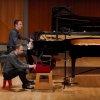
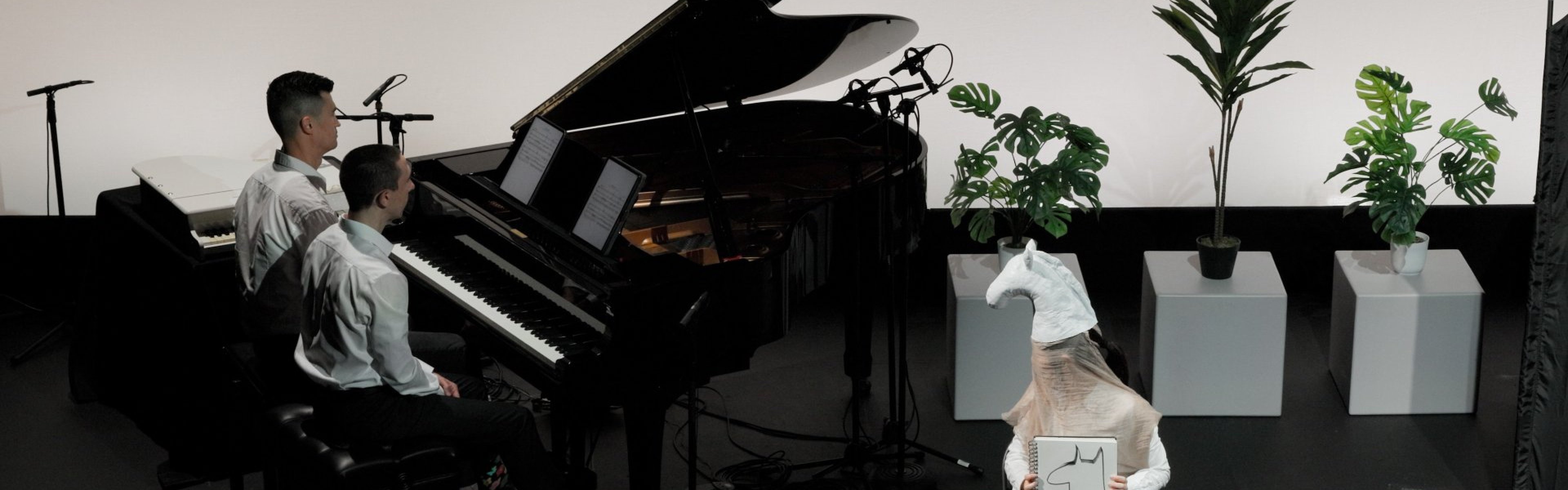
Two sets of virtuoso pianists divided the program into halves: Vicki Ray and Aron Kallay taking the first, Nic Gerpe and Thomas Kotcheff the second. The idea, Kotcheff noted in the program, was to create "a theatrical concert experience that blurred the boundaries between music, movement, absurdity and play." And by combining pinpoint piano artistry with puppetry and moments of slapstick, they achieved the goal, beautifully.
Satie's music for piano is idiosyncratic and spare. Beginning with the 1888 success of the Trois Gymnopédies, the composer offered an entirely new formula, where silence was as important as sound, where melodies lilted with a ballerina's grace, the structure was simple, while rhythms shifted unpredictably, modal harmony was explored, and jazz played a role next to circus parades.
As a resident of Paris' artsy Montmartre district, Satie embraced the cabaret's freedom to mix and match musical and theatrical styles. e He was the longtime resident pianist at Le Chat Noir, the club that gained the title—“temple de la 'convention farfelue'” – "the temple of zany convention."
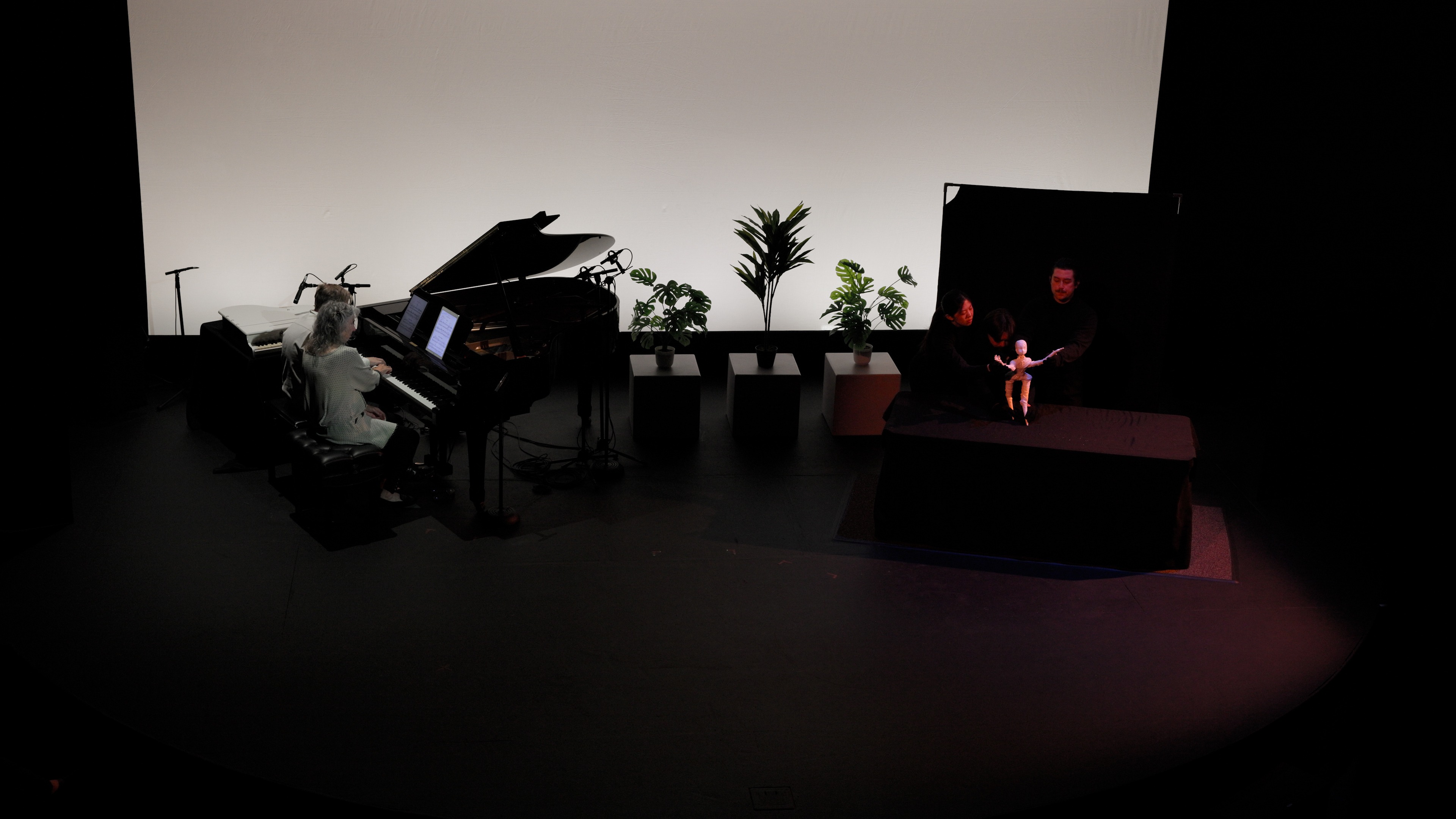
It was exactly this exuberant creative atmosphere that Kotcheff’s concert was designed to mirror. It combined the brilliance of traditional piano recital with a dash of Theater of the Absurd accompanied by the silent artistry of master puppeteer David Gordezky and designer Eli Presser, performed bunraku-style by Gordezky, Rachel Ho, and John Morgenstern.
In a post-performance conversation, Ojakangas, Johnson, and Krausas described how they were commissioned to pick one Satie piece to work with. They could mirror it, contrast it, meld with it, or reject it entirely.
Ironically, while each followed their own path, when the completed pieces were sequenced by Kotcheff, preceded by their Satie points of reference, they turned out to have a great deal in common. They nearly all stressed bold, percussive chords. Often the lower register would provide the structure in solid choral architecture while the other 10 fingers produced a torrent of note-clusters and pointillist details.
En Plus by Ojakangas was pure DADA, as a thunderclap of fortissimo attacks froze Piano Spheres Executive Director Thomas Welsh mid-sentence during his introduction. He would return 20 minutes later (un-frozen) to finish the introduction as if nothing had happened.
"Antoinette (Have your cake)” featured Cole's The Life Cycle of a Fruit Salad, which served as a delicious multilayered dessert following Satie's three-movement Apercus dèsagréables as the puppeteers decorated a bust of Marie Antoinette with a slumping wig of whip cream!
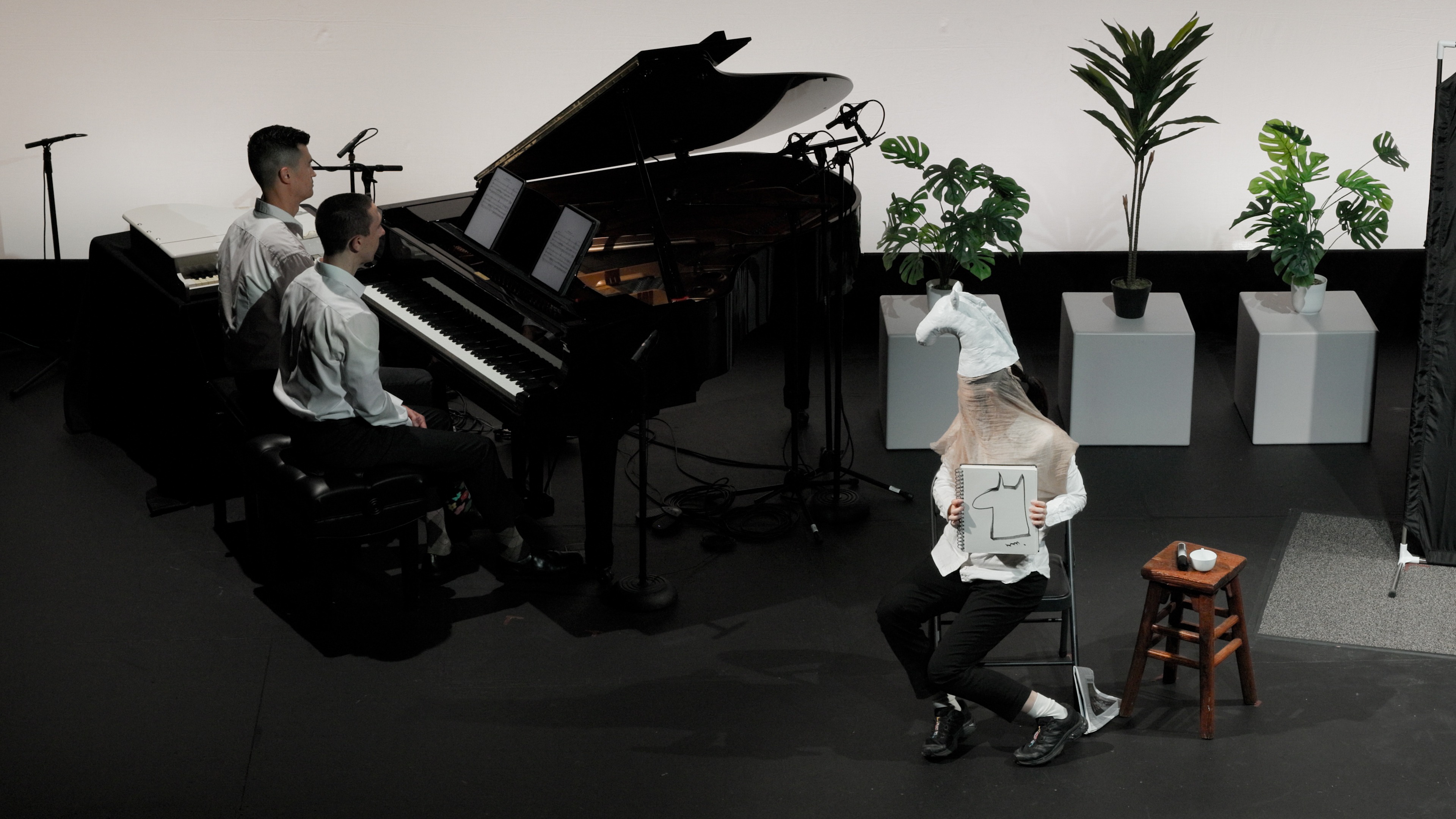
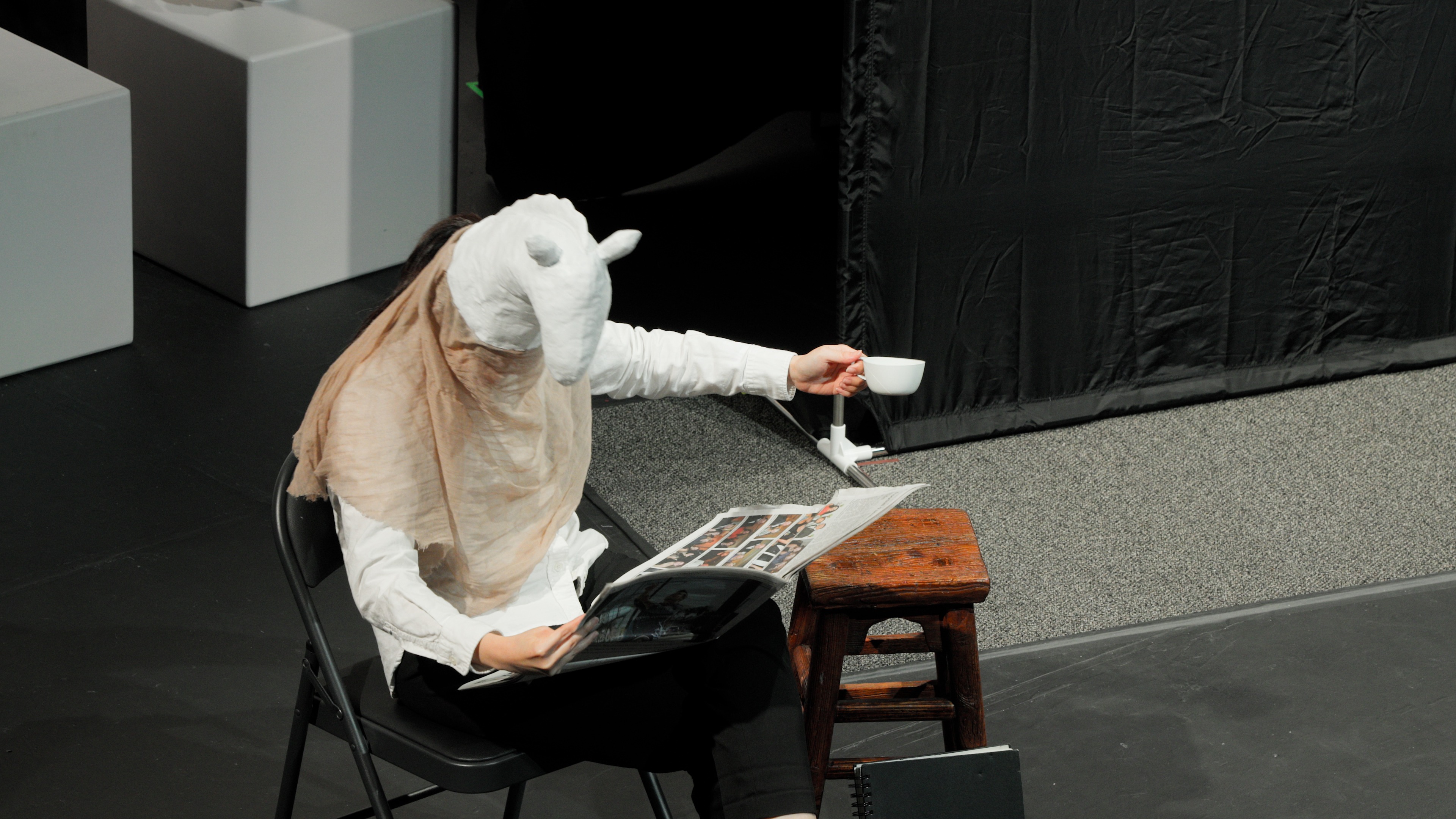
All the commissions, to varying degrees, looked back and forth in time combining their composer’s signatures with clever references, whether they were surges of “Le Jazz Hot” or cool, pulse-driven minimalism (as in Schram's More and the Same) and Trumbore's En levé, referencing Satie's En habit de cheval as a delicate "Dying Swan" ballerina puppet transformed into a flying horse — an equine motif that recurred and evolved over the course of the concert.
Krausas, no stranger to combining her music with puppetry, created a rambunctious march, Manière de commencement, which led perfectly into the grand finale, Satie's Trois morceaux en forme de poire (Three pieces in the shape of a pear). The funny thing, Krausas admitted, was that she didn’t know about the puppetry when she conceived the work.
The wonderfully whimsical concert was a perfect elaboration of Satie’s aesthetics, showing that his oddities still have influence a century after his death