In its opening weekend, the Cabrillo Festival of Contemporary Music had to handle a last-minute change. When pianist Alexandra Dariescu had to withdraw from the “Defiant Dreams” program, the scheduled premiere she was playing, James Lee III’s Shades of Unbroken Dreams, had to be replaced. But what started as overall concern concluded in moments of delight and sublimity.
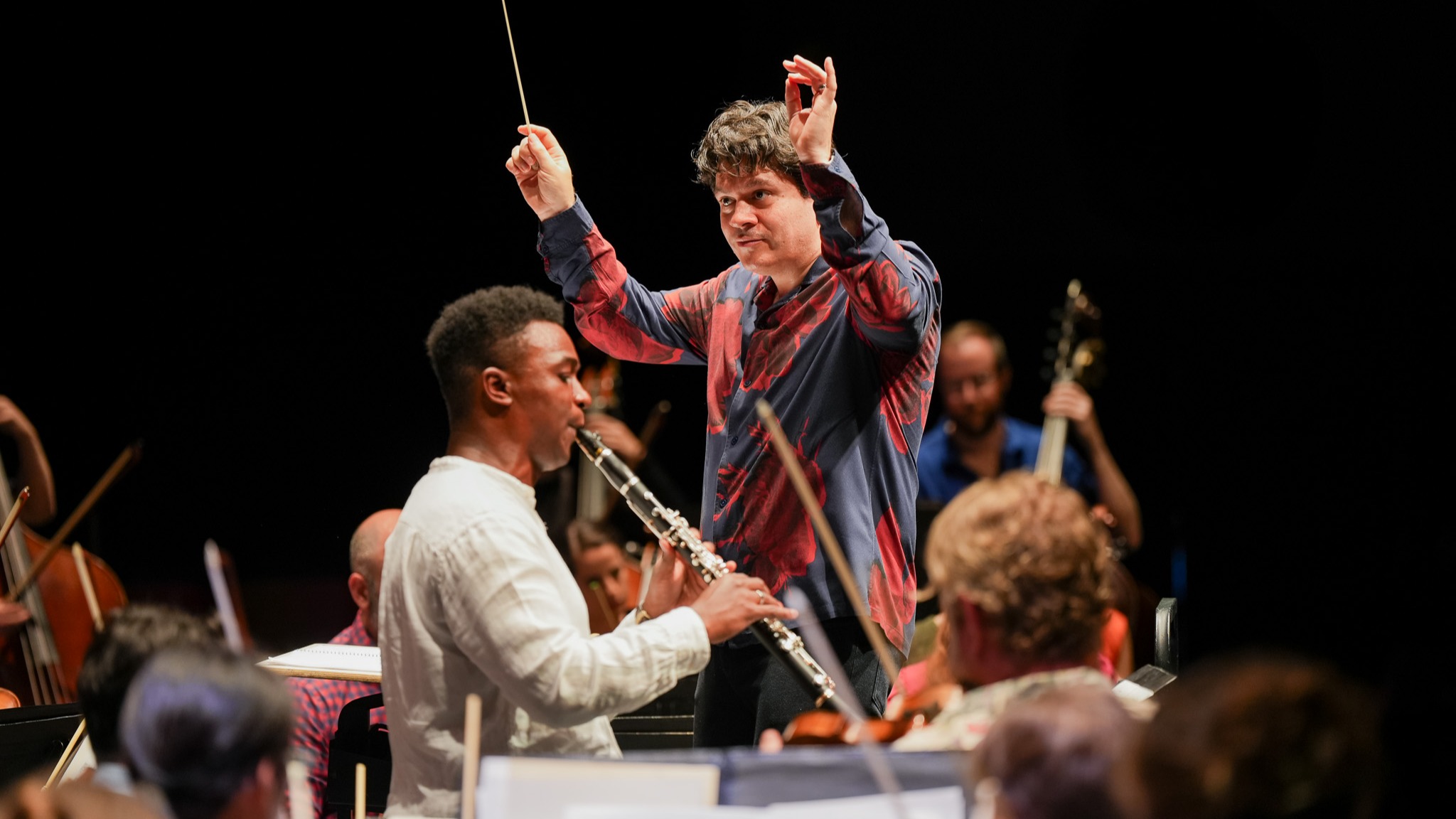
Clarinetist Carlos Ferreira, who had performed the previous night, returned as a superlative substitute on the Saturday, Aug. 1 concert, playing Aaron Copland’s criminally underappreciated Clarinet Concerto (1948).
“You're probably wondering, ‘Hey, wait a second! This is the Cabrillo Festival. The composer has to be present and alive.’ It is very true, but here's my pitch,” Cabrillo Festival Music Director and Conductor Cristian Macelaru told the audience at the Santa Cruz Civic Auditorium with a smile. “As a former composer in residence for one season, and as guest conductor for an entire season, Aaron Copland, through his music, will forever be present with us.”
Another addition, CFCM Executive Director D. Riley Nicholson’s Stacks (2024-25), gave the night another world premiere. “It's a piece that actually I invited Riley to contribute to this program,” Macelaru revealed, “as Riley is in his heart, a composer first.”
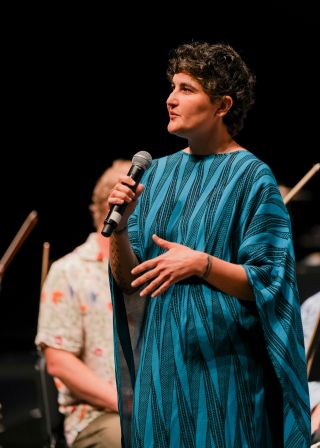
Leilehua Lanzilotti introduced her four-movement, 16-minute of light and stone with historic and linguistic insight. Commissioned and premiered by the New York Philharmonic, it’s dedicated to the four Hawai’ian siblings who comprised the islands’ final royal family and were themselves composers and boosters of indigenous culture.
Closing out her remarks, Lanzilotti explained that “(o)ur word for composing, haku, is the same as the word to braid.” The final movement is titled “to braid, as a lei,” and aural themes as well as narrative ones were interwoven throughout.
The first movement, “to compose,” celebrated the modern grandeur of Iolani Palace, the final royal residence. Each of the “Heavenly Four” has a distinct timbre. The horn section opened first, with an appropriately regal tone, then the violins followed by just the violas and the brass section, then the double basses.
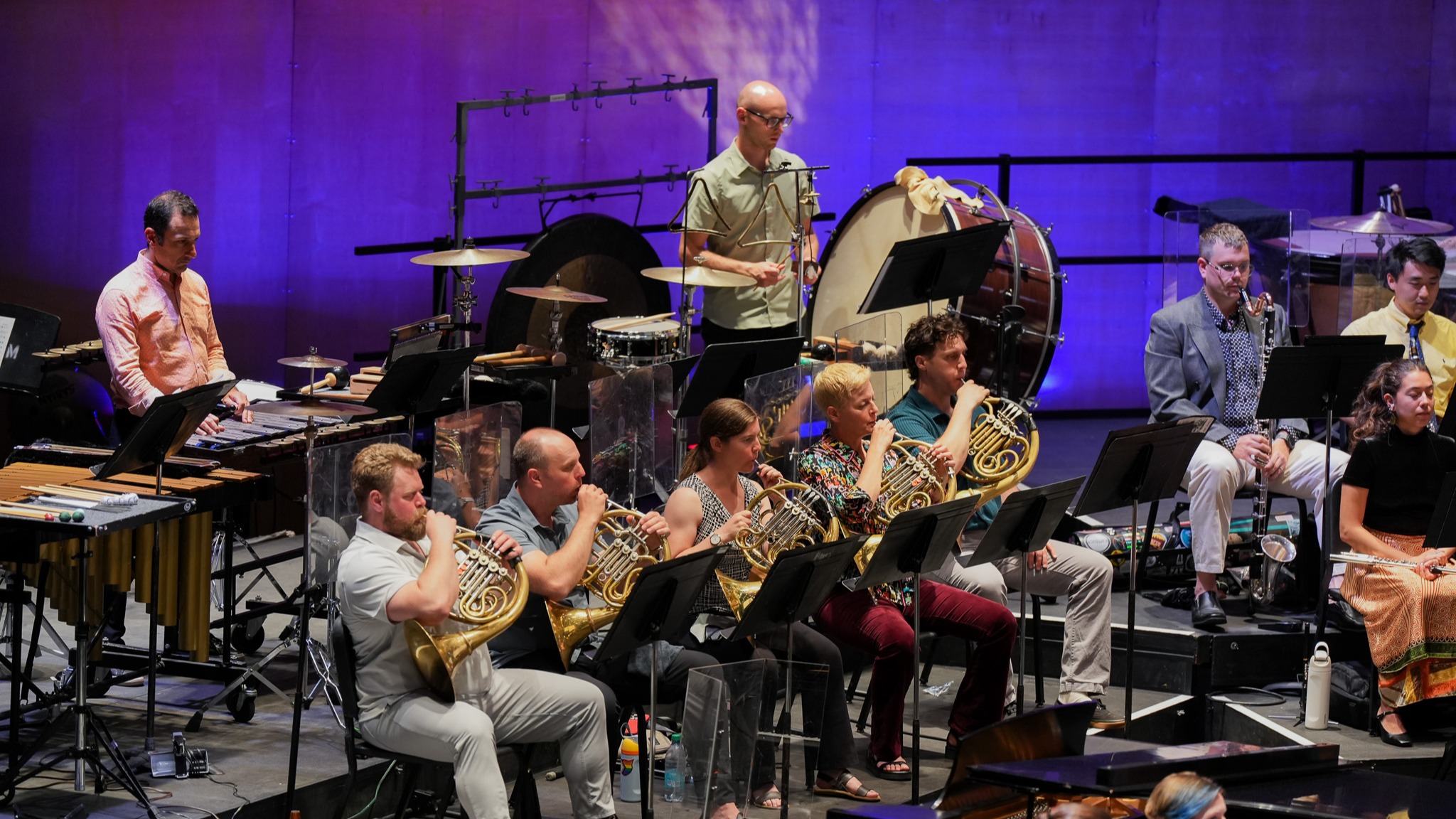
At the start of the third movement, “to rise up, as the moon,” the horn section blew air through their instruments as a snare drum was played with brushes, evoking winds and waves on Hawai’ian shores. Lanzilotti successfully projected both the island environment and some touchstones of Hawai’ian cultural identity.
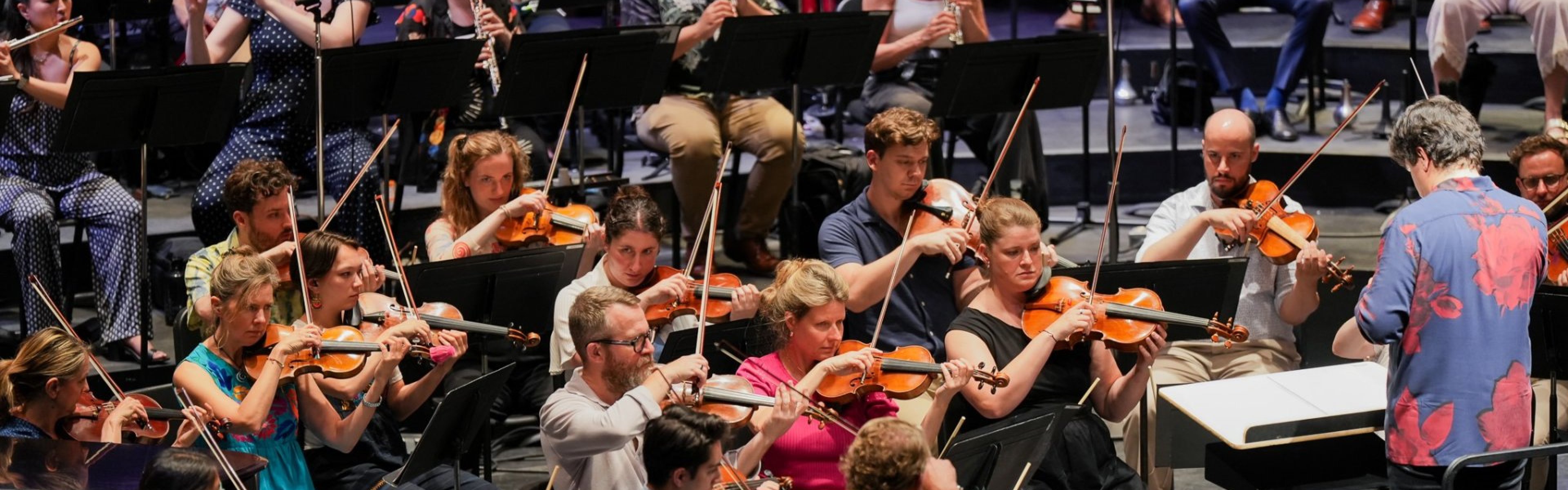
The back half of the orchestra exited for the performance of the Copland Concerto, with the string sections joined by a pianist and a harpist. Ferreira’s clarinet tone was crystalline and expressive, and he executed a broad range of dynamics without sacrificing clarity. Macelaru and the Cabrillo Festival Orchestra reminded Saturday’s audience of the work’s quality in a superb performance.
“This piece is really my most reverent offering to what I love about the orchestra, which is the ability for many individual voices to come together,” Nicholson said before the start of his Stacks. The 10-minute composition is “…about harmonies and color that are stacked and spliced and smeared across the orchestra, somewhat like a Rothko painting.”
With glistening strings and then the addition of individual woodwind timbres, Stacks is like a short concerto for orchestra. Percussion added to the kinetic sense of continual movement, with the piece concluding in a horizontal sonic spiral.
“For years and years and years, I've written music from a place that, for me, is usually very specific,” Sarah Hennies said prior to the orchestra’s performance of The Grain House, which closed the program. “Either it's about something that I know about, or it's about a specific sound.”
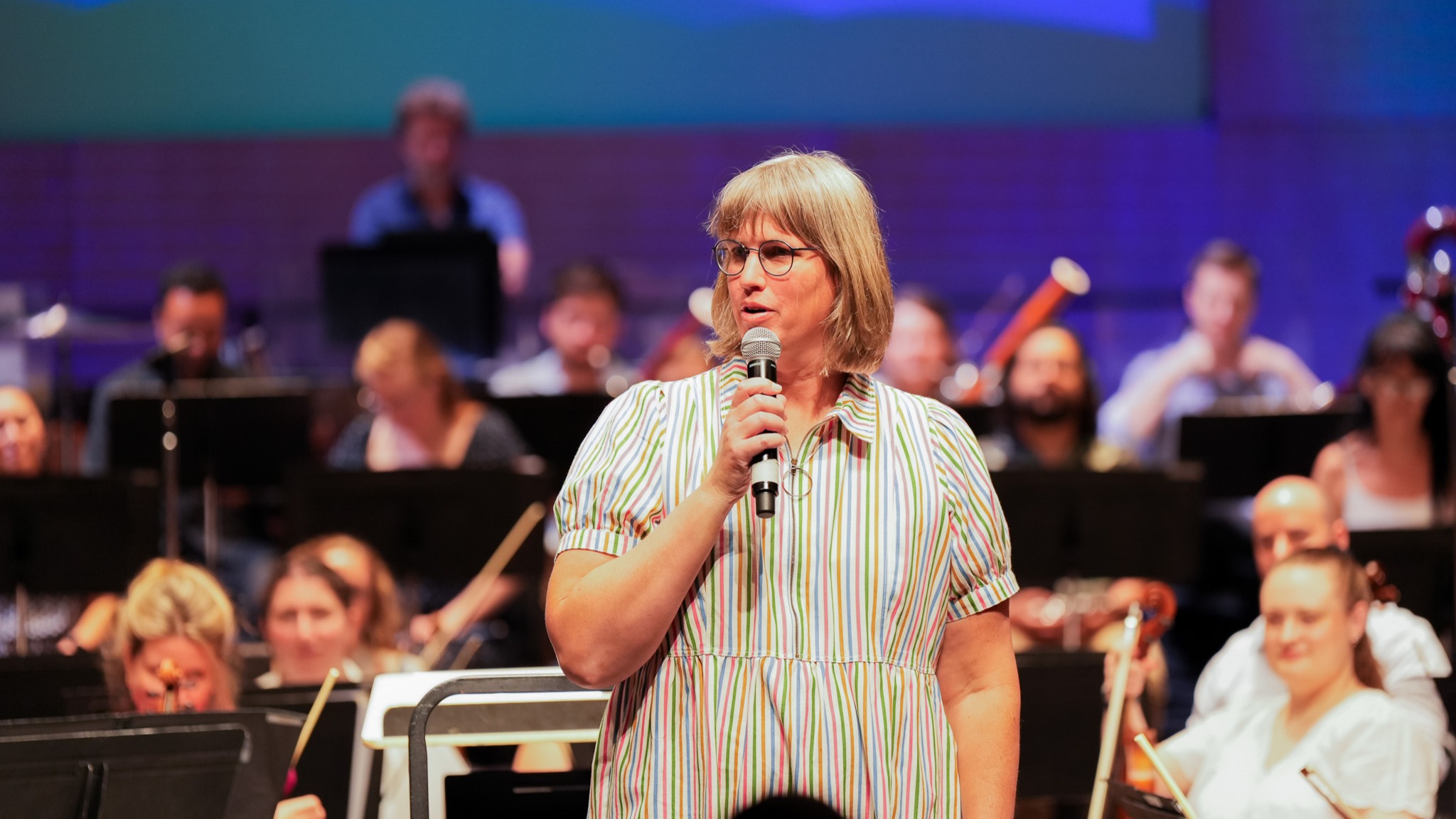
This new work, by contrast, is “just totally stream of consciousness,” she said. It begins with a rolling rush of sound with an emphasis on strings and percussion. Hennies also called for extended techniques in the brass, to unsettling, menacing effect.
Later on, the string players swapped their bows for dowel rods, providing an eerie wood-on-strings effect. Players also vocalized wordlessly before a jittery sonic buildup signaled the end and the piece concluded with a single percussive blow.
The West Coast premiere of James Lee III’s Shades of Unbroken Dreams has been postponed and may be presented at a future Cabrillo Festival. KALW — 91.7 FM in the San Francisco Bay Area or streamed via kalw.org — will broadcast the Defiant Dreams concert at 6:00 p.m. PDT on Sunday, September 6