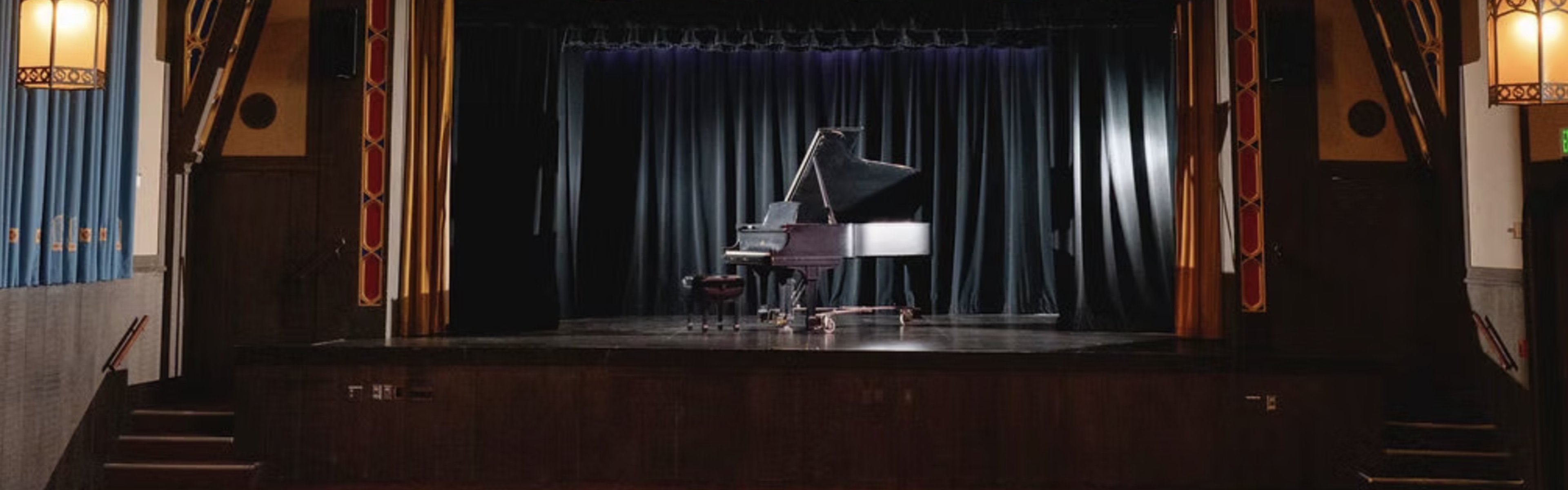
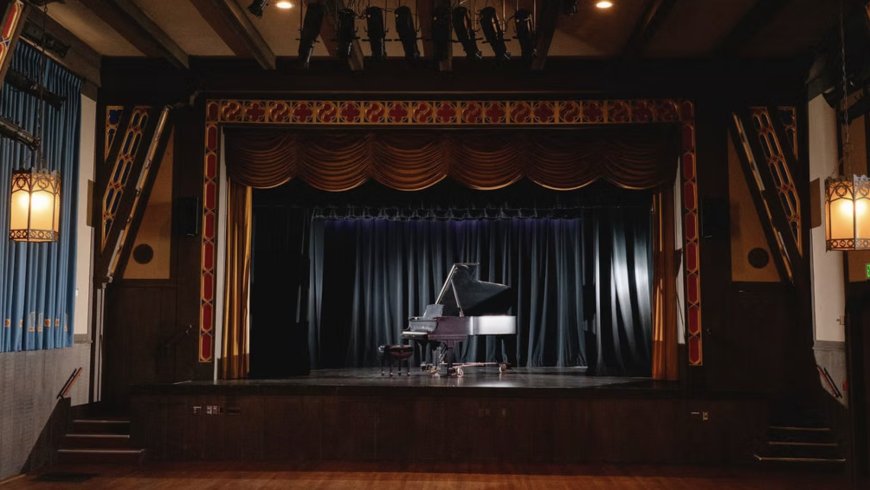
It’s fair to say that Bruce Koball, music director at the Hillside Club in Berkeley, has found his groove. A longtime Bay Area sound engineer, he curates the live music series presented in the 1924 building, masterminding the classical and jazz events himself.
Koball said in a phone interview, “When I first started as music director in about 2005, I was open to any genre, as long as the quality of the musicians was up to snuff. In the last ten years, we’ve gotten a cadre of members interested in genres that don’t light my candle. I’ve pulled back from that because it was getting to be too much and now, I just concentrate on jazz and classical. The people curating the other genres are doing a terrific job. I just leave them to it.”
Which is not to say the Hillside’s season has narrowed. It bursts with variety. Koball said a “cadre” in the last ten years has expressed interest in folk, world, and experimental music. The series is split into divisions that include classical, chamber, jazz, folk (community-centric HOOT! and Hillside Echoes concerts), world music, free bluegrass jams, and new work by composers who draw on several traditions at once.
The upcoming season features a fall equinox-themed show with Daggerboard and the Erik Jekabson Orchestra (Sept. 19), Oakland Jazz Choir with guest vocalist Stephanie Crawford (Oct. 2), Chamber Music Sundaes with the Tomodachi Quartet (Oct. 4), and the Berkelium String Quartet (Oct. 25), along with the monthly Monday Night Chamber Music Society organized by Ben Simon that features musicians from the San Francisco Chamber Orchestra. Also on the roster are concerts by such folk musicians as Maya de Vitry and Mark Erelli (Oct. 9), Northern Irish singer-songwriter Joshua Burnside, who folds Americana, world music, and electronic sampling into Irish traditional song (Oct. 18), singer-songwriter Margot Wagner’s CD release concert (Oct. 29), Galician folk music with As Meigas (Nov. 7), and more.
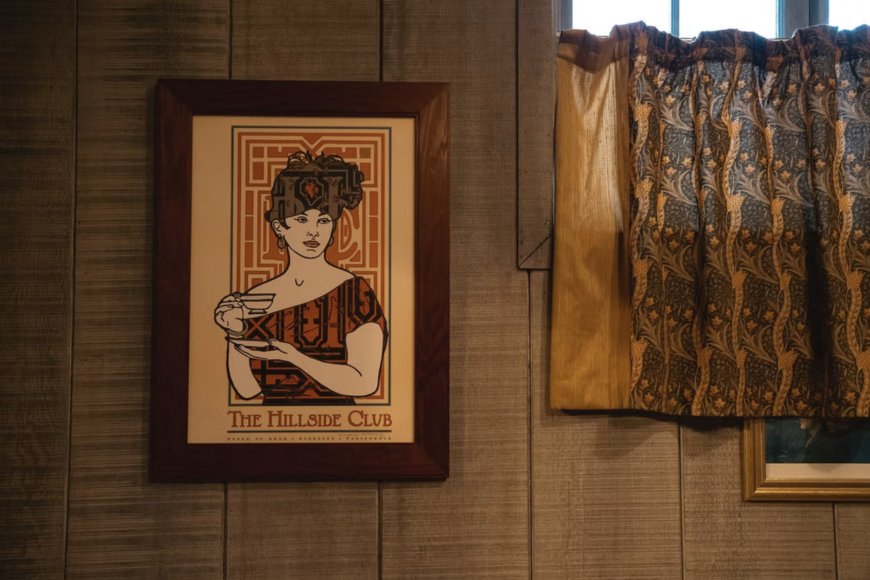
The club dates to 1898, when a group of Berkeley women set out to protect the hills from what their statement of purpose called “unsuitable and disfiguring houses” — early advocates for the natural and aesthetic character of the East Bay hills. As their voices grew more political, the club’s reach widened, and the arts and the community’s social and cultural life became central to its work. In 1906 it built a clubhouse tucked into the neighborhood a few blocks northeast of the city’s downtown core, designed by architect Bernard Maybeck; the 1923 Berkeley Fire took it, and Maybeck’s brother-in-law and sometime professional associate, the architect John White, designed the shingled replacement that opened in 1924, deliberately echoing the original.
Koball called the venue’s acoustics a manageable challenge. “The acoustics are interesting because it’s mostly wood. There is sound-absorptive paneling on the walls and the floor is hardwood. You must know what you’re doing.” Certain frequencies reinforce, and left unaddressed they turn the room boomy. “It doesn’t take an experienced ear to detect that,” he said. “Once you dial that in, it has a pleasant warm sound.” Koball records many of the concerts as a courtesy to the artists. Some of those tapes have become commercial releases, including a couple from Jekabson’s band.
Koball has no shortage of artists asking for a slot. “I know a lot of musicians and I’m full of people who want to play. Frankly, there’s so much good music out there, I’m not looking for more. I let my own tastes dictate some of the selections and I have people on the performing arts committee that have their ideas. We talk about it periodically. The thing that’s difficult is finding the time to do it all.”
Chamber Music Sundaes, built around current and former San Francisco Symphony players, has been performing around the Bay Area since the early 1980s. “I knew a lot of the players, so I’ve used that group and their management systems,” Koball said. “They’ll put together a concert and say, ‘We need this many dates for Sunday matinees.’” Other symphony members and independent musicians ask him for a particular month. “I’ll do my best to accommodate them. In the jazz domain, it’s the same. I know the skills and competence of the artists, so I don’t have to do background curatorial investigation.”
The Berkelium String Quartet, Koball said, has a solid repertoire and a taste for unusual formats. “The most recent thing they did for us was a concert that paired [violinist and leader] Dan Flanagan’s own compositions and well-known classical quartet pieces with artwork. He’d show the art, make some comments, then the quartet would play the music. It wasn’t just, get up there, play the piece, and thank you very much.”
On the jazz spectrum, Koball said Jekabson is a fabulous player. For the past three years, Daggerboard — Jekabson’s project with Wide Hive Records founder Gregory Howe — has marked each change of season with a concert. “We’re ready to present the fall one. It’s a very large ensemble and they’re making four vinyl releases. They’re essentially a talented orchestra, with creativity and original pieces. They also always do a few well-known standards in unique arrangements.”
Especially in a time when streaming provides unprecedented access to high-quality music, Koball recognized people’s continuing interest in live music as “amazing.” In the Hillside Club’s cozy rooms, in programs curated by people steeped in each genre, listeners after top-tier musicians tend to find what they came for.