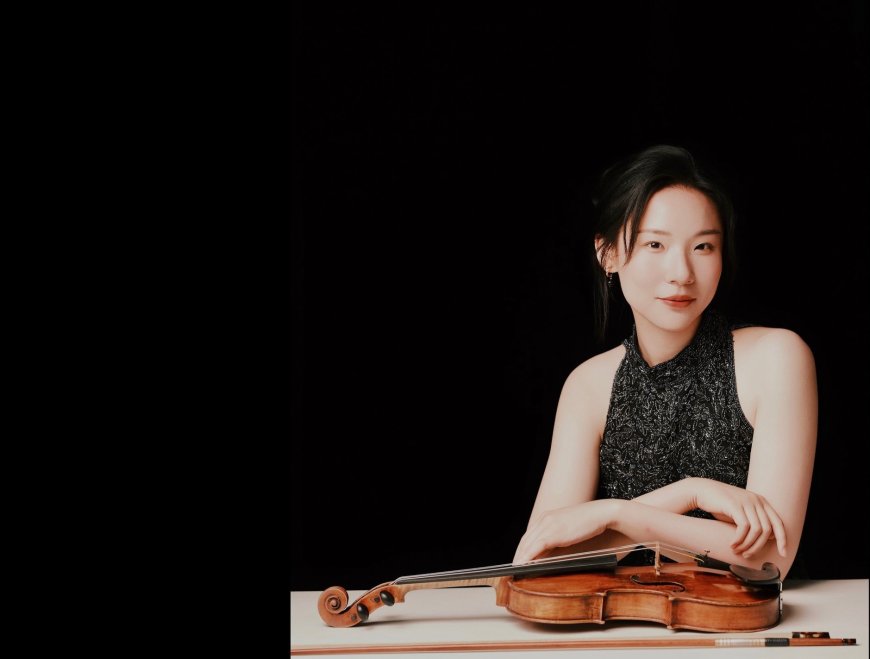
The San Francisco Bach Festival breathes life into Baroque music with seasoned professionals and young resident artists performing side-by-side. The annual event, hosted by the American Bach Soloists, runs Aug. 5-9 at SF Conservatory of Music.
Five curated concerts offer a golden opportunity to celebrate early music of historical significance, witness its contemporary relevance, and peer into the genre’s future.
Under Artistic Director Jeffrey Thomas, American Bach recently expanded to create the American Bach Academy Drake Fellows. Named after Daniel Drake, one of the organization’s sustaining benefactors, the three recipients of the award in 2026 are violinist Eliana Estrada, cellist Ian Kitchen, and violinist Yue Qian.
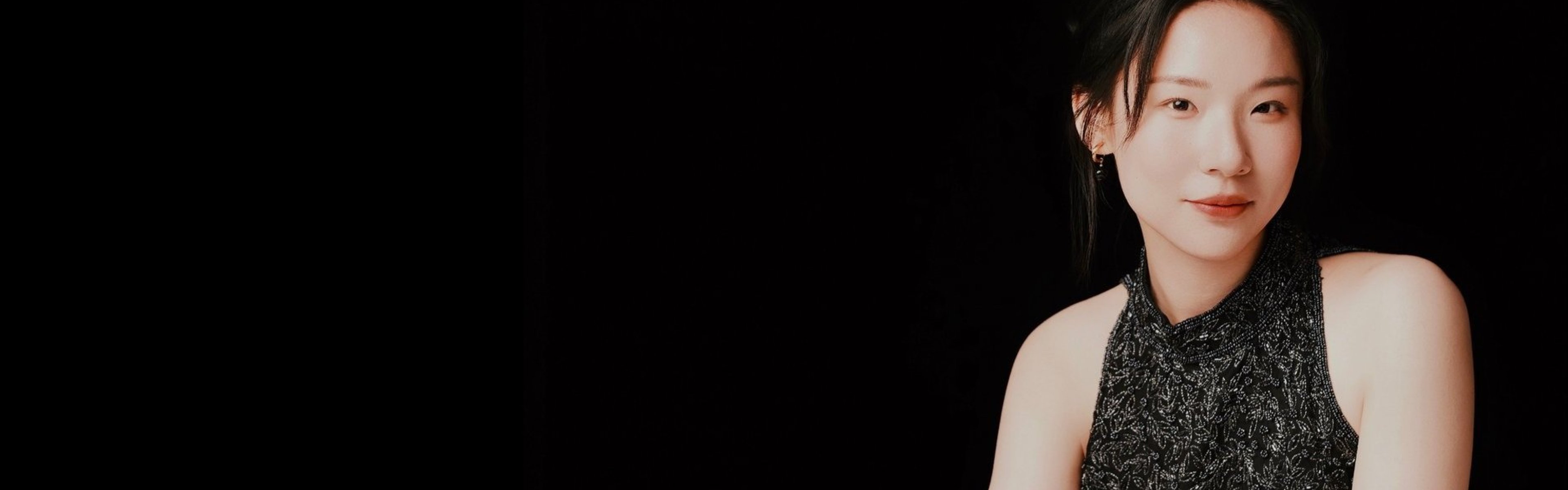
Qian spoke with SF Classical Voice over the phone from her apartment in Beijing, “my home for now” she said. The violinist discussed her Chinese heritage, music education, significant career milestones, and selected works on the festival schedule.
Born in Jiangsu, China, and raised in Shanghai, Qian began her musical studies at age five. After early training at Shanghai Conservatory Middle School, she moved to the United States at age 16 to attend Interlochen Arts Academy before pursuing undergraduate and doctorate degrees at USC. She then earned a master’s degree from the Juilliard School.
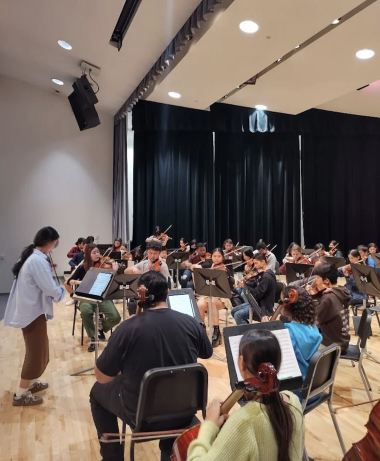
In addition to her solo appearances, Qian is an avid educator. Her busy schedule includes teaching at the recently opened Juilliard School in China and leading workshops at summer camps.
Although Qian came late to the baroque violin, the attraction was immediate.
Please share your baroque violin discovery story.
My full interest is the result of me picking Baroque violin as one of my minors for my studies. But the path leading to that choice traced back to my undergrad years at USC.
I was 24 and studying with Midori. She had a specific approach to Bach that’s historically informed. It shaped my listening, thinking, and curiosity about Bach that inevitably led to this Baroque music world. Later, in Juilliard for my masters, an unusual recommendation popped up on my YouTube page. It was for a movie, Tous les matins du monde (All The Mornings of The World). The background music featured composer Jordi Savall and I was just so enticed.
I was completely drawn into that world and how emotional the music was. It talked to my heart. I got seriously interested in Baroque music’s ability to speak directly to you. Savall remains one of my biggest heroes in music.
To what do you attribute your instant enchantment?
There’s a timber to the gut string. It’s more human than modern strings… it’s more like talking. And because Baroque pieces have “less structure,” compared to Classical periods where structure was the main pillar, it’s freer to write as you wish.
How has playing early music informed your approach to the violin?
There is always an aspect of improvisation in early music that doesn’t exist in modern violin playing. Your technique and musical intent has to be precise, [but] everything doesn’t have to be one hundred percent accurate.
That mindset loosened me. It helped me to be more relaxed when playing modern violin as well. This leads back to confidence. The more I play Baroque music, the more I learn to be in the moment and trust my body.
What are your main takeaways from your studies in Shanghai and at Interlochen Arts Academy?
I feel fortunate to have experienced two different approaches. The Shanghai Conservatory Middle School gave me a solid foundation of techniques. There was a lot of intention and focus, and there was a supportive teacher. [I learned] with daily practice, technical stuff can always get better.
Later, at Interlochen, it opened me up to a wildly different perspective. Individual voices were more encouraged and you were [pushed] to explore how you think and apply that into your music playing.
If not for the formative training I had in Shanghai, I would not have been able to be free to explore. If not for Interlochen, I would have had nowhere for my foundation to be free. These two trainings track beautifully together.
How do you apply those lessons in your role as a teacher?
As an educator, I try to combine these two at a younger age. The interesting thing is students become more interested because they’re allowed to explore earlier than they’re used to. The thing I work on most is how to find the balance.
Some technical parts, you just have to practice. As a younger student, you have to get down the foundation part. It’s hard for me to enforce them sitting down to practice. But I’m happy to see how free they are. They’re not afraid of expressing their musical feelings.
What are you discovering in yourself through teaching?
I’ve always known every student is different, but I have to find a different approach on the spot. That requires being extra intuitive and trusting myself. That’s the biggest thing: confidence. I’m shy to express it. [But in] teaching, I have to [do it].
This is a great question you ask because it feeds back to my playing as well. I have to be confident because otherwise, my message will not get across.
Please share your thoughts about three selected works you will play for the SF Bach Festival’s programs.
Ericsson Hatfield’s Trio in the Roman Style
[This is] my first experience playing a Baroque piece by a living composer. I was happy to see people still write in this style. It’s great music and nice to listen to. These days, we aim to come up with new things that catch our attention but are not necessarily so pleasant that we want to listen to it again. This, and Canzano Trio Sonata No. 9, are so pleasant. I want to play and listen to them over and over again.
Compared to Romantic pieces, the notes [in the Hatfield trio] are not that hard. What I love about it and all Baroque music is you have to be a more complete musician to perform it. I have to know the overall harmony, not just my part. I have to determine the timbre, the speed of my bow, or its pressure for notes that may change over the bar line. There are very clear cadences that regulate each movement. I have to have that arc in mind, know what storytelling there is. We have to practice not just to get notes right, but delve into the music on a wholistic approach.
Antonio Vivaldi’s Concerto in D Minor for Two Violin & Violoncello
Vivaldi is a sort of rock-and-roll figure. He wrote really aggressive music and I still wonder how people took it back then. It’s super fun to play, starting with the canonic opening with two violins. I don’t need to think or analyze it, but just enjoy the contour of the lines and have an open ear for other people playing because it’s often canonic or in counterpoint.
Nicola Canzano’s Trio Sonata No. 9 in C Major
Despite being in a major key, it’s an introspective work. Especially the second movement. It’s more of an internal dialogue. I’m playing with a colleague violinist but not competing. We’re having a conversation that feels personal. It’s comfortable; not flashy. It’s purely compositional and I express genuine feelings.
I will have different understandings of it after I rehearse it with the other fellows. Music is collaborative, which I cherish.

You participated in the Gabriela Lena Frank Creative Academy in 2022 and you work with Beijing Contemporary Soloists. You mentioned these were significant activities in your career.
It was amazing for Gabriela to provide composers with this almost utopian environment. They present a work somewhat finished. We read them on site so they could hear what they liked and didn’t. As instrumentalists, we could provide feedback from the player’s perspective, which is crucial. If composers don’t play an instrument [they are writing for], they can write something not so comfortable.
After rehearsals, we’d sit on the patio, look into the valley, have food together. It was such a friendly environment and Gabriela is such a ray of inspiration. She reminded me of the kindness we all need. In the music world, we can get competitive and lose that beginner’s mind. The human connection brought me hope for music that could be written for future years to come.
Tell me about your experience working on Jade (2023), an album by Beijing Contemporary Soloists.
I grew up half in China and half in the U.S., so for me to apply what I’ve learned into music of my own heritage, but not necessarily old music, is interesting. Most of these composers have had training abroad so we share perspective on music that blends Asian philosophies with Western techniques.
Why is it important? Because good works need to be heard. The Jade album isn’t released worldwide, but for people in China most haven’t heard about these composers, it’s worthwhile to make their voice heard.
Like in tech, you always want to stay informed about the newest thing. It’s always good to have as broad exposure as you can, try new things, then try to learn from all of it.