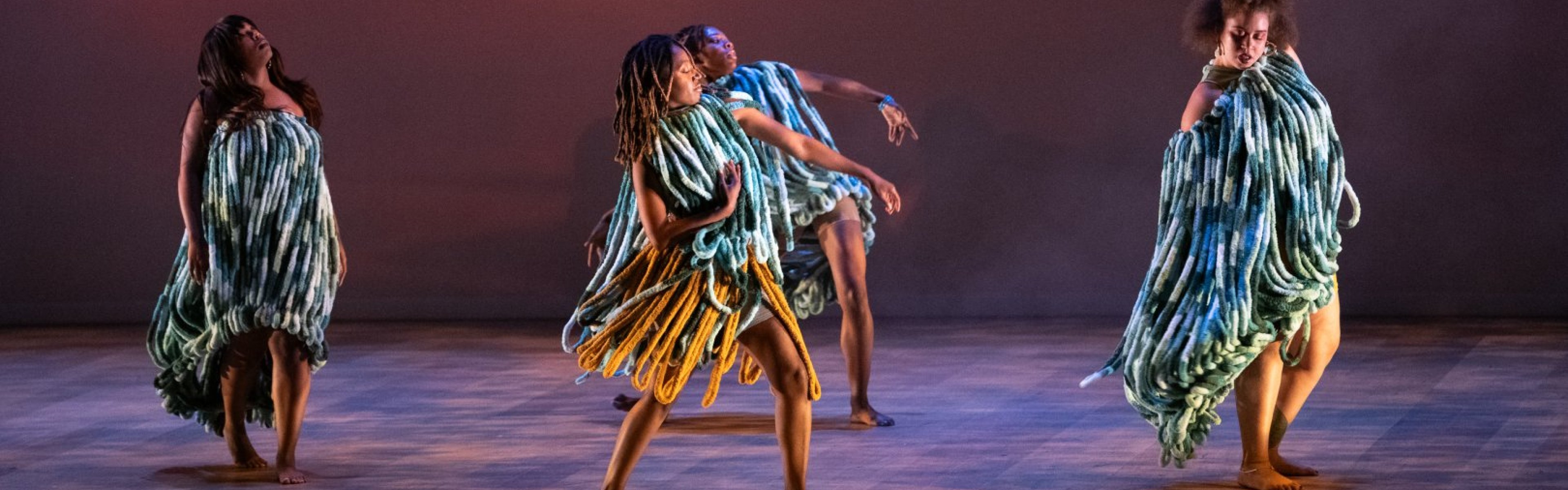
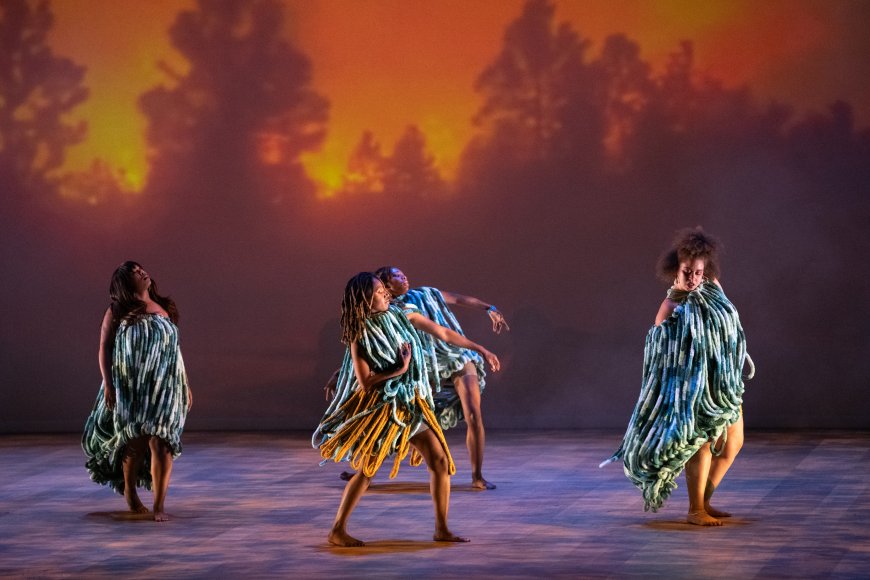
CAP UCLA’s Parable of Portals promises to be an evening of meditative improvisational movement and poetic transmedia storytelling. On Dec. 11 at the Nate Holden Performing Arts Center, choreographer, writer, composer, and educator d. Sabela grimes performs the work he created with Meena Murugesan, inspired by science-fiction author Octavia E. Butler’s “Parable” series. (The performance is sold out, but there will be a standby line for those seeking last-minute entrance.)
“I was introduced to Ms. Butler’s work by one of my professors at UCLA and fell in love with it,” grimes explained in a phone conversation with SF Classical Voice. “Her influence and her inspiration have been a part of all my work, and not just as a movement artist or movement composer, but also as a sound designer. I also think about the world building, and the care [she took] for the portrayals of different sorts of humanity.”

If this sounds heady, grimes, who teaches hip-hop, dance history, and improvisation at the University of Southern California, is simply excited to talk about his adoration for Butler and his process in creating “Portals.” Featuring a cast of eight, the work has gone through various iterations, the most recent at the Sierra Madre Playhouse last September.
“From my point of view, I am going to create a movement-focused, dance-focused work honoring Octavia E. Butler,” grimes said. “And to be more explicit, I’m going to say it out loud: ‘It’s an obnoxious love letter, [and] it’s me profusely pouring out my gratitude.’ That’s what this is.”
It’s also a reimagining of Butler’s professional and personal writings into a living testament to the novels’ profound explorations of survival, resilience, and community. For their research, grimes and Murugesan — who is a video, textile, and performance artist — spent long hours at the Huntington Library in San Marino, California, poring over Butler’s archives; the writer was born in neighboring Pasadena, where she spent much of her life before passing away in 2006 at age 58.
“It was such a heavy and rich experience,” grimes recalled. “We’ve done three-channel video installations and a short film. I create animations, and Meena creates amazing video architecture with projection mapping. I’ve also written all the texts and bring in [Butler’s] text and some of her vocal bits from her interviews.”
But grimes, 56, said he didn’t grow up dancing. It was only after graduating from UCLA with a degree in English and subsequently moving to Philadelphia to work at the Frankford Group Ministry, a nonprofit organization, that fate stepped in: He met hip-hop choreographer-dancer Rennie Harris and eventually joined his company, Rennie Harris Puremovement, where he began to dance professionally.
At Puremovement, grimes said he began to explore themes in dance that he now identifies as elements of Afrofuturism — a genre Butler is credited with developing through her science-fiction works — and Afro-surrealism. These cultural aesthetics explore the intersection of Black identity, technology, and fantasy to spotlight societal issues. This development in his artistic identity has stuck with him throughout his career.
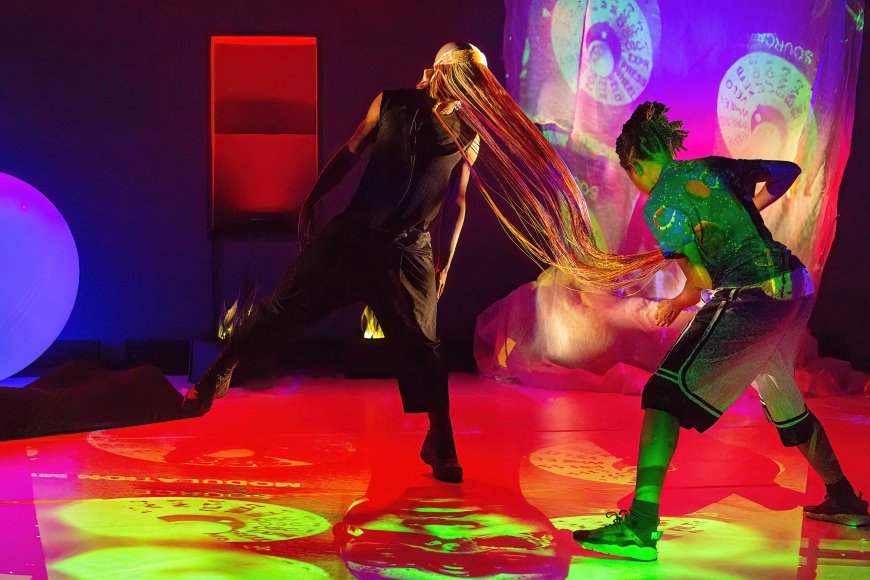
“In the collaboration process, one of the biggest things is what I call movement meditations,” grimes said. “These movement scores are valuable [because] each performer brings something of that idea to their own interpretation, through their own abstraction. And through that, it starts to really bend what you think of as street dance. We approach it from a street dance form, and the performers we work with are interdisciplinary, very hybrid, [and] multilingual dancers [who] bring a lot of information to do these things fluently.”
And if you ask grimes about process, he simply says, “I don’t actually have one process, but I have a core intention — to be in dialogue with the folks in the community. I conceive of these ideas, but it’s so fulfilling and fruitful for me to say, ‘Hey, this is what I'm dreaming. Can you see it? Can you feel it?
What do you say? What don't you see? What’s confusing you?’”
This, grimes posits, “will allow the audience to step into a living system rather than a fixed show, [where] I hope they feel the sense of being inside something unfolding.”