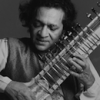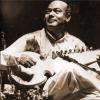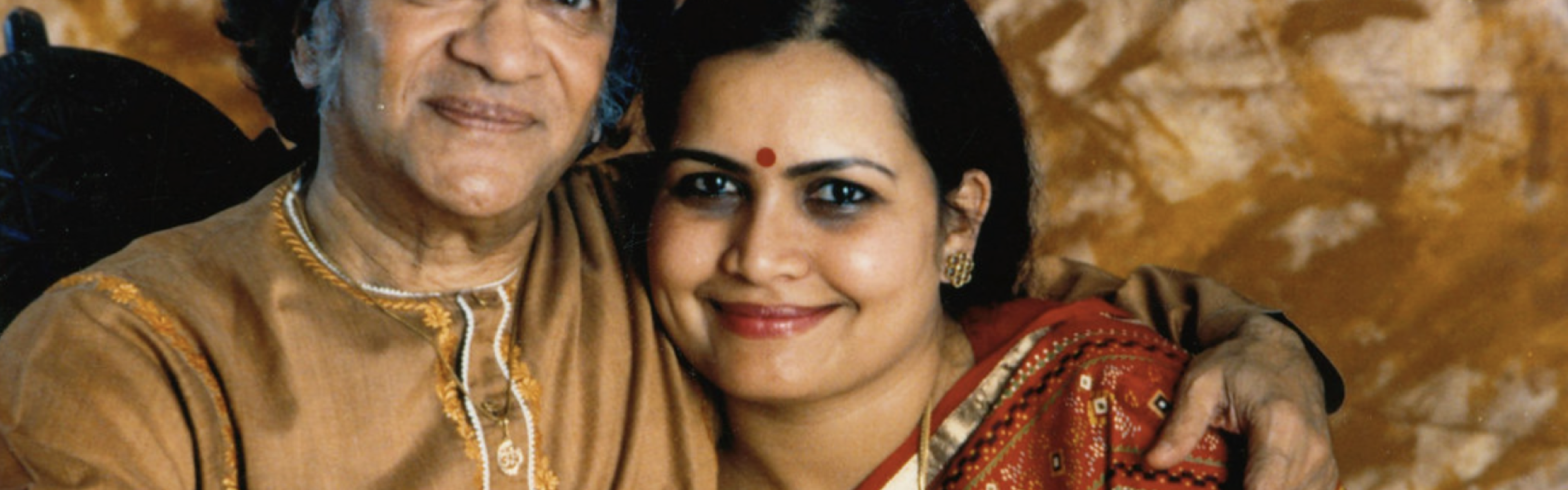
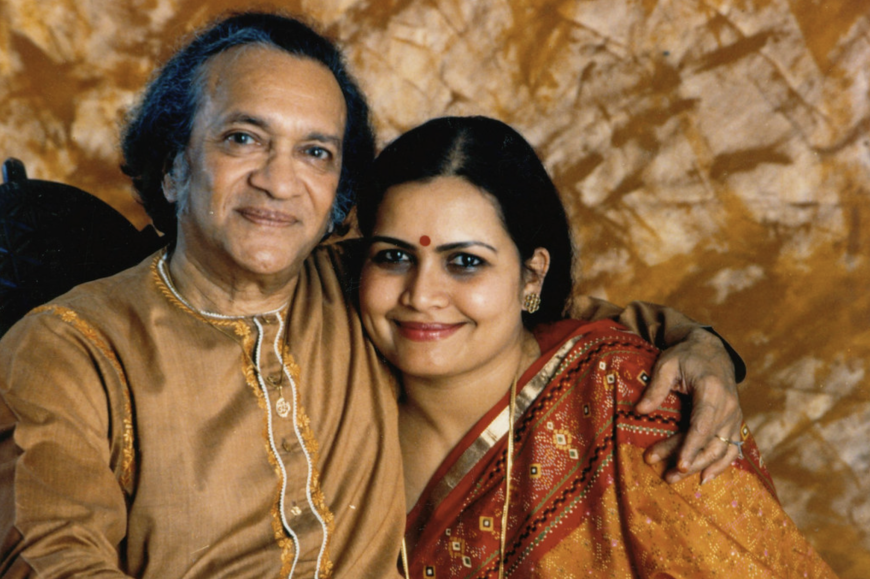
On Saturday, April 4, three days before what would have been his 106th birthday, the Ravi Shankar Ensemble will showcase the breadth and depth of music created by the Indian-born virtuoso of the 20-stringed sitar. The concert, presented by SFJAZZ at Herbst Theatre, is part of a national tour co-curated by Sukanya and Anoushka Shankar, the widow and daughter of Raviji (Shankar’s honorific name).
When I interviewed Shankar at his American home in Encinitas, California, in 1995, I got to meet Sukanya and to conduct a short separate interview with Anoushka, then 14 and her father’s star pupil. Shankar was characteristically modest about the celebratory consequence of his 75th year. “I feel very grateful for this love and admiration,” he told me. With encouragement from his friend George Harrison, the four-CD retrospective In Celebration was released by Angel Records in conjunction with Dark Horse Records. And, since Shankar’s passing in 2012 at age 92, rereleases and newly discovered recordings of his oeuvre have continued.
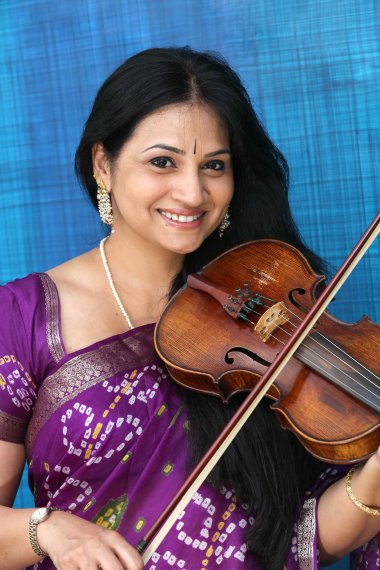
Though trained in Northern Indian classical music as a youth, Shankar absorbed the Carnatic influence of South India, aided by Sukanya, who came from a family of Carnatic musicians and dancers.
“In the South, we are very regimented,” said Sukanya, via Zoom from her London home. “Everything is based on strict rules of taal (rhythmic framework). Whereas in the North, I found that there’s more fluidity and freedom.” The six members of the Ravi Shankar Ensemble are themselves divided evenly between Northern and Carnatic backgrounds, appropriate to the eclectic overview of Shankar’s oeuvre that they’re presenting.
The program is described by ensemble member Padma Shankar (not a blood relative) as “an entire soundscape of Raviji’s work,” all of which he’d performed on sitar. Included are four ragas — the familiar foundation of Indian classical music, formulated as a set of melodic structures and musical motifs. One of them, Sandhya, is described by Sukanya as “a beautiful evening raga which [Raviji] loved. And in every concert in the last few years of his life, he played that raga for me.”
Sukanya asked Padma, who’s a vocalist as well as a violinist, to sing “Jaane Kaise,” from the soundtrack of Anuradha, one of several films with music by Shankar. (His best-known film work was for Satyajit Ray’s Apu Trilogy, 1955–1959). “You’ll also hear deeply rooted Hindustani pieces like Tarana,” notes Padma. Further representing Shankar’s compositional reach are a pair of pieces honoring gurus, a paean to spring from a theatrical production, and a fusion improvisation, Fire Night, inspired by the Los Angeles fires of 1961 and originally recorded for the World Pacific label, featuring jazz musicians Bud Shank and Gary Peacock improvising with Shankar on sitar.
Sukanya Shankar was a virtuoso performer on tanpura (a long-necked bowl lute) when she first encountered Shankar in the 1970s, and as his lifemate assumed a loving relationship paralleling that of her instrument to his. “I was always in the background,” she says. “I took care of him, I cleaned, I cooked, I did everything,” including the musical education of their daughter Anoushka, up to the age of seven.
So when Sukanya took on the organization of the ensemble and the tour, “it was a very new thing for me.” Anoushka, at the height of her career as a sitar player and composer, helped curate the program, but had to leave much of the hands-on preparation to her mother. Sukanya was surprised to find that “I could remember more of Raviji’s music than could some of his students.”
But she also drew vital support from sitarist Shubhendra Rao, who’d been one of her husband’s senior disciples. The six ensemble members — who perform on flute, tabla, and mridangam (a long double-sided drum) as well as sitar and violin — convened with Sukanya in Delhi late last year, and “it was all like a family,” she recounts. “We worked from morning till night for three days, and we got it ready.”
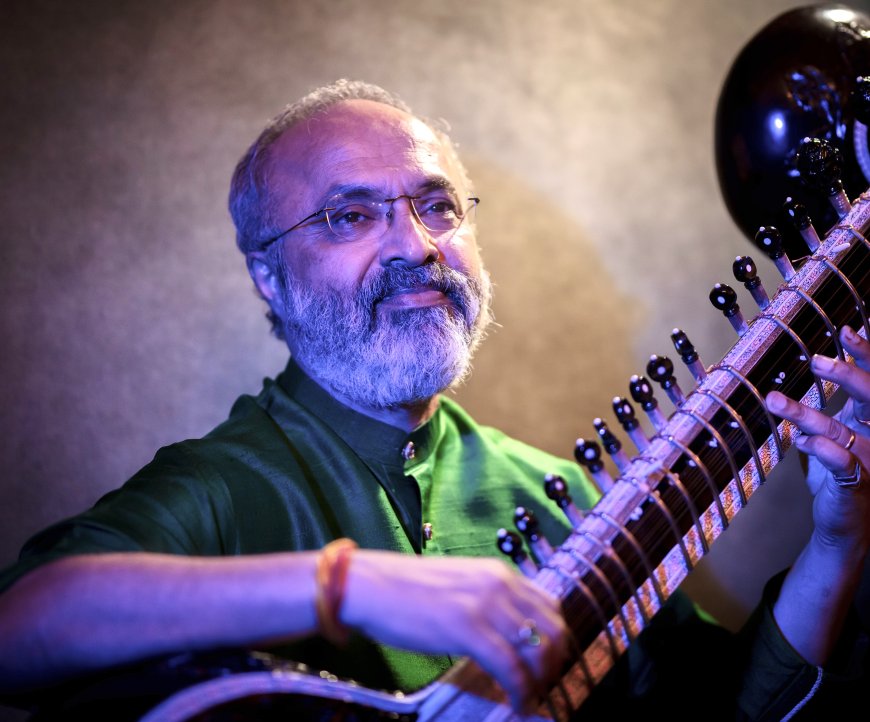
Sukanya expects such musical celebrations to continue, bringing to light Shankar’s unpublished works. She administers the Ravi Shankar Foundation established by her husband, with branches in Encinitas, California, and Delhi. Anoushka regularly records and performs her father’s music, sometimes reimagining his ragas.
And Sukanya affirms that all of this is actively motivated by Shankar. “You won’t believe it, but he’s really with me, he’s right here,” she says, gesturing towards a portrait of her husband on the wall behind her. “He’s approving it very much, because the Ensemble is bringing some of his best compositions, and he loved composing them. I was there when he was composing many of them. So it’s like bringing something alive in me again, too.”
For more about the Ravi Shankar Ensemble, visit their website.