
Composer Sarah Kirkland Snider, dubbed “a rising star on the American compositional scene” by The Wall Street Journal, and whose music has been hailed as “rapturous” by The New York Times, has written her first opera. Inspired by historical events and the writings of Hildegard von Bingen, the opera, co-commissioned by Beth Morrison Projects and the Aspen Music Festival and School, will receive its world premiere in a production billed as HILDEGARD, presented by Los Angeles Opera at The Wallis in Beverly Hills Nov. 5–9 before bowing in New York in January.
The historical figure at the heart of the opera has been a longstanding interest of the composer. She has spent the last eight years researching the life of the German abbess, visionary mystic, and composer, in addition to the Benedictine monastic culture and the socio-political history of the 12th century.
“I’m 52, and basically, I’ve had a 25-year fascination with Hildegard’s story,” Snider said. “I also fell deeply in love with her music.
“When I was in school,” Snider, who, like the saint, suffers from migraines, added, “Hildegard was not in my musical course studies. I didn’t know about her until I was reading about migraines in my 20s in a book by [neurologist] Oliver Sacks and thought to myself, ‘If I ever write an opera, this is who I want to write on.’ It took me a long time to get here, but that’s the basic genesis of “Hildegard.”

There’s nothing basic about Snider, whose previous works have been commissioned or performed by, among others, the Boston Symphony Orchestra, Chicago Symphony Orchestra, and the New York Philharmonic. She also wrote the libretto to Hildegard.
“I never thought about writing my own libretto, [and] I did when it was the only option on the table,” Snider said. “I tried working with a few other writers — one was a historical fiction scholar on Hildegard, but he didn’t want to play with her timeline. Another was uncomfortable about the way I wanted to tell the story [so] he got to the point where he said, ‘You need to write this libretto. You have so many ideas.’”
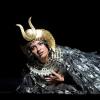
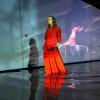
Set in the year 1147, the opera follows Hildegard as she begins to receive divine visions and enlists fellow nun Richardis von Stade to help illustrate them. Their spiritual and creative collaboration deepens into intimacy, forcing both women to confront the limits imposed by faith, gender, and power. The production is directed by Elkhanah Pulitzer, whose bold stage direction has earned acclaim at San Francisco Opera (where she recently helmed John Adams’s “Antony and Cleopatra”) and who is known for exploring the intersection of music and theater through innovation and immersive visual storytelling. Soprano Nola Richardson creates the title role, joined by mezzo-soprano Mikaela Bennett as Richardis, with Gabriel Crouch — a longtime collaborator of Snider’s — conducting the chamber ensemble of 11 instruments. The production features immersive visual projections by Deborah Johnson.
The historical Hildegard was not only the first woman in the history of the Catholic Church to speak and write in the name of God (she was only recently canonized, in 2012), but also had a close relationship with fellow nun Richardis von Stade, which Snider called “a journey of self-acceptance” and is key to the story of her opera. Snider’s research included going to Eibingen Abbey and the ruins of Disibodenberg Monastery in Germany.
“I was covered in goosebumps walking around imagining that Hildegard had walked these same spaces,” Snider said. “They’re not even sure where the cottage was where she was walled up until she was 42 [because of her intense visions] but seeing how small that one room was — a single cell — was extraordinary.”
Snider was surprised by “the degree of anxiety and self doubt Hildegard overcame. “She was fierce, but she was also self-doubting, anxious. It took her a lot of work to overcome that. I sympathize, because it’s also an issue with me,” the composer added. “I wanted to know how she overcame that self-doubt and anxiety and battled the social norms. Despite attempts to dismiss her visions, Hildegard “built her empire bit by bit,” and her legacy is indisputable, Snider said.
“How does somebody with that level of self-assessment go on to become this person who has the largest surviving body of music from the Middle Ages, and more Latin writing than anybody from then, particularly for a woman without a formal education?” Snider asked. “I was curious to see how she did that.”
Adding the caveat that she doesn’t aim to compare her own story to Hildegard’s, Snider noted that “any time we sit down to something we haven’t been told or validated externally that we can do, it’s terrifying. It takes a long time. You have to believe in yourself. For a woman in particular, it’s a challenging journey — even 900 years after Hildegard.”