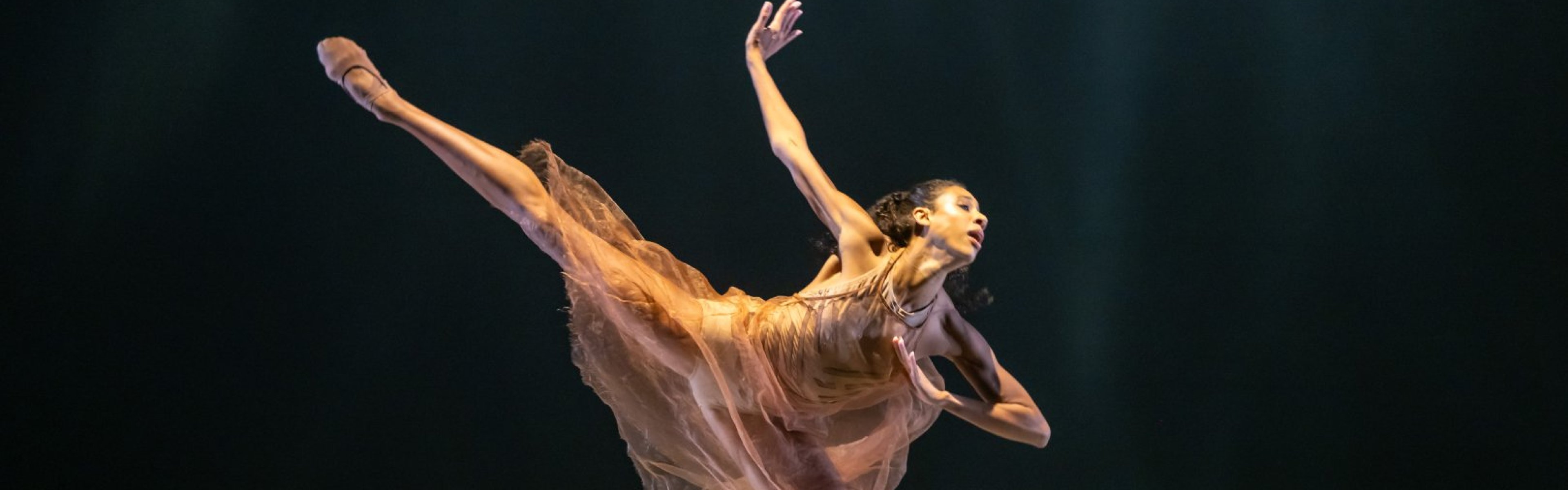
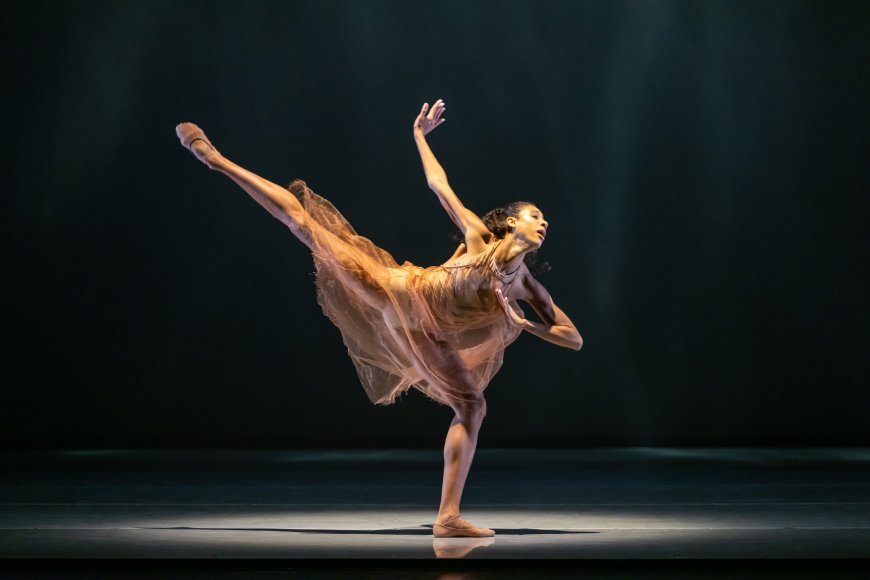
In a striking early scene of LEGACY, an urgent new LINES Ballet work choreographed by Alonzo King with music written and performed by Esperanza Spalding (who often goes by the stylized name esperanza spalding), a dancer stumbles and falls to the ground. Four other dancers rush to lift him to his feet. And then it happens a second time, with help once again on the way.
Straightforward as that action is, it signals some of the hard work this piece — which centers on the theme of heritage in the broadest sense of the term — explores. Later, in a powerful pas de deux that summons that early scene back to mind, the remarkable Adji Cissoko and equally potent Shuaib Elhassan labor in each others’ grasp. When one collapses, the other struggles to carry the weight of them both. And then it reverses and reverses again, until this grappling drive to support each other becomes a visceral, desperate need to hang on and carry on together. The duet is aptly named: “Through Two but Not Two.”
Fitting, too (if a bit grand), is the subtitle spalding affixed to this world premiere, which opened Saturday, April 11 at the Yerba Buena Center for the Arts Blue Shield of California Theater: The Immeasurable Immensity of Your Inheritance.
In 16 sections that flow together in the span of a little over 30 minutes, LEGACY blends solo work, ensembles, and full company sections, all of it bound together with spalding’s music as a flowing throughline. Positioned far stage right and dressed in a wonderful multicolored, bell-shaped gown, she uses plucked melodies on her resonant, patiently unwinding double-bass and her warmly enveloping singing voice to both cast a mood and set up a complex interplay with the dancers. It’s as if the singer and dancers are discovering their deep connections on the spot.
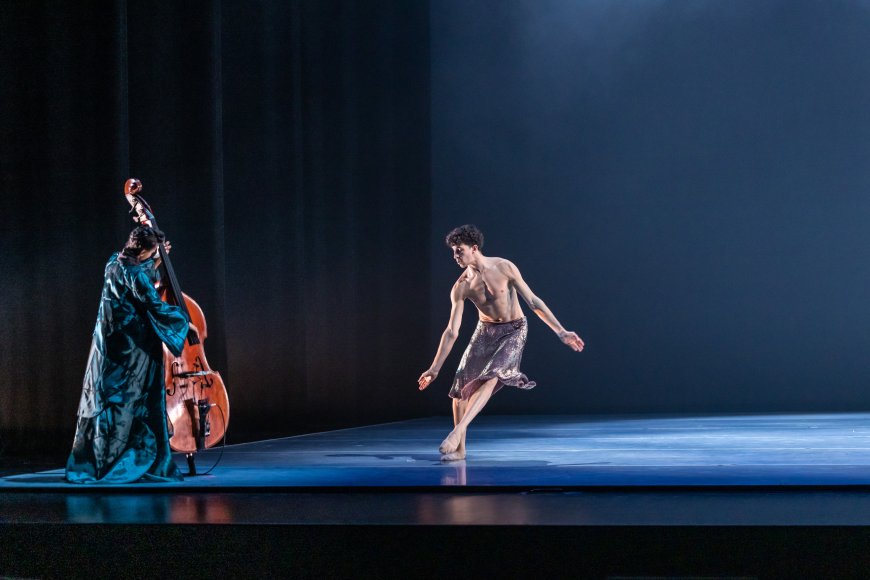
While much of what spalding sings is wordless, the fragments of poetic text that emerge are often on point for the show’s themes of social, cultural, and familial inheritance. “Already always home,” goes one particular choice line.
For much of the way, the dancers barely touch each other. Bodily separation in King’s choreography yields two of the most affecting passages. One comes when a torso-rolling move ripples from dancer to dancer across the stage — a legacy passed down by a subconscious, subliminal force. Not long after, the performers are all on their bellies, writhing and swimming, as if the stage were water — a river to be crossed to the far side with great effort.
Viewers may find many different layers of meaning in scenes like this and others. Even when some of the solos and small ensembles seem to be spinning in place — literally and figuratively — the dramatic and fearless dancers, storming the stage in bare feet and designer Robert Rossenwasser’s sleek and sometimes shiny shorts and skirts, are never less than heroic. Backs flex to the limit; arms and finger snake upward; legs propel gyroscopic turns and spins.
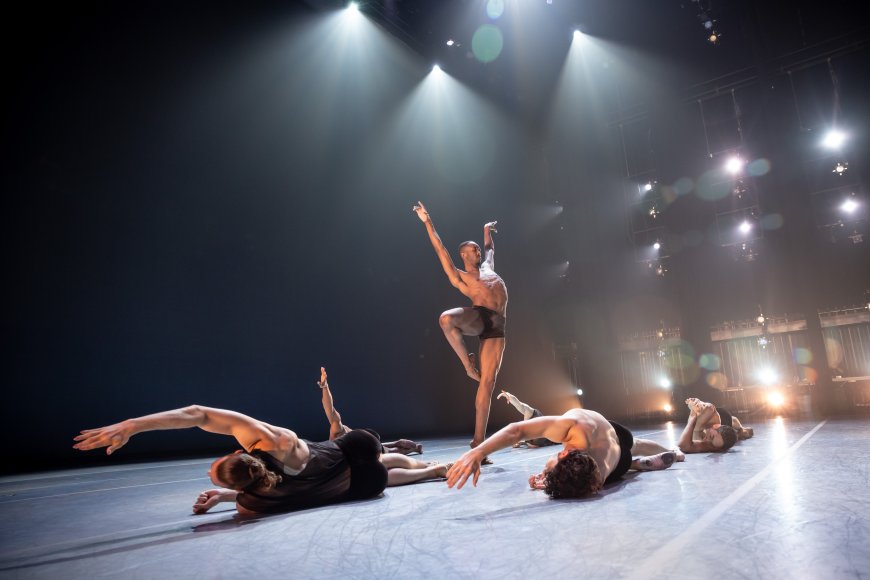
There’s a late bit of humor that turns poignant and won’t be given away here. In the end, the dancers do join hands in what seems to be a coda of communion. But King and isn’t about to wrap things up so neatly. As the curtain slowly falls, three women remain, looking to each other and to us. The struggle continues, their presence says. The hard work of connecting goes on.
A revival of King’s Ode to Alice Coltrane (2024) occupies the second portion of the bill. Set to recorded music by the titual second wife of jazz legend John Coltrane —and a renowned musician in her own right — this expansive suite of dances celebrates a fascinating, complex figure.
Alice Coltrane (1937–2007) was a composer, pianist, and bandleader who turned increasingly to a study of Hindu spiritualism beginning in the mid-1970s. King’s 15-number Ode covers her artistic range and evolution, from “Migration Walking” to a sequence of Hindu spiritual numbers, which marry jazz to Eastern forms, at the end.
The 47-minute work opens with groups of dancers creeping onstage and pressing their ears to the floor, as if to hear this deep-down musical excavation. As they rise to their feet and walk offstage they might be evolving themselves, The Ode has a long-lens sense of time.
In paying tribute to Coltrane, the Ode showcases the power and grace of the LINES dancers. Their attitudes and extensions, space-spanning vaults and sinuous transitions to Eastern stylization of cocked arms and splayed fingers were often exquisite. King certainly has a style, but it rarely feels stylized. In a work of jazz dancing, there are no Fosse-like popped hips or jutting angles. The slender, reed-like Lorris Eichinger stood out on opening night.
An active lighting design by Seah Johnson articulated and heightened the longish piece. As the light sparked like starbursts on the back wall, it was fitting that the compelling Adji Cissoko, who danced the opening number of LEGACY,” should bring the evening to a close in “Going Home.”