Olivier Messiaen’s sensuous, exhilarating, roof-raising, even kooky sonic spectacular, the Turangalîla-Symphonie, is no stranger to the Los Angeles Philharmonic — though it would be for most less-well-staffed orchestras elsewhere. The young Michael Tilson Thomas gave the local premiere in 1972and it has since been a showpiece for three LA Phil music directors — Zubin Mehta, Esa-Pekka Salonen, and Gustavo Dudamel — and Principal Guest Conductor Susanna Mälkki.
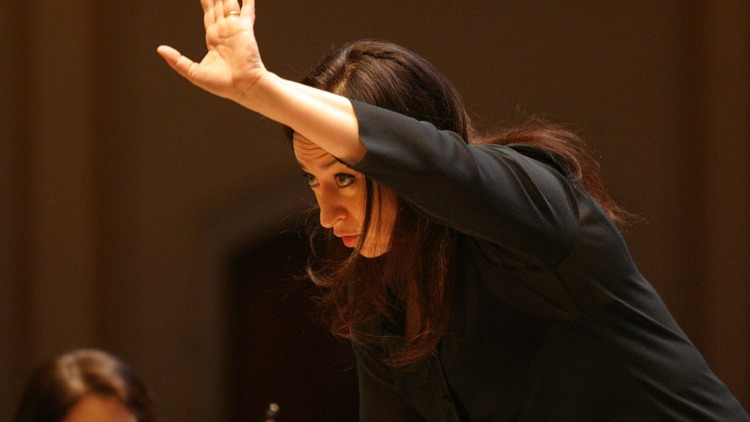
More than seven years after Mälkki’s performance in January 2019, the distinguished Australian conductor Simone Young had a go with it Sunday afternoon, April 12, in Walt Disney Concert Hall. Like all of the other live performances of this work I have attended, it was a blast — literally and figuratively.
More was promised. As originally announced, the “symphony” would have been augmented by special lighting from director Zack Winokur that, according to the publicity, would “highlight Messiaen’s synesthesia, as well as color-specific notations from the score enhancing the immersive experience of the iconic work.” None of that materialized Sunday. Just as well; the music doesn’t need visual enhancement beyond gawking at the strange, antique ondes Martenot electronic instrument that makes the sci-fi-like swoops and sighs.
Count Simone Young as another conductor who completely gets this expansive, 10-movement, 77-minute piece in all its ecstatic, noisy, libidinous, complex, deeply meditative, visionary states. The tempos were mostly urgent, yet Young knew how to draw out the closing cadences of the highly romantic fourth, sixth, and eighth movements to exquisite effect.
The high point of any Turangalîla performance is usually the fifth movement “Joie du sang des étoiles” (Joy of the blood of the stars), a cacophonous, sassy, even subliminally jazzy orgy of sound (ironic, since Messiaen reportedly hated jazz). Too often it is done at too fast a tempo to make it shine, but Young had it pegged at just the right pace, allowing things to get as wild as you could stand. She capped the movement with a crescendo on the final chord that was drawn out as far as it could stretch, bringing the music to a smashing conclusion.
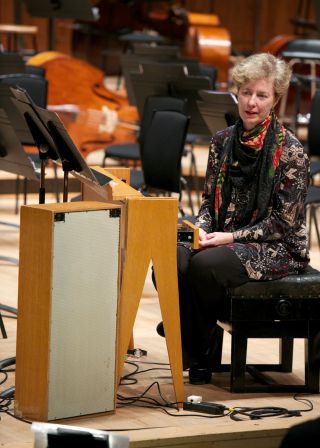
Jean-Yves Thibaudet, who manned the piano in previous Disney Hall performances of Turangalîla in the 2010s, returned for this one, reveling in the hammered passages at the extreme treble end of the keyboard, savoring the droplets of sound sprinkled over the suave strings in the sixth movement (“Jardin du sommeil d’amour” or “Garden of love’s sleep”). Also returning from earlier Turangalîla performances here was the go-to ondes Martenot virtuoso Cynthia Millar, who handled the instrument’s inimitable portamentos with even greater expressivity than ever.
One could nitpick a few things in the LA Phil’s playing that weren’t ideal. The opening minute of the piece sounded ragged, and the trombones, which carry out one of the main recurring motives throughout the work, were sometimes a bit too irrepressible in their enthusiasm, blotting out some of the wealth of detail that Disney Hall can reveal. But none of that got in the way of the onslaught of hedonistic, orgiastic sound that the most devoutly religious major composer of the 20th century was serving up in this huge symphony of universal love.