First performed in 1832, La Sylphide is widely regarded as the first Romantic ballet. The historical nature of the piece is evident in the third revival of former San Francisco Ballet artistic director Helgi Tomasson’s 1987 production, which opened Friday, April 10, at the War Memorial Opera House. Despite some charming ensemble dances, a vivid lead performance by guest artist Alban Lendorf, and some dashes of humor, this Sylphide floats by in 89 minutes (including the intermission) without quite persuading this audience member that it mattered enough.
After seeing La Sylphide in Paris, the Danish dancer and choreographer August Bournonville brought the piece to Copenhagen, where he presented his version with a score by Herman Severin Løvenskiold in 1836. Like most companies, SF Ballet performs the Bournonville choreography, staged in this outing by Ulrik Birkkjaer.
Heavy on pantomime and with virtually no partner dancing, La Sylphide offers a Romanticism of the imagination rather than a passionately embodied telling of its simple Scottish fairy tale. That, along with a Danish style that mandates a certain composure of the upper body and lots of rapid beats, steps, and jumps below, generates balletic mannerisms. It may beguile Bournonville fans and leave others cold.
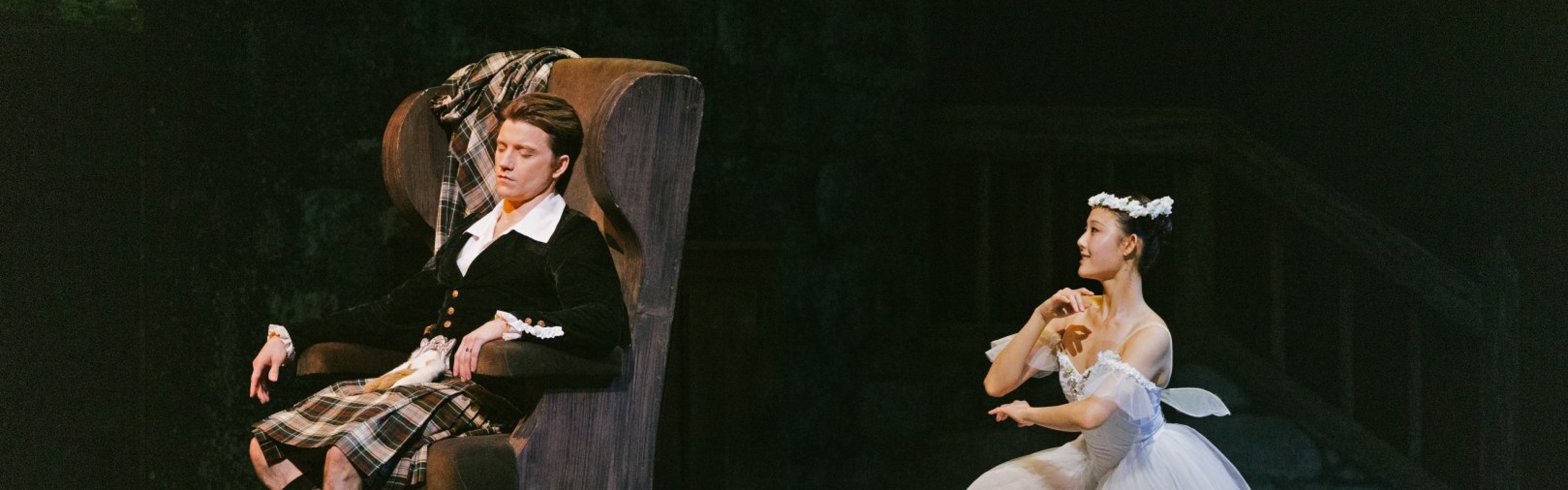
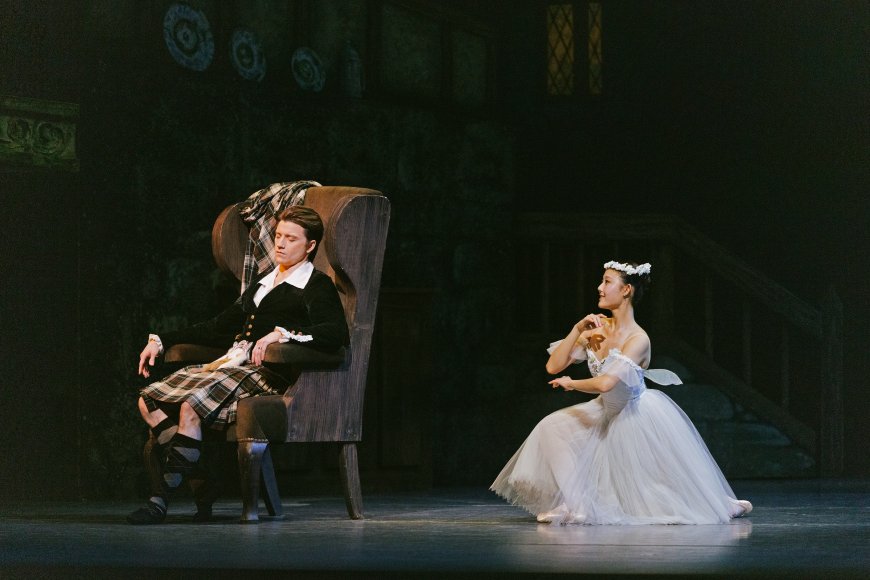
The action, such as it is, begins with James (Lendorf) dozing by the fireplace in his gloomy Scottish lodge room (scenic and costume design by Jose Varona) on the day of his wedding to Effy (Carmela Mayo). Watching over him from behind his chair, like a dreamy apparition, is the winged Sylph (Wona Park on opening night). Circling the room with some initially stiff and gradually more limber steps, she vanishes via one of the production’s nifty bits of visual magic.
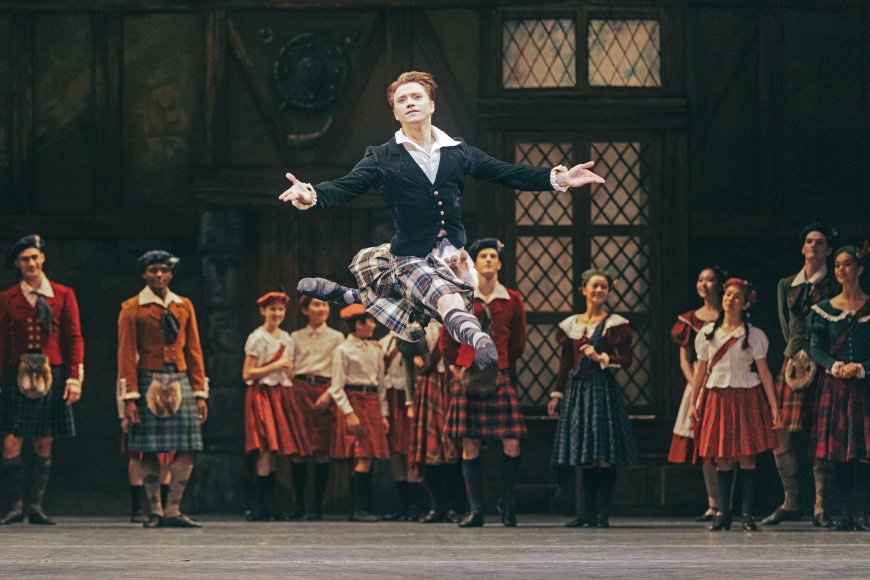
Lendorf, with the slightest shift in posture and long gazes, portrays James’s bafflement and ambivalence convincingly.
Enter a macho, palm-reading witch (Nathaniel Remez as a ferocious Madge) who proceeds to lay out the entire plot in advance. Exit any suspense.
When Effy arrives, her pigtails and puffy sleeves mark her as a material girl. It’s no wonder she ends up with James’s friend Gürn, played by Fernando Carratalá Coloma with a bounding, eager-beaver drive.
The problem, from a dramatic point of view, is that when James leaves Effy at the altar to pursue the elusive Sylph, there’s no real sense of betrayal, since they were clearly never a match in the first place. Never mind. Some jolly wedding reels and line dances aswirl with tartan plaid kilts and gaudy socks take over the stage.
The second act is set in a forest. After a cauldron scene that leaves Madge’s cohort acid-tripping when they taste the brew, James’s pursuit of the Sylph is on. Up in a tree one moment and leaping away across the stage the next, she’s forever barely out of his reach. That’s a good thing, given that the rules of this fairy tale dictate that all is lost if he touches her.

While she may meet the standard of “lightness, clarity and elegance” that Tomasson prescribed for La Sylphide, with her delicate pointe work and bestilled poses, Park missed a measure of spontaneity and allure — her performance was too carefully composed.
But when Park takes a few soft steps with Lendorf at her side, carefully watching and trying to match her toe for toe, you feel the hold she has on him. Besotted, he’s like a child again, just learning to walk. In a poignant duo for cello and clarinet, the sweetest sounds rise from the pit, led by conductor Martin West.
When Lendorf, a former principal dancer with the Royal Danish Ballet and American Ballet Theatre, finally gets to launch, he springs into action with his long limber torso and seemingly effortless, leg-scissoring jumps. His separate-but-equal pas de deux with Park is over all too soon.
Things end just as Madge suggested they would. With one last visual coup, the curtain falls. The short program is over.
In the past, SF Ballet has paired La Sylphide with another work — Alexei Ratmansky’s The Seasons, or Mark Morris’s Drink To Me Only With Thine Eyes. Perhaps such contrast would make one — this one — value La Sylphide more highly. It is, after all, the source of two centuries’ worth of evolution in classical ballet. That alone is worth respectful attention and tribute.