
Harry Bicket spends a lot of time in orchestra pits — he’s the music director of Santa Fe Opera and a regular guest conductor at other opera houses. So, in an all-Mozart program with San Francisco Symphony, it was perhaps no surprise that his concert truly caught fire after the intermission, when South African soprano Golda Schultz came on stage to sing arias from the composer’s operas.
The entire program, heard at the first of three concerts at Davies Symphony Hall on Thursday, Feb. 5, was sleekly, and often speedily, conducted. Bicket used a historically informed approach, using a smaller orchestra with reduced vibrato appropriate to Mozart’s time. But Mozart’s orchestras didn’t play in 2,800-seat halls like Davies, and occasionally the acoustic reverberation turned the orchestral texture muddy. An extra stand or two of violins might have helped the group sound better.
For instance, the first half of the program — the Serenade in D Major, K. 238, “Serenata notturno,” and the Symphony No. 34 in C Major, K. 338 — came across as faceless and in need of more wit and spark.
Bicket led the Serenade and Symphony with precision, and yet neither had an ideal amount of buoyancy and excitement. The slow movements would have benefitted from more relaxation and rubato (rhythmic flexibility). But in the Serenade — scored for strings, timpani and a solo quartet of two violins, viola and bass — principal bass Scott Pingel made a laugh-out-loud comic turn of his last-movement cadenza, as did principal timpanist Edward Stephan and associate principal violist Yun Jie Liu in theirs.
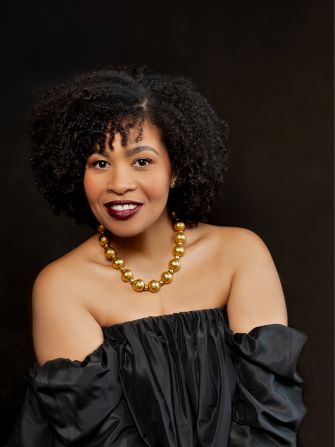
Schultz, with a voice of shimmering beauty, sang one aria from each of Mozart’s three supreme operatic creations with librettist Lorenzo da Ponte. She largely brought the purity of line, verve and drama that they demand, while also adding lovely ornaments throughout.
In the last act of The Marriage of Figaro, Susanna, finally married to her beloved Figaro, anticipates their wedding night in “Deh, vieni, non tardar” (Come, do not delay). Schultz floated the aria as it needed to float, the orchestra properly lilting in the accompaniment. Principal oboe Eugene Izotov was particularly lovely in this aria. If there was any lack in the performance, it was that Schultz sounded a bit less than fully enraptured.
It might be that the soprano has outgrown Susanna, a role usually sung by a light lyric soprano. She now has the heavier roles of Fiordiligi, from Così fan tutte (So do they all), and Donna Anna, from Don Giovanni, in her repertory, and she was notably successful in her selections from those operas on Thursday night.
“Come scoglio” (Like a rock) from Così, is a notoriously difficult aria, its wide-ranging leaps and runs reflecting Fiordiligi’s rage and her determination to remain faithful to her lover Guglielmo. Schultz tore through the aria, on fire all the way, in a thrilling performance,
Likewise, she was electrifying in Donna Anna’s scene and aria from Act 1 of Don Giovanni, “Don Ottavio, son morta… Or sai chi l’onore” (Don Ottavio, I’m dying … Now you know who tried to dishonor me), which falls early in the opera, after Don Giovanni attempts to rape her, kills her father, and escapes into the night. Recent Adler Fellow tenor Samuel White ably joined her in the recitative as Ottavio.
After a huge ovation, Schultz and Bicket came back for an encore, a delightful performance of the concert aria “Chi sà, chi sà, qual sia,” (Who knows, who knows, what it is) K.582.
Bicket’s conducting came alive for the arias and stayed that way through a snappy, exciting performance of the Symphony No. 38 in D Major, K. 504, “Prague.”