“This is divine intervention,” sings Björk as she enters for her guest appearance on “Berghain,” the lead single from Rosalía’s latest album, Lux. If its reception is anything to go by, this record is as close as it gets to divine intervention, or at least some higher form of inspiration.
Björk’s proclamation sounds like a handoff, baptizing a new generation of fluorescent, electronic, avant-pop craftwork. Among recent splashy statement pieces by Rosalía’s contemporaries, Lux might be the most dramatic and successful attempt to rethink the format of the pop album.
Released on Nov. 7, 2025, Lux is the fourth studio album from the Catalan-born Spanish singer, who has already established herself as a global pop superstar. Although Rosalía’s musical personality has always been described as innovative — even recalcitrant — this album in particular marks an ambitious and risky break from her earlier work, as well as from the current conventions of pop writing. Rosalía sings in more than a dozen languages on the record, which also makes prominent use of orchestral textures (courtesy of the London Symphony Orchestra) and choral backing, presenting itself as something close to high art.
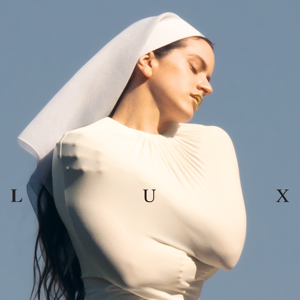
As its Latin title implies, Lux is wrapped in sacred imagery and themes, drawn from the singer’s study of hagiographies, detailing the lives of saints. Appearing in a flowing white habit on the album’s cover — and sprawled topless on white bed linens on the back — Rosalía proposes an aesthetic of divinity that is as reverent as it is unorthodox.
Musically, the record unfurls not like a series of independent tracks — more the norm in the streaming era — but as a single, unified experience that demands to be taken in as a whole. Its sonic palette is sweeping and luminous, with Rosalía’s bright, agile voice as its beating heart. Her training in flamenco cante leaves little trace of a specific tradition’s stylistic trappings; instead, it gives her voice license to range across registers and expressive modes, from fragile intimacy to stunning spectacle. Rosalía’s navigation between these extremes reflects the question posed on the opening track, “Sexo, Violencia y Llantas”: “Quién pudiera vivir entre los dos / Primero amar el mundo y luego amar a Dios” (Who could live between the two / First to love the world and then to love God).
After a piano introduction, Rosalía intones that question in a weaving, cantorial style, accompanied by a single cello line. She then repeats a series of related questions in a declarative, almost defiant rhythm over a punchy synth bass, soon joined by lush orchestral strings. With its constantly shifting pacing and declamatory vocal style, this opener serves less as a standalone song than as a prologue to what is to come.
The album runs 49 minutes in its digital version (the CD and vinyl editions include three extra tracks — “Focu ’ranni,” “Jeanne,” and “Novia Robot” — that are unavailable digitally). While orchestral strings often simmer in the background, the tracks create remarkably varied soundscapes that sum to a coherent and expansive total experience.
On “Divinize,” a processed piano ostinato provides a steadily thumping but hushed groove for one of the record’s more straightforwardly “pop” moments. “Mio Cristo Piange Diamanti,” sung entirely in Italian, is a pleading, passionate ballad — perhaps the closest the album gets to the rhetoric of an opera aria, although Rosalía’s singing here is wonderfully delicate, almost quivering in its vulnerable rasp.
“Berghain,” the single that features Björk along with the versatile producer, Yves Tumor, has Vivaldi-like rocketing violin arpeggios and a fearsome choral backing, sung in German, for one of the record’s most heavily “classical” orchestrations. “La Perla,” a wry, winking waltz, offers a lilting respite from the otherwise severe atmosphere, with charming plucked acoustic guitar and flamenco-tinged harmonic spice.
One of the album’s most poignant moments is the piano ballad “Sauvignon Blanc,” which is perhaps more conventional in its verse-chorus structure than the rest of the album. By the time we’ve gotten here, the album’s monumental conceit has had time to sink in — but the total, genre-bending experience can start to sag under the weight of its own maximalist melancholy.
Since its November release, Lux has been received as an event, giving Rosalía her first top 10 album on the Billboard 200 and earning lavish praise from critics. Reviewers have described the album as “demanding” and “quite a big ask” because it refuses the bite-sized logic of the playlist, insisting instead on ritualistic monumentality and scale. What makes Lux feel unfamiliar, even exhausting, is its attempt to thematize a binary that has occupied philosophers for generations: the duality between the worldly city of appetite, glamour, and eroticism, and the City of God, invoked by the album’s hagiographic and liturgical apparatus.
Using her music as a stage for that tension, Rosalía proposes a new vision for the pop album: not a mirror for relatability, but a vessel for longing that points beyond the self.