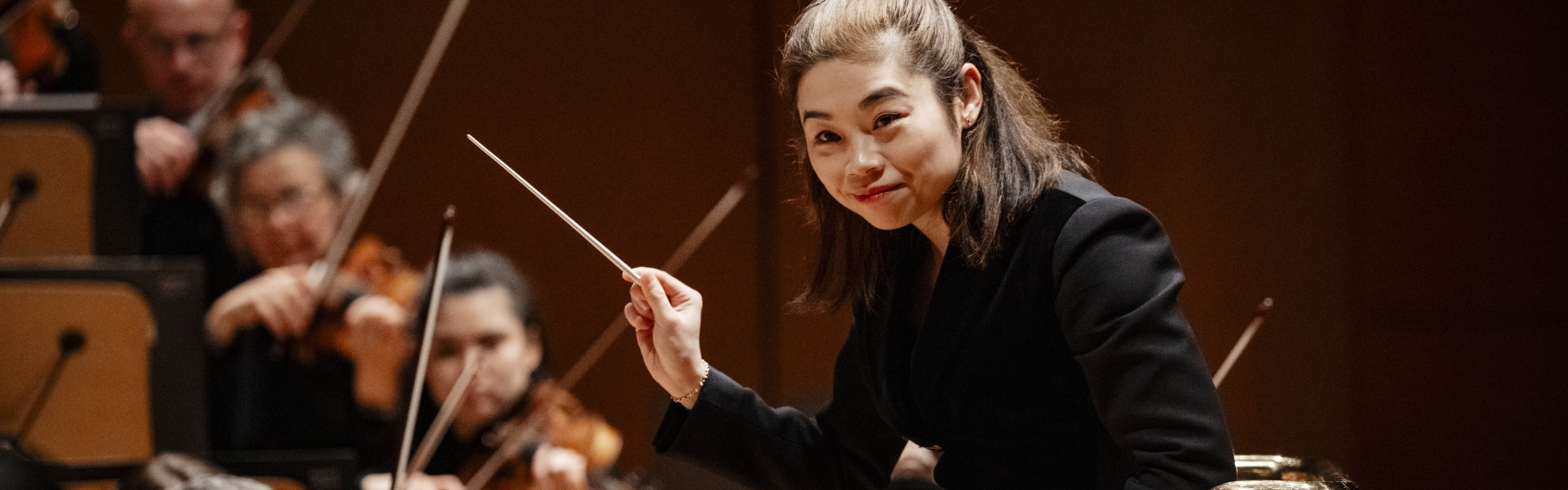
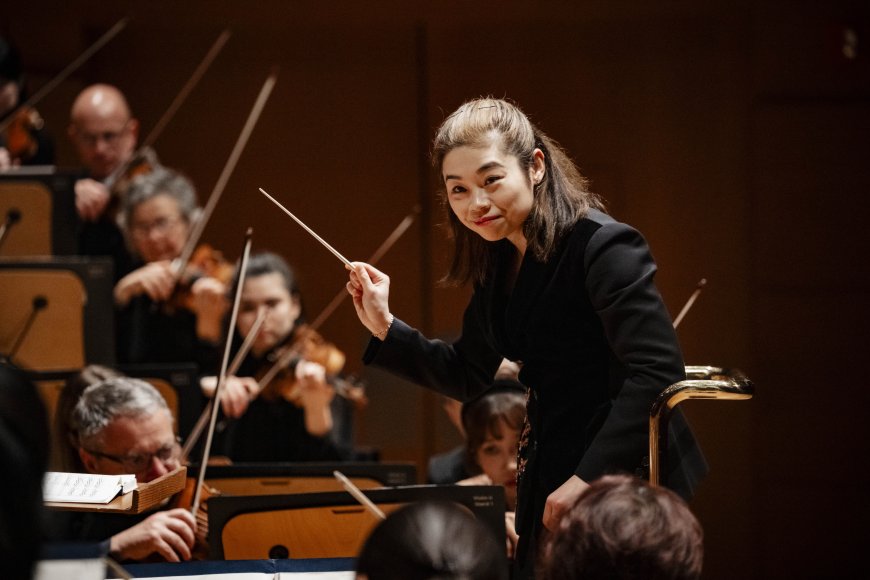
On Jan. 29, Elim Chan settled in for another concert with the Los Angeles Philharmonic. Since she is likely in the running for the orchestra’s soon-to-be-vacant music director post, attention was paid.
There was no guest soloist on the agenda Thursday night, just Chan on the podium — a distinction usually reserved for established, star conductors.
The program was a delectable selection of European classics from the dawn of the 20th century, with not a concerto in sight. It was apparent that Chan’s musical connection with the LA Phil is deepening; the orchestra responded faithfully to the subtle and extravagant gestures in her repertoire. She’s good — there’s no doubt about it.
Maurice Ravel’s Le tombeau de Couperin — a heartfelt memorial to friends of the composer who died in World War I — is one of his most emotional compositions. It is perfectly crafted and balanced, and yet capable of delivering a wallop that is simultaneously poised and poignant. I can’t get enough of it, whether in its original six-movement solo piano form or Ravel’s four-movement orchestral expansion.
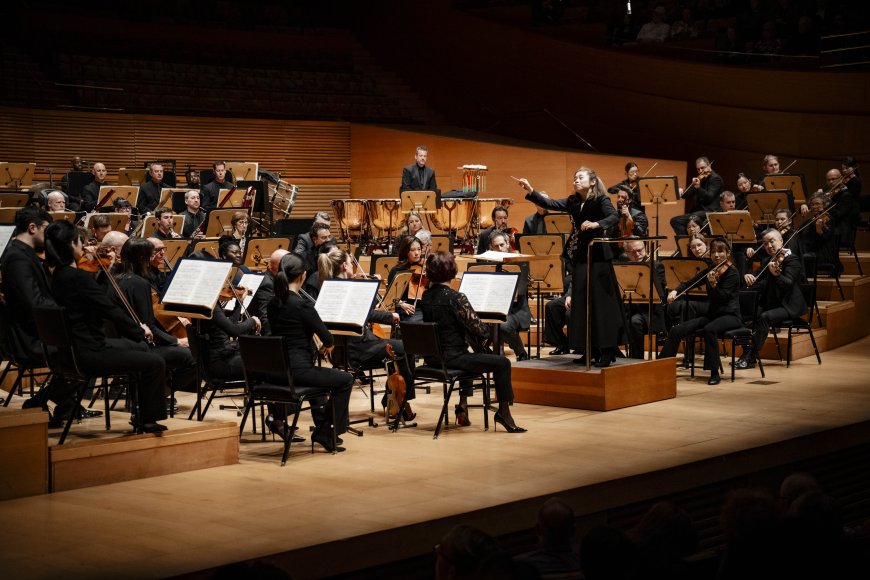
At the start of the concert, Chan and the Phil came swiftly and fluidly out of the gate in the Prelude — with personalized phrasings and attacks in the Forlane, exquisite control of dynamics in the Menuet, and a very fast and frisky Rigaudon, including a special nod to Ryan Roberts’s lovely oboe solos.
Béla Bartók’s Dance Suite was next — six movements that contain a wealth of Hungarian, Romanian, Arab, and even Asian influences, as well as Bartók’s penchant for drifting night music and occasional pungent dissonances. The LA Phil was an early adopter of Dance Suite, performing it first in 1929 — just six years after the world premiere — but the orchestra programs it infrequently nowadays.
Chan was at her best here, with painstakingly graceful conducting for the more lyrical passages, and abrupt gear shifts that echo the title of the Unsuk Chin piece she led at Hollywood Bowl, subito con forza (suddenly with power). Even so, there were touches that could have been a little more ferocious — like the sliding trombones in the second dance.
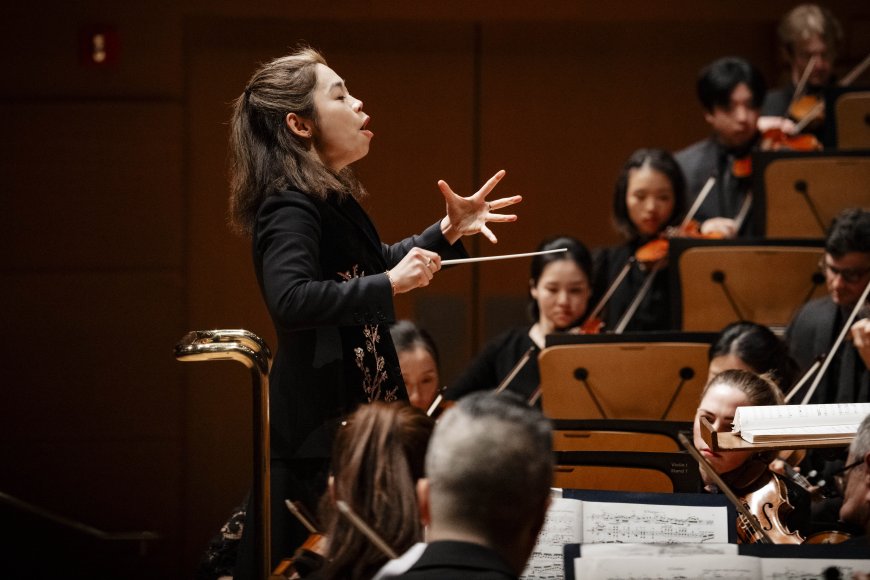
Gustav Mahler’s Symphony No. 4 is, of course, no stranger to the concert hall. But in contrast to the majority of Mahler Four interpretations heard today, Chan reverted to an older tradition of fleeter tempos. She basically followed Mahler’s detailed instructions, while maintaining a unified pulse to ensure the work’s sudden fluctuations occurred in context with the overall picture.
There are two massive climaxes in the first and third movements, and Chan spurred the orchestra to a room-filling volume. There was plenty of forward motion and cantabile feeling in the slow movement, but one could not quite sense the depths beneath the deceptively placid waters. Not yet, at least.
Soprano Masabane Cecilia Rangwanasha displayed a full, thick timbre more akin to that of a mezzo-soprano — not exactly reflecting the voice of a child describing the delights of heaven, yet singing sweetly with a comfortable vibrato. Chan deftly shaped the contour of the vocals from the podium and let the final notes of the harp and double basses fade slowly into the distance, only to have any potential silence afterwards scuttled by immediate applause. Alas.
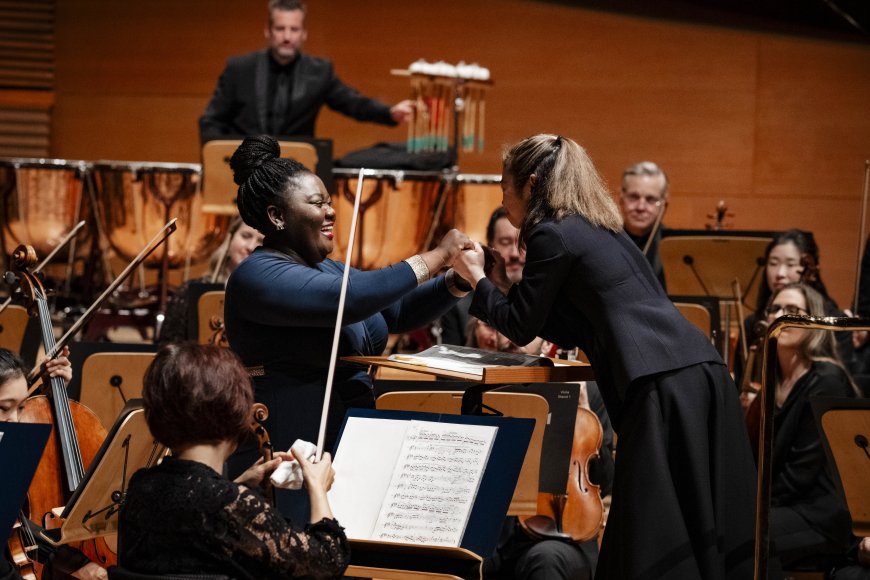
Attendance was relatively light, and the Phil didn’t sell seats behind the orchestra, making the hall seem emptier. It’s no matter, though, as Chan seems to be developing a following here, judging from the audience’s frequent whoops of delight.