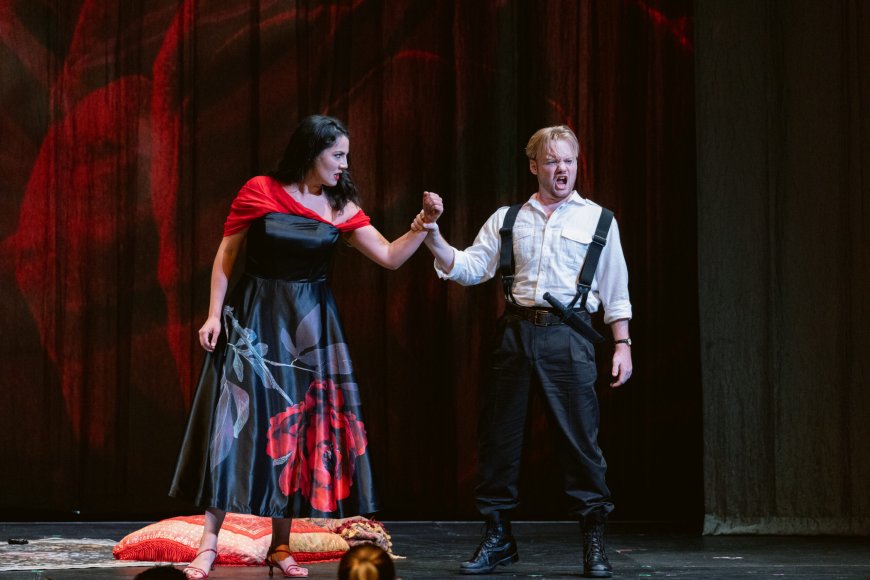
The audience for the Merola Opera Program’s “La Tragédie de Carmen” gets more or less what it may expect. The “more,” unfortunately, is what delivers less.
At a runtime of 80 minutes, theatrical master Peter Brook and composer Marius Constant’s 1981 distillation of Georges Bizet’s 1875 grand opera can be a propulsive, emotionally concentrated tale of love, lust, inconstancy and murder. A strong 2015 Merola production proved how well it can work with training program singers.
In a new production that opened a two-performance run on Thursday, July 9, at the San Francisco Conservatory of Music’s Caroline H. Hume Concert Hall, this year’s cohort isn’t as successful.
Director Mo Zhou and her collaborators overload the piece with extraneous action, murky and symbol-laden projections (by Camilla Tassi), and static blocking. The result undermines the potency of “Tragédie.”
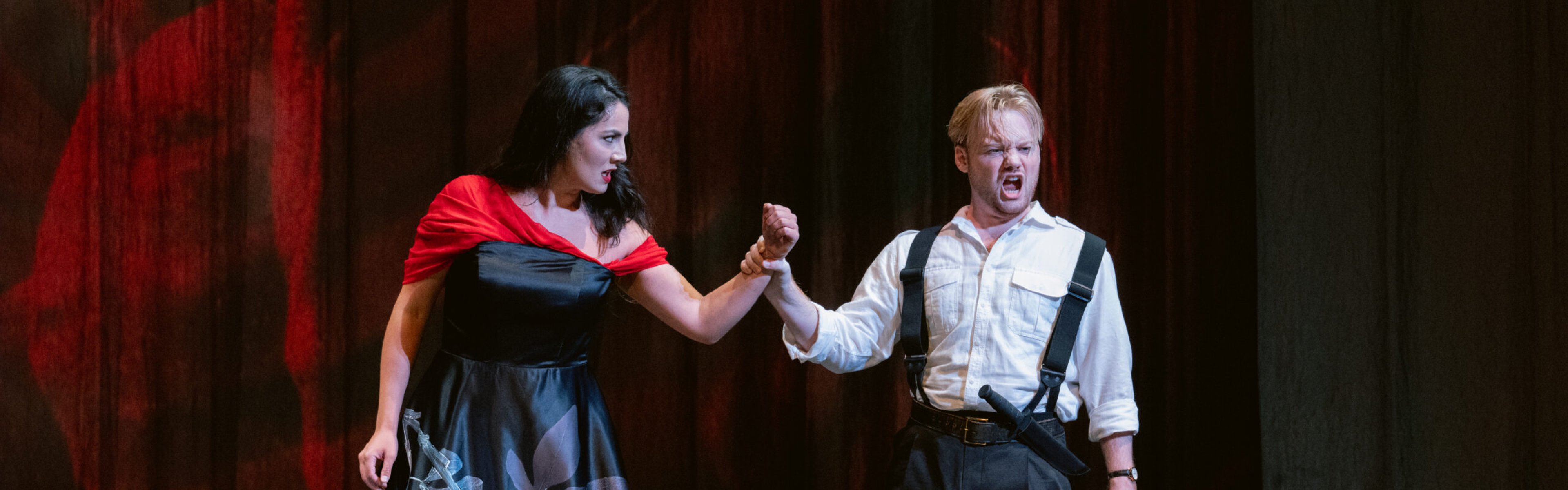
The performers tend to look inert, standing around waiting to sing or otherwise defusing the action. This is especially exemplified near the end, when the spurned lover Don José (Charles Styles) and Carmen (Ariana Maubach) march zombie-like offstage, just as a combustible encounter is about to catch fire.
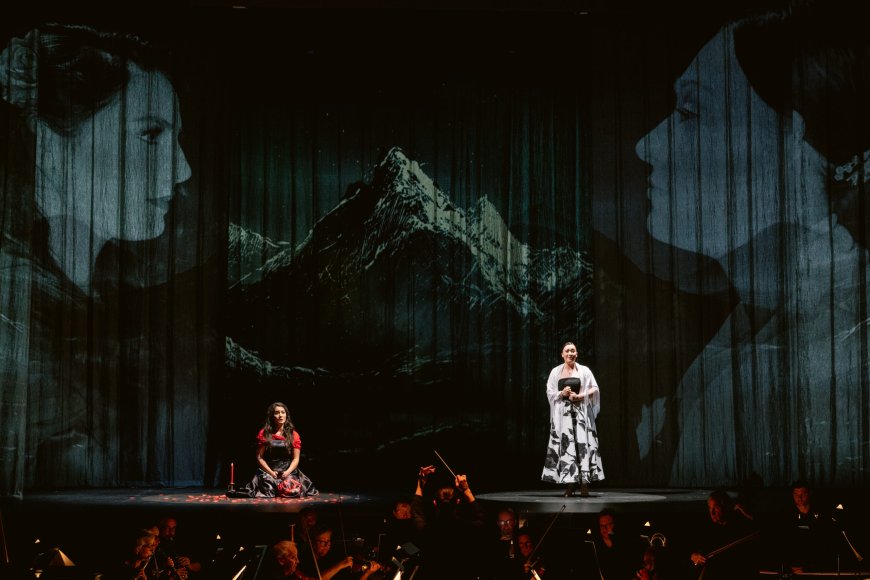
Since Zhou conceals Carmen in a spooky hooded costume at the outset and offers a post-mortem redemption for her at the opera's conclusion, the actors at times play against the material. The overused red roses, onstage and on the pleated projection screens, summon thoughts of “The Bachelor.”
On a more positive note, there are two impressively dynamic voices among the cast of four singers. Maubach’s mezzo-soprano is a big instrument. She makes it gleam in the “Habanera,” then follows up with a bewitching “Seguidilla” and the so-called “Gypsy Song.” If her moves aren’t always as beguiling as her voice, that’s a downside many listeners won’t mind.
As the black-clad bullfighter Escamillo, bass Raúl Morales Velazco blasts his character’s vanity and thundering ego into every measure of the “Toreador Song.” He’s pretty dashing with a cape as well.
Soprano Anna Thompson has a bright, clear voice that blends well with Maubach’s in their duet. But her Micaëla, the hometown girl who brings a message to Don José of his mother’s love — and her own — lacks the sweet, guileless innocence that ought to melt a listener’s heart.
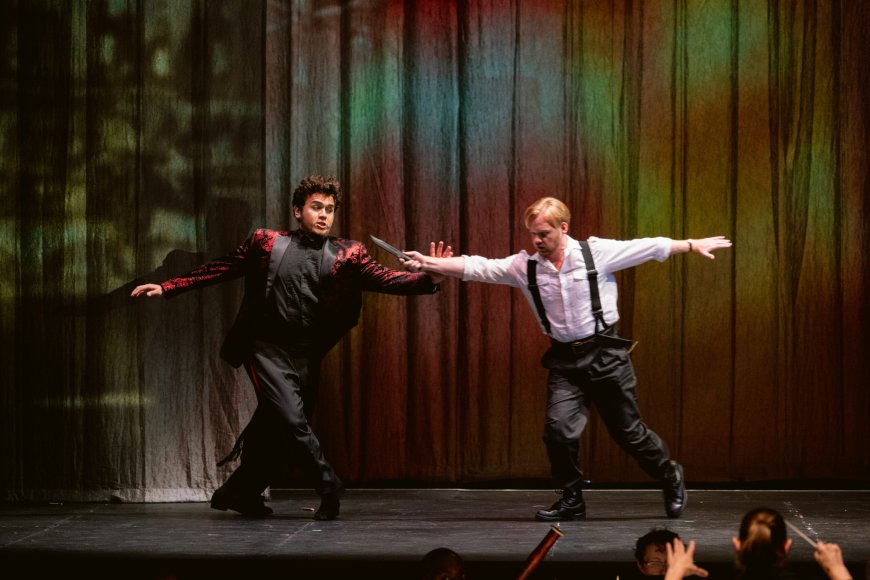
Tenor Charles Styles struggles to carve out the self-destructive path of a man who is obsessed with the impulsive Carmen. His voice sounds stretched at the high end and lacks urgency in the lower register. Given the reliably high caliber of Merola singers over the years, he may simply be in a role that doesn’t serve him well.
Stephanie Rhodes Russell conducts a 16-member orchestra. After some intonation problems early on, the musicians comported themselves well on opening night. Stacey Pelinka’s sweetly yearning flute solo was a highlight.
As the opera heads for its convulsive climax, Brook works a startling effect into his distinctly stamped “Carmen.” The onstage orchestra falls silent as a recorded full orchestra takes over. In a 2015 interview with the Guardian, Brook offered a puckish explanation for the choice: “An audience always needs a lift three-quarters of the way through a show.”
Brook was a fearless and intuitive artist. If this account of his “Tragédie” blurs his acute vision somewhat, seeing and hearing young singers in their best moments signals great things to come.
Steven Winn is a freelance writer. This review has been provided in partnership with San Francisco Chronicle.