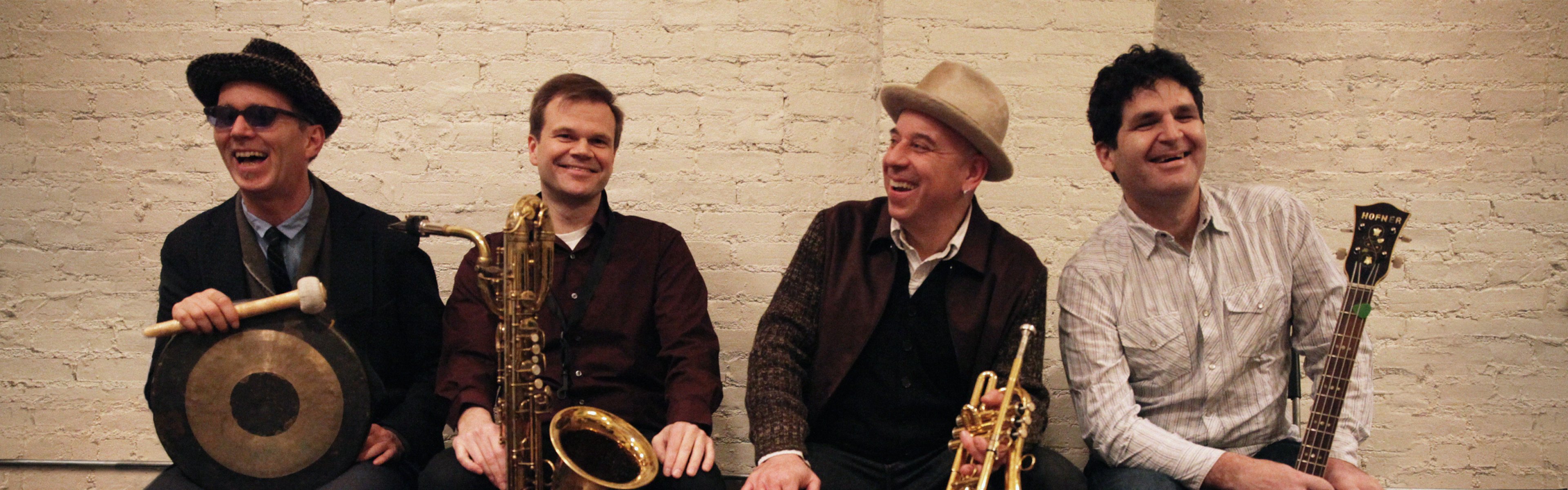
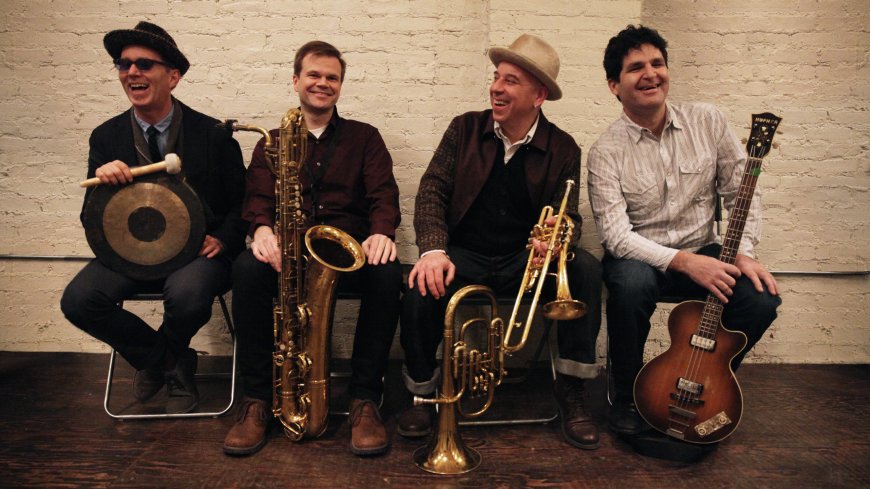
There generally isn’t much nudity at a Sexmob show. The performances are mostly safe for work, if a job site isn’t averse to an orgiastic outpouring of familiar songs reimagined via freewheeling improvisation.
Over three decades, the New York quartet has devoured everything in its path: Nino Rota film scores and James Bond themes, Sly and the Family Stone anthems, James Brown funk, and pop songs from Abba and Prince to Nirvana and the Beatles. It seems no song is safe from serving as creative fuel for Sexmob on the rampage.
“What makes a Sexmob song? Something we can translate into our language, and there’s often that moment, eventually, when people will recognize it,” said Sexmob founder Steven Bernstein. “The whole point of a Sexmob show is that moment when it’s like, ‘Is that what I think they’re playing?’’’
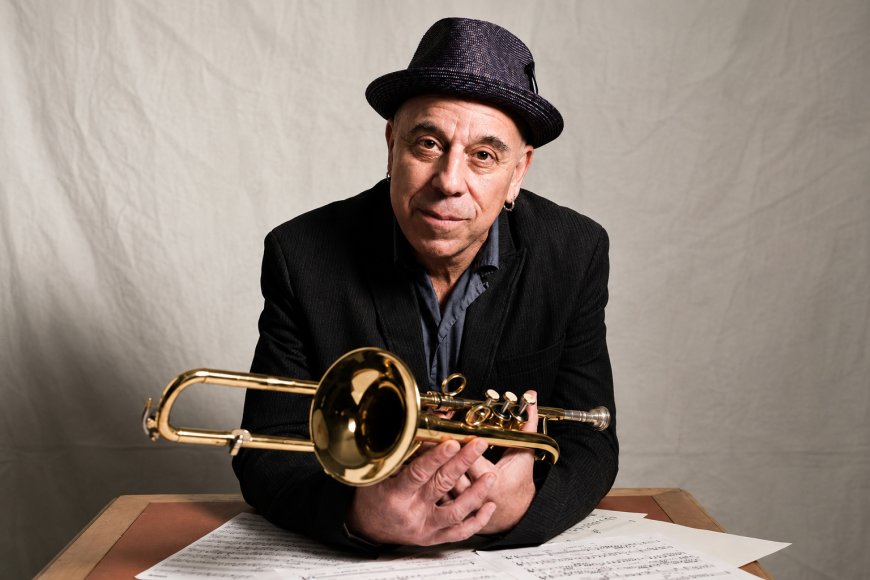
The Berkeley-reared trumpeter founded the group in 1995 for a wee-hours slot at the Knitting Factory, and Sexmob (also known as Sex Mob) quickly infused the jaded Downtown scene with a bracing jolt of unabashed gusto. Sexmob doesn’t eschew irony, but rather, embraces the ridiculous, sublime, and everything in between. In doing so, the virtuosic quartet brings total commitment to Bernstein’s populist playlist and seat-of-the-pants arrangements.
Returning to the SFJAZZ Center’s Joe Henderson Lab for its third four-night, eight-show residency July 16-19, Sexmob features its founding cast of oversized characters with Briggan Krauss on alto and baritone sax, Tony Scherr on acoustic bass and guitar, and Kenny Wollesen on drums and sundry percussion. Billed as “Psychedelic SF Grooves,” the first two nights feature special guest guitarist Liberty Elman on a program that taps into the sounds Bernstein heard in the late 1960s as a precocious grade schooler in the Berkeley public school program that infused classrooms with jazz and improvised music.
“I grew up with Big Brother & the Holding Company and Jefferson Airplane,” Bernstein said, while noting that in 2023 he played trumpet at the Fillmore for Hot Tuna’s final electric show. “‘White Rabbit’ has been a Sexmob tune for a long time, so I didn’t have to come up with a completely new set of songs.”
The second half of the residency features guest percussionist John Santos on a program billed as “Latin Bay Area Soul.” Not surprisingly, Bernstein has his own idiosyncratic take on the music. While he hails Cal Tjader’s role in popularizing Cuban grooves on the Bay Area jazz scene in the 1950s and ‘60s, Sexmob is looking at the Latin rock movement embodied by Santana, Malo, and Azteca, “which means you’re looking at Pete and Coke Escovedo, who bridge Latin jazz and Latin rock,” he said.
“What happened was that so many bands in the Bay Area had congas in them. Tower of Power had congas early on. That’s the Afro-Cuban, Latin side in the Bay Area. It was part of the zeitgeist, electric guitars and congas. That’s not what they did in New York.”
Bernstein’s musical focus extends far beyond the Bay Area. Sexmob spent months traveling the world with performance artist Laurie Anderson back in 2023, a project documented on the triple Nonesuch album Let X=X (Live), which added Doug Wieselman to the Sexmob fray on winds and guitar. Anderson has been developing a whole new set of material, and hits the road with Sexmob again, though this time the group includes Mazz Swift and Christina Courtin, violinists and vocalists “who are incredible, Juilliard trained and know how to improvise,” Bernstein said.
Anderson takes Sexmob on the road for a series of California dates in the fall, playing Ojai’s Libbey Bowl (Sept. 23), Los Angeles’ Orpheum Theatre (Sept. 24), the Curran Theatre in San Francisco (Sept. 25), and Santa Cruz’s Rio Theatre (Sept. 26). Aside from two Let X=X pieces, “it’s a brand new show, with new themes, stories and visuals,” Bernstein said. “Laurie is playing way more violin on this tour. It’s incredible, three strings improvising together.”
As usual, Bernstein’s horn runneth over. Sexmob is getting set to release a new live album recorded on the final night of a European tour. And his longest running association, the Kamikaze Ground Crew, is preparing to release a new project extending the antic avant-circus music sensibility it first honed as the house band for the Flying Karamazov Brothers. He’s also working on the score for a modern version of The Threepenny Operathat uses Kurt Weill’s original orchestrations. “I’ve done Ellington, Nino Rota, and Mingus,” he said. “Kurt Weill is the last of the big 20th century composers I want to tackle.”
Behind his wildman persona, or perhaps informing it, Bernstein is one of the key arrangers on the New York scene. Whatever the situation or setting, he’s earned a reputation for crafting vivid, kinetic, and highly playable charts. In his own projects he’s stretched his arranger’s wings most spectacularly with the Millennial Territory Orchestra, a romping, stomping little big band that extends the repertoire of 1920s and ‘30s Midwestern dance bands.
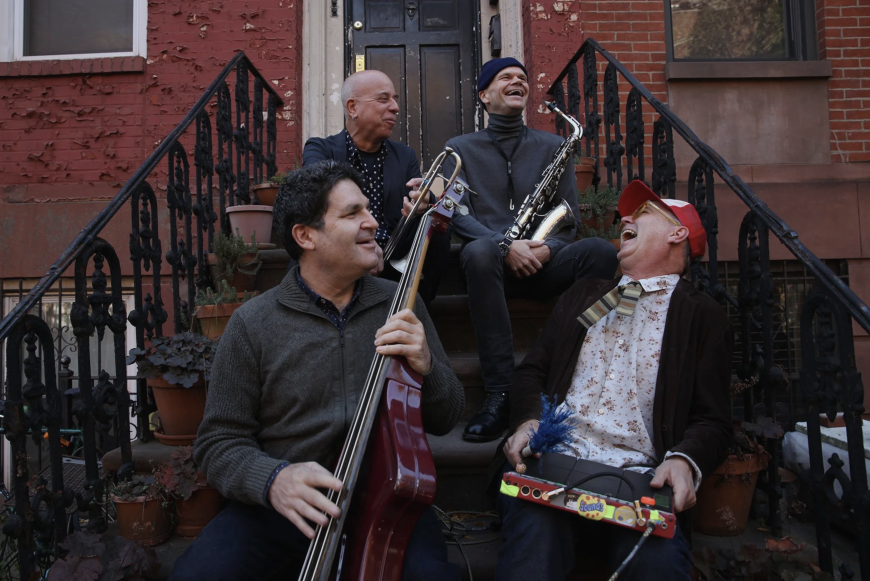
Berkeley clarinetist Ben Goldberg has performed several times with Millennial Territory Orchestra West, as well as Bernstein’s Diaspora Soul project. When it comes to his arrangements, Goldberg has been influenced by Bernstein’s exacting standards. “I feel like he’s been a model of good bandleading,” said Goldberg, who releases a duo album with Sexmob percussionist Kenny Wollesen, Dog Hypnotic, next month. “Specifically, when he has a very specific idea of phrasing or rhythmic approach, he communicates it super clearly and doesn’t settle for anything less. When everybody’s been informed about what needs to be approached in a particular way the flip side is the part of the concert that has freedom is real freedom. That’s a model for me.”
The tension between control and chaos is part of what makes Sexmob so, well, sexy. There are danger and vulnerability woven into every set. It’s a highwire act where rather than plunging to their doom the artists are more likely to somersault back to the line, emboldened to take yet another leap.
“I read Sammy Davis Jr.'s autobiography Yes I Can, and he says that what audiences are going to remember are not shows that went perfect,” Bernstein said. “They remember shows that almost fell apart, but that you pull together. They're going to go home and say, ‘Man, I just saw a guy who pushed it to the limit.’ I use that as my philosophy.”