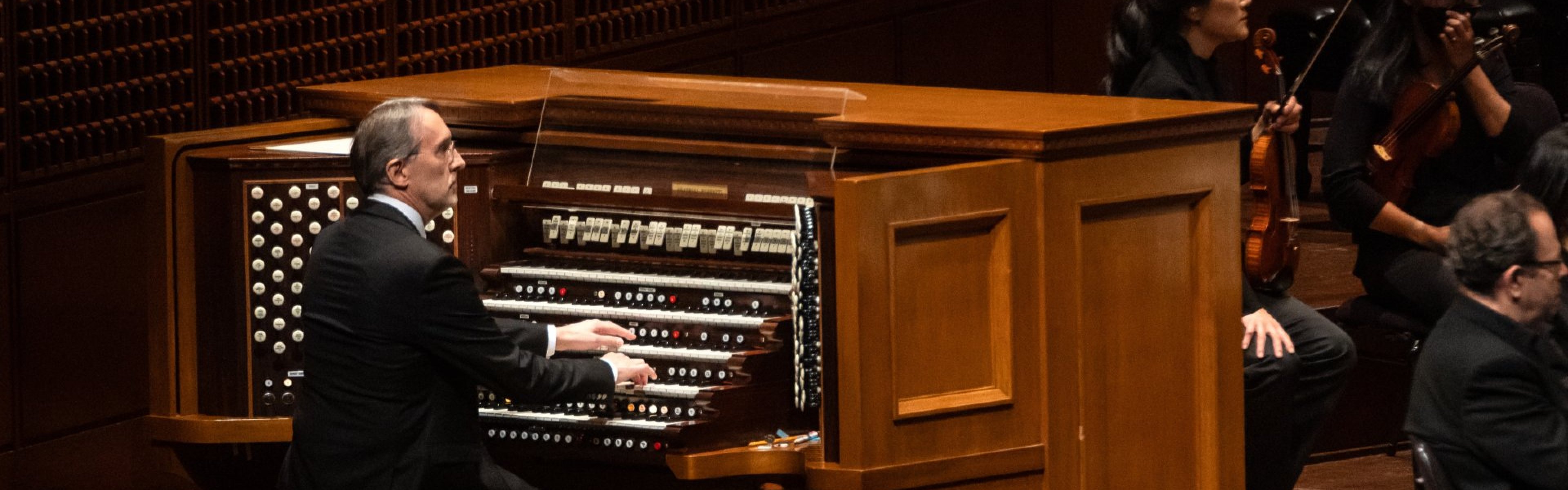
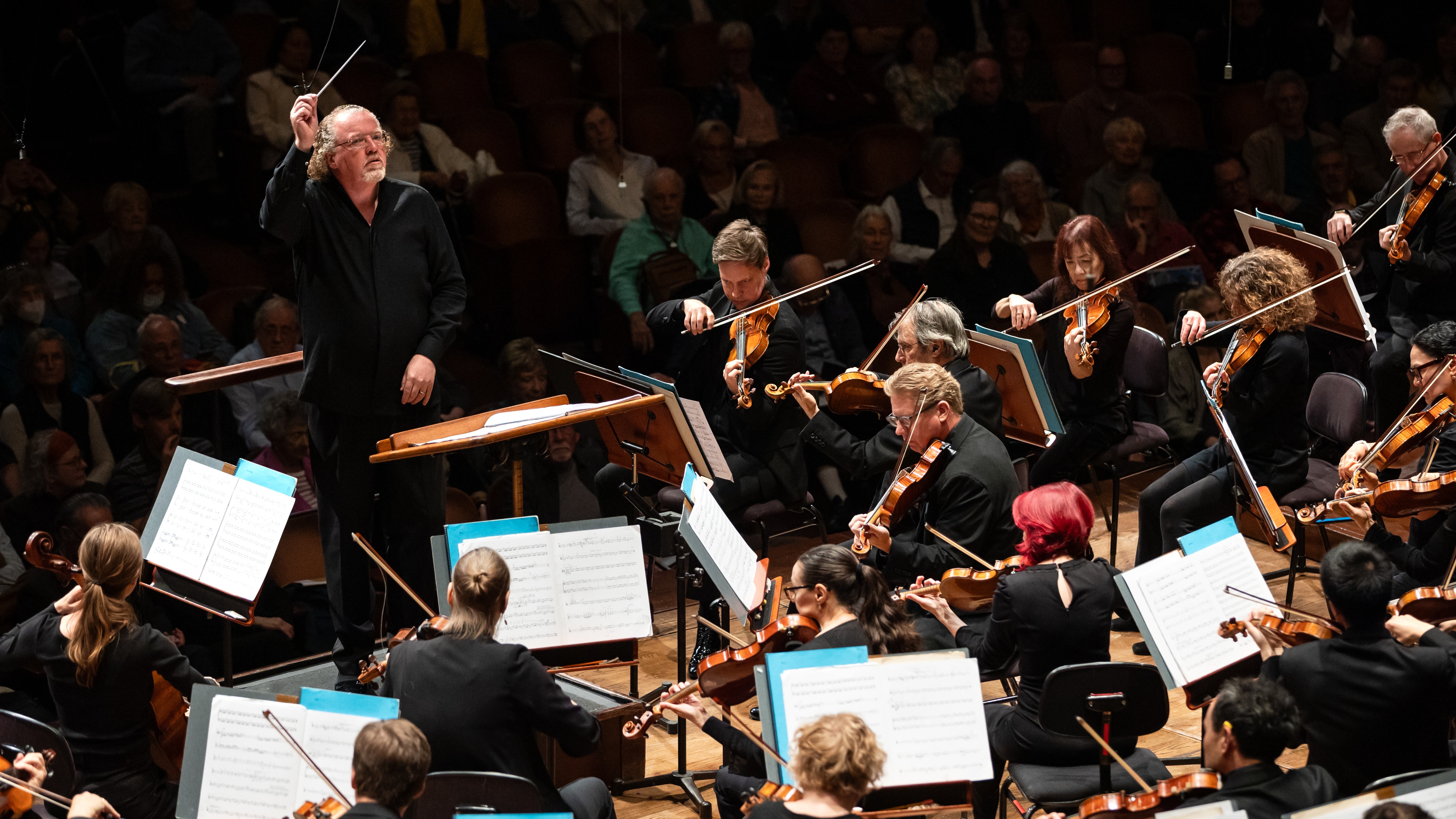
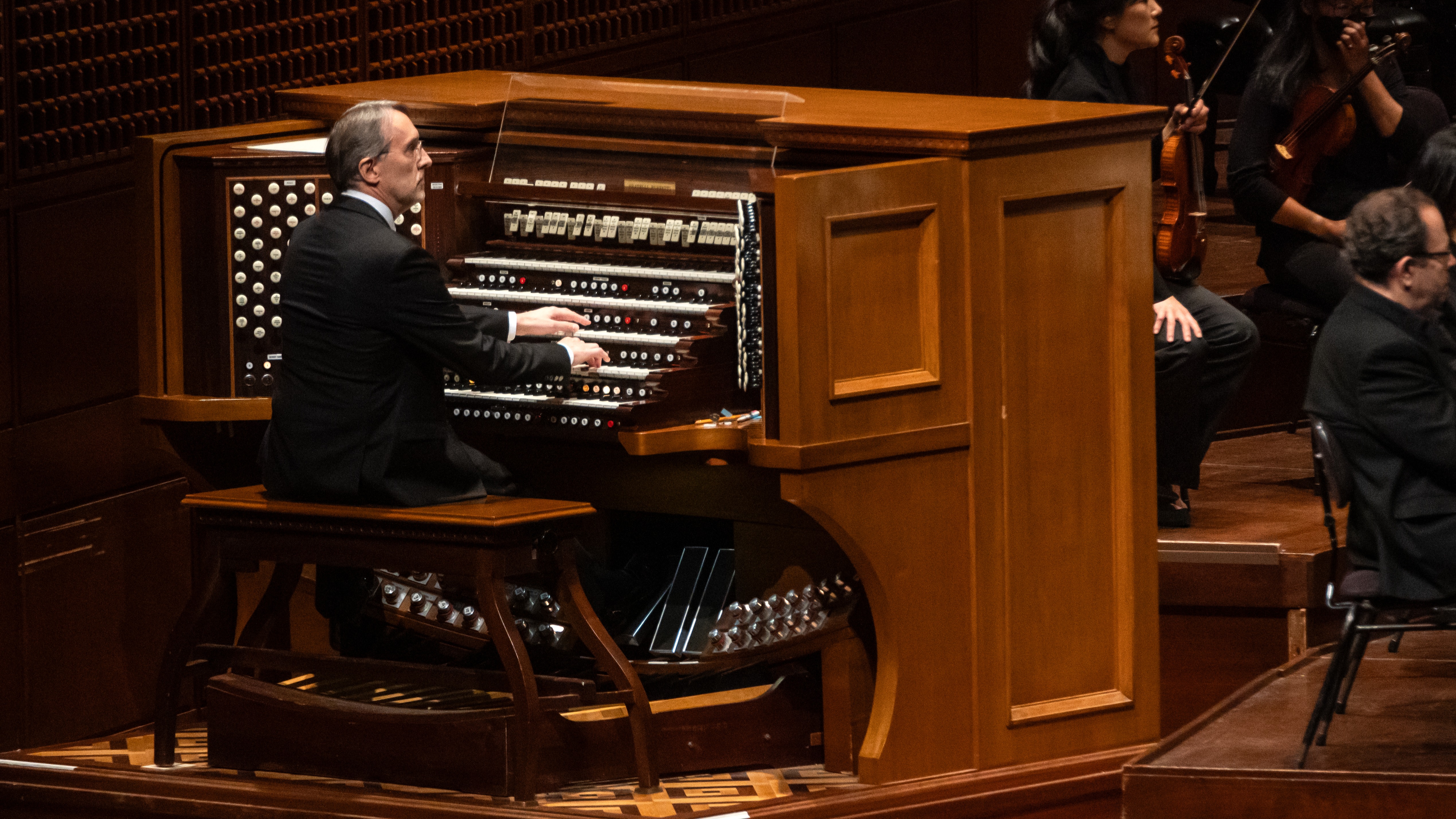
The San Francisco Symphony’s concert on Thursday afternoon occasioned a very special guest — one who’s been around for decades but only rarely comes out to play: the enormous, magnificent Ruffatti Concert Organ.
Commissioned specifically for Davies Hall from the Padua firm Fratelli Rufatti, it was, at 8,000-plus pipes, the largest concert organ in North America at the time it was installed, in 1984.
If you’ve ever felt indifferent or annoyed by the organ, or written it off as a church thing, guest conductor Stéphane Denève and legendary organist Olivier Latry have come together, in a dream pairing, to convince you otherwise. In a concert of repertory standards, at least as far as organ works go, Denève, Latry, and the Symphony made a genuinely thrilling case for the organ as versatile, multicolored, and profound.
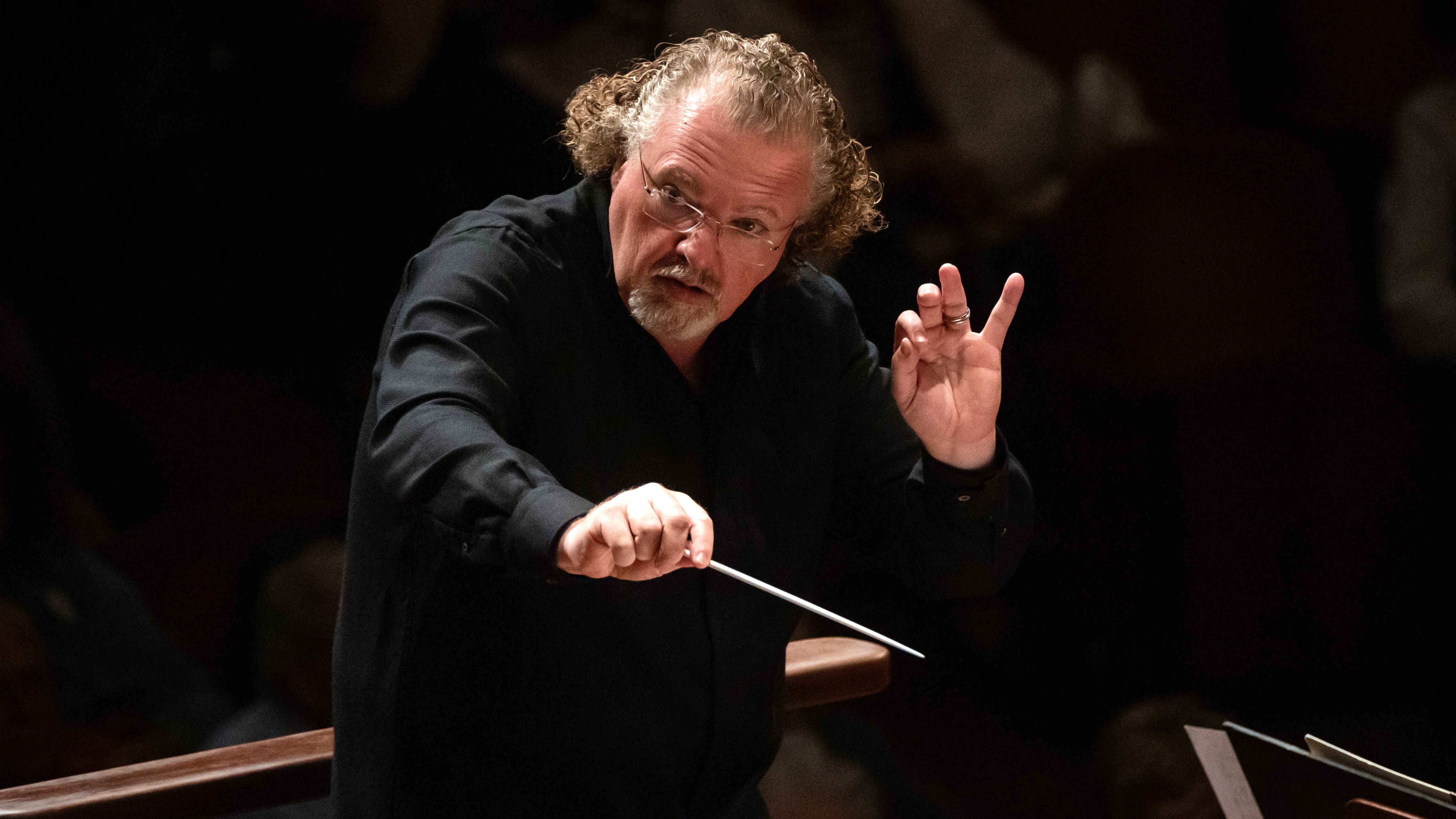
Denève explained that the program’s three works all have German antecedents, particularly Beethoven. This is basically true for all music in the century after Beethoven, even the many French composers who made it their mission to resist the German Romantic flavor.
And it’s true today. The concert opener, Guillaume Connesson’s brief 2012 symphonic poem Flammenschrift (“fire-letter,” a quotation from Goethe), is a tribute to Beethoven and German music generally. In that, it succeeds: it has forceful themes, quick contrasts in intensity and timbre, and brief moments of lyricism. (Drolly, its self-proclaimed “double-sonata form” also perfectly captures the German penchant for almost inaudible — maybe even irrelevant — formal structures. Still, its forceful, colorful march made these 12 minutes a welcome remix of a familiar aesthetic.
The organ then arrived for Francis Poulenc’s Organ Concerto in G Minor and Camille Saint-Saëns’ Symphony No. 3 in C Minor, “Organ.” Despite being composed decades apart, the two share a gleeful sense of experimentation, using the instrument to reimagine the structure even the very existence of the symphony genre. Yet there remains a profound difference between the pieces, one that Denève and Latry rightly accented in their thoughtful performances.
On the eve of the apocalyptic Second World War, Poulenc had veered far from his playful iconoclasm and adopted a more serious style. The 1938 Organ Concerto was written at the moment when Poulenc reinvested in his Catholic faith. He imbued it with religious allusions, particularly in its opening and closing organ fanfares, which undeniably conjure J.S. Bach’s foreboding Fantasia and Fugue, BWV 542.
The concerto alternates between devilish sprints and slower, more pensive responses. Poulenc manages to pack in a parade of surprising references: the obnoxious hurly-burly of the crowd, ecclesiastical prayers, Bach-like chorales, and a few instances of lament-like arioso. At the podium, Denève exaggerated these contrasts while constantly leaning into the concerto’s opaque colors With a tight grip of the orchestra, he led the strings in dark imitation of the organ’s gothic shadows, so that the border between organ and orchestra was wonderfully blurred.
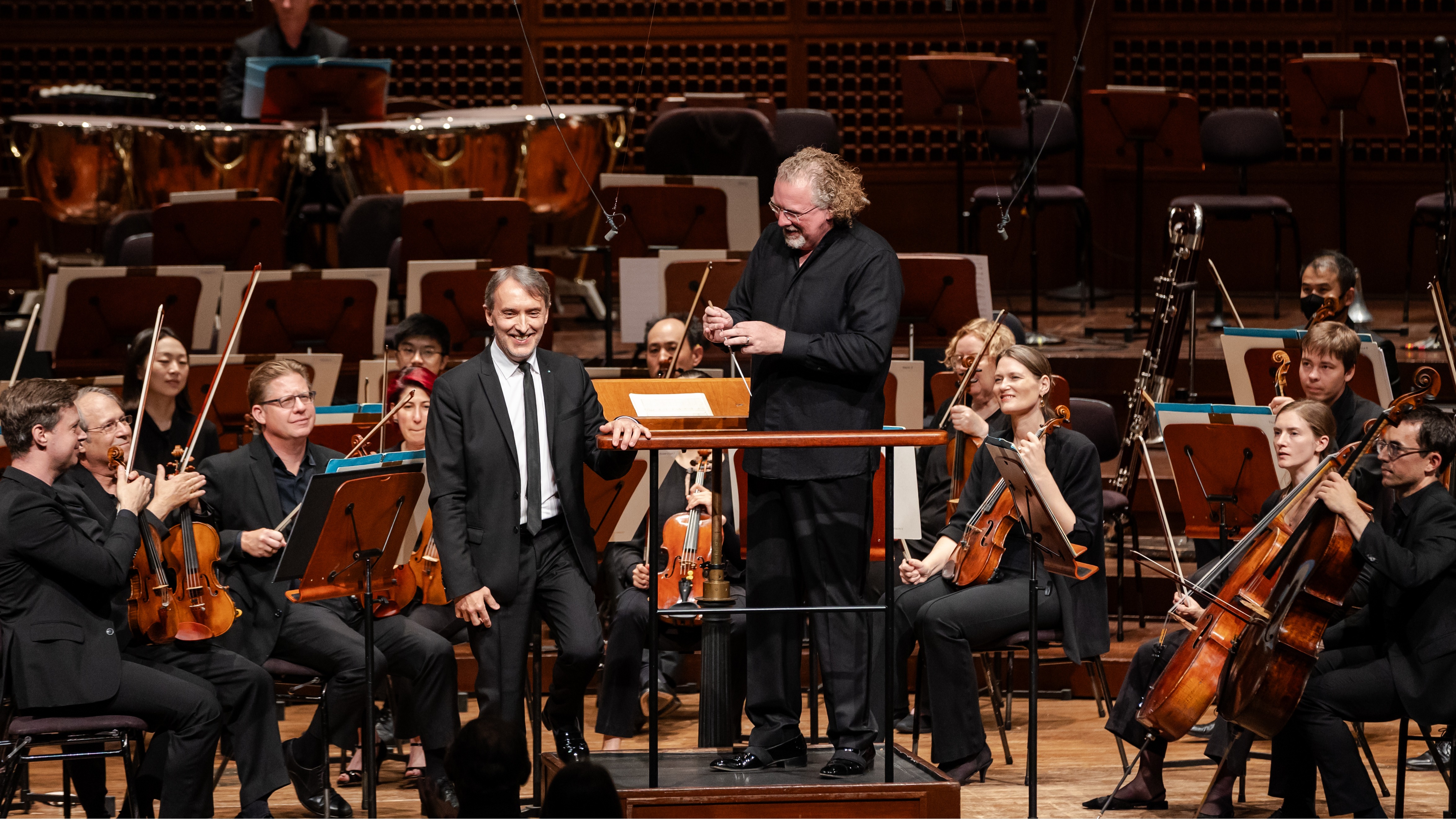
Latry, for his part, happily ruled over this schizoid world. Every note was articulated, every musical gesture infused with character and energy. Minus some, probably inevitable, issues of balance — how could the violins hope to compete with the organ at full blast? — the concerto told its bleak, breakneck story in a loud and confrontational voice. Even more impressive, Latry complemented the orchestra, coloring the organ so vividly that it produced the sounds of the wind instruments entirely absent in the orchestration.
On the surface, Saint-Saëns’s 1886 symphony looks the same. There is a thematic contrast between major and minor keys, the opposition of stormy themes and their sunnier counterparts, and finally, a confrontation between the organ and the rest of the orchestra.
But there’s more to this music than contrast. Listen to the “second” movement, the poco adagio: until the organ quietly sneaks in, you could be forgiven for mistaking it for any other symphonic slow movement with pretty themes. But at the organ’s entrance, something unexpected happens. Anchored by the organ’s cutting timbre, the strings’ song suddenly blossoms with new harmonic color. Strings, winds, and organ merge in a heavenly tower of sound that could never be produced by an orchestra alone.
This is how Saint-Saëns really employs the organ: not as an antagonist, a shapeshifting sparring partner like in Poulenc’s concerto, but as an entire orchestral element whose presence merges with and transforms entire scenes. In the final moments of the poco adagio, the organ and strings engage in an inquisitive, hopeful dialogue before merging in a triumphant, unified close.
This story was first published in partnership with the San Francisco Chronicle.