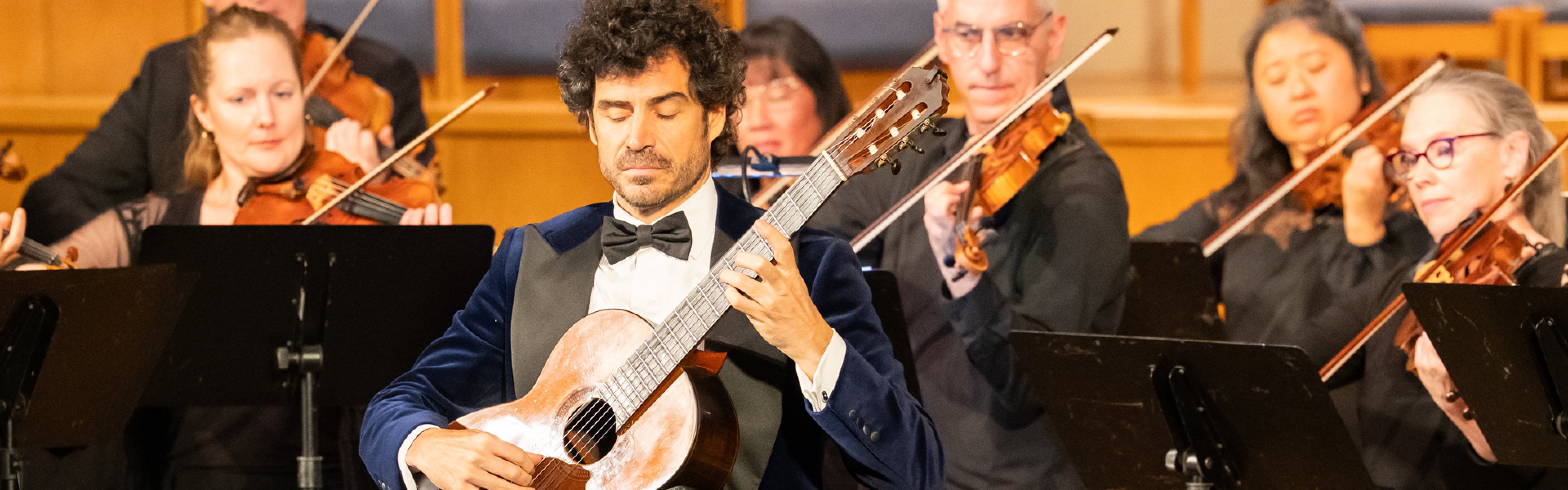
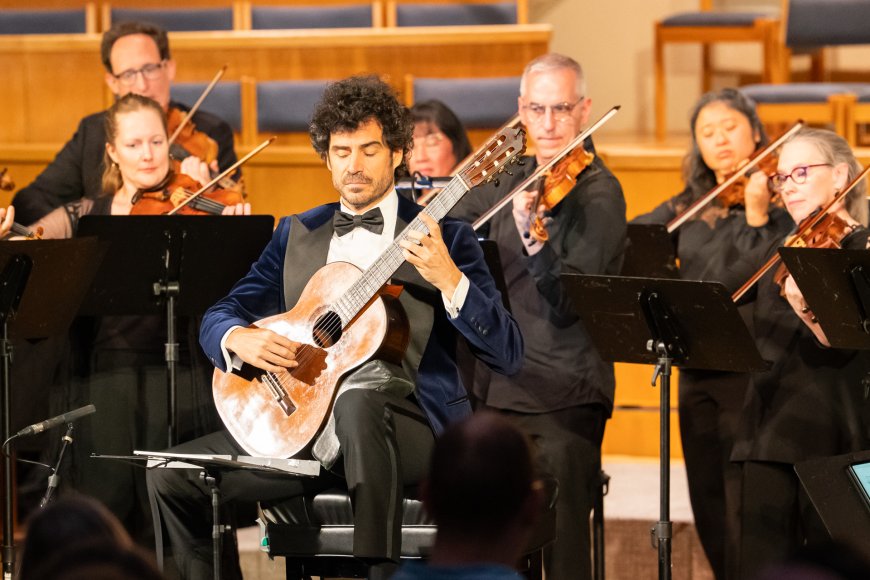
Guitarist Pablo Sáinz-Villegas is a born storyteller. Onstage, he emotes in a way that immediately draws in audiences and collaborators.
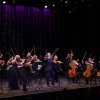
Those qualities, plus his exceptional musicianship combined for an unforgettable performance of Joaquín Rodrigo’s Concierto de Aranjuez on Friday in the sanctuary of Berkeley’s First Presbyterian Church. New Century Chamber Orchestra invited him to put the final touch on a season that underlined the group’s shapeshifting ability as much as its balanced core sound that generates its own ecstatic response.
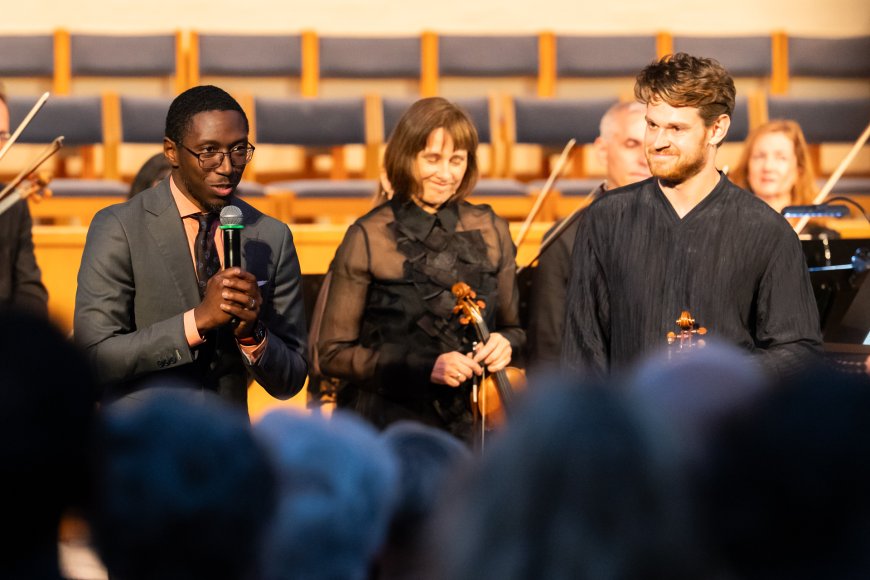
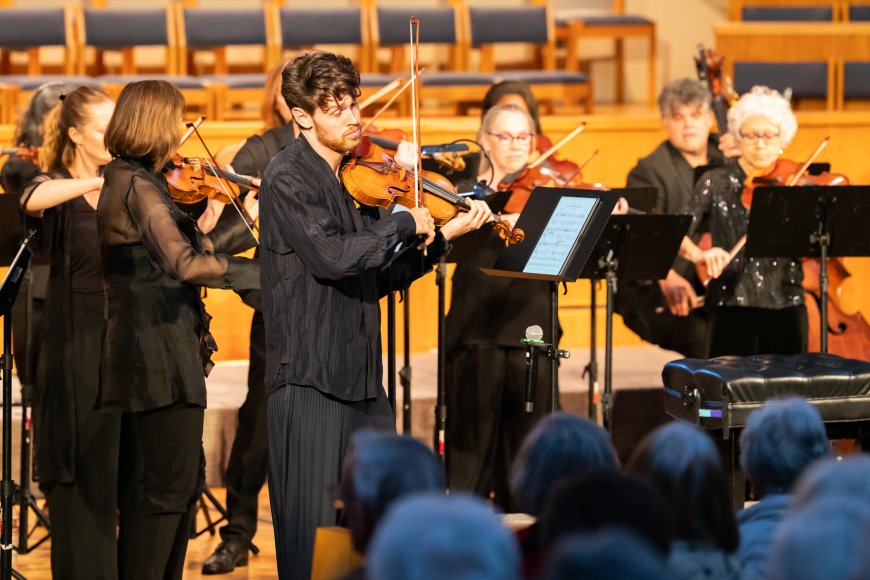
The orchestra was working without Music Director Daniel Hope, who had been injured and was unable to travel. In his place, the orchestra hired Canadian violinist Blake Pouliot as concertmaster. For a program entitled “Radiance in Rhythm,” the musicians were as relaxed and sharp as they’ve ever been, possibly because they knew the music was going to connect with the audience.
Sáinz-Villegas was a perfect soloist for the Concierto: his guitar wept in the second movement, stepped authoritatively into the flamenco-influenced first movement, and leaped airily through the courtiers’ dance at the Aranjuez Palace in the third. He used little push-pull tensions between the notes so that the rhythms were vivid and the melodies sang.
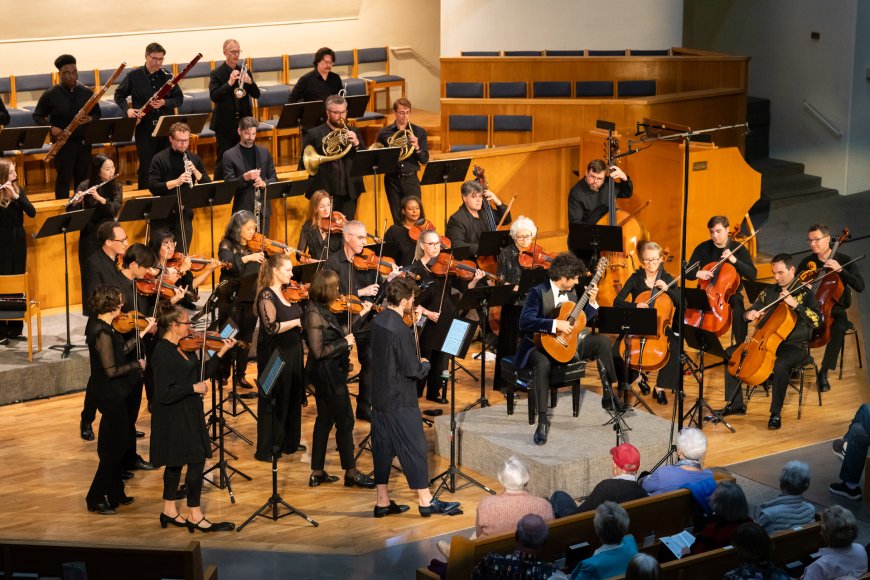
The orchestra, enhanced with high profile wind players from the San Francisco Symphony, Opera, Santa Rosa Symphony, and others, rose to the occasion in a performance for the ages: Jesse Barrett’s English horn solo in the Adagio was especially beautiful and consoling. Sáinz-Villegas gave the ethereal Recuerdos de la Alhambra (Memories of the Alhambra) as an encore.
The world premiere of Henry Dorn’s Blues Variations was the other major news of this concert. Commissioned by NCCO as part of the Emerging Black Composers Project, the piece comes out of the composer’s connection to the blues, part and parcel of his Arkansas background where, he says, “All-blues Saturday” is a tradition. The piece opened with a string-bending cadenza, played ad libitum by Pouliot, who went for it without reserve.
That set the tone for the orchestra, which responded fairly well to the piece’s requirements. Though they didn’t have the weathered grit of an Arkansas blues string band, the composer went for something more hybridized. The piece is structured in the background on classical variation form, with a divisions (running eighth notes) variation, a slow-tempo variation, and so on. The theme is an artsy take on a 12-bar blues and each of the 12 variations on it grow more fantasia-like before snapping into a down-and-dirty fiddling finale. With the orchestra fully committing to the idiom, Blues Variations made a huge impression.
Sáinz-Villegas was the powerful soloist in the work that followed Dorn’s, Michael Daugherty’s Bay of Pigs (2006). The 16-minute concerto-like work is a portrait of Cuba almost as seen through the eyes of exiles. The first movement, “Havana Dreams” is misty-eyed nostalgia, with a main theme that could serve as a movie title track. But there’s a tense middle section that connects with the second movement “Waterfall” is a roiling portrait of the seas around the island, with fleeing refugees. That leads to the finale, “Anthem” which evokes the “revolutionary chanting” of Fidel Castro and Che Guevara’s forces. It’s a suspenseful and effective work. Sáinz-Villegas’s performance was a tad more introspective than the recorded one but benefited from his dramatic feel for rhythm.
As a concert opener, Hope selected Astor Piazzolla’s Fuga y misterio, an excerpt from the opera Maria de Buenos Aires (1968). It’s an actual fugue with, as the title promises, a mysterious central section. Scored originally for Piazzolla’s tango band, the string orchestra version required some extended playing techniques to translate the percussive aspects of the piece. The wild and free theme is unusual as a fugue subject, but that’s what makes the music so alive and fresh.
Music of Piazzolla’s Argentine predecessor, Alberto Williams (1862-1952) rounded out the concert. His 10-minute Suite Argentina No. 1 (1923) is a pleasant, occasionally striking ode to the gaucho. It includes a milonga, “either a predecessor or a subcategory of the tango,” the genre in which Piazzolla later made his mark. Though slight, it had its charms and the NCCO played, as it has all season, with the warmth and depth of sound that makes the ensemble so special.