Among the Bay Area’s small-budget opera companies, West Bay Opera — now in its 70th season — is still at full sail. The company’s success is thanks to its loyal fan base and General Director Jose Luis Moscovich, who has kept the company’s balance sheet steady and its standards high.
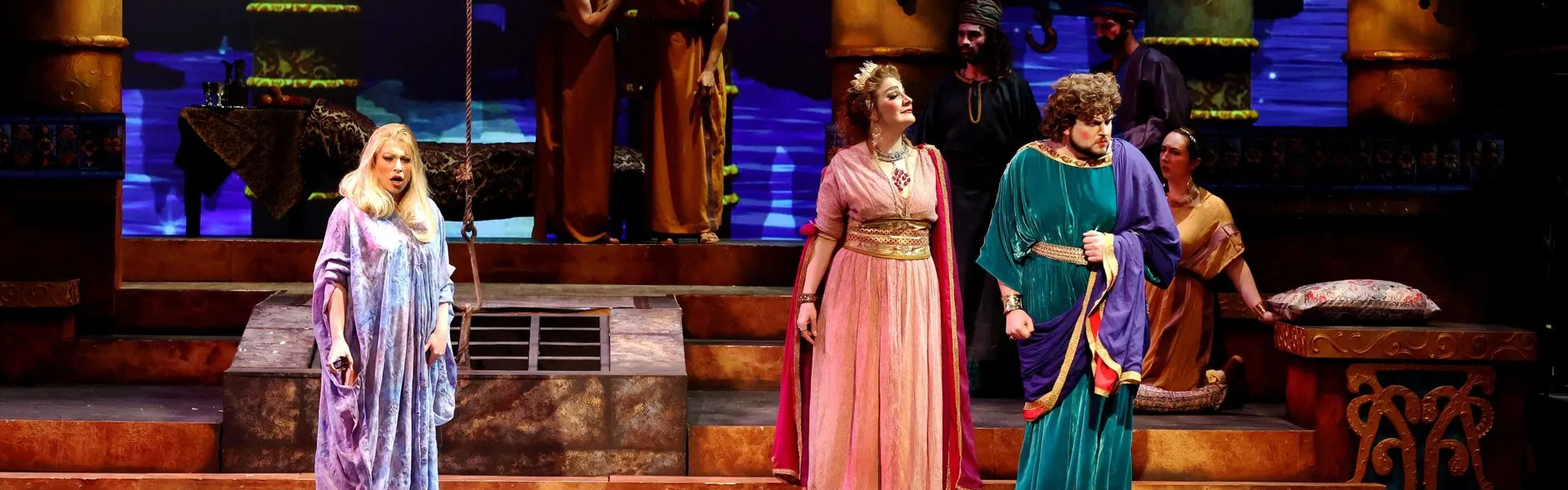
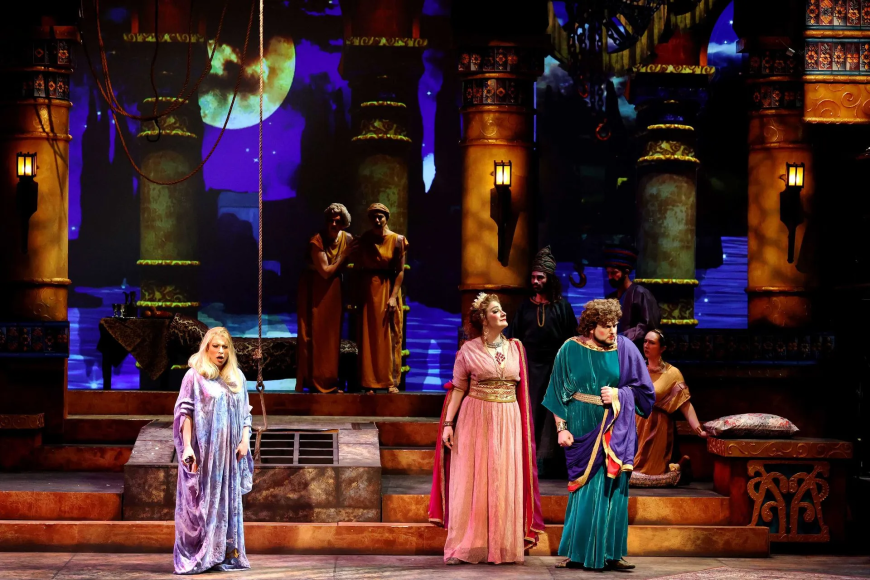
Doing large-scale operas in Palo Alto’s small Lucie Stern Theatre requires some creativity, and tradeoffs are often necessary. But Richard Strauss’s Salome, the company’s second production this season, is a surprisingly good fit. The work doesn’t have a chorus, takes place in one location, and only has a few exits and entrances.
Saturday’s performance displayed the company’s greatest strength: its casting, which in this case included seven singers new to West Bay Opera, including the three leads.
Finding a Salome to fill the role’s many demands is nearly impossible, but dramatic soprano Joanna Parisi was a good choice. She boasts a strong voice, capable of sustained exertion at full volume in the upper register, and even the low notes that are sometimes finessed.
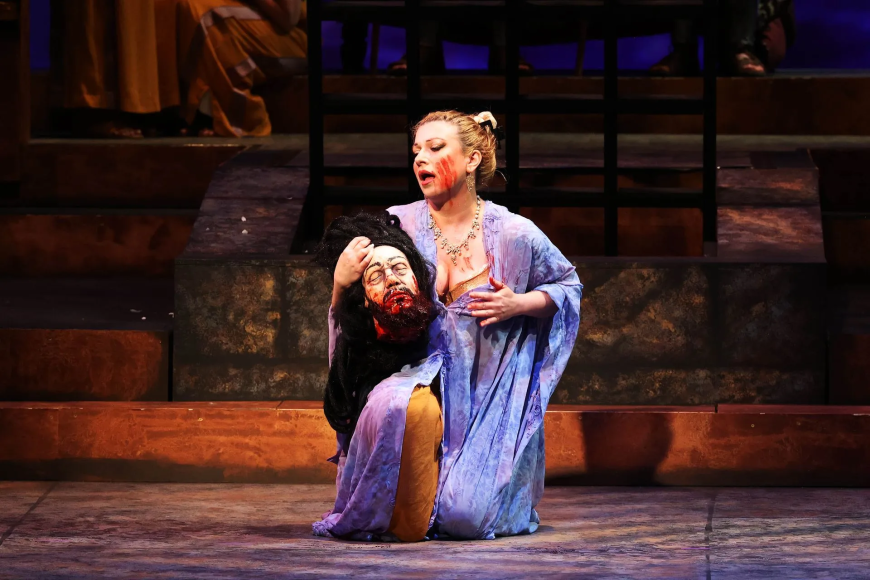
Parisi threw herself into the role, including the dance and the final aria, where she rolled on the ground with a severed head before kissing it. Like many performers of this role, the weight of her voice made her less convincing as a young woman, and she didn’t seize the opportunities Strauss provided to lighten her tone for contrast.
She attempted to do so when teasing the young captain of the guard, Narraboth, but her phrasing was leaden. She was much better when she first asked for the head of John the Baptist — the vocal change, combined with her delivery and acting, was brilliant.
A bigger problem was Parisi’s split focus. Because she often looked to Moscovich in the pit, there was little or no eye contact between Salome and the other characters. As a result, drama was lost. In a larger theater, this might be okay, but in the Lucie Stern, it was quite obvious. As a side effect, her phrasing was too careful most of the time. Still, she filled out the soaring lines of her climactic aria with conviction and power to spare.
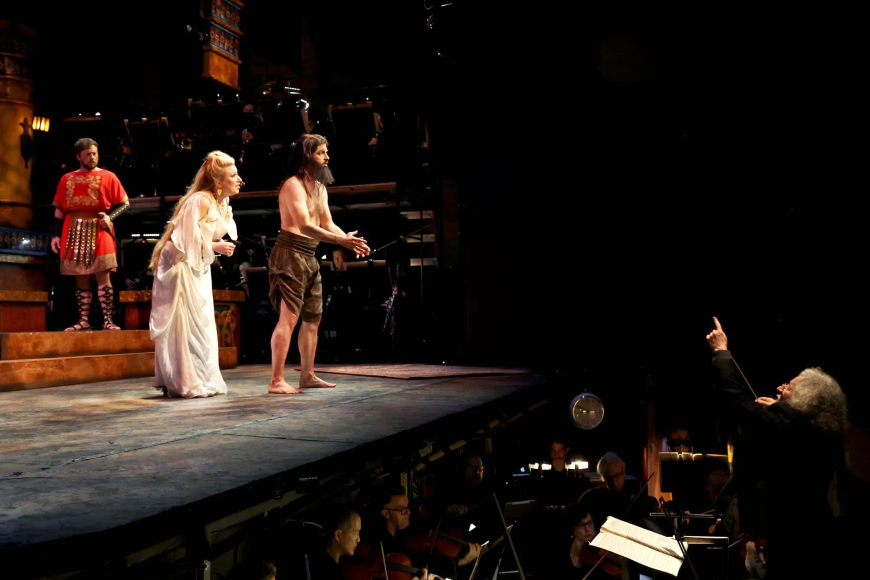
Nathaniel Sullivan as Iokanaan (John the Baptist) was excellent, a secure singer with a good voice. Companies usually cast a more resonant, cavernous voice than Sullivan’s lighter baritone, but he has the notes and his sound is open and commanding. His one scene carried a lot of tension and gave the show a jolt of energy.
Will Upham made a fine Herod, wrapping his clear tenor around the character’s declamatory lines. It’s easy to overplay Herod, especially when made up like a commedia dell’arte character, but Upham didn’t exaggerate. Laure de Marcellus, as Herodias, was also very good and is well known to WBO regulars.
Of the many excellent supporting players, Brian Skoog deserves a mention for his beautifully sung Narraboth. The first line in a show often indicates where things are heading. From Skoog's first vocal entrance, the audience relaxed. Valérie Filloux (the page of Herodias), Isaiah Musik-Ayala (First Soldier), Kirk Eichelberger (Cappodocian), and the rest of the cast made important contributions.
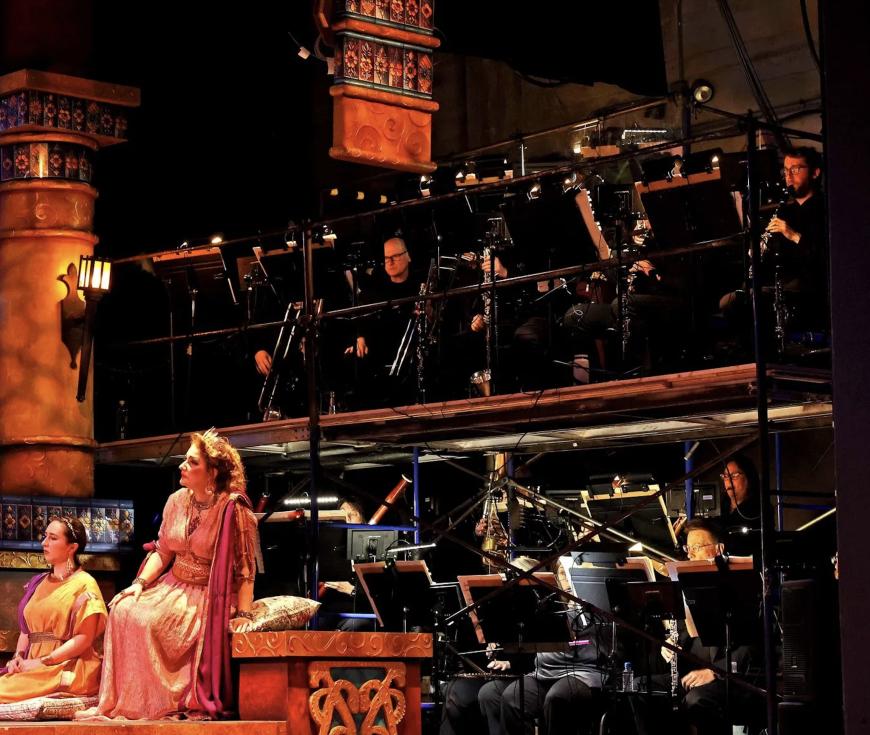
The orchestra, using a score reduction for small string band and duple winds and brass, coped well. Moscovich led a performance that moved along and never got too heavy or overwhelming. With so few strings, it’s impossible to give Strauss’s high lines the sonic sheen they’re meant to have, and some of the faster figuration needed more definition. As usual, the non-string players were seated in the wings and, as usual, I expected balance problems, but there were none. Bravo.
The production, a revival of the one that premiered in 2017, was cleanly directed by Richard Harrell — on a stage this size, sometimes you just need a traffic cop. The functional sets, projections, and costumes were by the usual WBO team of Peter Crompton and Callie Floor, makeup and wigs were by David Gillam, and lighting was by Daniele Ferguson. Daiane Lopes da Silva had some good choreographic ideas and managed Salome’s long dance well.
But audiences don’t go to West Bay Opera for all of that. It’s a singer’s house, and Moscovich fills it well.