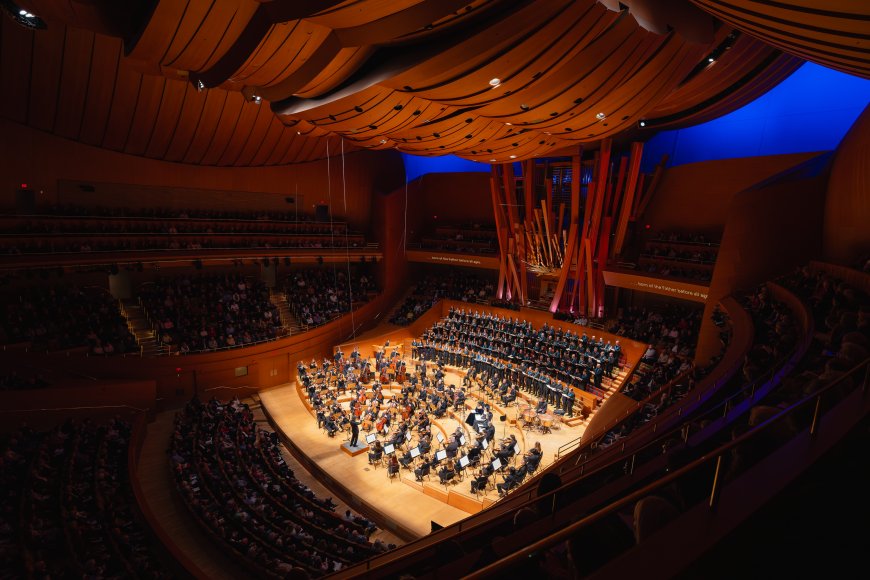
For Gustavo Dudamel, Beethoven’s colossal choral composition Missa Solemnis represents nothing less than “the holy grail of the symphonic repertoire.” But until now, the incredible difficulty and “almost impossible requirements” of this sprawling masterpiece had scared him off.
When planning his final season after seventeen years at the helm of the Los Angeles Philharmonic, the conductor decided he had finally reached the necessary level of “maturity and expertise” to tackle the mass setting, for the first time.
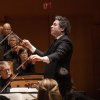
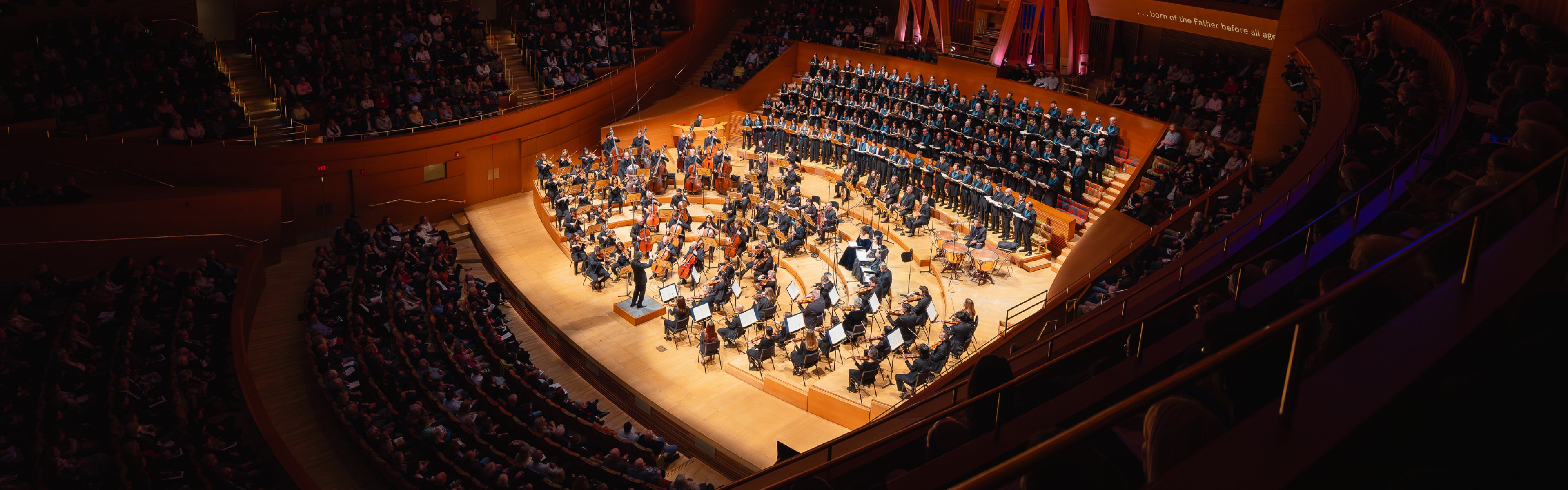
On Feb. 20 at Disney Hall, performing before another sold-out crowd, Dudamel commanded an army of more than 200 musicians — chorus, orchestra, and four vocal soloists. Two more performances followed over the weekend.
Intense and grandiose, the performance did not lack for heft and gravitas, though at times it sounded unsettled and lacking in focus. Even that magician Dudamel could not entirely conceal the dramatic oddities of such a weighty composition that revels in striking rhythmic and dynamic contrasts, but lacks a clear emotional arc.
However, victory was achieved. The presentation of this masterpiece in such an ideal acoustic environment — and with such impressive forces — has to be considered yet another artistic triumph of the Dudamel era.
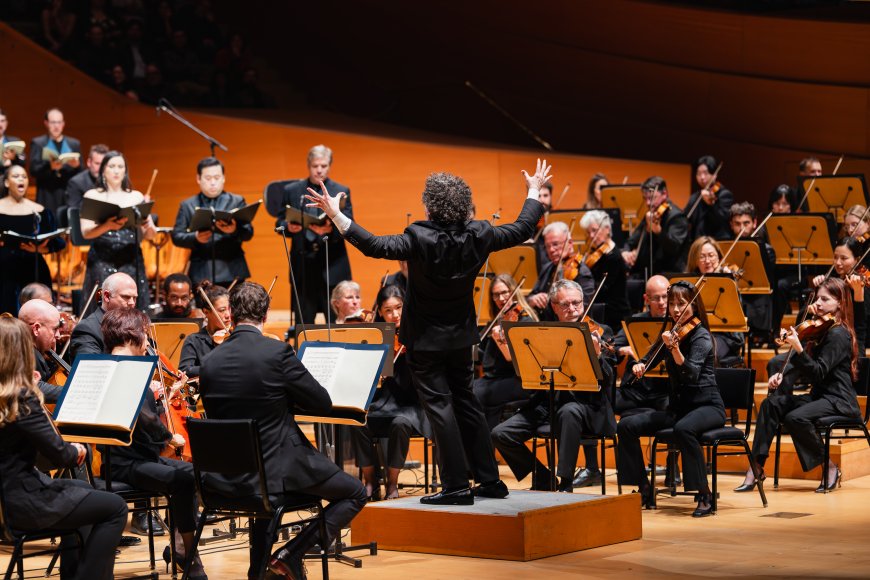
Beethoven wrote what he considered his “best work” concurrently with his Ninth Symphony. Dedicated to his pupil the Archduke Rudolf of Austria, the Missa Solemnis premiered in St. Petersburg, Russia, in 1824. For many years afterward, however, this hybrid oratorio remained little-known and rarely performed.
Its religious content poses problems for some presenters, not to mention the extreme production demands. Michael Tilson Thomas led the most recent LA Phil performances of the work in 2015, an innovative semi-staged “installation” that apparently left very fond memories.
Dudamel had at his disposal a most impressive cast of characters last weekend. For starters, 125 members of two internationally renowned choruses came from Barcelona — the Orféo Català and the Cor de Cambra del Palau de la Música Catalana. From the world of opera came soloists soprano Pretty Yende, mezzo-soprano Sarah Saturnino, and tenor SeokJong Baek. Acclaimed Wagnerian bass-baritone Nicholas Brownlee had been scheduled to appear, but was replaced at the last minute by Rod Gilfrey, who did his best given the circumstances but sounded tentative and remained buried in his score.
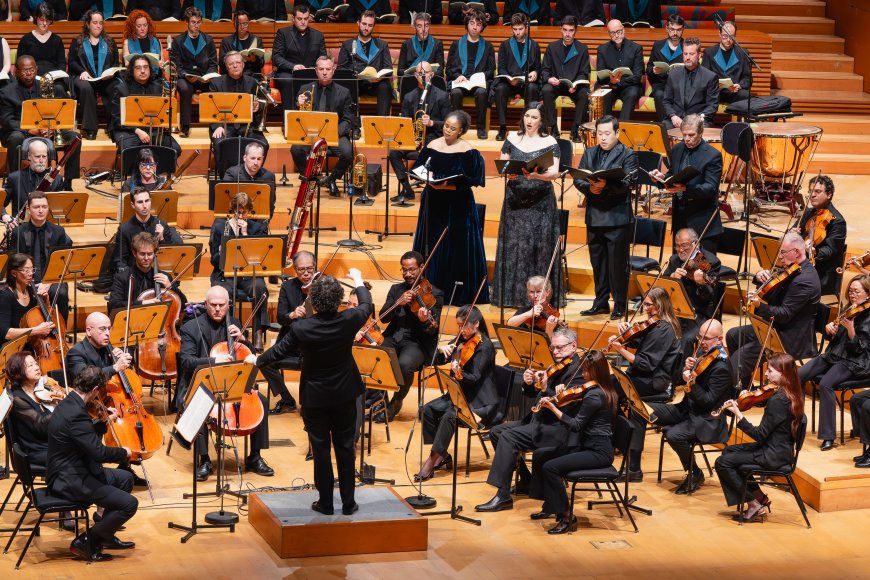
Dudamel placed the soloists in the middle of the orchestra, treating them like instruments in the ensemble. This placement at times covered their voices but overall produced a more blended sound. The soprano part dominates the quartet, and Yende acquitted herself well, displaying a laser-like tone, although her pitch wavered at times. Saturnino — who portrayed Maddalena in LA Opera’s recent production of Rigoletto — sang with finesse and controlled power. Baek’s light and tender voice easily rose to the high tessitura, but was sometimes submerged under the orchestra.
Structured in five large sections of the Catholic mass with a running time of about 90 minutes, the Missa Solemnis often sounds like an opera Beethoven never got around to composing. The chorus dominates throughout, with periodic episodes for the vocal soloists in various combinations. At times the writing for the singers sounds more instrumental than vocal, with many forays into the uppermost limits of their range, especially for the tenors, who hover around a high A for extended periods. The orchestra plays a secondary, accompanying role to the singers for the most part.
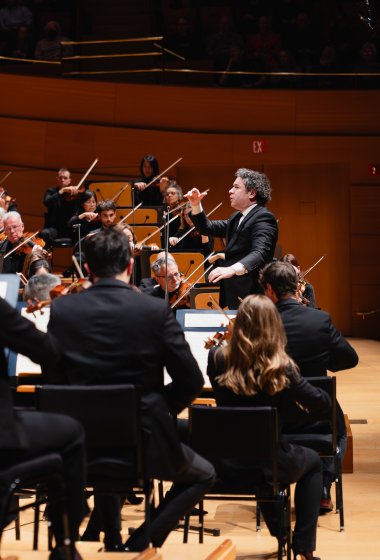
Dudamel began the brief orchestral introduction of the mass’s opening, “Kyrie,” at a stately tempo, with some tentative entrances from woodwinds and brass. He picked up the pace in the explosive “Gloria,” which Tilson Thomas has described as “Messiah on steroids,” with the countless fugal passages cascading in rapid succession. With so many voices in the chorus, maintaining distinct entrances and lines can be a challenge. At times, what emerged from the energetic Barcelona choruses was a gigantic, undifferentiated wall of sound.
Dynamic levels varied from loud to soft, with a spine-tingling diminuendo in the Credo section on the words “et sepultus est” (and was buried).
Alan Snow, currently Associate Concertmaster of the Minnesota Orchestra (and perhaps a possible candidate for the vacant position of LA Phil Concertmaster), led the violin section with confidence and brought an elegant, bright tone to his solos in the Sanctus movement.
After a brief military episode with pounding timpani blows that bring to mind the conflicts raging in the world outside, the final pages of the Missa Solemnis treat at great length, and in various intricate fugal patterns, the phrase “Dona nobis pacem” (Give us peace). The final measures arrive too soon and too abruptly, but the plea, of course, is more relevant than ever.
Dudamel brought his arms down very slowly and deliberately at the close, savoring the resonance of Beethoven’s hopeful spiritual journey from struggle to harmony. Then the hall exploded into cheers.