“What can you say about a 25-year-old girl who died? That she was beautiful. And brilliant. That she loved Mozart and Bach,” asks Ryan O’Neal’s preppy scion Oliver Barrett IV in the famous opening lines of the hit 1970 film Love Story.
David Conte, professor of composition and chair of the composition department at the San Francisco Conservatory of Music, offers another item to the credit of Jenny Cavilleri, the film’s doomed working-class pianist and Radcliffe College student, played by Ali McGraw. Her ambition to study in Paris with Nadia Boulanger (1887–1979) introduced millions of Americans to the name of the 20th century’s most influential music teacher (and, some contend, the most influential ever).
The 14-year-old Conte was one of them, and hearing about Boulanger in the darkened theater set in motion a long chain of events that led, some five decades later, to him overseeing the recreation of La ville morte, a long-lost opera by Boulanger released in January on the Conservatory’s Pentatone label.
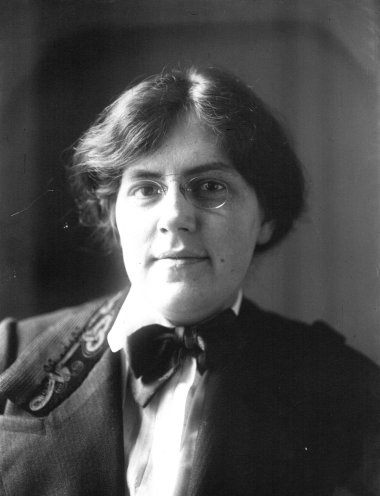
“I heard Ali McGraw say this exotic name, which is how many people who weren’t musicians first heard of Boulanger,” Conte said. “She did teach at Harvard during World War II, as department chair: Walter Piston had been her student. She lived in the U.S. from 1940 to ’46, and during that time was especially close to [Igor] Stravinsky, who had immigrated to the U.S. in 1939, and whom she had first met in 1910, at the premiere of his ballet The Firebird.”
Neal Goren, director of Catapult Opera in New York, approached Conte about La ville morte because, five years after the spark kindled by Love Story, Conte traveled to Paris for what turned out to be a three-year tutelage under Boulanger’s wing. Conte’s composition professor at Bowling Green State University, Ruth Inglefield, was impressed by his work and arranged for a summer of study in 1975 with Boulanger at Fontainebleau (where Aaron Copland had been part of her first class in 1921).
“I came back after that first summer and Boulanger helped me get a Fulbright Scholarship so I could return to study with her, even though I was underage and had no degree yet,” said Conte, who lived in Paris from 1976–78. “I’m one of a few living composers who studied with her. I’m particularly lucky to be teaching at a major conservatory where young composers who are compelled by her pedagogy can come to study with me.”
Today, Boulanger’s legacy as a teacher overshadows her work as a composer. She wrote La ville morte with pianist Raoul Pugno, a mentor and collaborator. The planned premiere in 1914 was preempted by the start of World War I and the opera never reappeared. Goren became aware of the piece about 12 years ago when he was looking for operas by women composers to produce and conduct. He contacted Peggy Monastra, who represents many of the world’s most eminent composers, and she mentioned that she had recently acquired a piano-vocal score for an opera by Boulanger that was barely a rumor.
“The story I’ve heard is that when World War I broke out she packed them up for safekeeping and sent them to Normandy, and the warehouse was bombed,” Goren said. “The only thing that survived was her piano vocal score. Monastra said, ‘You’ll have to commission orchestration to perform this.’ When she sent it over, I was totally astonished. Every page was more gorgeous than the last, with music that’s a cross between Debussy’s Pelléas and Wagner’s Parsifal.”
One reason that La ville morte was such a surprise is that Boulanger famously renounced composing to focus on teaching (and conducting). Her oeuvre is as diminutive as her constellation of students is vast, a stylistically far-flung firmament that, to name just a small fraction, includes Copland, Elliott Carter, Astor Piazzolla, Philip Glass, Quincy Jones, Virgil Thomson, Marc Blitzstein, Thea Musgrave, Burt Bacharach, Michel Legrand, Lalo Schifrin, jazz trumpeter Donald Byrd, and Charles Strouse, who wrote the Broadway musicals Bye Bye Birdie, Applause, and Annie.
Another reason she gave up composing was that her younger sister, composer Lili Boulanger (1893–1918), produced an extraordinary body of work in her short life, becoming the first woman to win the Grand Prix de Rome composition prize (at the age of 19, in 1913). Feeling that her own compositions, however polished, lacked the personal voice attained by her sister, and grieving Lili’s death, Boulanger walked away from writing.
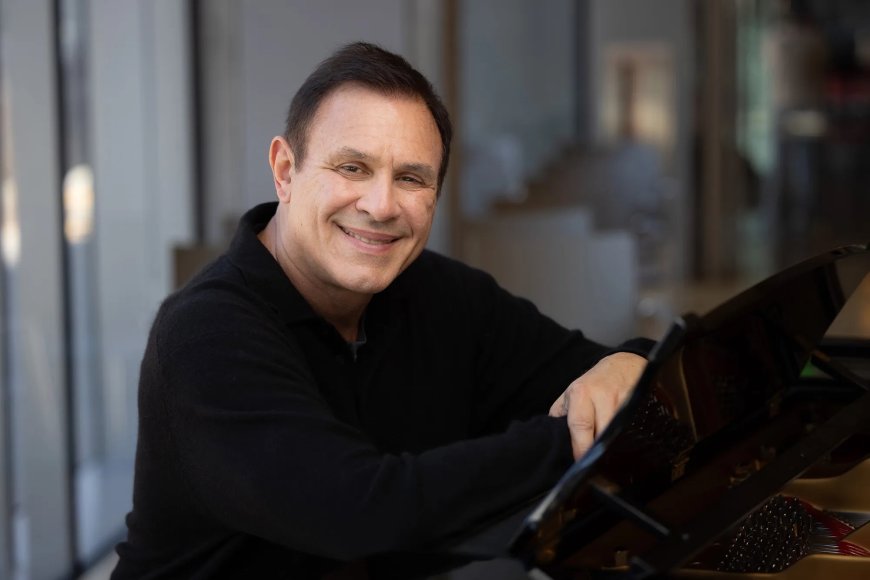
“She told me about her work: ‘My music is well made,’” Conte recalled. “‘It’s miles better than lots of music, but it’s miles emptier because it has no personality.’ She was aware that her sister was a great genius, and that her own genius was for teaching, which she did until her death in 1979.”
While Goren approached Conte about writing an orchestration from the piano/vocal score for a chamber ensemble of 11 instruments, his hands were full with another commission. He suggested Stefan Cwik and Joseph Stillwell, two of his former students and SFCM colleagues, take over the project while he would serve as an adviser. Conte provided feedback after a workshop reading featuring SFCM students in the summer of 2023. The Greek National Opera premiered the work in Athens on Jan. 19–28, 2024, a co-production with Catapult Opera, which gave its U.S. premiere at the NYU Skirball Center that April. The album was recorded during the New York run.
Goren and Conte settled on a chamber opera setting in recognition that Boulanger’s preference “was for a distilled sound that would fulfill the harmonies but wasn’t overly flowery,” Goren said. “We agreed what would serve the piece and her memory was an 11-piece ensemble with piano, string quintet, and wind quintet.”
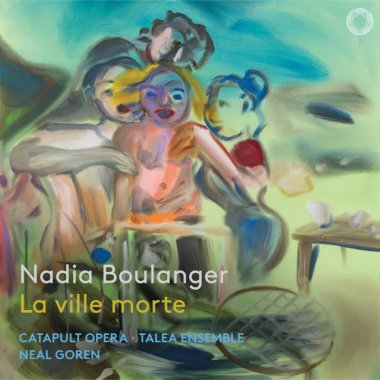
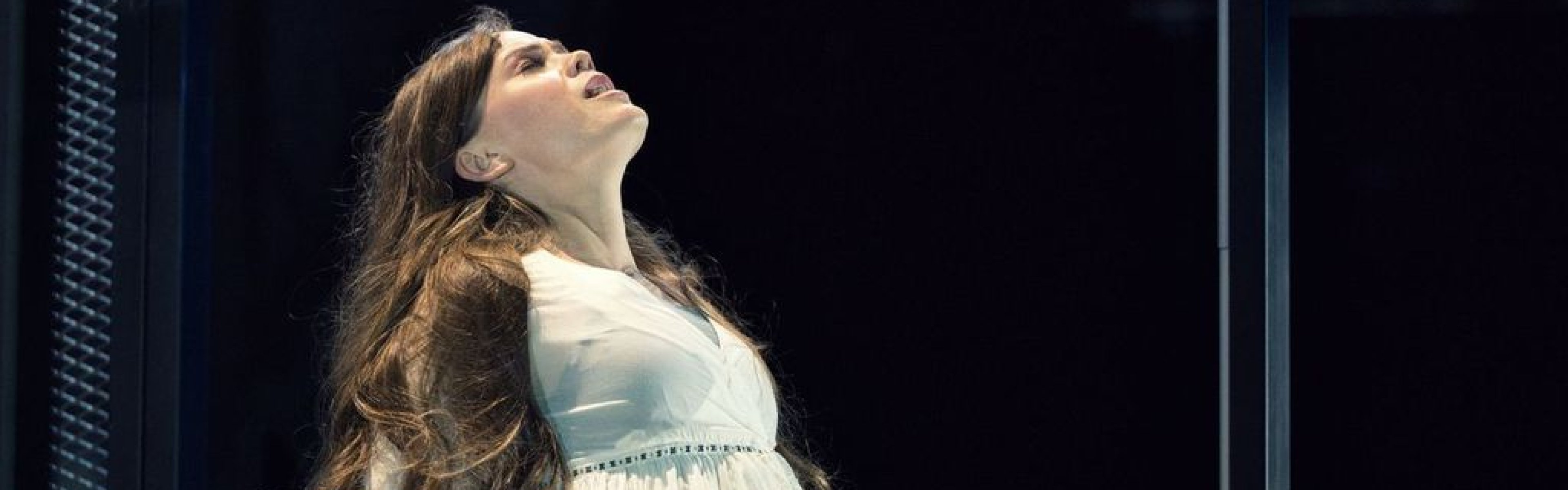
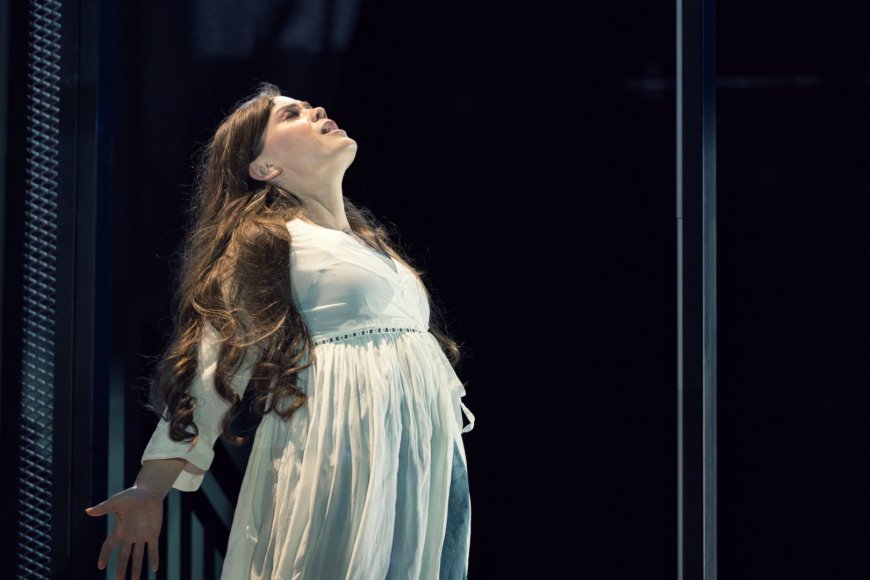
The titular dead city of La ville morte is Mycenae, and the libretto was adapted from a controversial play by Gabriele D’Annunzio. Boulanger’s music captures a roiling skein of lust and jealousy among a quartet of archaeologists. The emotional currents flow around “a virginal soprano,” Goren said. “There are forbidden desires, lesbianism, adultery, and incest, all wrapped into one. I think Boulanger was looking to cause a scandal and become known that way, which cut against her schoolmarmish look.”
Cwik and Stillwell worked with an English translation of the French text, creating an orchestration that enhanced the psychological intensity of the themes “and the way the music comments on the characters,” Stillwell said. “There’s all this attraction cycling around this innocent girl. There are references to Debussy’s Pelléas, and the nature of the leitmotifs, little motivic elements that keep reccurring and coming back, flow in a way that feels very dreamlike.”
Though it seems like an ideal project for West Edge Opera or Opera Parallèle, there are no plans yet to present La ville morte in the Bay Area. Boulanger’s incalculable role in shaping various currents of 20th-century music, to say nothing of her distinction as the first woman to conduct several of the world’s major orchestras, means “there is continued interest in her compositions,” Conte said.
“Even if they lack the striking originality and power of the work of her sister Lili, they have craft, eloquence, and beauty, and with the passing of time their value has become more apparent.” And in composing, beauty means never having to say you’re sorry.