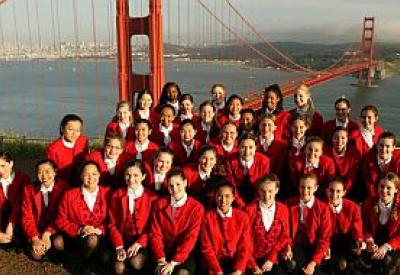
It was all treats and no tricks whatsoever in Davies Hall on Halloween night as far as the music went. Appearances, on the other hand, were somewhat misleading.
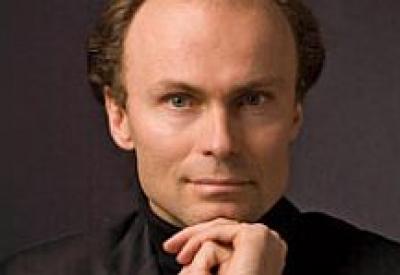
A few years into the future, perhaps, not every mention of San Francisco Symphony Associate Conductor James Gaffigan will refer to his age and appearance.
When the ghost of Jacob Marley first appears in Dickens' A Christmas Carol, practical, level-headed Ebenezer Scrooge suspects "an undigested bit of beef" at work, rather than a supernatural knocking at the door.
You haven't lived fully until hearing opera in a small Italian town — the smaller the better. Forget the niceties of production values and flawless performances; instead, you can revel in the most essential component of the genre: passion.
The good news is that there is no need for long-distance travel. You get unbridled, sweeping, rousing operatic passion right in the heart of Silicon Valley.
For those who can't (or won't) see the forest of an opera for the trees of performance minutiae, here's the word about the San Francisco Opera's new production of Wagner's Tannhäuser that opened on Tuesday night: Donald Runnicles' Opera Orchestra and Ian Robertson's Opera Chorus give a magnificent account of the music, which is among Wagner's most sweeping and bewitching.
Runnicles and Ge
Stephen Sondheim's Sweeney Todd is a big musical — large in passion and in production values. It originally opened in 1979 at one of Broadway's biggest theaters, in Harold Prince's hugely operatic production, and went on to be performed by opera companies as well as in theaters around the world.
From Oakland, drive 40 miles south on 880, that overcrowded, dangerous highway, paved like hell, and not with good intentions. Then, 10 miles north of San Jose, hang a left on Auto Mall Parkway, in search of Ohlone College. You are now in Fremont, formerly rural, now a mixed industrial-residential city of 200,000, with the largest number of expatriate Afghanistanis in the U.S.
Can a simple story, deliberately lacking in operatic gestures, make a good play? Thornton Wilder's 1938 Our Town certainly did. It was a subtle, laid-back, and whimsical account of small-town America, more of an archetypal abstraction than practical reality.
What do you know: a grand operatic discovery at a chamber-music concert. But consider the source. He was both the "Paganini of the Double Bass" and the conductor of the Cairo premiere of Verdi's Aida.
I don't know how many Danielle de Nieses there are, but I have already heard two of them. The first was a terrific Cleopatra in a remarkable presentation of excerpts from Handel's Giulio Cesare in Calistoga's Castello di Amorosa on July 14.
As the lights were going down in Davies Symphony Hall on Saturday night, I caught a line in the program book asking "What are we to make of Prokofiev ..." but had no chance to read further before the hall went dark. The question — after a childhood of mandatory Prokofiev in a Soviet-occupied country and a subsequent lifetime of listening to him by choice — didn't make sense.