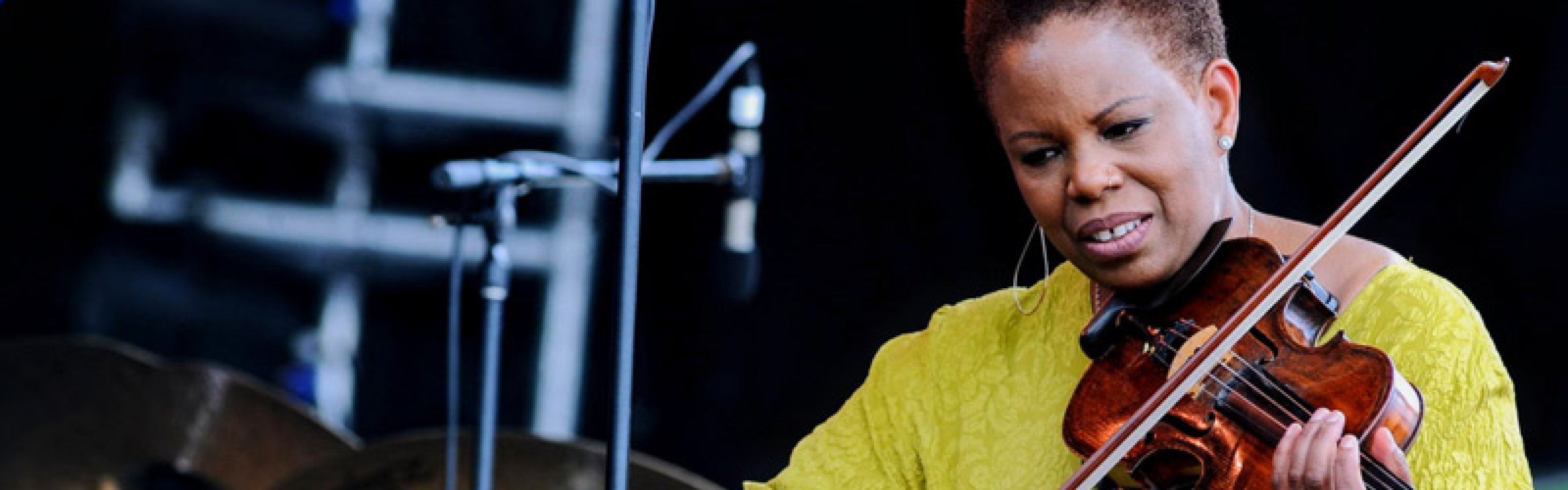
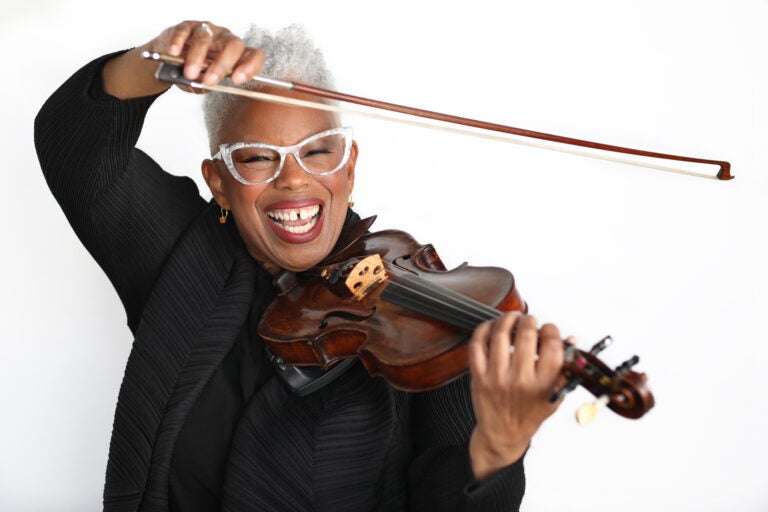
Raising the visibility of jazz violin — “We’re still out here trying to be recognized,” she says — has become more difficult for Regina Carter since she was diagnosed with spinal stenosis in 2013. The condition induced a couple of surgeries and persistent muscular atrophy, leading her to step away from a career that had her in demand as one of the most virtuosic practitioners of her instrument in the jazz and pop genres in the modern era.
She’d accompanied the likes of Aretha Franklin, Lauryn Hill, and Billy Joel, performed and recorded with small ensembles Straight Ahead and the String Trio of New York, collaborated with Max Roach and Oliver Lake, and was showcased in the touring production of Wynton Marsalis’s Blood on the Fields, while launching her own discography.
Carter started on piano and violin at the ages of two and four, respectively, and performed with orchestras while growing up in Detroit. Training in the Suzuki method and master classes with Itzhak Perlman and Yehudi Menuhin prompted her to study classical violin at the New England Conservatory of Music, but she returned to Michigan and enrolled at Oakland University there after switching to jazz.
A couple of her albums were dedicated to her mother, and caring for her in her final years alerted Carter to the healing power of music, which has become a practice for her since stepping away from the stage. She spends part of her year at her New Jersey home with her husband, Alvester Garnett, a drummer who’s recorded and performed in her quartet, as well as with Abbey Lincoln. Now 59, Carter spoke with SF Classical Voice from her other home in Culver City, close to UCLA, where she teaches at the Herb Alpert School of Music.
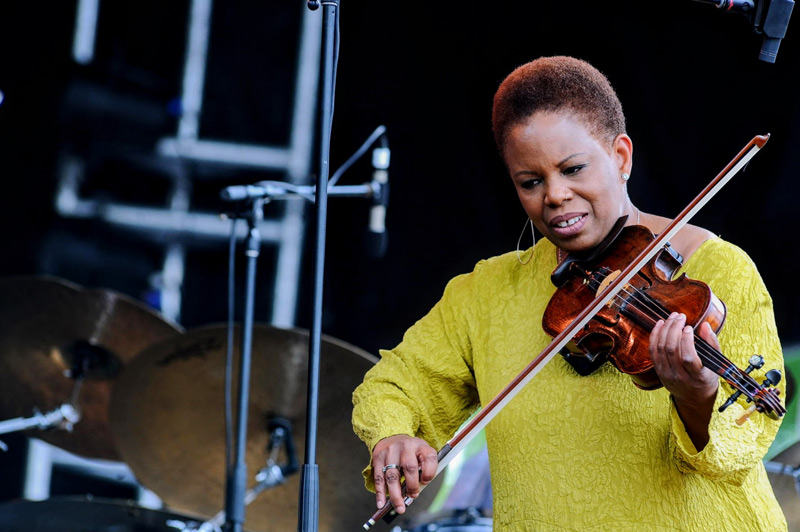
I know that you taught strings in the Detroit public schools and you’ve done workshops and master classes throughout your career. But what prompted you to join the UCLA faculty?
My mother had been an educator, and my grandmother graduated from Morris Brown College in 1915, so education was huge in my family. But when I got an invitation from my dear friend, the great jazz pianist Arturo O’Farrill [Professor of Global Jazz Studies at UCLA and Associate Dean for Equity, Diversity, and Inclusion] to join him, my first reaction was “no.” But then I started figuring out what was going on with me physically. I knew I wasn’t probably going to be able to play for a while, and I’d lose my health insurance with the musicians’ union. So the UCLA job was full-time, with tenure and health insurance.
What’s your course load?
In the winter quarter, I have a class in the social and cultural history of jazz, and an ensemble and a private student. In the spring, I’ll teach again a course on a project called Gone in a Phrase of Air, which I’d started in Detroit, with stories from my mother and other people. It’s about redlining across the United States and the displacement of different communities. I don’t like to read papers, and the students at UCLA have been mostly music students, so I have them interview people and compose and put the music together with videos, photographs, and some spoken word.
Don’t you also teach a class in the social and cultural history of jazz?
Well, that was started by a saxophonist from Detroit, Salim Washington, who’s the Chair of Global Jazz Studies at UCLA. We go from pre-jazz on up to bebop, present some musicians who’ve been left out of the canon, so to speak. And what was happening in the United States after World War II, when they were sending “jazz ambassadors” to Europe to try and clean up the whole Jim Crow thing. We show how Black musicians were really treated here, and how record companies were paying musicians with drugs or cars or whatever, and yet taking their royalties. But there were some white musicians like Dave Brubeck who refused to play in venues if Blacks weren’t allowed to come in as audience; we deal with that kind of thing.
If you had to make a State of the Jazz Union address at this point, what would you say?
I’d touch on the fact that we have a person in charge of our government who doesn’t like this music and is trying to get rid of Black and brown people, regardless of whether or not they have their paperwork. And how artists are standing up for what they believe in, bailing on the Kennedy Center since he put his name on it. Some of the music is reflecting that this is a very dangerous time, and it’ll be interesting to see what comes out of that.
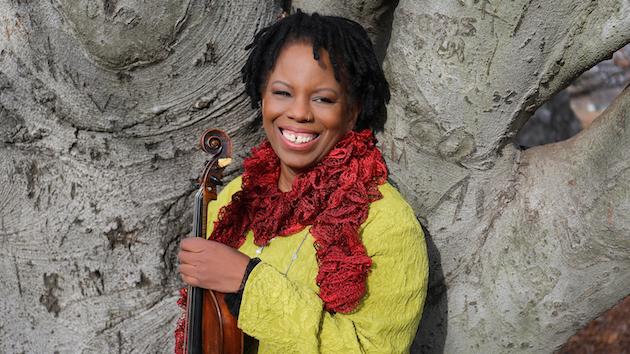
It seems that serving as a doula — a healer — has become like a third career for you.
When my mother, Grace, was in hospice in 2006, I saw how music really affected her vital signs. She loved Ella Fitzgerald, whom I used to go see when I was in high school. After my mother passed, I wanted to deal with elderly people who didn’t have anyone with them. I found a patient also named Grace, in her late 80s, and she had pictures of jazz musicians on her refrigerator. It turned out she had a nephew who had a recording studio in New Jersey, and my husband had just been there! So there was this full-circle moment, a sign that this was meant to be.
At first, I didn’t want to take on any more patients, because I was traveling so much. But after a few years went by, I thought, I really want to be an end-of-life doula. The thing is, I’ve been very curious about death, even since I had a schoolmate die when we were six years old. I think being a death doula helps me with my fear of it.
Did you get training?
Yes, in 2007, right after I got the MacArthur Fellowship, I took an introduction to music therapy. They said I had to play a chordal instrument and sing, but I thought, if I sing to someone, they’re gonna leave here a lot faster! [laughs]
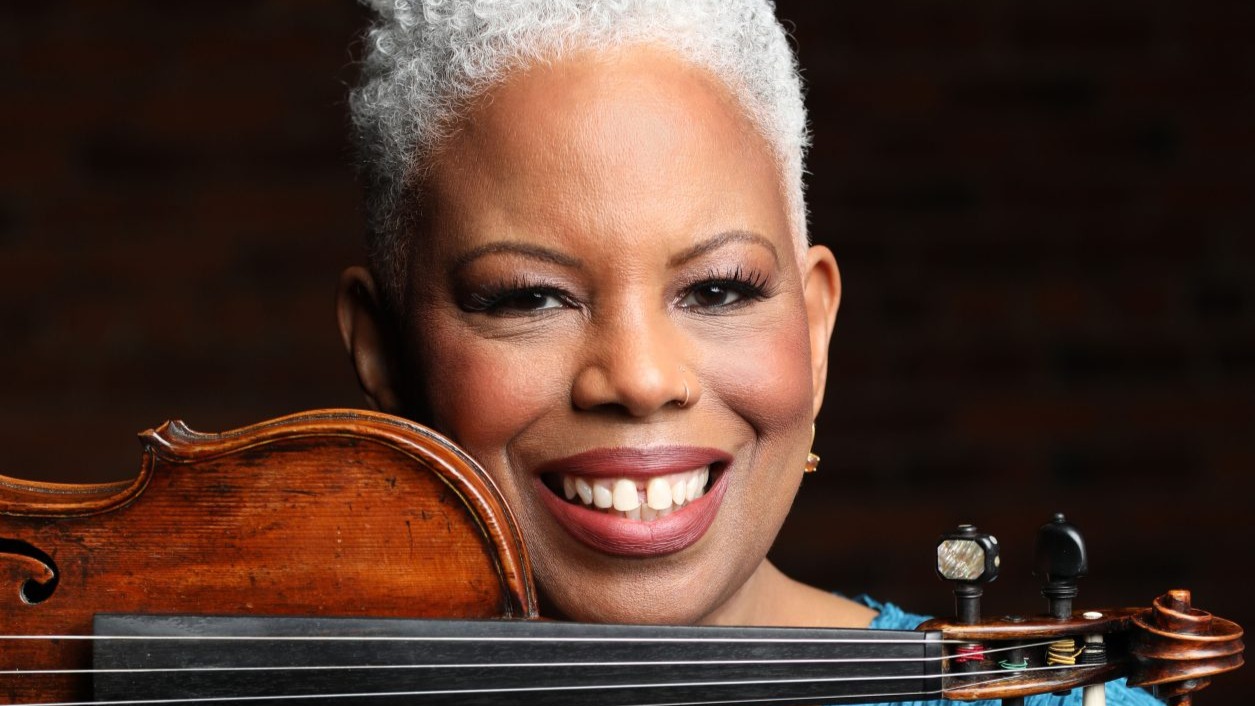
Have you deployed the instrument of your first career in your career as a doula?
I had one patient with dementia, and his wife said, “He likes a lot of Broadway and jazz songs.” So I played my violin, and he sang along with the songs he knew. He passed away a couple of weeks after that, but you know it was just a beautiful connection. It works with people in hospice if that’s what they want, though some of them aren’t even cognizant or are nonverbal. But you know, hearing is the last thing that leaves us when we die.
What are the odds of your reviving your first career?
I’m between physical therapy and trying to play. I just play a little bit every day, just so that my hands don’t forget, and I’m trying to get the strength back in the bow. Actually, the real test will come later this month, because I’ll be going to a rehearsal of the Global Jazz Studies’s faculty tour of five dates in Japan. I told them I could play on several tunes and sing on some others. I want it to be perfect, and if it’s not, I get really angry.
We’ll be crossing our fingers for you.