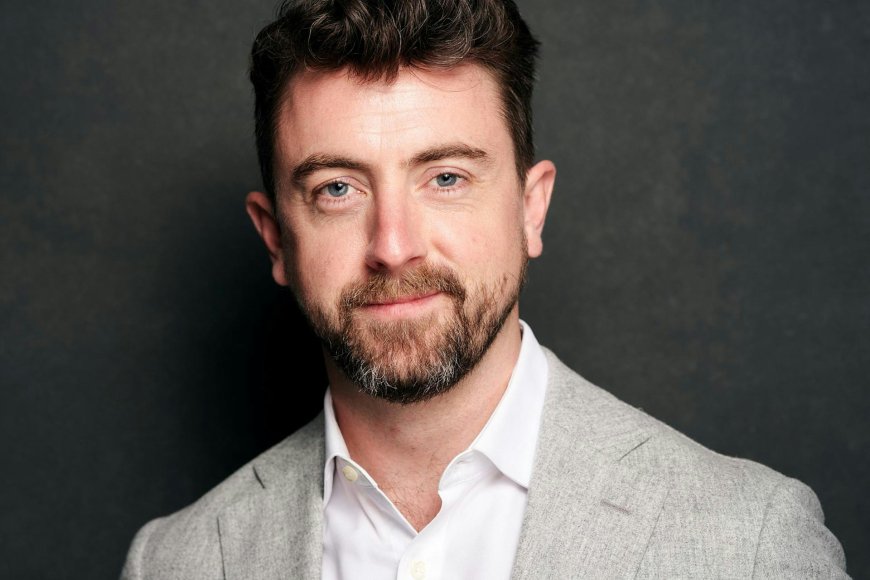
Most of us face a crossroads at some point early in life. For acclaimed tenor Ben Bliss, the options were stark: Dr. Phil, or the LA Phil.
That first path — the long and uncertain road toward success in Hollywood — beckoned him for a time. But after a couple of years as a production assistant on the television therapist’s talk show — an experience he called “a bit soul-crushing” — Bliss made a hard turn and devoted himself to music. He and his soul are happy he did.
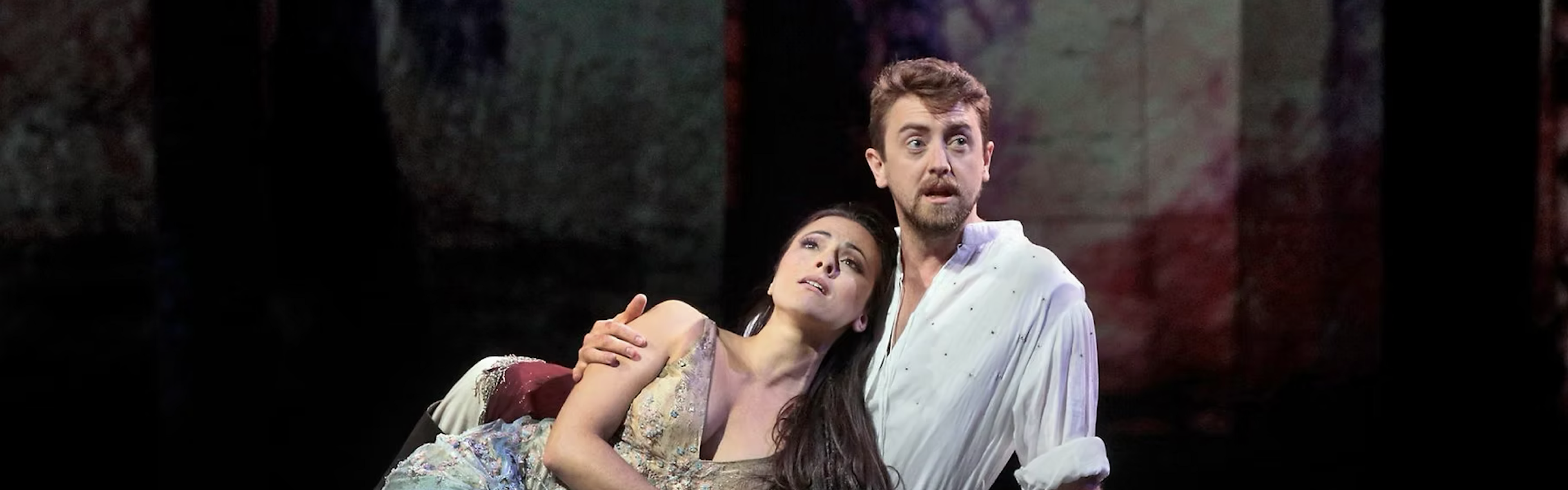
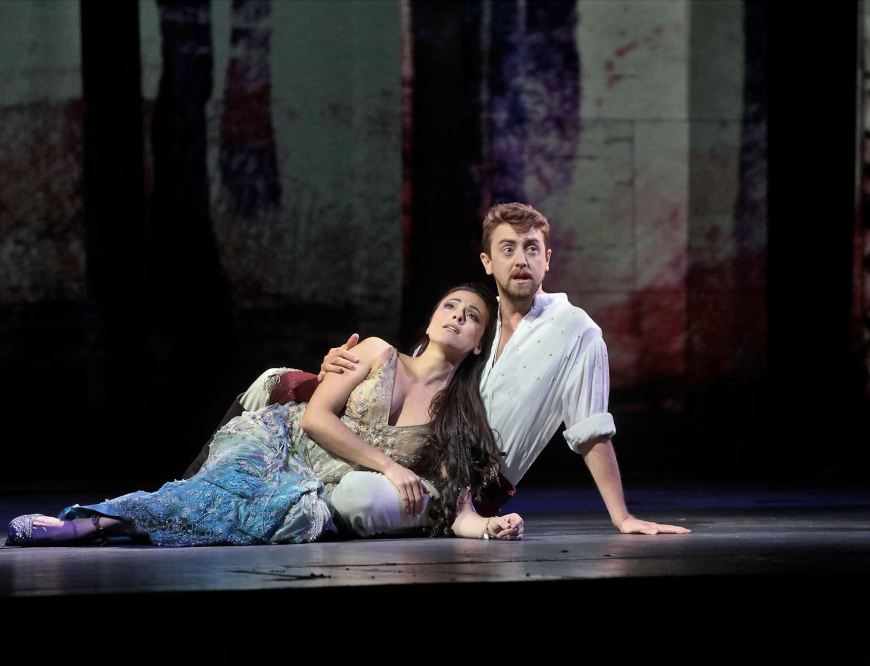
Bliss, who recently turned 40, is enjoying a growing international career. He has performed at the Metropolitan Opera, San Francisco Opera, Paris Opera, and Royal Opera, Covent Garden, where he made his debut this summer.
LA Opera, where he had his first major successes, is presenting him in a recital on Dec. 7 at the Wallis in Beverly Hills.
The tenor discussed his unusual path to opera stardom in a phone call with SF Classical Voice from Chicago, where he was singing Mozart’s Requiem with the Chicago Symphony. Our conversation has been lightly edited for clarity and concision.
Your recital program is quite eclectic, ranging from opera arias and art songs to works by Stephen Sondheim and Sammy Fain. How did you put it together?
I never spent a lot of time in song-literacy classes, so I have a slightly smaller breadth of knowledge and experience in that realm. I find that to be an advantage, in that I have a lot to explore. I’m not deeply ingrained in the dogma of “This is what a recital should look like.” The door has been left open to me to be a lot more free-form and creative with it.
It takes me a lot longer to program a recital than it does for some folks. I basically make a list of the composers, genres, and sub-genres I’m interested in and would like to know more about. I’ll then make a list of the entire song repertory of [Benjamin] Britten, or [Gabriel] Fauré, or [Claude] Debussy, or the tenor songs of [Richard] Strauss. I’ll listen to those over a period of weeks or months and pick out the ones that particularly speak to me, either musically, harmonically, or poetically. I’ll whittle those down into a smaller playlist, then massage it, see how things fit together to create a flow for the evening. It’s a long process, but I usually come up with something unique and personal.
I love to ignore the partitions between different styles of music. I find great joy in that kind of variety. Toward the end of a recital, I’ll sing the Ingemisco from Verdi’s Requiem, followed by a Frank Sinatra song. I see no reason why not. I find museums more interesting when they have a Rembrandt next to a Warhol next to sacred art from the 12th century.
Your recital includes a song by Benny Goodman, the great clarinetist. That reminded me that you perform with jazz musicians fairly regularly in New York.
Singing with jazz bands has made me a more versatile performer and a better singer. It has brought a lot of depth and contour to my classical work.
You’re also singing some Sondheim. Your performance of his great song “Being Alive” on YouTube is quite moving. It feels like you’re embodying the character, a man on the verge of an emotional breakthrough.
One of the things I like about a recital program is I get to be more specific about what I want to say and how. In opera, sometimes you’re navigating a narrow path as you try to connect with the piece through the conduit of a conductor’s interpretation and the staging and costumes.
When I sing, I want it to feel like we’re sitting around a campfire and I’m telling you a story. I try to do it in an interesting way, but at the end of the day, I just want to talk to you.
Operatic vocal technique takes a long time to master. But it’s not the end product. It’s like a painter learning how to mix pigment. He can be great at that, but if he doesn’t have anything to say, it doesn’t really matter.
Most of the artists I interview got a sense of their gift early and worked on it relentlessly from a young age. That’s not your story at all. You grew up in suburban Kansas City, a few blocks from Joyce DiDonato. Your mother was in the chorus of the Lyric Opera of Kansas City.
She has been with them since before I was born. The last show she sang was Romeo and Juliet, and I was singing Romeo. For her, it’s tough to top that!
Presumably, there was a lot of music in your home growing up.
So much so that I took it for granted and was somewhat disinterested in studying it. In high school, I was first a huge football nut. But my parents didn’t want me to get hurt, so I switched to the choir and the theater. I caught the cinema bug and decided to go to film school.
I found Chapman University in Orange, which offered choir scholarships, even for non-music majors. I sent them a recording, and the dean of the music school, an amazing guy named Bill Hall, started calling my house every week.
In the end, you were a film major and music minor.
Yes, I got very lucky with my voice teacher, Patrick Goeser, the greatest educator I have ever known. He was also the voice teacher of Duke Kim, who recently sang Tony in LA Opera’s West Side Story, among many others. Patrick told me he would fail me if I didn’t try out for an opera. So I did, and they cast me as Tamino in The Magic Flute. I sang Albert Herring the following year.
I appreciate the balance that the university gave me. I might be up late in the studio working on a project, and when I’d had enough, I’d head over to a practice room in the music school and learn some Benjamin Britten. After a few hours of that, I’d head back to the editing suite. Ultimately, my senior thesis project film was screened at 30 film festivals and won some awards. So I felt I was making some headway.
I graduated in 2008 with a film degree and moved up to L.A. I got a job bartending at a place across the street from the studios and hustled the guys who came in. That led to a job with the Dr. Phil show, where I worked for 2 1/2 years. Patrick stayed on my case all that time, asking me “What are you doing moving camera equipment? You’re a singer.” In January 2011, I quit the show, called Patrick, and said, “You win.”
Were you rusty at that point?
I had been doing some singing. I remember sometimes when the office would empty out, I’d go into Dr. Phil’s private voice-over booth and sing through some opera arias.
But you were basically starting from scratch.
I used the hustling skills I learned in Hollywood to reach out in every direction I could. I sang for anyone who would listen. I ended up singing for Plácido Domingo and doing the LA Opera Young Artists Program. The following summer, I attended the Music Academy of the West, where I was the understudy for Tom Rakewell in The Rake’s Progress. It was a perfect opportunity. Since then, I’ve sung the role in Boston, at the Met, and at the Paris Opera.
After L.A., I was in the Young Artists Program at the Met, where I finished in 2015. I’ve been freelancing ever since. I’ve sung at the San Francisco Opera twice, in Dialogues of the Carmelites and Così fan tutte. My LA Opera debut was Benvolio in Romeo and Juliet, where I had two lines.
Then I sang Parpignol in La bohème. My main takeaway from that experience was ‘Be careful what you let the director know.’ I did a little juggling in rehearsals, so he said, “We’ll have you do that.” While the curtain was down, I had three feet between the lip of the stage and the curtain, where I had to walk sideways while juggling and trying not to throw a ball in the orchestra pit.
When preparing for a role, you listen to recordings of other people who have sung it in the past. A lot of musicians deliberately avoid doing that, for fear of copying someone else or perhaps picking up a bad habit. Do you like hearing what other singers have done with the material you’re working on?
Oh, yeah. I’ll usually check out as many recordings as I can, and then whittle it down to two or three. It helps me memorize everything. It’s interesting to see what choices other artists have made. I’m sure I soak up some of their choices by osmosis. But I can’t imagine it being a bad thing taking cues from Plácido or Pavarotti.
Sometimes I’ll say, “I love that. I’m going to try that and see how it feels — build on it to do my own thing.” Other times, I’ll hear something and say, “I’m definitely not going to do it like that. Now I know that doesn’t work.”
In an earlier interview, you said you consider yourself “a link in the chain connecting the modern world to creativity from centuries ago.” What do you mean by that?
It does feel kind of cool that I’m carrying the torch forward. People have been performing this music for hundreds of years, and hopefully they will do so for hundreds of years to come.
Also, I feel connected to players who spent their lives on the road to make their living — troubadours and players. We’re carrying on that tradition. I live my life on the road. Every relationship I’ve had over the last 15 years has been long-distance. I feel a disembodied kinship with the road-warrior artists and musicians throughout history.