Los Angeles Opera was in its infancy in 1987 when it launched its second season with Puccini's La bohème. Although major stars Plácido Domingo and Thomas Hampson were in the cast, and Christopher Alden directed, that production was not a success.
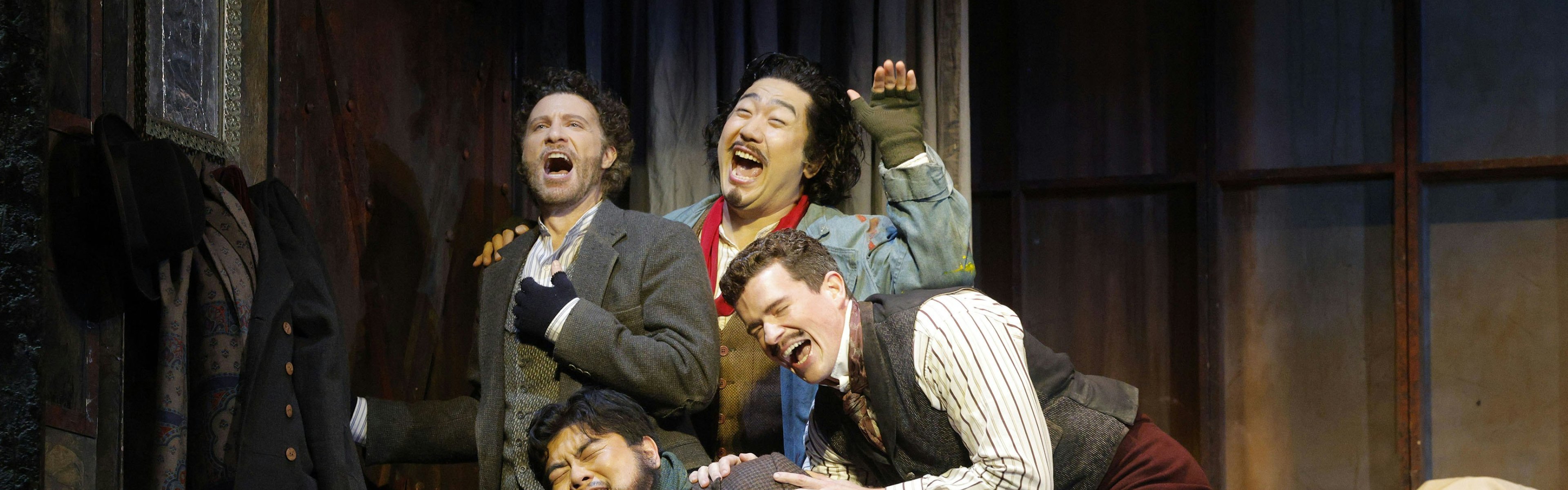
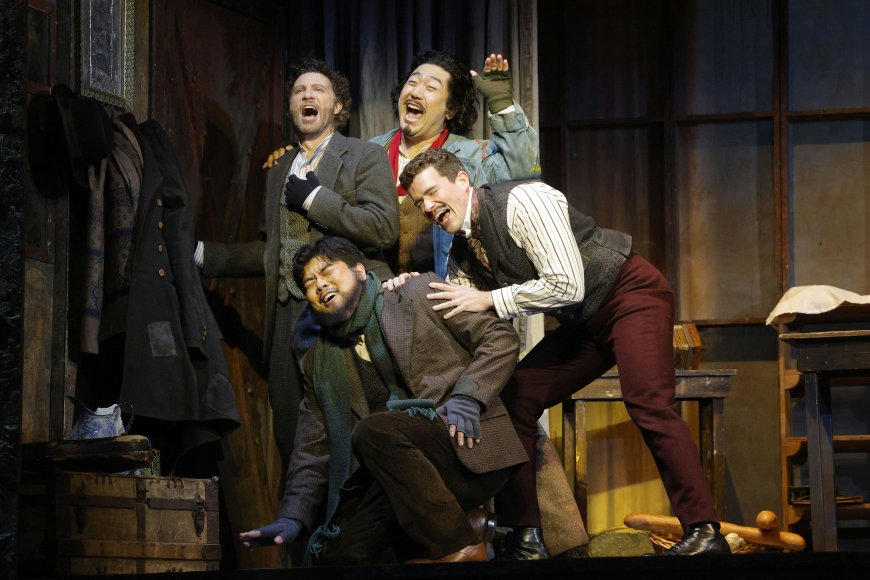
The company’s current production, which opened on Saturday, Nov. 22 at the Dorothy Chandler Pavilion, dates back to 1993 when movie director Herbert Ross (The Turning Point, Steel Magnolias, The Sunshine Boys) was extended an invitation to direct the work. His production, with lavish sets by Gerard Howland and costumes by Peter J. Hall, was a smash, and has been revived seven times prior to this season.
It's no surprise that the biggest ovation of the evening exploded (like the production’s shower of tricolor confetti) at the end of Act Two, with a Christmas Eve at Café Momus extravaganza worthy of the Metropolitan Opera. While the cast did not feature marquee names, their singing and dramatic intensity deserved more than the tepid, polite applause that the opening night audience gave them earlier in the performance.
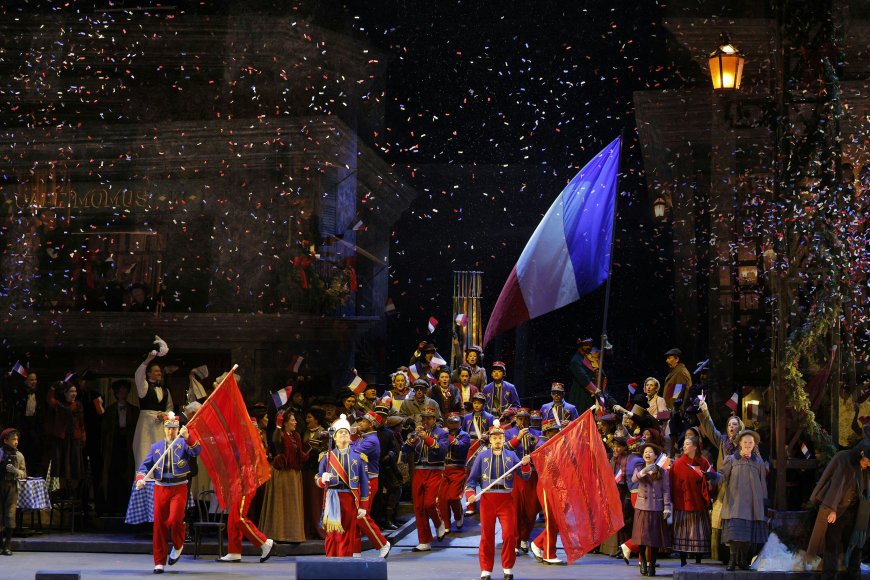
Despite the silliness that dominates the first and final acts, La bohème is, at its core, a story of desperate survival. Farcical interactions set to Puccini's most frivolous music lead to scenes both passionate and lyrically soaring. It's a duality almost impossible to blend.
One of the key directorial challenges of La bohème is the question of how to portray the Bohemian world these characters inhabit. By definition, this part of society separates itself from middle class norms and expectations. In this revival, Director Brenna Corner doesn’t stretch the traditional operatic formula, but what she offers works.
In the case of Mimi, however, we miss any sense of dramatic nuance. Soprano Janai Brugger (a former Musetta in the company's 2012 and 2016 revivals) sings Mimi beautifully but doesn't access enough of the character’s dramatic possibilities. She embraces innocence instead of the reality of an 1830s Bohemian grisette.
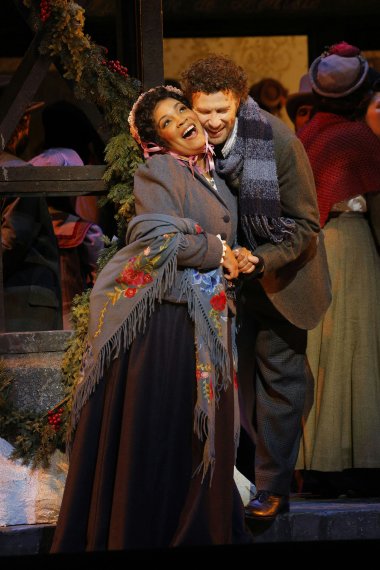
The other three lovers were rhapsodic, passionate, and combative. Italian tenor Oreste Cosimo is an ardent Rodolfo. He's a true Italian tenor with plenty of fire and vocal magnitude. South Korean baritone Gihoon Kim stands out as a volatile Marcello, well-matched against soprano Erica Petrocelli as the flamboyant Musetta. And for those who relish a perfectly executed cameo, long-term LA Opera veteran Rod Gilfry has great fun as the bamboozled landlord, Benoít, and the sugar daddy who gets stuck with the tab, Alcindoro.
Conductor Lina González-Granados is without question LA Opera's rising star. Her performance could move at the speed of lightning but also linger over atmospheric details, then swell to passionate crescendos. She has excellent rapport with the orchestra and singers, including the enormous celebratory chorus in Act 2. LA Opera had better ensure she doesn't get poached by the LA Phil.