Call it a bass man’s holiday.
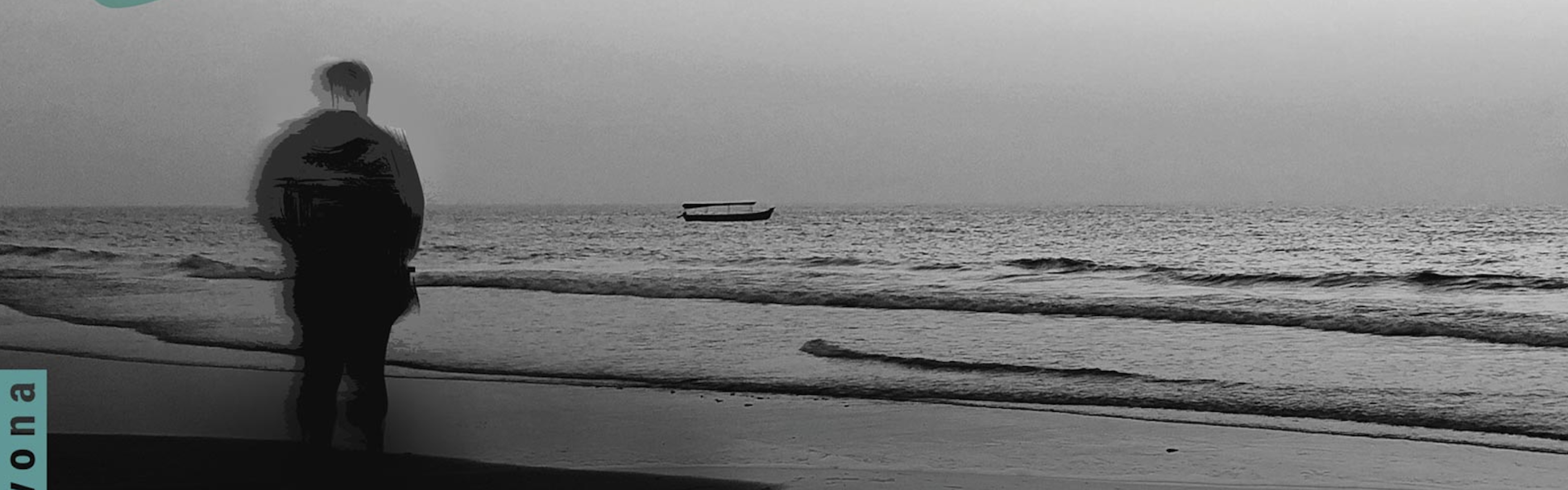
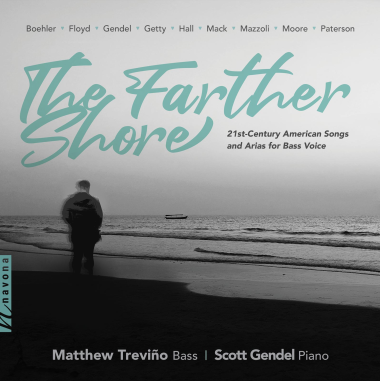
In The Farther Shore, released on May 8 by Navona Records, Matthew Treviño traces his voyage across an edifying variety of modern compositions, displaying both their musical and lyrical attractions and how adeptly he adapts his craft to their differences.
Treviño has been a go-to for bass roles in modern opera recordings — a couple of them are represented here. But according to his album notes, the singer aims to defy expectations.
“The catalog of new music written for the bass voice remains limited [and] the bass voice carries a set of archetypal expectations,” Treviño points out. “My goal is to show how the singer can embody familiar characters and then gently unravel them.”
Attentively accompanied by pianist Scott Gendel, the album opens with Juliana Hall’s monodrama for Moby Dick’s “Ahab,” an undersea post-mortem which has the captain shouting defiance and sighing resignation. Treviño credibly conveys the hyper-dramatic text created by Caitlin Vincent. Hall’s music aptly follows Benjamin Britten’s balance of turbulent tides and silence.
Composer Matt Boehler, in a world premiere, sets texts by three poets under a collective title from one of the poems’ lines, The Great Gramophone of Puzzling Existence. The second poem, A.E. Stallings’s “Another Lullaby for Insomniacs,” begins a cappella and proceeds with spare accompaniment, showcasing Treviño’s lucid diction and superb interpretation of individual words and phrases. Ferlinghetti’s “Dog,” in the third poem, has a canine whimsically wandering the streets of mid-century San Francisco (where composer Boehler later received his conservatory training). Both composer and singer trot through this scenario with growls, yelps, and humorous delight.
A selection from Missy Mazzoli’s Proving Up has Treviño working confidently in the low and high reaches of his range and modeling the art of voice acting. With Ben Moore’s setting of a poem by W.B. Yeats, the singer moves into the mode of a lied, or a folk song, as the evocative and adaptable Scott Gendel takes on a more familiar accompaniment role. The music is lyrically lovely, the voice soft and comfortable.
Treviño debuted the titular role in composer Gordon Getty’s one-act opera The Canterville Ghost at Leipzig Opera in 2015. Treviño has appropriately revivified “Insupportable!” in this collection, with its ghoulishly comic libretto (written by Getty) and its impetuous fortissimos. The singer spans Getty’s trademark wide intervals with compelling authority.
Another of Treviño’s debut roles is recapped as The Client in Robert Paterson’s Three Way. No humor here, but an affecting reading of the work’s creepiness by the singer.
Carlisle Floyd is honored as a forefather of modern American opera with an aria from his Cold Sassy Tree. Treviño is empathetic and psychologically credible in his depiction of the aging, lovestruck character Rucker Lattimore (with Floyd, like Getty, the librettist). This is a scene well set and well played; the music is modernly romantic. Treviño successfully takes on a regional accent, and extends it into the aria of reluctant politician Elisha, from Evan Mack’s Roscoe.
The album concludes, tastefully, with the world premiere of A Clear Midnight, a pellucid nocturne by the accompanist himself. There’s an ample offering of contemplative piano music, prettily pairing Gendel’s lyricism in his instrument’s higher octaves with Treviño’s lustrous lower voice.