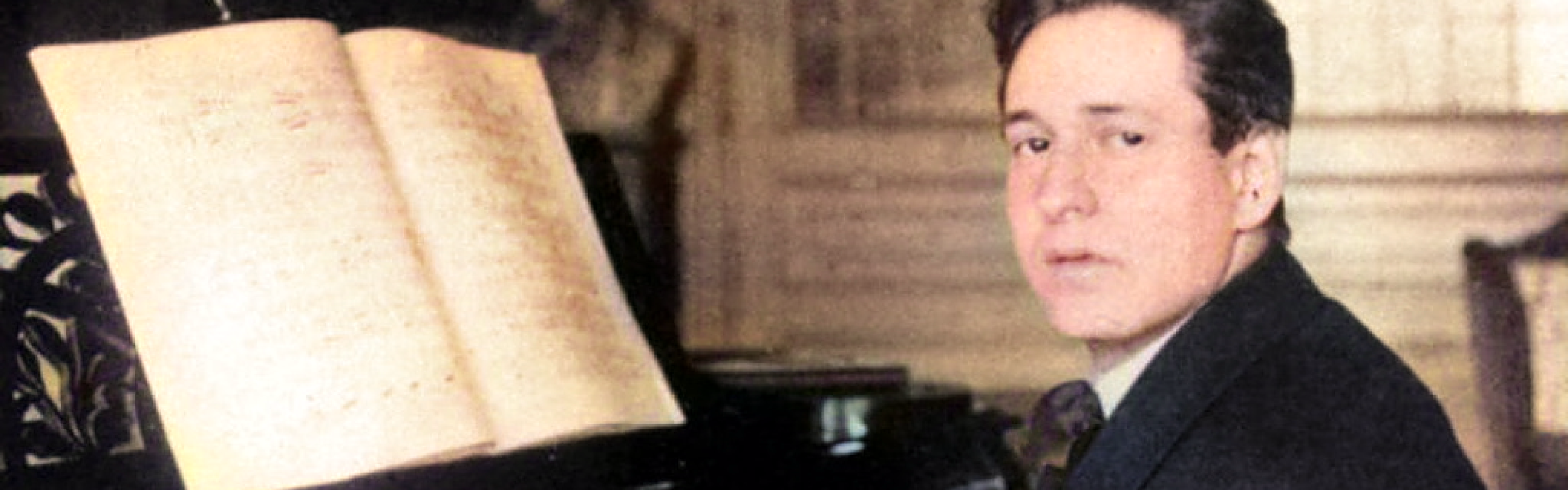
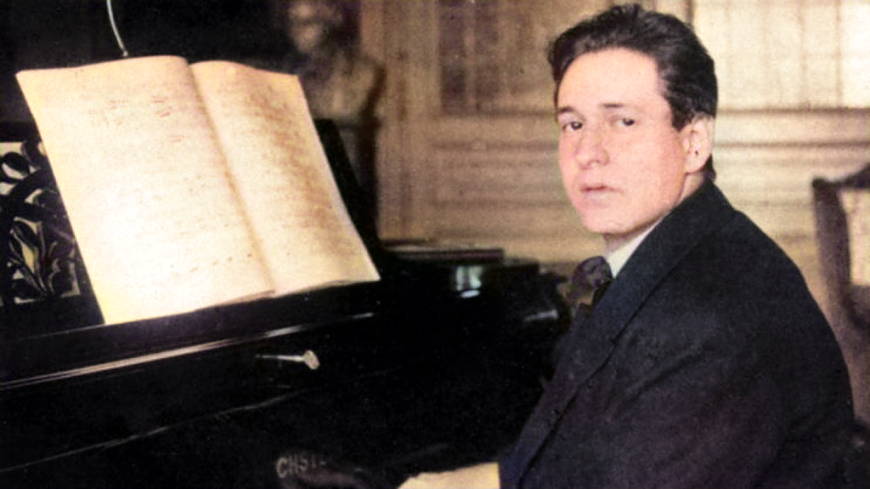
Erich Wolfgang Korngold famously wrote music for films and, in a sense, the 20th century was his largest score.
The Austrian Jewish composer lived and worked through times of profound upheaval: two world wars, the rise of Nazism, and mass exile. Those forces rippled across art and music, shaping Viennese Romanticism, Broadway operetta, the meteoric rise of Hollywood film, and detached postwar modernism.
Across his career, Korngold moved fluidly between these expressive styles — composing prolifically while maintaining a singular artistic voice. In Europe, he was an accomplished composer of opera and concert music; in the United States, he was best known as a founding figure of the symphonic film score.
As Emma Griffin, the managing artistic director of Mannes Opera, put it, “He had to pivot so many times in his life to encompass what was happening in the 20th century. I find his story —the joy he took in his work throughout all this — very, very moving.”
Amid these shifts, some of his music slipped through the cracks. Among them was Die Stumme Serenade (“The Silent Serenade”), an operetta composed in late 1940s. It was intended for Broadway, but the debut never materialized.
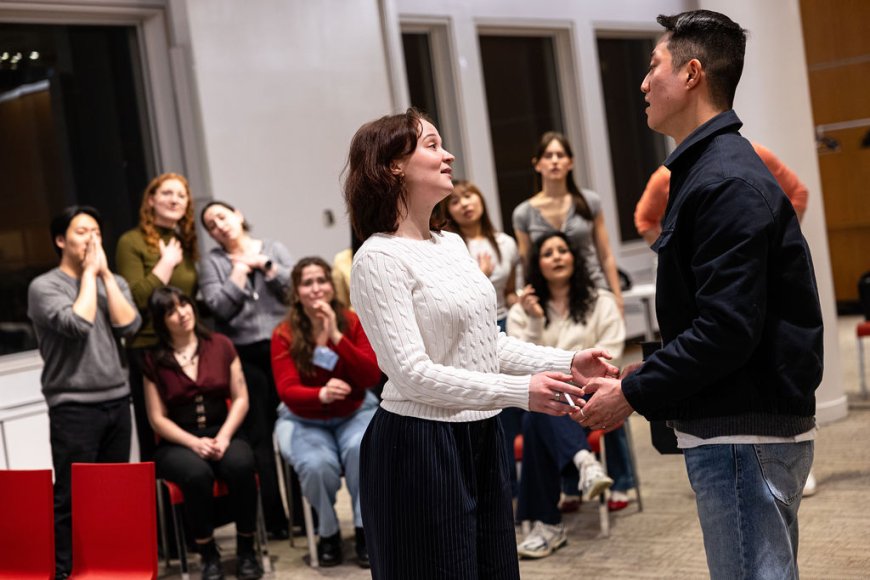
This month, Mannes Opera — the opera program of The New School’s Mannes School of Music — will give the operetta’s long-awaited U.S. premiere, breaking decades of silence. Directed by Griffin and conducted by Cris Frisco, The Silent Serenade will be performed on March 13–14 at 7:00 PM at the Gerald W. Lynch Theater in New York City. Admission is free.
Born in 1897 in what is now Brno, The Czech Republic, Korngold showed early signs of a prodigious musical talent. He grew up steeped in the Viennese late-Romantic tradition and earned the admiration of Mahler and Strauss. In Europe, Korngold quickly established himself as an opera composer. His most popular opera, Die tote Stadt (“The Dead City”), premiered in 1920 when he was just 23, and it remains his most widely known work.
At the invitation of director Max Reinhardt, he came to the U.S. in 1934 to score a film. For several years following, he moved between Europe’s operatic stages and Hollywood studios, until the Nazi annexation of Austria in 1938 forced him to remain in Los Angeles. As Korngold put it, Hollywood saved his life.
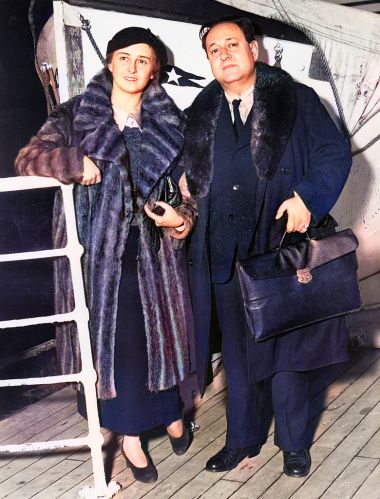
The composer joined a remarkable convergence of European émigré artists and composers in Los Angeles: some, like him, drawn into the newly burgeoning film industry, while others — including Ernst Krenek, Stravinsky, and Schoenberg — led a modernist avant-garde movement. Korngold, however, resisted its prevailing austere aesthetic, holding fast to his richly Romantic musical language.
That sound was just what Hollywood needed. Korngold’s fully fledged, operatic textures delivered the narrative sweep and emotional immediacy American films demanded.
He wrote symphonic scores with soaring melodic lines, rigorously constructed from recurring musical ideas. At a formative moment in American cinema, he helped define and legitimize the symphonic film score; the lineage to film composers such as John Williams, Howard Shore, and James Horner is unmistakable.
His name soon became synonymous with the genre. Korngold worked with Paramount and Warner Bros., with whom he signed one of the most lucrative contracts. He scored films including The Adventures of Robin Hood (1938), The Sea Hawk (1940), and Kings Row (1942), among the era’s most ambitious productions.
But cultural tides shifted with the end of WWII. Across the arts, an exhausted postwar world had little patience for unfettered lyricism. Film music began to favor leaner textures; Broadway moved toward the naturalistic dialogue of Rodgers and Hammerstein; and in the classical realm, cool ultra-modernism still reigned. The Silent Serenade was Korngold’s attempt to reclaim his identity as a composer for the stage.
The Silent Serenade melded his fluency in Viennese operetta, Broadway theatricality, and Hollywood lyricism; the combination played to his strengths but clashed with the times. Yet, The Silent Serenade stands on its own terms.
“It's rare to find something this beautiful in that kind of musical theater-operetta-pop culture space,” Griffin said.
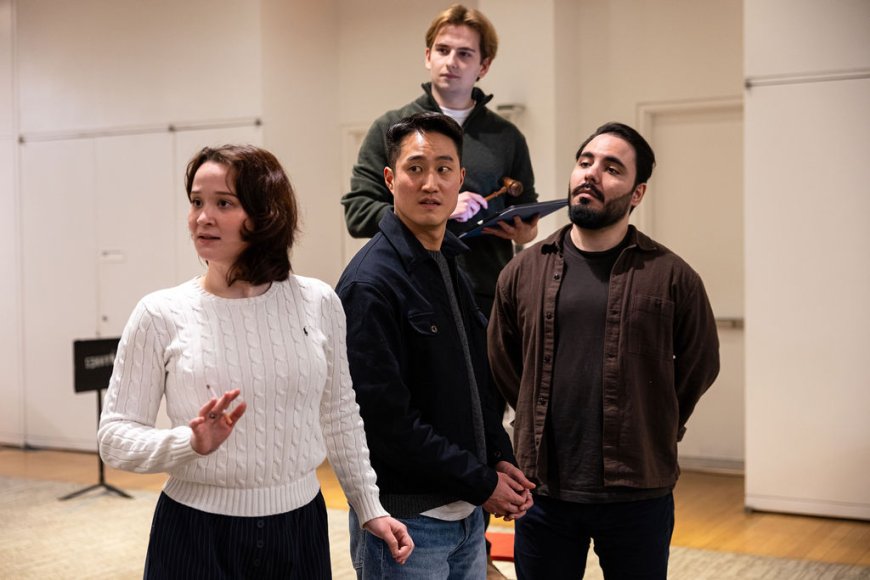
The music is sumptuous and warm, shaped by his years in Hollywood, with the feel of 1930s and ’40s musicals — what she describes as “a sparkle and sense of delight that’s both theatrical and musically irresistible…it's delicious, fun, but also rigorous and difficult.”
Based on a short story by Austrian writer Raoul Auernheimer, the comedic plot is a flurry of artifice that spins out of a single, silent tryst. A dressmaker is in love with a glamorous actress, who is engaged to the Prime Minister; a bomb scheme, political machinations, and a bumbling cop enter the fray. Griffin called the piece, which is fashion-forward and featuring variety-show pacing, a “funhouse of mirrors and dressing rooms.”
For all its caprice, The Silent Serenade is rooted in sincerity, with romance at its core. Though the piece has a sense of “oversized-ness,” Griffin said.
“You cannot sing these love songs and not mean them.”
She also pointed to a distinctly postwar undercurrent: an anxious political backdrop of bad government, unpopular leaders, and populist figures. All of this makes for rich teaching, she added: “In teaching the performing arts, we are constantly also teaching history.”
While the climate that produced this work — one of uncertainty and rapid change — may not feel entirely distant, its expressive language is often unfamiliar to students today. Griffin notes the challenge of teaching the theatricality and direct sentiment of works like “Singin’ in the Rain” or “White Christmas” to artists several generations removed.

The same holds true with comedy. In contrast to today’s more ironic, psychological humor, the gags in The Silent Serenade are rhythmic and slapstick, in the same vein as the vaudevillian Marx Brothers; like the Italian theatrical art of commedia dell’arte, they require exaggeration and absolute commitment. Griffin pointed to modern models such as Will Ferrell, who performs “in elevation” — treating even the most absurd situations with complete sincerity.
The operetta’s production history has nearly as many twists as its plot. A deal with prominent theater producers and brothers Lee, Sam and Jacob Shubert never materialized, and the piece failed to gain traction with other backers.
Korngold opined, “To get a performance in New York, music has to be ugly, programmatic, serious. If it’s beautiful it is only tolerated if the composer has been dead for fifty years.” It was translated between German and English multiple times by different hands.
The work was finally performed in a live radio broadcast in Vienna in 1951, and later staged in Dortmund to tepid reception.
As the Mannes Opera team is discovering, that uneven history left The Silent Serenade essentially untested in performance. “It never had its out-of-town tryout,” Griffin said. “No one ever said, oh, move this song here and do this song here.”
That kind of workshopping traditionally helps a new stage work succeed.
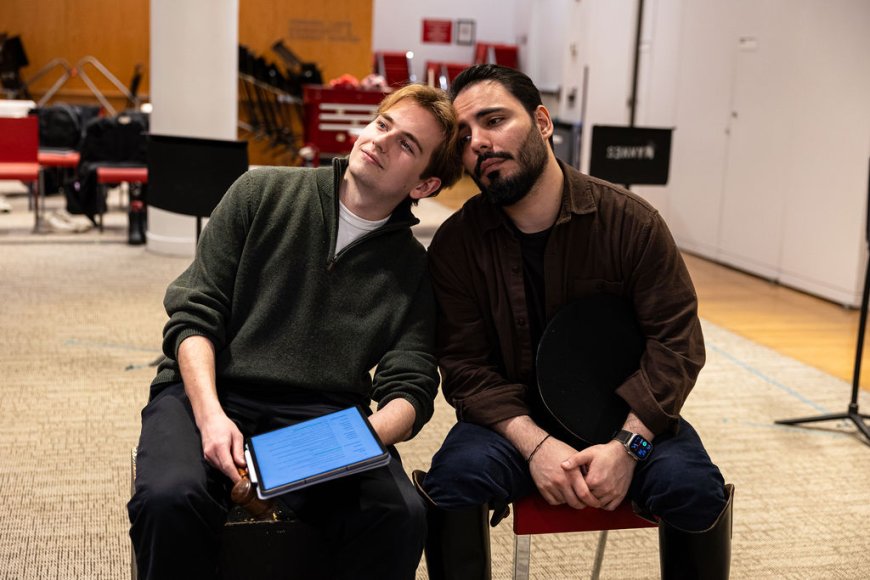
The Mannes production arrives amid a broader resurgence of interest in Korngold’s music, with increased performances in Europe and the United States over the past few years. In 2019, under the direction of conductor and Bard College president Leon Botstein, Bard’s SummerScape festival, “Korngold and his World,” revisited his work, including a long-awaited American premiere of Das Wunder der Heliane, which originally premiered in Hamburg in 1927 but was later suppressed by the Nazis.
Conductor Cris Frisco pointed to the long, uneven path of The Silent Serenade as a reminder that upheaval is nothing new in the opera world.
“We're in places now where the changes to the industry now seem seismic,” he said, “but probably historically are in line with what always happened.”
Work like this — demanding, risky, and rooted in reconsidering the past — is central to Mannes’ ethos. For Griffin, it also reflects a broader responsibility: in a landscape where professional companies often can’t afford such risks, whether in cost or controversy, conservatories can.
“If it's too risky, unknown, never been done before, we can take that on,” Griffin said. “For us, it's a win-win. We're doing incredible work with our students. They're having exposure to this extraordinary thing. This is the kind of work that should be done in the conservatories.”