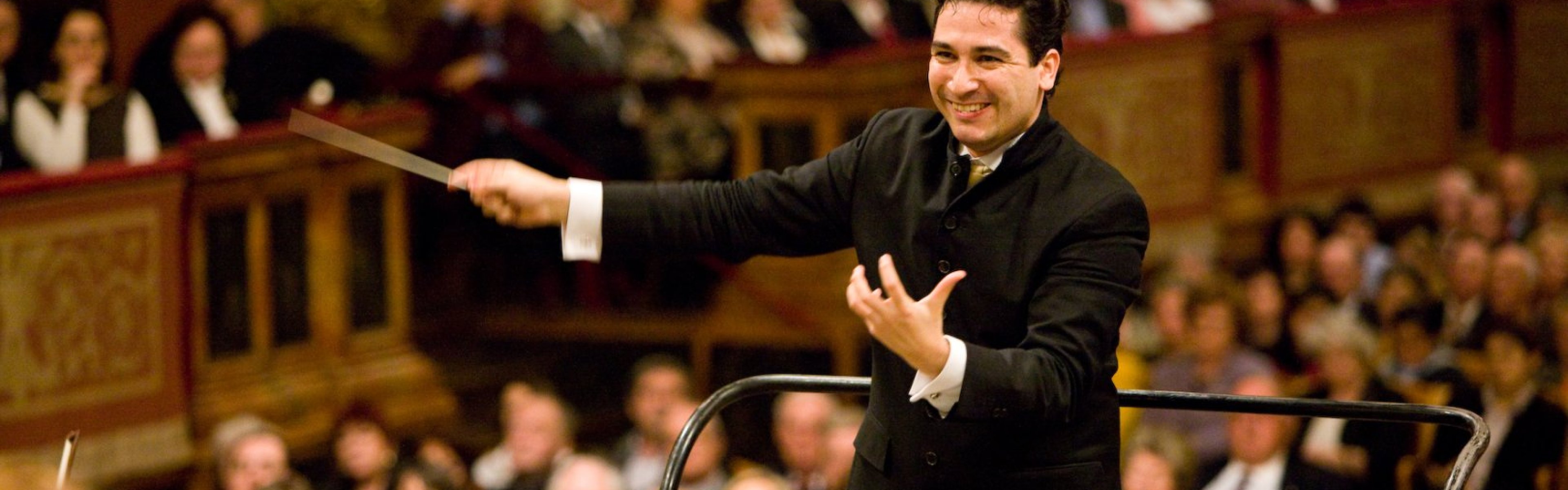
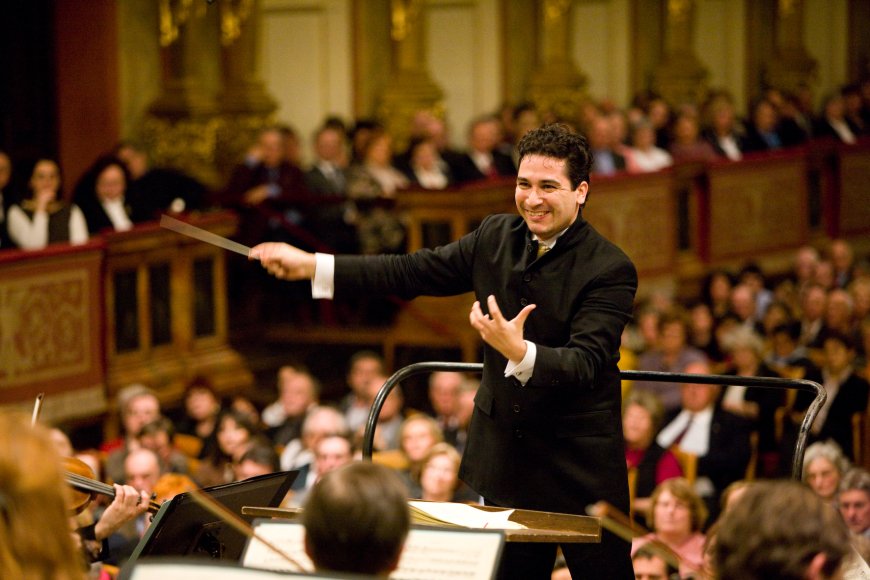
The excitable Colombian-born conductor Andrés Orozco-Estrada, 48, is no greenhorn among today’s baton wielders. He was, after all, the music director of the Houston Symphony from 2014 to 2022, and is currently General Music Director of the City of Cologne and Gürzenich Kapellmeister (James Conlon’s old jobs). But as he admitted in his breathlessly paced spoken introduction at Disney Hall on Friday, May 1, he had not been in Los Angeles before, so LA Phil audiences were catching him for the first time.
Orozco-Estrada had chosen Michael Tilson Thomas’s uproarious curtain-raiser Agnegram as the leadoff piece many months ago, but upon MTT’s passing last week, this concert instantly became the obvious choice as the one dedicated to MTT’s memory in his hometown.
Agnegram — named after Agnes Albert, a longtime patron of the San Francisco Symphony — is seven minutes of intricately worked-out orchestral hijinks where Old World symphonic traditions clash and combine with American vernacular. It reminds me of the screwball antics of Don Gillis’s Symphony No. 5½ (“A Symphony for Fun”) that fascinated Arturo Toscanini, who led it in 1947.
Orozco-Estrada took to Agnegram with even greater doses of brio, razzle-dazzle, and knockabout humor than its composer marshaled. It was actually a great way to remember MTT — not with a solemn or tearful elegy, but with a life-affirming whoop-de-do.
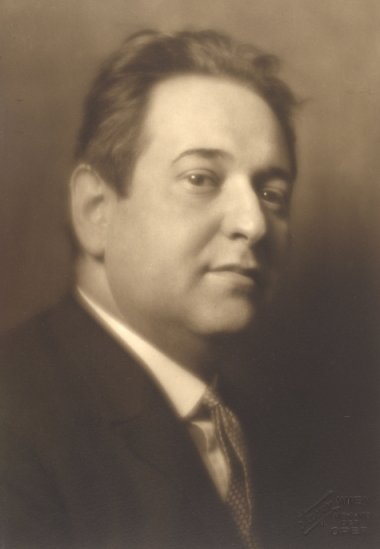
We are hearing Erich Wolfgang Korngold’s Violin Concerto a lot more these days in concert than we used to — and there are several reasons why. It’s a fine piece, overflowing with melody, gorgeously orchestrated, just long enough for its material, and equipped with technical fireworks for virtuosos. It has also been riding on the tide of increasing respect and exposure that Korngold’s film music has been receiving in recent years. Third, Jascha Heifetz isn’t around anymore. Though commissioned by Bronisław Huberman, the concerto was championed by King Jascha, and his example, set forth with unearthly technical prowess on a recording made with the LA Phil, probably had the effect of intimidating other soloists. (Heifetz’s monumental first recording of Jean Sibelius’s Violin Concerto also stood alone in the catalog for many years, and the piece didn’t catch on as a concert staple until he left the stage.)
Finally, the modernist thought police who declared anything that smacked of romanticism to be reactionary and unserious aren’t around anymore, leaving Korngold room to flourish.
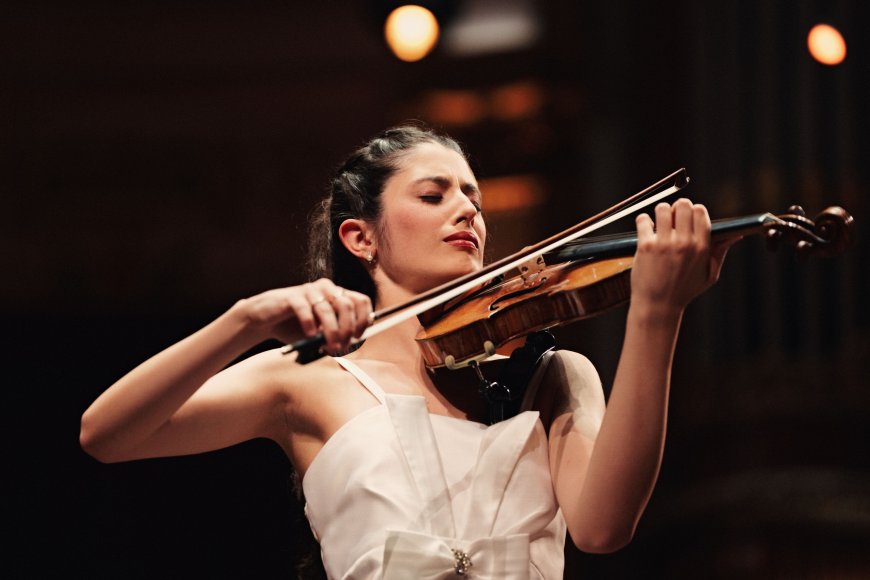
Violinist María Dueñas performed this concerto beautifully and songfully, with a smallish tone that occasionally got overpowered by the lush goings-on in the orchestra, and thankfully without overdone sentiment: the score supplies all that’s needed. (Dueñas will repeat the piece with the San Francisco Symphony June 12–14.) After her performance, she at first seemed to be walking offstage, but instead, she turned right and climbed up to where principal harpist Emmanuel Ceysson was perched. She played her encore with him, a delightfully elaborate arrangement of “Granada.”
As for the orchestra’s rendition of Antonín Dvořák’s Symphony No. 7, the less said, the better. Perhaps unused to Disney Hall’s highly detailed acoustics, Orozco-Estrada took a heavy, storm-tossed view of the work, which had virtually no Czech lyrical feeling. He also allowed the brass to blare loudly, to the point of bombast. Only his sure, swaying control of rhythm sent the piece on its way, fighting through the strange balances. This was similar to Gustavo Dudamel’s own brash performance here in 2020, which wasn’t very good either.