Like light from a distant star glimpsed through a telescope, Maurice White’s “Passages” is a message from the past, reclaimed via a technological feat.
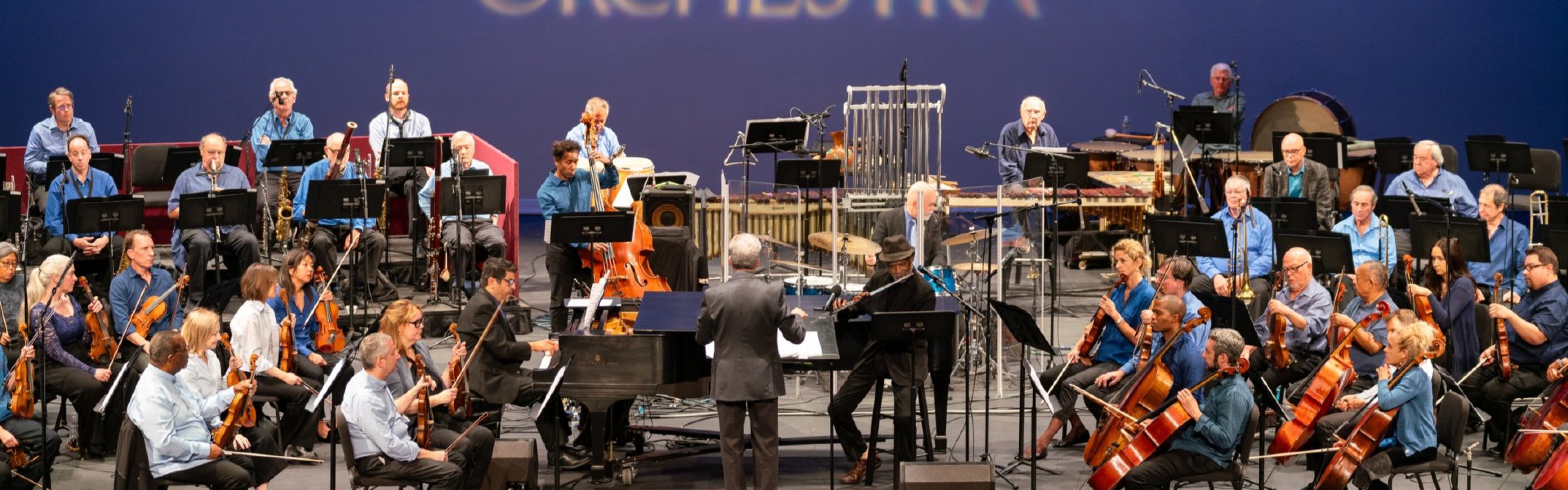
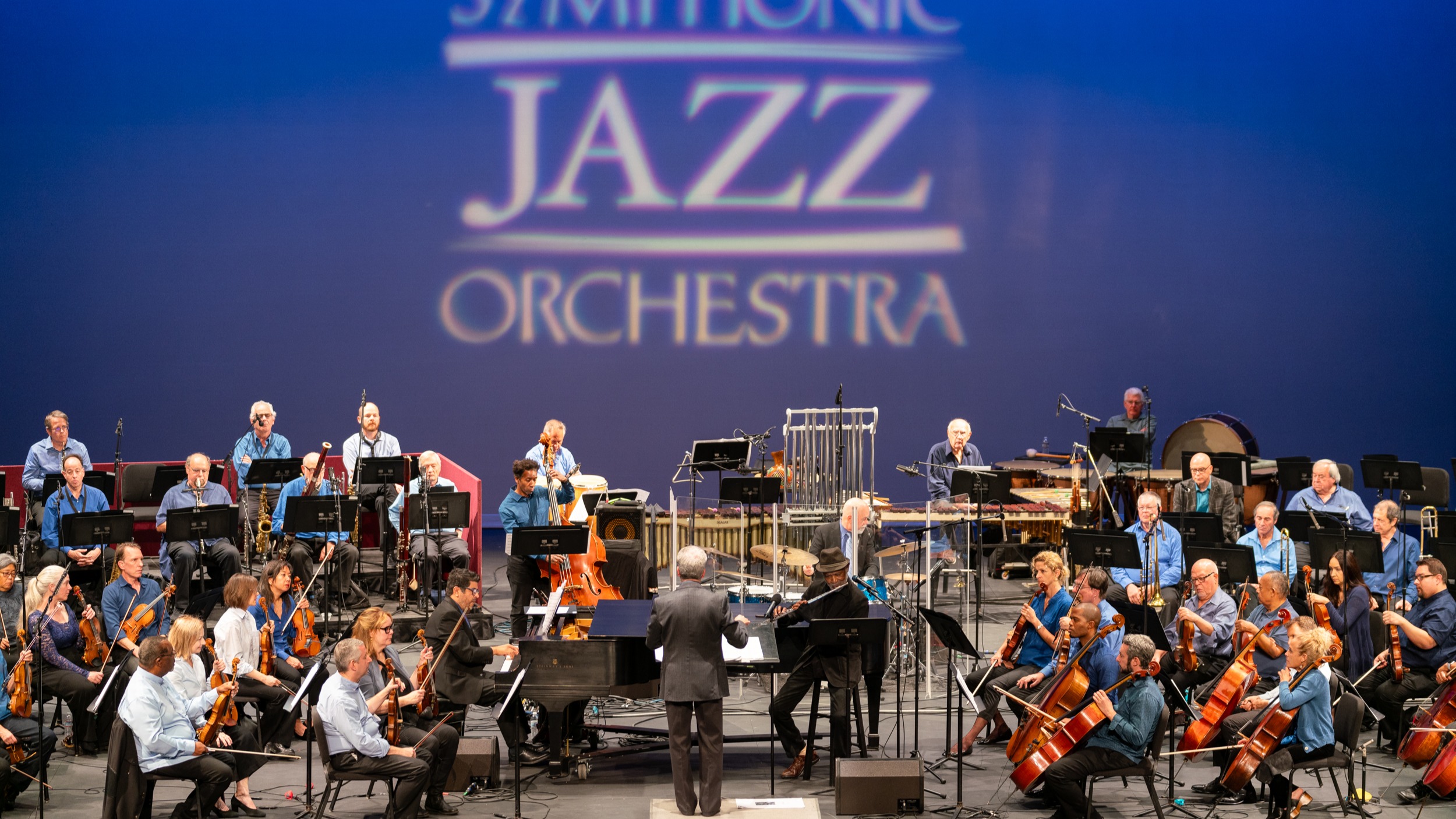
The story of how an orchestral work by Earth, Wind & Fire’s vocalist, lead composer, and guiding spirit, who died in 2016 at the age of 74, was recovered after two decades in the ether is inextricably tied to the Symphonic Jazz Orchestra (SJO), the Southern California ensemble for which it was created.
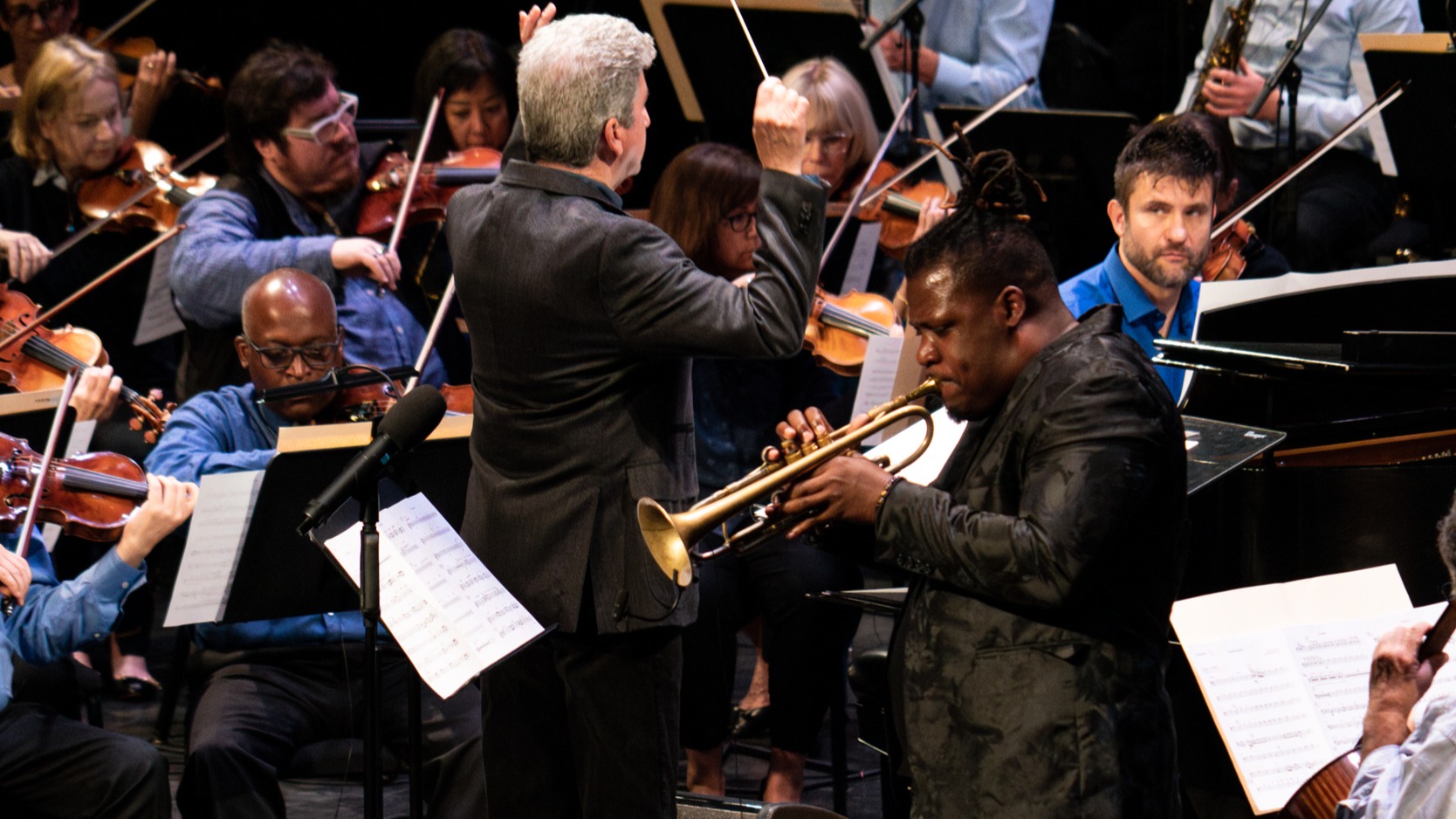
The 68-piece SJO performs the world premiere of the 10-minute concerto for alto saxophone, May 9–10, at the Carpenter Performing Arts Center in Long Beach as part of “A Salute to Maurice White,” an orchestral program of Earth, Wind & Fire songs arranged by jazz luminaries such as John Clayton, Derrick Hodge, Vince Mendoza, and Marshall Gilkes.
“This is a concert 23 years in the making,” said composer, producer, conductor, and SJO music director Mitch Glickman, who founded the orchestra in 2002 and also contributed several arrangements to the White salute. The concert’s centerpiece, Passages, was conceived as a vehicle for introducing the SJO with a splash.
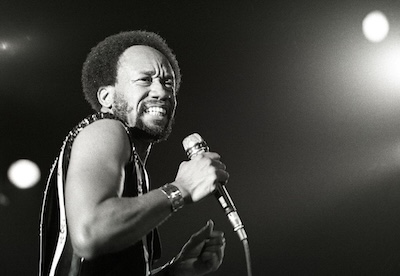
If George Clinton’s Afrofuturism turned interstellar space into a freaky, funkified after-hours party, White’s band Earth, Wind & Fire revealed a universe as a shimmering discotheque filled with signs and wonders. He had come up as a drummer on the Chicago jazz scene in the 1960s, including a long stint with pianist Ramsey Lewis’s hugely popular trio. White brought his love of jazz, West African music, R&B, and soul to the elemental grooves and horn arrangements, which powered a succession of hits that made Earth, Wind & Fire one of the world’s best-selling acts.
Glickman launched the SJO (“my midlife crisis,” he said) as an extension of the orchestral jazz lineage running from George Gershwin’s Rhapsody in Blue through Jack Elliott’s American Jazz Philharmonic (an endeavor that preceded Elliott’s founding of the Henry Mancini Institute). Working closely with Marin keyboard great George Duke (1946–2013), who served as the SJO’s music director during its first decade, he approached White with a commission.
Since retiring from performing with Earth, Wind & Fire not long after the group was inducted into the Rock and Roll Hall of Fame in 2000, White had been focusing on writing and producing new music. He was game for the challenge. Working with his longtime collaborator Bill Meyers, White dug into the new project and just kept digging.
“After he finished the 10-minute piece, he thought, ‘Wouldn’t it be cool to have some of my pieces reinterpreted by the orchestra?’” Glickman recalled. “‘Wouldn’t it be cool to have a female vocalist sing some of my songs?’ He’s looking at his repertoire in a different way. We started to build a whole salute. It escalated into this massive project with a $1.7 million budget and in the end we couldn’t raise the money.”
Passages would have been lost if Glickman hadn’t understood the potentially historic nature of the undertaking and hired a film crew to document White and Meyers working together. As part of the process, he also convinced the usually elusive White to sit down for a series of on-camera interviews, while taping commentary from illustrious peers about White’s influence. Every musician of our generation owes him a debt.
After White’s death in 2016, Glickman thought about trying to present Passages and reached out to Meyers to see if he could get his hands on the tracks they’d recorded. “He said, ‘That was four moves ago, and I wouldn’t know where to find it,’” said Glickman, who’s the longtime director of music programs for the Los Angeles County Museum of Art (LACMA).
It was almost another decade before a filmmaker working on an Earth, Wind & Fire documentary contacted Glickman, hoping to get access to the interviews he’d filmed with White. “Man, that was three moves ago,” Glickman said. “But I spent some months digging and looking and came up with five reels of DigiBeta.”
Looking through the footage, Glickman realized that he’d captured all of Passages as White and Meyers worked together in the studio. The score and the original tracks they’d laid down were long gone, but the music is there. He called up Meyers and “asked if he’d be up for this search-and-rescue mission,” Glickman said. “Bill painstakingly rebuilt the whole piece, transcribing the footage.”
With a green light from White’s estate, he set about revisiting the celebration of White’s oeuvre that had been abandoned in the early aughts. For Passages, the SJO recruited vocalist Chanté Moore, drummer Christian Euman, and one of the most sought-after alto saxophonists in jazz, who can’t be named for contractual reasons. But her career has been red hot in recent years, with a series of acclaimed recordings and high-profile performances from Newport to Monterey (not to mention a glittery wardrobe that would fit in seamlessly amid Earth, Wind & Fire).
The program includes bassist Derrick Hodge’s arrangement of “Be Ever Wonderful” from 1977’s All ’n All, Vince Mendoza’s take on the title track from 1975’s That’s the Way of the World, Glickman’s alto sax feature for the 1978 single “Fantasy,” and John Clayton’s version of the 1978 hit single “September.”
New York jazz trombonist Marshall Gilkes, a noted composer himself, whose trombone concerto gets its West Coast premiere with Symphony San Jose next March, arranged “Reasons” from That’s the Way of the World. The original track, a soaring soul ballad showcasing co-writer Philip Bailey’s silky falsetto, already featured an orchestral setting, “so I tried to not overdo anything,” Gilkes said.
“We needed to give it an ending because the original just kind of fades. I tried to add some harmonic colors. When you transcribe Philip Bailey’s voice, he sings these in-between notes that are tricky to transcribe, so the horn player has to listen to the original.”
The salute to White is a taste of an ambitious year to come as the SJO celebrates its 25th anniversary next year. Glickman is hoping the Earth, Wind & Fire material turns into the ensemble’s second album, a follow-up to 2015’s Looking Forward, Looking Back, which features commissioned works by George Duke and Lee Ritenour, along with “Rhapsody in Blue.”
“Our job is to commission and perform new works,” Glickman said. “George Duke wrote a beautiful bass concerto that we premiered at UCLA with Christian McBride. Our last concert featured Terri Lyne Carrington, premiering her music with orchestra. There’s still so much to explore in this arena.”