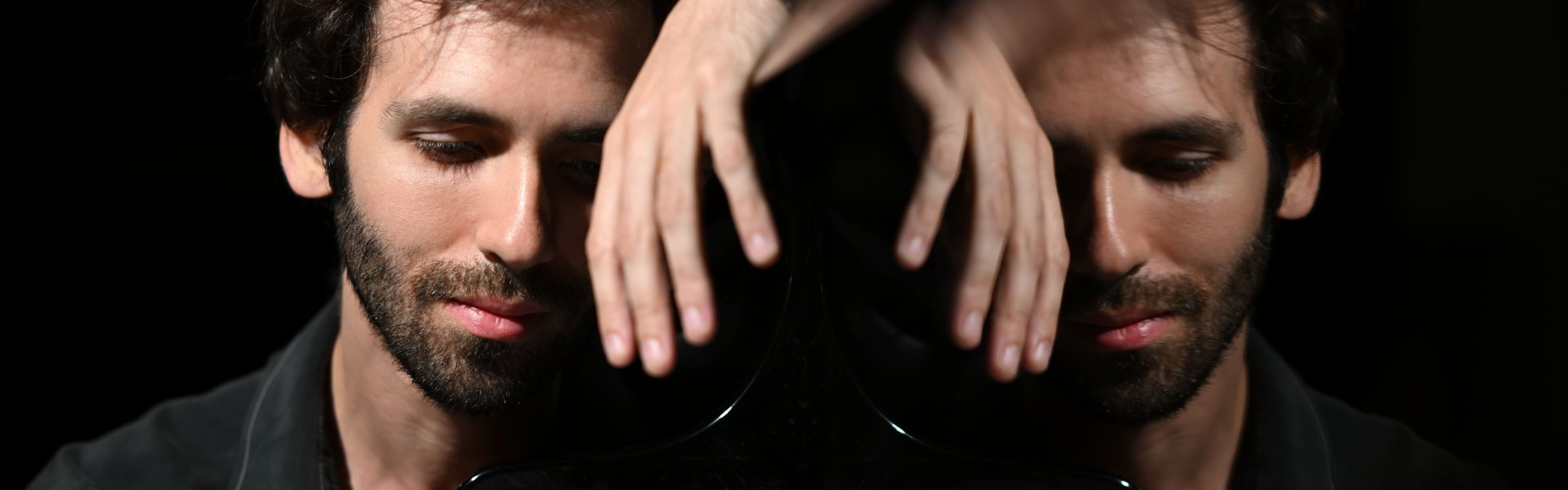
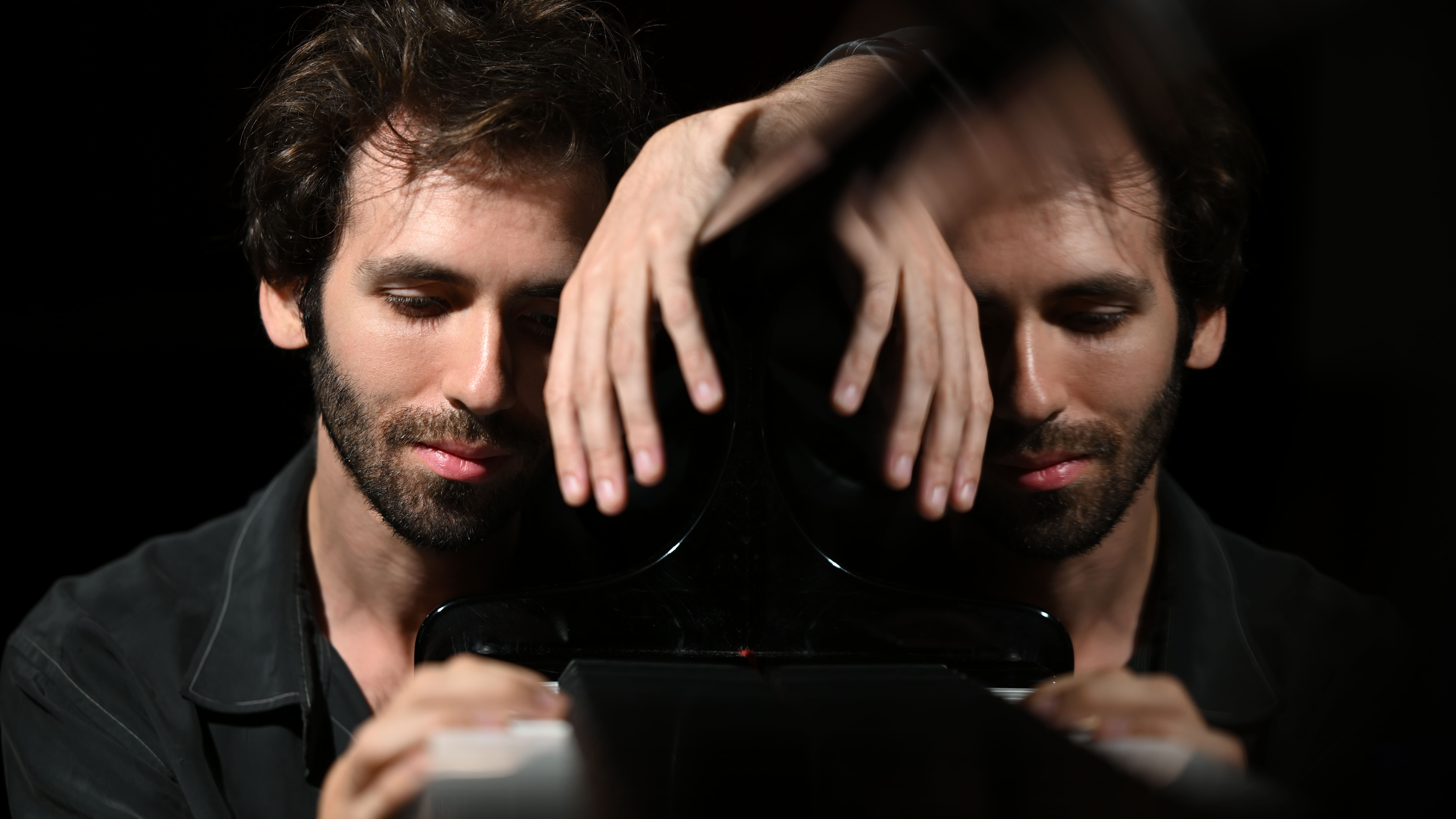
French he may be, but young piano wizard Alexandre Kantorow has a special gift for Russian music. Even the Russians seem to think so, since he was the first French pianist to win First Prize at the legendary Tchaikovsky Competition, in 2019.
On April 28, before a spellbound audience at Walt Disney Concert Hall, Kantorow showed off his flair and stamina a la russe in a soaring, deeply felt, and technically Herculean recital. Anchoring the program were two rarely-heard first sonatas by close friends and piano virtuosi Sergei Rachmaninoff (1873–1943) and Nikolai Medtner (1880–1951).
A dreamy Prelude (No.45), composed in France by Polish expatriate Frédéric Chopin (1810–1849), made a fitting Franco-Slavic companion. Hungarian Franz Liszt’s spicy and extravagant keyboard curiosity, Variations on a motif by Bach:Weinen, Klagen, Sorgen Zagen, written in Germany, strengthened the Eastern European theme.
That all four composers emigrated, either by choice or necessity, lent the evening a mood of melancholy nostalgia.
Performing from memory, Kantorow brought to this dense and intellectually demanding program not only rock-solid technique and command, but a gentle, probing touch and clarity of intention. His ability to shift in mood, volume and color in the middle of a phrase brought chills.
Kantorow opened with a dazzling account of Liszt’s spectacular homage to Bach. The 30 variations require dexterity, supreme confidence, and a liberated improvisatory sense. With his fluid technical control and fervent interpretive imagination, Kantorow left no doubt why he has been called “Liszt reincarnated.”
Medtner completed his Piano Sonata in F Minor, the first of 14 , in 1903. Like most of his music, this sonata adheres to strict classical style with complex contrapuntal textures, leading some critics to call him the “Russian Brahms.” Intersecting chromatic lines cross with mathematical precision, some in fugal episodes.
Kantorow deftly negotiated the thorny thickets of notes and scales, exposing the wistful emotion beneath the surface, especially in the devotional slow movement. His light and fluffy crystalline touch enlivened the gravitas and decorum.
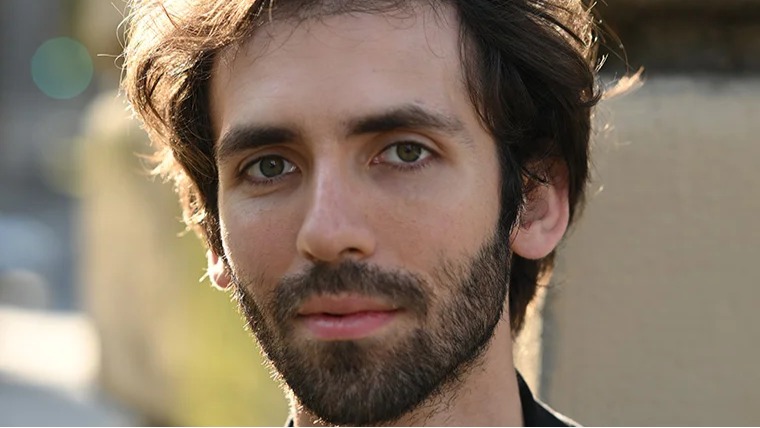
After intermission, Kantorow changed the pace with the warm and languid Chopin Prelude. Following the ebb and flow of the gently descending lines, he created a mood of bucolic serenity without sacrificing momentum.
In a theatrical gesture that may have confused some audience members, Kantorow launched into Rachmaninoff’s little-known First Piano Sonata immediately afterward.
Composed in 1907, the sonata was originally intended to represent characters from Johann Wolfgang von Goethe’s Faust. Although Rachmaninoff eventually discarded that framework, the first movement’s surging turmoil suggests the fevered workings of Faust’s dark mind.
The pianist brought out the Sonata’s play of muted light and devilish dark, emphasizing subtle details in a texture oversaturated with ideas. Echoes of Russian church bells, a chant-like liturgical motif, and phrases of the Dies irae from the Requiem mass rise out of an endless flow of slowly unfolding melody. In less talented hands, this piece can sound overwrought and muddled, but Kantorow provided a clear narrative, emphasizing the two reoccurring motifs, and producing a rich, big sound. He scaled the impossibly difficult cadenza passages — written for Rachmaninoff’s enormous hands —like a nimble mountaineer.
Rachmaninoff once said that “the most important thing for me in my interpretations is color. Without color, it is dead.” Kantorow has that same kaleidoscopic sense of shading and nuance.
The rousing standing ovation demanded encores. First came another meditative and soulful tribute to Bach, the Siciliano from his Flute Sonata in E-Flat major, BMV 1031, in Wilhelm Kempff’s arrangement. A tender, surging account of Liszt’s monumental arrangement of Isolde’s Liebestod from Tristan and Isolde (S.447) sent us blissfully homeward.
There’s no question that Kantorow is one of the most talented, skilled and creative pianists on the scene today. Here’s hoping he returns to L.A. again soon.