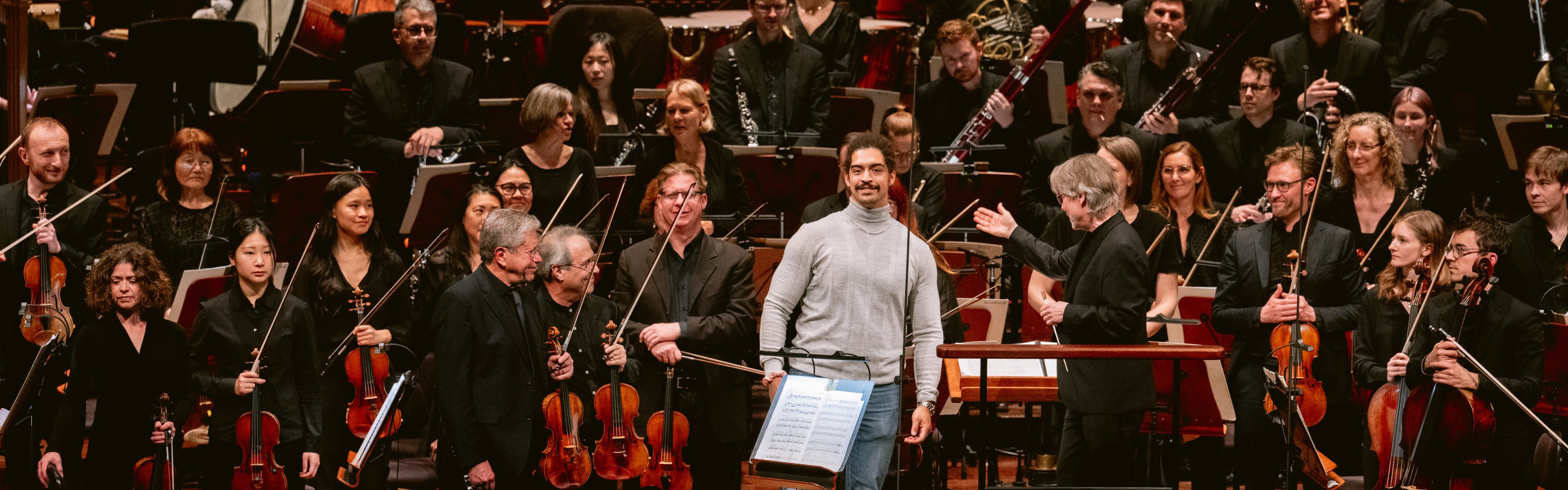
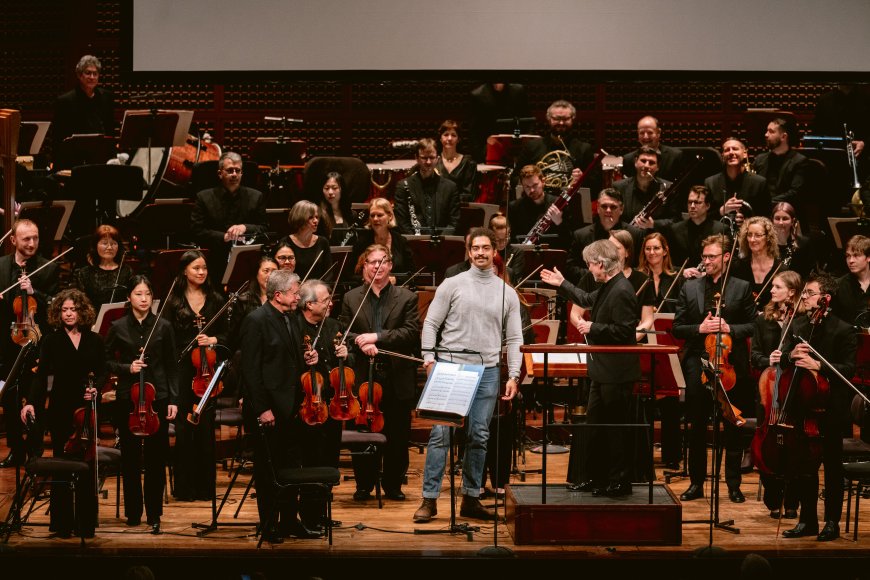
The Emerging Black Composers Project has reached its half-way point.
Launched in 2020 as San Francisco Symphony’s 10-year commitment to uplifting Black American composers, one winner is selected per year to compose a new work that premieres with the Symphony.
In support of the work, the winner receives $15,000 and mentorship from SF Symphony’s senior musical staff (up until this past June, Esa-Pekka Salonen), Resident Conductor of Engagement and Education Daniel Bartholomew-Poyser, and Edwin Outwater, Music Director of the San Francisco Conservatory of Music. SFCM remains a supporting partner to the program, despite having withdrawn from administering it in 2025 following a directive from the U.S. Department of Education.
As conductor Michael Morgan once insisted, the prize was not created to fill a void, but rather to illuminate and encourage existing musical talent in the contemporary classical tradition. The first winner of the award — named the Michael Morgan Prize after the conductor’s death — was Trevor Weston, 52 at the time. From his Push (2021), to Jens Ibsen’s Drowned in Light (2022) and Xavier Muzik’s Strange Beasts (2023), the project has produced a variety of boundary-pushing, transcendent works.
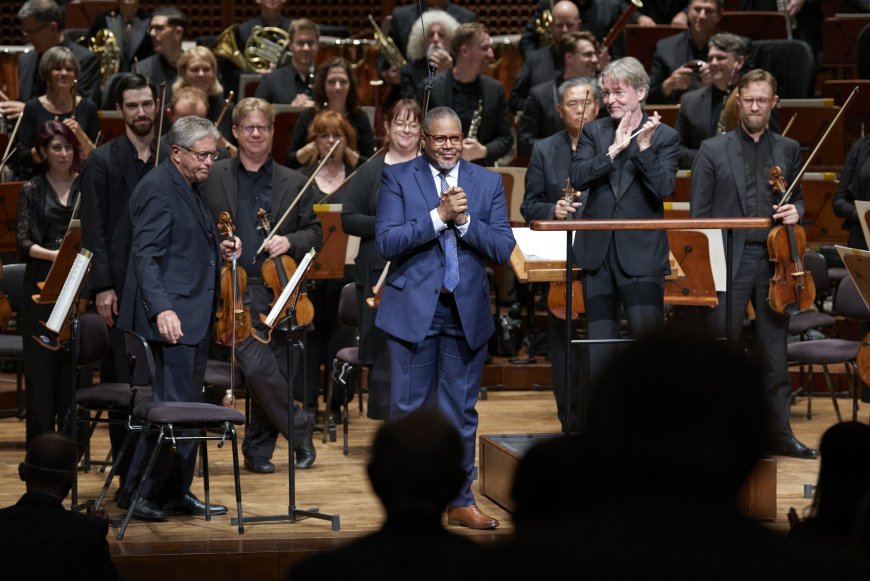
EBCP’s fourth winner, Tyler Taylor, will give his premiere this May. Kyle Rivera, who was recently announced as the project’s fifth winner, will give his premiere during the Symphony’s 2026-2027 season.
The opportunity to write for the San Francisco Symphony is only part of the reward. Publicity is another benefit. “Once you’re vetted,” Weston said, “other organizations have an easier time hiring you.” The deadline to apply for EBCP’s 2026 cycle is Feb. 1.
SF Classical Voice staff spoke to several prize winners to learn more about the lasting impact of the Emerging Black Composers Project. Below are their reports. Excellent musicians are going mainstream thanks to this award.
One wishes Morgan were alive to see it.
Jens Ibsen — 2022
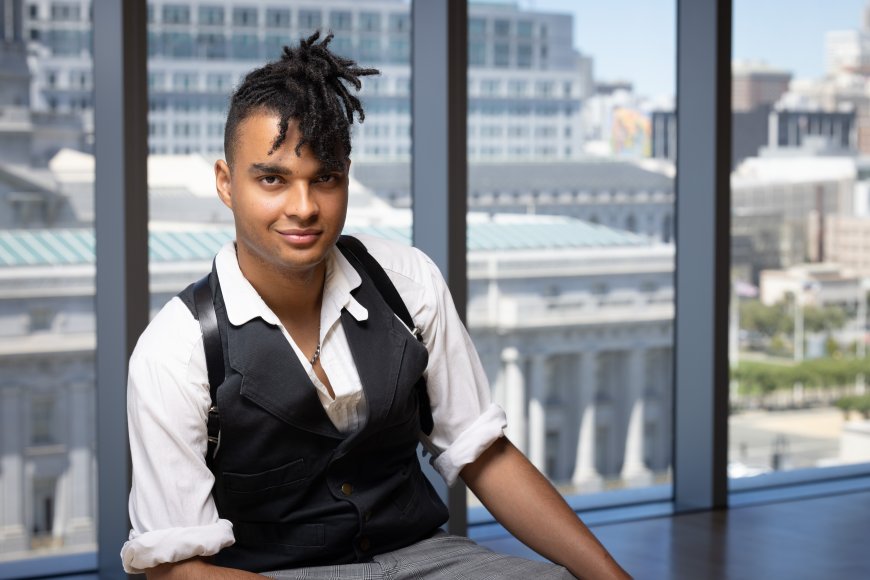
Jens Ibsen applied for the Emerging Black Composers Project “kind of on a lark.” As a composer perpetually submitting to competitive opportunities, he’d learned to remain unattached to outcomes — so unattached, in fact, that he’d forgotten about the application entirely.
“Until Daniel Bartholomew-Poyser, who was one of the judges the year that I applied, added me on Instagram and asked me via DM to speak about the project with him,” Ibsen recalled. “He calls me, and he’s on his way to go conduct The Rite of Spring. But then he’s like, ‘Oh, yeah, by the way, you won.’”
The program granted Ibsen free admission to SF Symphony concerts for over a year, allowing him to study the ensemble’s sound and programming before putting pen to paper. “I saw a lot of great shows and really came to understand the orchestra,” he said. “I had a lot of time to have the piece really germinate.”
When it came time to write Drowned in Light, his 2023 premiere, Ibsen worked closely with Outwater. “He was very helpful and really just kept pushing the piece to be bigger and better and bolder,” Ibsen said. “It was so much better than it would have been, I think, were it not for his direct input.”
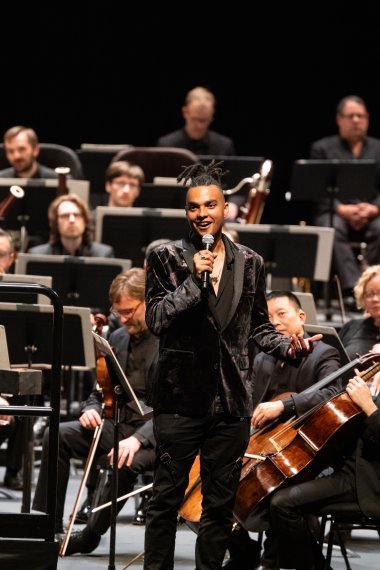
The resulting work featured electric guitar and drum kit along with the orchestra — a reflection of Ibsen’s broader artistic mission. “Generally, the work that I do as a composer is centered around bringing the hallmarks of rock and metal music to the concert hall,” he explained.
That mission has only expanded since his EBCP premiere. In January, Ibsen premiered Whale-Road, a 17-minute prog-metal opera performed in Times Square, New York City, as part of the Prototype Festival with Beth Morrison Projects. The piece, set to poetry by Julian Talamantez Brolaski, was inspired by whale song as a form of cross-species communication. (Clips of the performance are available on Ibsen’s Instagram.)
Looking ahead, Ibsen’s Scene Symphony — a work inspired by rock and metal bands — will premiere with the San Francisco Chamber Orchestra at the end of February. Later this year, the East Bay’s Awesome Orchestra will premiere his half-hour symphonic work, Sakawa.
For composers considering applying to the EBCP, Ibsen’s advice is practical: “Definitely do it, and do it over and over. If memory serves, I applied the first year, didn’t get it. Especially as a young composer, recordings are currency.” He noted that just a year later, better recordings of his work made a difference in his application.
More broadly, Ibsen urged young composers — Black composers especially — to resist external pressure to conform. “Don’t try to mold your artistry around what you think other people want,” he said. “You’ve got to find that thing that you’re that crazy about and just pursue it single-mindedly.”
Reflecting on his time with the SF Symphony, Ibsen emphasized the program’s supportive atmosphere. “I felt very welcomed. There was never the sense — that you get in virtually any other early career composer gig — of like, ‘No, you can’t do that.’ They really just wanted to make my dream happen. And they did.”
Kyle Rivera — 2025
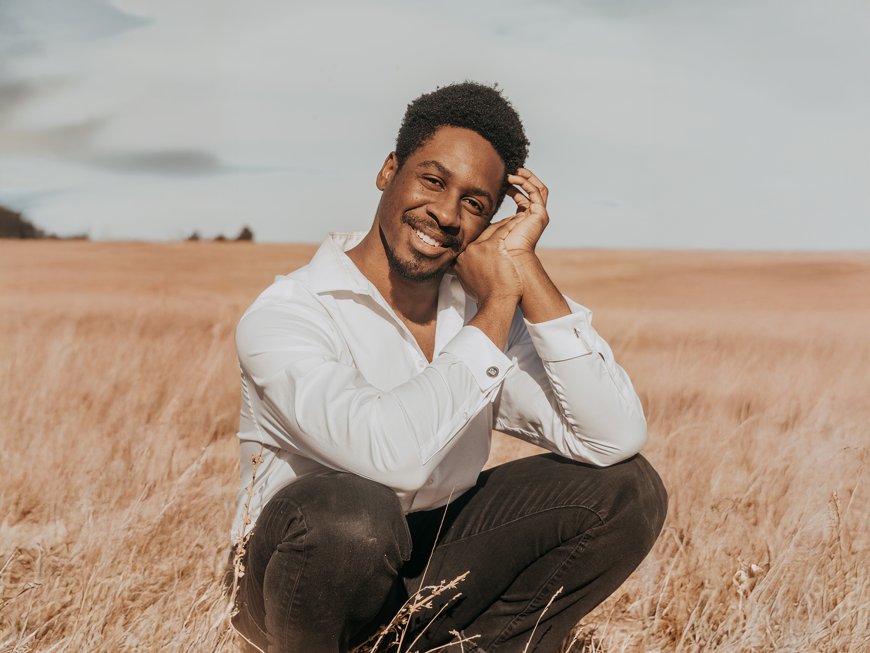
When Kyle Rivera received a call at his home in Houston, Texas from the SF Symphony requesting to speak with him about his application, he assumed he had made some sort of error filling it out — “because I always do something wrong when I apply to these things,” the young composer shared jokingly with SF Classical Voice.
When Rivera learned he had been selected as the program’s fifth winner, he felt a sudden onset of emotion — pride, joy, and disbelief — and then reflected on the prize and his responsibility as its recipient.
The announcement of the 2025 winner had been delayed after the SF Symphony and San Francisco Conservatory of Music suspended the program in February following a memo from the U.S. Department of Education’s Office for Civil Rights warning schools to eliminate their diversity programs or risk losing public funding. The San Francisco Symphony announced in August that the Emerging Black Composers Project would return, albeit without SFCM as an administering partner. Rivera is the first prize recipient under the Trump Administration’s aggressive DEI threats.
“In addition to the shock, there was also that feeling of pride and honor that came with the prize, but then also this really strong feeling of obligation, just knowing the kind of threat that it was under, and what the statement of it coming back means,” Rivera said. “And just knowing that there is a lot to consider in how I move forward.”
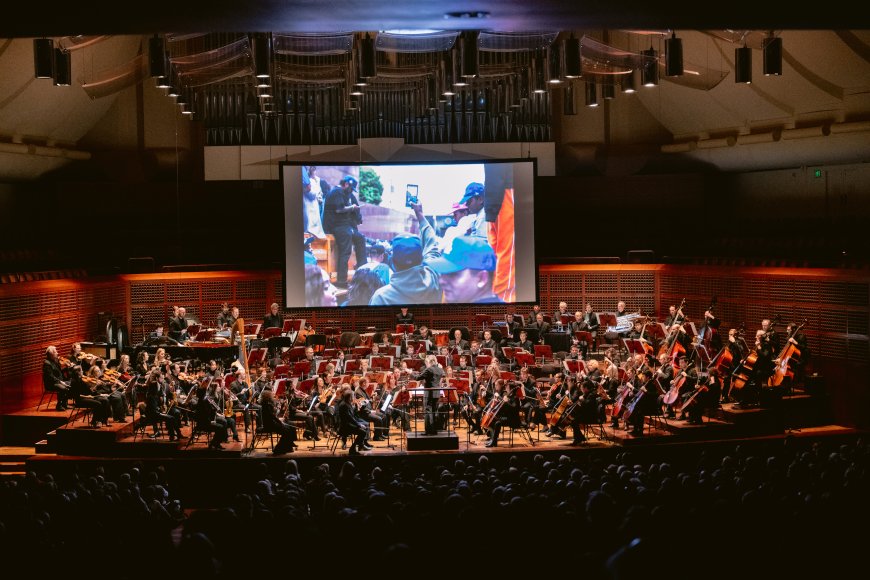
Rivera, who just finished a master’s program at Yale in 2025, has already begun work on his commissioned piece — set to premiere in February 2027. He is writing for a full orchestra and predicts the composition will be 15-20 minutes in length, most likely with three movements.
While composing the new work, his main source of metaphoric inspiration has been whale fall — the process by which a whale’s body falls to the bottom of the ocean after its death, supporting new ecosystems of diverse aquatic life.
“I've started to think about this in terms of government and systems of power. How there's the cycle of these long-established bodies of power, or government, that fall and become the emergent foundation for new systems to arise,” he said. “It almost plays with my anarchic ideation in some ways.”
Rivera said he works with multiple mediums during his creative process. So far, he has experimented with text and visual art to flesh out his ideas for the “whale fall” theme.
For the next five years of the Emerging Black Composer Awardd, Rivera hopes the project will continue receiving support amid funding threats or similar challenges. He also hopes it will continue beyond its original scope.
And as for the future of his personal career, Rivera said he plans to add teaching to his plate, as a creative outlet, in addition to his compositional work.
“It's important for me to be able to be a performer — to share the music that I love too —and also to just feel like a person connected to the greater ecosystem of artists, of Black creators, thinkers, and thinkers from all backgrounds,” he said.
Trevor Weston — 2021
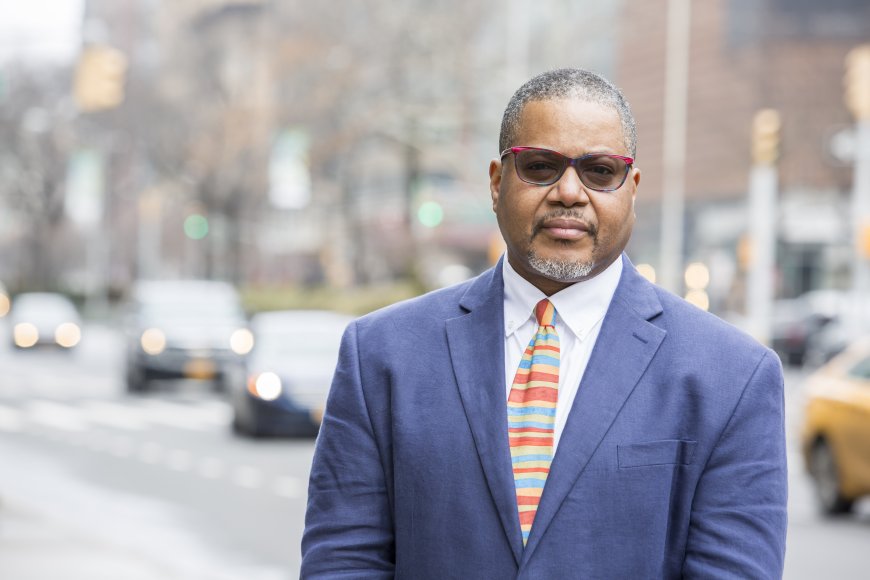
The first winner of the Emerging Black Composers Project, Trevor Weston, said he had a wonderful time preparing his orchestral work, Push (2022), for its premiere with the San Francisco Symphony under Esa-Pekka Salonen.
In the following years, Weston was asked to sit on the jury for the award. The composer embraced the opportunity to showcase Black composers and their breadth of contributions to orchestral and classical music.
“There have always been Black people writing in this tradition — writing symphonies and classical music — long before there was jazz and [broad knowledge of] Black vernacular traditions.” And so, the Emerging Black Composers Project is one way to broaden audiences’ awareness of that presence and variety.
“What I appreciate about the idea of the project is its attitude of ‘let’s see what happens if we present unique voices from this culture,’” Weston said. “When I’m judging [applicants], I’m looking for something that is risk-taking in its style. Like, ‘oh, we don’t hear enough of this in orchestral music.’”
Weston himself embodies multiple influences in his music. He studied under composers T.J. Anderson at Tufts University, and then Olly Wilson at UC Berkeley, both of whom were (or are, in Anderson’s case) midcentury modernists whose styles reflect mainstream currents of the 20th century. Weston also spent time at IRCAM, Paris’s center for music experimentation and research. He is a choral singer and organist who can sing medieval chants from neume notation, but also loves the blues, funk, and hip-hop.
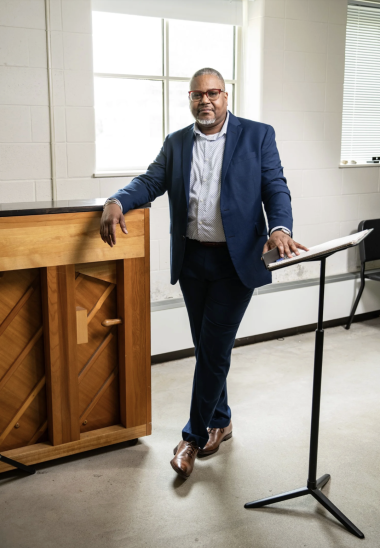
In the wake of Push, Weston enjoyed a flurry of commissions. “I finished a 17-minute cantata for Washington Bach Consort, and I wrote a piece for the NY Philharmonic MAP program, and then Aqua for San Francisco Chamber Orchestra,” Weston said. “And then a 50-minute oratorio, American Lamentation, for St. Thomas Church in New York City,” where he was once a choirboy. He also returned to UC Berkeley to see the university orchestra perform Push, “which was surreal.” Weston literally knocked wood as he described how busy he’s been.
If there’s one thing Weston has learned over his career it’s that, “We are our best selves when we don’t filter. Make interesting connections. The way I connect things is what makes me me.”