As I made my way to the Proud Bird Ballroom — an unassuming banquet hall on the edge of LAX — in the fall of 1990, there was no way of knowing that I was about to witness history unfolding.
After reading a short article in the Los Angeles Times about the fundraiser for legendary trombonist-arranger Melba Liston (1926–1999), who had suffered a stroke and needed a computer with expensive music notation software to start writing arrangements again, I knew I wanted to be there.
I’d written a paper about Liston for a jazz history class at UC Santa Cruz a year or two before, but in the late 1980s she was off the scene, her whereabouts largely unknown. Discovering that she was back in Los Angeles, where she first earned renown in the 1940s, was a thrill and an opportunity. Little did I know the event would launch my five-year friendship with Liston.
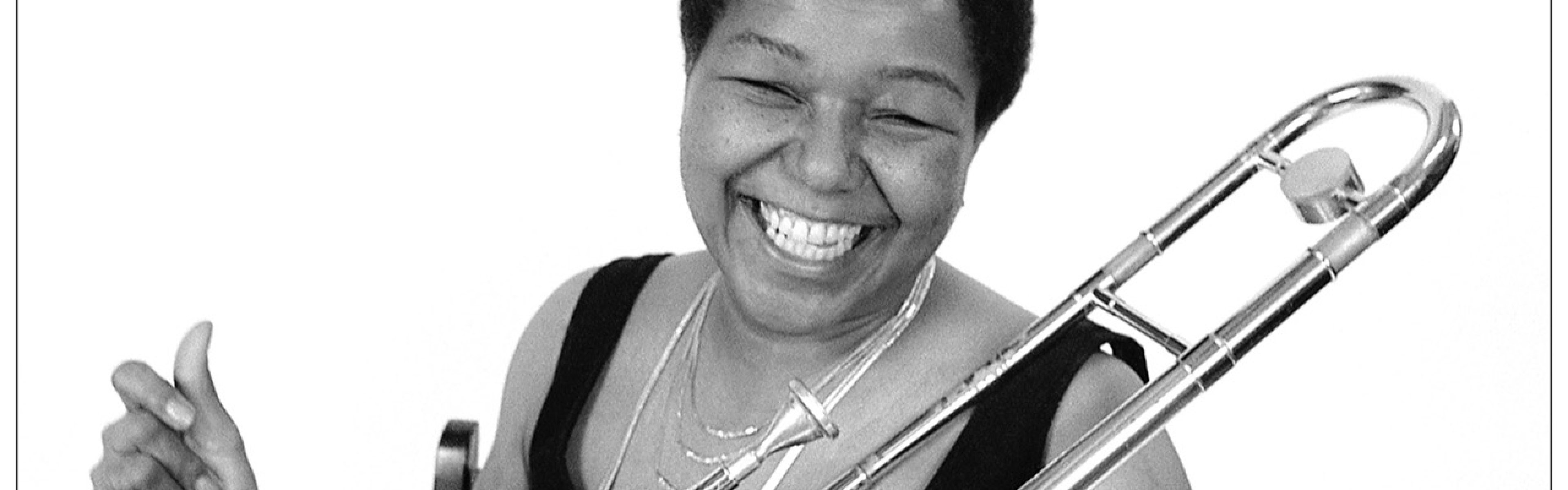
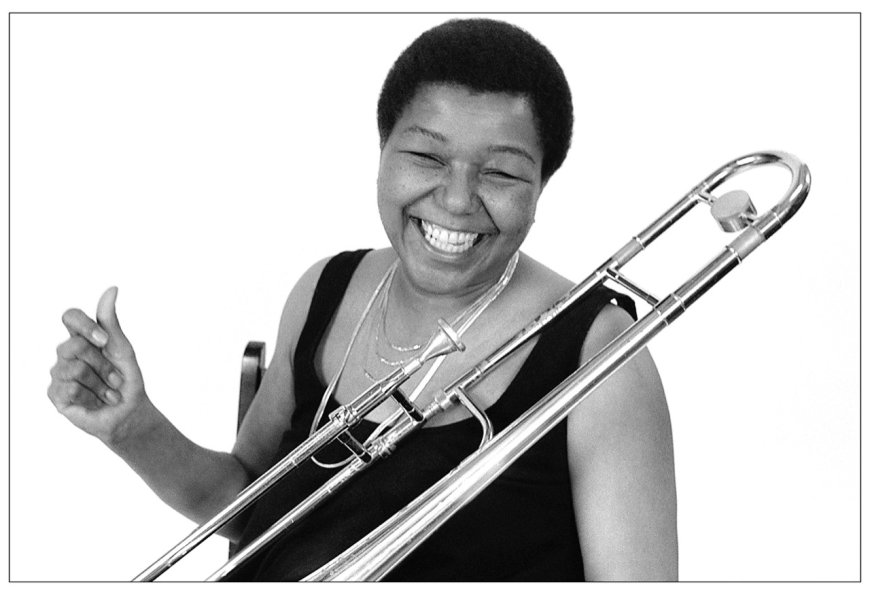
A singular figure in jazz, Liston was the only woman horn player who worked regularly in leading orchestras throughout the 1940s, ’50s, and ’60s, touring and recording with Gerald Wilson, Dizzy Gillespie, Quincy Jones, and others. While she contributed to dozens of albums by the greatest jazz artists of the era, Liston often downplayed her trombone prowess. She felt she’d made her mark in her behind-the-scenes role as an arranger and orchestrator for a similarly illustrious constellation of bandleaders.
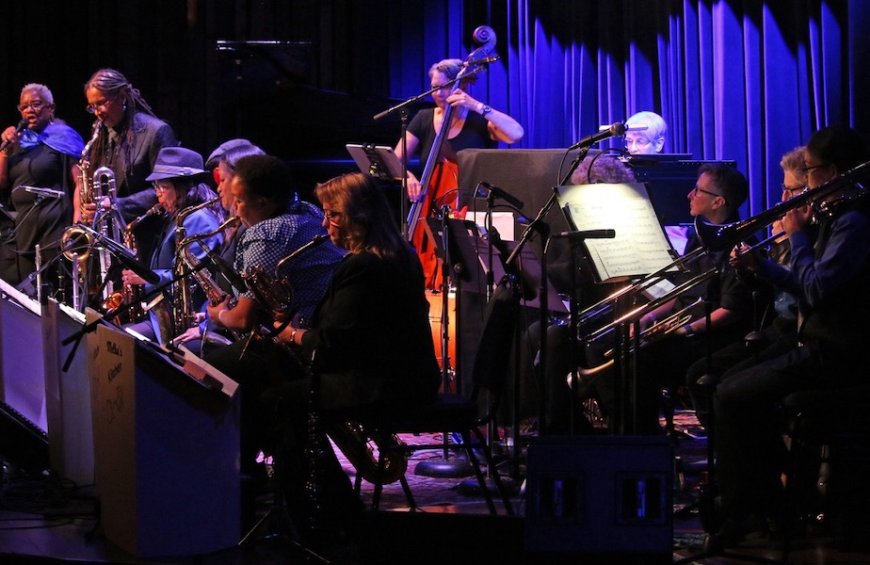
I was reminded of the fundraiser last month at a concert and colloquium held by the all-women band Melba’s Kitchen at Oakland’s Plymouth Jazz & Justice Church, celebrating Liston’s 100th birthday. In between crisp performances of her arrangements, the event included remarks by four professors involved with the Melba Liston Research Collective. Lisa Barg, an associate professor of music history and musicology at McGill University in Montreal, described Liston’s constant struggle against the jazz scene’s often poisonous sexism and her late-career triumph over disability. It was after the 1990 Jazz Heritage Foundation’s Proud Bird Ballroom fundraiser that Liston “was able to buy her first Apple computer,” Barg said. Suddenly, the occasion took on a historical cast.
Melba’s Kitchen continues the centennial celebration Sunday, Feb. 22, at The Freight with special guest pianist Dee Spencer, who founded San Francisco State’s jazz program and is also a member of the Melba Liston Research Collective. While the ensemble is the biggest champions of keeping Liston’s music in circulation, Melba’s Kitchen and the Research Collective aren’t the only forces in the jazz world ensuring her legacy remains visible.
Last October, Jazz at Lincoln Center inducted Melba Liston into the Ertegun Jazz Hall of Fame, part of a 2025 class that included tenor saxophonist Joe Henderson, pianist/composer Horace Silver, and vocalist/songwriter Abbey Lincoln (with whom Liston collaborated on the song “Rainbow,” a piece in the Melba’s Kitchen book).
My own efforts to champion her music started at the Proud Bird Ballroom. During a quiet moment I sidled over, introduced myself, and ended up making a date to visit her at the West Adams house she shared with several aunts. It was the first of many visits; over the next five years we struck up an ongoing relationship. I was hoping to get an oral history published, but the project never came together.
Instead, I set about making myself as useful as possible for her. Liston was using a wheelchair to get around, and it was hard for her to get out of the house. I’d visit every few weeks to hang out, and whenever an old friend of hers came through town, I’d pick her up and take her to the gig. Her reunions with friends such as Elvin Jones, Clark Terry, Abbey Lincoln, Charles Brown, and Blossom Dearie were beautiful to behold.
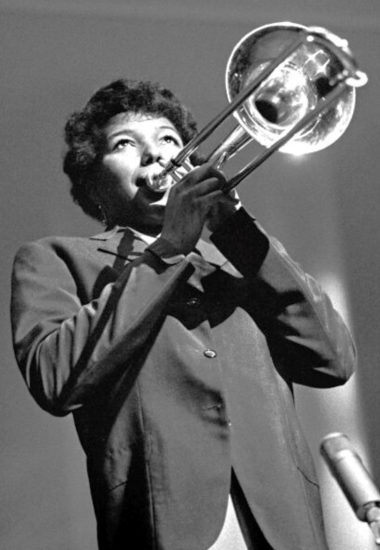
On many visits, Liston was immersed in various writing projects. Though the trombone had been her refuge, it was with her pen (and later computer) that she felt she made her greatest mark. Her peers were era-defining arrangers like Tadd Dameron, Billy Strayhorn, and Gil Evans. She arranged albums for the likes of Elvin Jones, Milt Jackson, Johnny Griffin, Dakota Staton, Billy Eckstine, Gloria Lynne, and Junior Mance. But it was her four-decade-long collaboration with pianist-composer Randy Weston that stands out as one of the great partnerships in jazz history.
Weston and Liston first met when she was playing trombone with Dizzy Gillespie in 1958, and they immediately struck up a friendship. From the late 1950s through the mid-’60s, Weston and Liston collaborated on a series of classic albums, starting with 1959’s Little Niles and Live at the Five Spot, which featured tenor sax legend Coleman Hawkins and trumpet great Kenny Dorham. With 1961’s Uhuru Afrika, Liston arranged and organized Weston’s 24-piece orchestral suite celebrating the rising African independence movements, a project that broke new ground in incorporating West African rhythms into jazz.
In the late 1960s and ’70s, when the record industry’s interest in jazz cratered, Liston worked as a staff arranger at Motown, arranging and conducting for Marvin Gaye, Diana Ross, and her old friend Billy Eckstine. During a trip to Jamaica with Weston in the early 1970s, Liston was offered teaching work, and she founded the Popular Music Studies program at the University of the West Indies and headed the African American Music Division of the Jamaica School of Music. She returned triumphantly to the States in 1979 when she was featured at the Kansas City Women’s Jazz Festival, and soon began touring her own band for the first time.
In 1992, after an almost two-decade hiatus, Liston and Weston joined forces once again, this time on the Verve label. The results were the double CD The Spirits of Our Ancestors, featuring her former employer, Dizzy Gillespie, and tenor saxophonist Pharoah Sanders. Weston credited her as arranger on the cover for the first time, and each subsequent project followed suit, with 1993’s brilliant Volcano Blues billed as Randy Weston and Melba Liston over a photo of both artists. She was very pleased.
Born in Kansas City, Mo., in 1926, Liston moved to Los Angeles with her mother in 1937. Raised in a family of strong, independent women, she began playing the trombone as a young teen and soon became a member of a band led by highly regarded music teacher Alma Hightower, who also mentored the great, undersung alto saxophonist Vi Redd (1928–2022). As a teenager, Liston joined the pit band of the Lincoln Theater, where she started writing arrangements. When trumpeter Gerald Wilson decided he needed a vehicle for his own writing, he put a band together and recruited Liston for the trombone section. It was during her tenure with Wilson that Liston recorded some historic tracks with rising tenor saxophonist Dexter Gordon, a friend from junior high.
Wilson’s band made several national tours, giving Liston her first taste of New York. After Wilson broke up his band, he put together a group that included Liston to accompany Billie Holiday on what turned out to be a disastrous tour through the South. On returning to New York, Dizzy Gillespie hired Liston for his orchestra, a band that included John Coltrane, John Lewis, and Jimmy Heath.
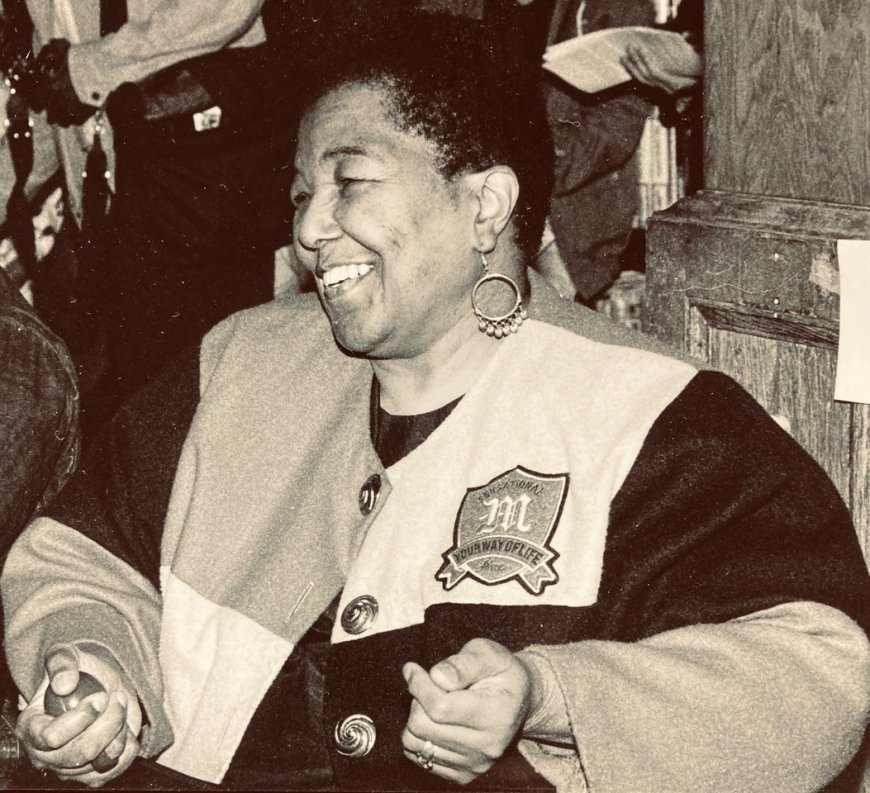
In a 1992 interview with me, she described the dicey conditions under which she first joined Gillespie’s orchestra. Encountering Billy Eckstine, known as “B” to his friends, she recalled:
“He took me all through the place to Dizzy and he said, ‘You want a job?’ I said, ‘I ain’t got no clothes and I don’t have no horn.’ He was firing one of his trombone players and he said, ‘You can have his costume, and I’ll give you a baritone horn to play until you get yours.’ And so I started on the baritone horn and a man’s jacket and clothes on ‘til I got my things. It was terrible! The music was fine. I didn’t have no trouble worrying about that. Just looks and clothes and everything. I never did have trouble with music.”