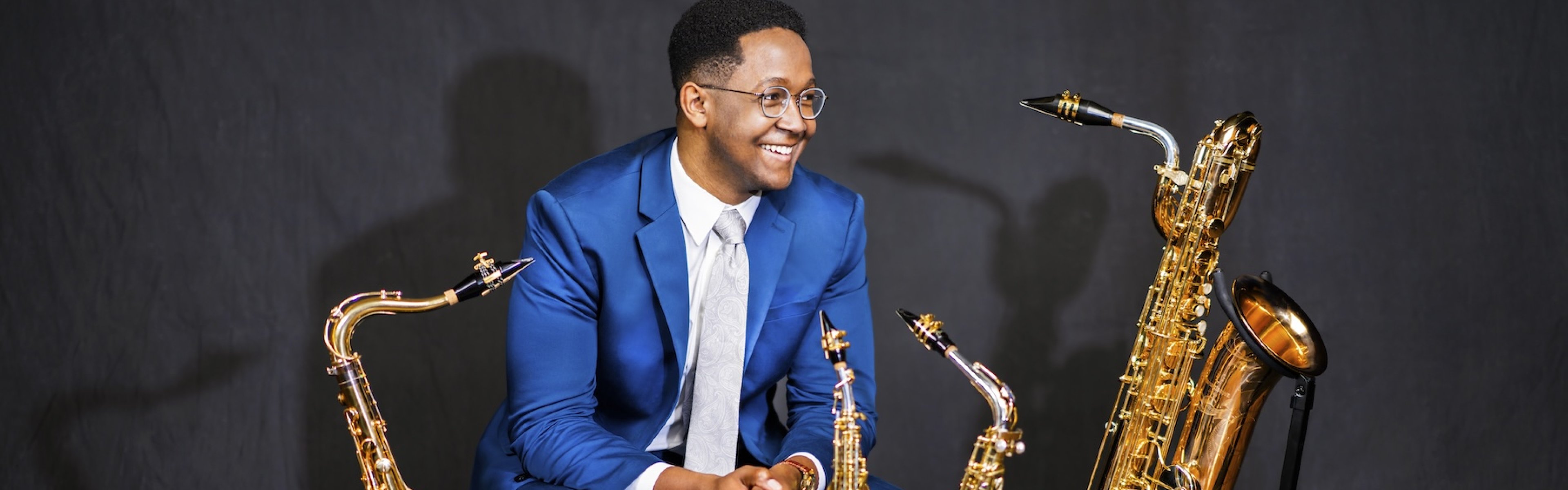
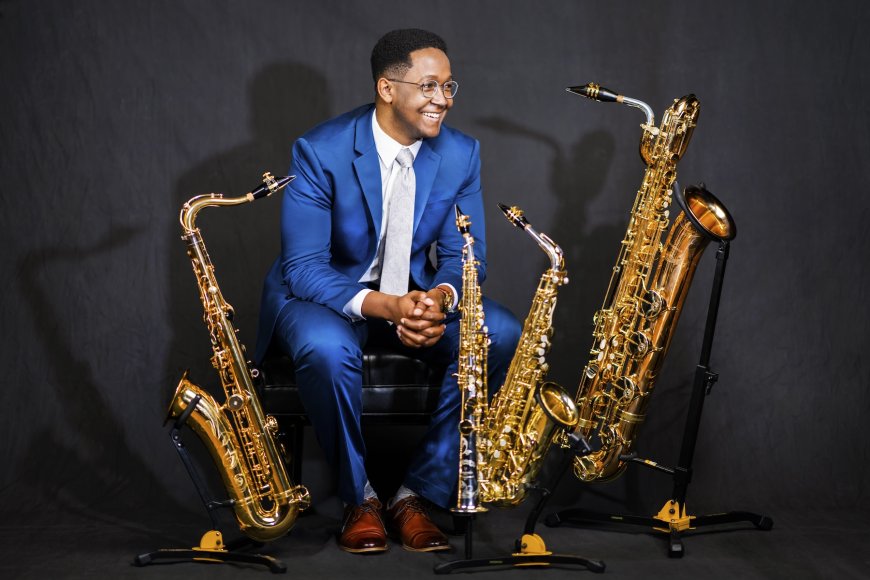
Although the saxophone is most often associated with jazz, Steven Banks is obsessed with changing that impression. The 32-year-old saxophone player, composer, and educator is striving to bring his instrument into the foreground of the classical music world.
Banks will be performing on baritone sax in “Golden Silhouettes,” presented by Cal Performances, on Sunday, Feb. 1, at 3 p.m. Joining him is pianist Xak Bjerken — Banks’s longtime friend and collaborator.
The program includes a mix of modern and classical pieces, demonstrating Banks’s ability to showcase the versatility of the saxophone. Works will include “hear them,” a piece commissioned for Banks and composed by Grammy-nominated composer Carlos Simon, “Shadow of the Blues” by American composer John Musto, a bassoon sonata by Camille Saint Saëns, a cello sonata by Samuel Barber, and Beethoven's 7 Variations on Bei Männern, welche Liebe fühlen.
Born into a musical family in North Carolina, he grew up listening to a wide mix of genres, including Motown, jazz, and spirituals in the Baptist church where his grandfather was a pastor, which Banks said introduced him to the “transformative and awesome power of music.”
After learning piano and clarinet, Banks decided to switch to the saxophone when he was in middle school, initially because he found its shiny silver look to be so beautiful.
Banks, the first saxophonist to win the prestigious Avery Fisher Career Grant, is currently a faculty member at the Cleveland Institute of Music, where he teaches saxophone and chamber music. He has appeared as a soloist with numerous orchestras and smaller ensembles and is a founding member of the Kenari Quartet — an all-saxophone ensemble that performs regularly. Banks has previewed and presented many of his own compositions, along with commissions by modern composers and pieces from the classical repertoire that Banks has transcribed.
Banks recently chatted with SF Classical Voice about his musical journey.
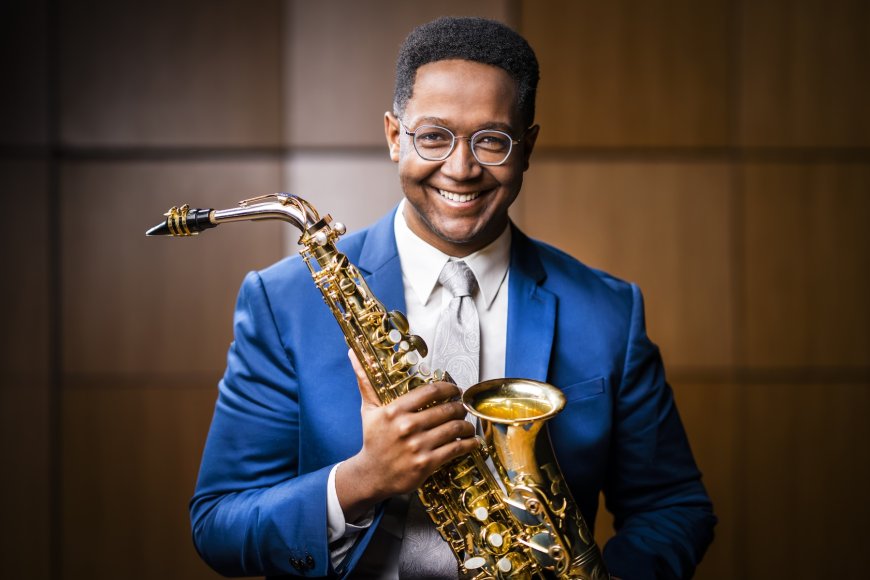
You once said, "I am obsessed with creating a sound world with my instrument that transcends description." Can you elaborate on that?
I don't want people to hear my instrument and hear the limitations of it. I want [them] to hear raw human-ness coming through the instrument. I love when I listen to someone playing their instrument —like a violin. I forget that the sound is actually coming from a string. It just seems like the sound is resonating all around me, almost like it's emanating from that person's soul. So with the saxophone, I don't want to hear the reed or the kind of mouthpiece that they're using, I want to hear raw human-ness coming through the instrument.
When and why did you decide to become a professional musician?
I decided to become very serious about music in my junior year of high school at the North Carolina School for the Arts. I knew that I wanted to be a performer, and was envisioning performing with orchestras and touring and being a soloist, even though I didn't have any models for doing that in the classical saxophone area.
What made you decide to take a classical direction with the saxophone as opposed to other, more well-known genres for the instrument, such as jazz?
I really liked the idea of being able to learn more about the form and the construction of the music, and to find a freedom within that structure, as opposed to improvising. I still really enjoy jazz and love listening to it, but in terms of performing and composing, classical music just always felt like my natural way of being.
Your mentioned that your process and inspiration for composing originally came from events in your life, but that it later changed. What is your process now?
My process for composing is not really a distinct thing — it ebbs and flows as life ebbs and flows. But now I do a lot of studying of scores of great composers of the past. Brahms, Ravel, and Rachmaninoff are some of the ones that I look to the most. And I often write specifically for people, or for a specific cause, or if I have something else that inspires me.
You got into meditation during the COVID-19 pandemic. How has that affected your composing?
I often have a meditation session where a melody or a primary theme may come to me, and then from there I'm thinking about using the techniques that I know. [There’s] a natural intuition and emotional arc to see where this little germ of an idea wants to go.
You created and recently launched Come As You Are, a community engagement initiative embracing diversity, equity, and inclusion. Tell me about that.
I decided to start the Come As You Are initiative because, at the end of the day, the core goal of my career is to help diversify the field of classical music, both by bringing the instrument of the saxophone to the center of it, but also by performing and commissioning and bringing pieces by under-represented composers to the concert hall. My goal is also to diversify the audience and to give people incentive to come and hear this music, so that people in the world understand that classical music is not a monolithic thing; it's something that can be used to express the stories and emotions and yearnings of all people.
Are you working on any new projects?
I have a new record, “Cries, Sighs and Dreams,” coming out on May 8 on the Il Pirata label. It is a mix of works of mine that I composed and works by Camille Saint-Saëns and American composers Paul Creston and Carlos Simon [Banks is also performing one of Simon's pieces for the Cal Performances program].