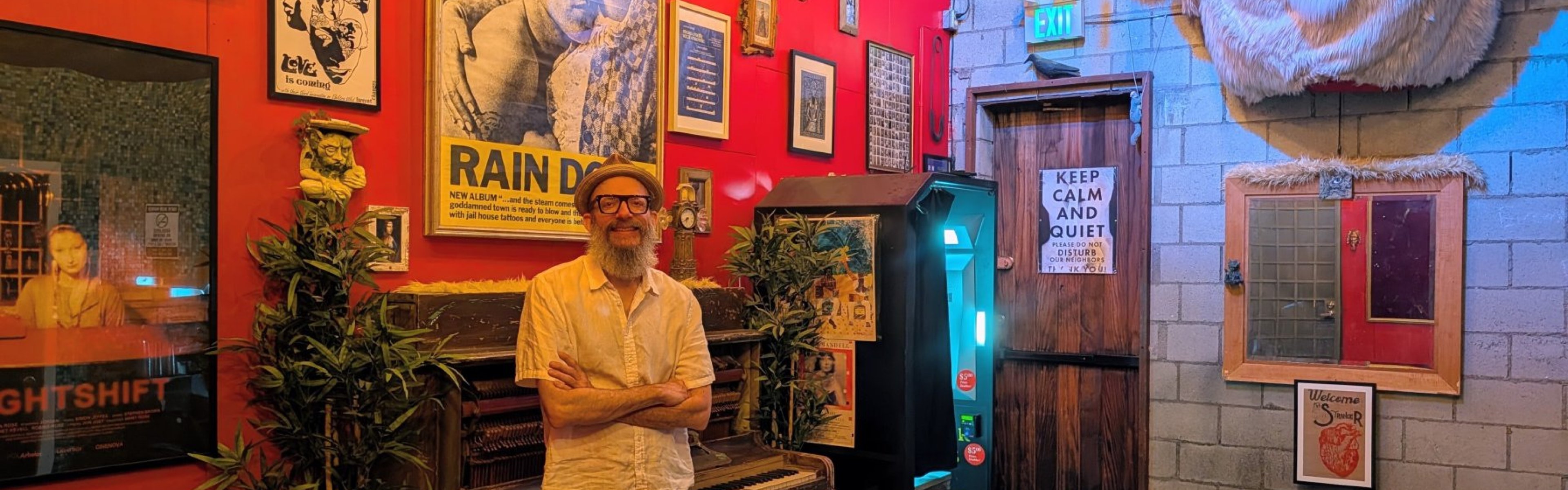
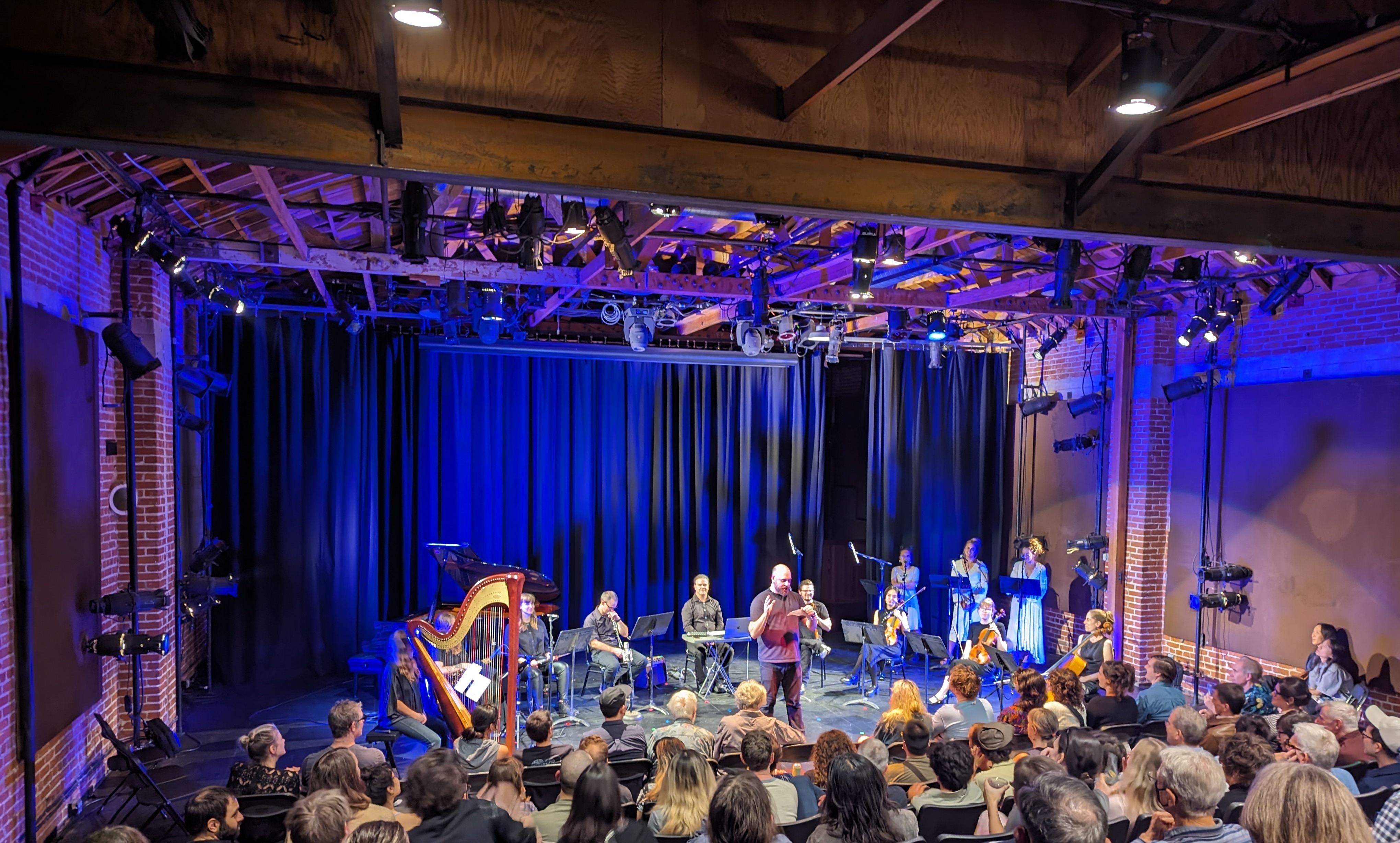
In a town where innovative spaces seem to pop up and fade away with the capriciousness of weather, Andrew Maxwell has, to date, helped build something that feels surprisingly robust — a cultural hot spot that continues to connect with the artistic vibe of Los Angeles. Indeed, as co‑founder, along with Peter Kolovos, and curator of 2220 Arts + Archives, Maxwell has become one of the forward-looking guardians of Los Angeles’ experimental scene.
Located in historic Filipinotown, the venue features a dynamic calendar curated and cooperatively scheduled by some dozen L.A.-based independent programmers and cultural nonprofits. Events include concerts, readings, and film series, as well as archival projects from groups such as LA Filmforum.
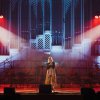
Recently, on August 7-14 the inaugural Windgrease Festival took place, with such eclectic offerings as a live compositional performance by the Windgreasers Experimental Vocal Sextet, a poetry concert with readings by, among others, Baba Made and Harmony Holiday, and a live conversation and drumline honoring the influence of the late L.A. master musician Billy Higgins (1936-2001).
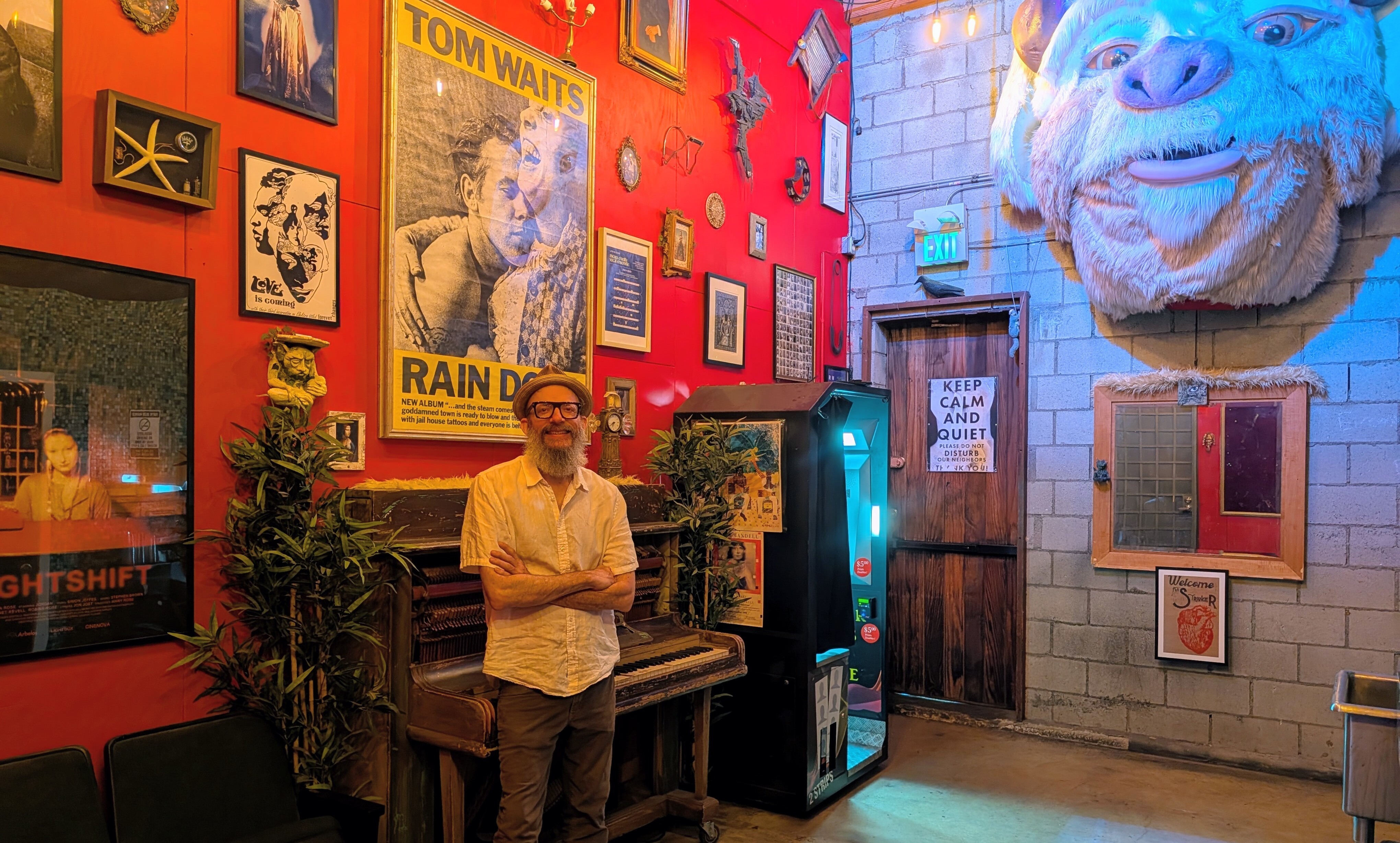
But before Maxwell and Kolovos, a musician and record label owner who manages the property, bought the building in 2020 and opened it the following year, it had been the Bootleg Theater for two decades, where it served as a launching pad for performers of all stripes. And in 2000, scenesters knew the space as the Evidence Room, where thespians, including TV actors Megan Mullally and Nick Offerman and performance artist John Fleck, were seen in a 2000 production of The Berlin Circle. Mark Taper Forum’s New Work Festival and its Next Step series were also held in the venue.
In other words, the DNA of the building has become part of Los Angeles’ storied history.
Maxwell, who also co-founded 2220 Arts’ Poetic Research Bureau writing salon with PRB’s executive director, Joseph Mosconi, recalled, “I was leaving my day job in arts and technology, working for places like Google for 25 years, but I was running arts organizations on the side, and Peter and I were discussing acquiring a small black box theater. Immediately, my hope was to move it beyond poetry to music and song, [as well as] an interdisciplinary arts center. We reached out to friends who had run venues in the area and were running their own music series, as well as micro-cinemas and itinerant movie series.
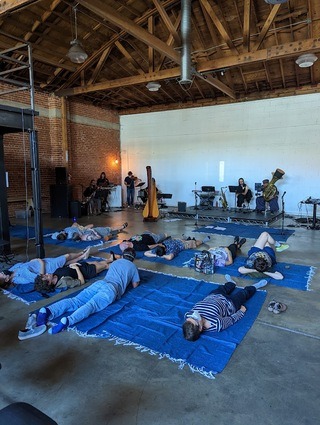
“LA Filmforum,” added Maxwell, “had just been kicked out of the Egyptian [Theatre], so it didn’t have a home; Acropolis Cinema with Jordan Cronk didn’t have a home. So, we started gathering mutual friends together who were willing to do one to three events per month and built it into a programming co-op that’s a dozen strong today, which is responsible for about two-thirds of what happens at 2220 now.”
Thus was reborn one of L.A.’s coolest art spaces, with a thriving performance venue, bar, and archives, all within nearly 8,500 square feet. Maxwell is especially proud of being a risk-taker, pointing out that the model “is very unusual for any city. It allows us to do crazy things, like a 25-act music festival followed by a sprawling film festival the same week. We also bring in a lot of adventurous programmers.
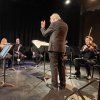
“For instance, last Christmas season,” he went on, “we did Gavin Briars’ Jesus’ Blood Never Failed Me Yet, which involved a community orchestra of largely nonprofessional musicians that were 80-strong [performing] in the large warehouse space.” The open attitude allows anyone, professional or not, to bring up an idea and realize it.
Those ideas have also involved opera previews, such as Expostulation(s) of Mary, from 2023, an electroacoustic composition inspired by the music of Henry Purcell. The work brought together composer Eliza Bagg from Roomful of Teeth, Ben Babbitt, and [performance artist/trans activist] Heather Jones, with choreography by Julia Eichten and dancer Jas Lin. Members of Wild Up new music group were the instrumentalists.
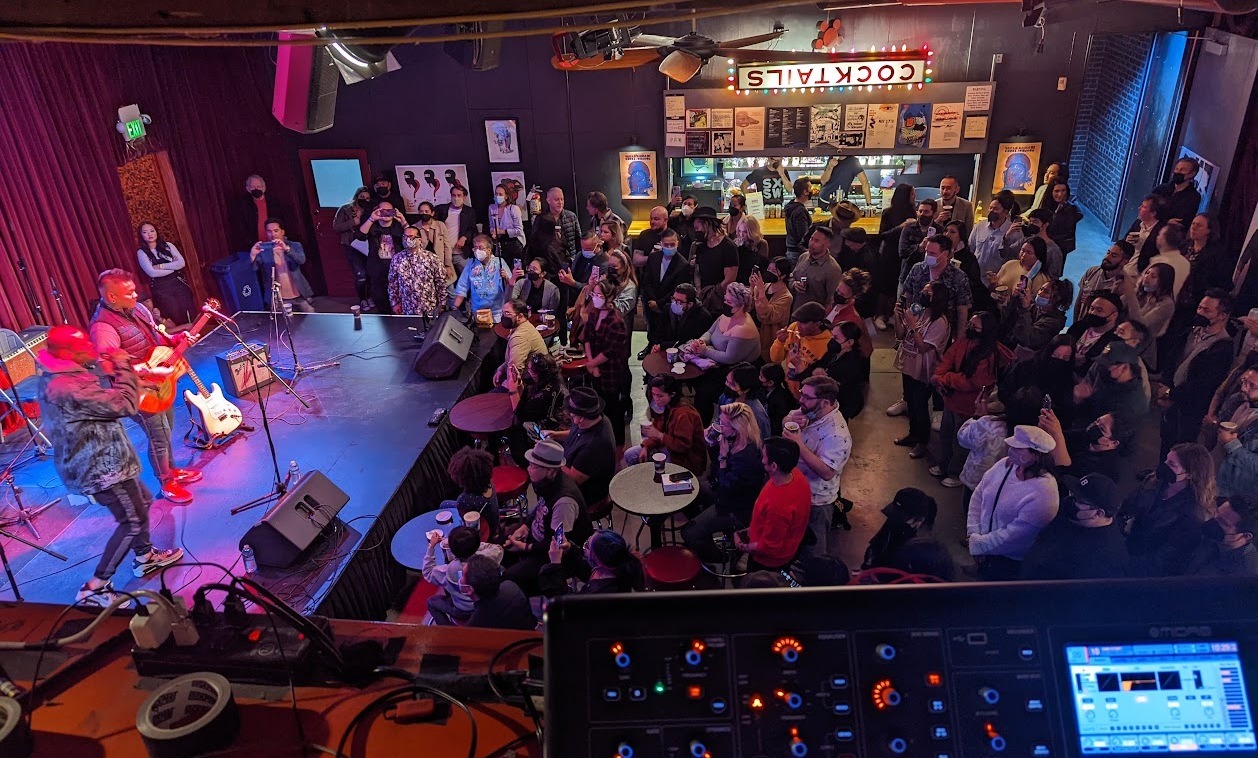
“It’s that sort of ethos,” noted Maxwell, “of trying to bring a culture of high imagination to the street level.”
Having logged some 1600 events since opening its doors, 2220 Arts is on an artistic roll, with contributing organizations such as Monday Evening Concerts (M.E.C.), Piano Spheres, and Angel City Jazz Festival each doing three to four performances.
Last summer the presenter mounted a large exhibition on the 60-year history of the Pan Afrikan People’s Arkestra, which was founded by composer, pianist, and community activist Horace Tapscott (1934-1999). “There's three generations in that orchestra, and you can see when they perform, it brings some of the people that are working in the more traditional jazz idiom together with the younger generations that are working to bring jazz alongside electronics and experimental practices.”
Putting the group’s ephemera on display showed “that the orchestra was this thriving musical community that didn’t get as much visibility in canonical histories, when they’ve been sustaining back to the early ‘60s.”
And that is the heart of Maxwell’s enterprise. “Even as we’re putting on 300 events, as we did last year, they’re all reflective of a larger history that’s happened here in L.A., which is refracting a world history of adventurous practice. We can be high-minded and ambitious, while also being [a] scruffy storefront.”
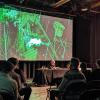
With seating capacity for between 250-400 people, counting standing room, the venue is flexible. The black box theater looks somewhat like a TV studio, the front room is effectively a bar, or, said Maxwell, “almost like a punk club.” The warehouse space accommodates exhibits, sound installations, or large readings and talks.
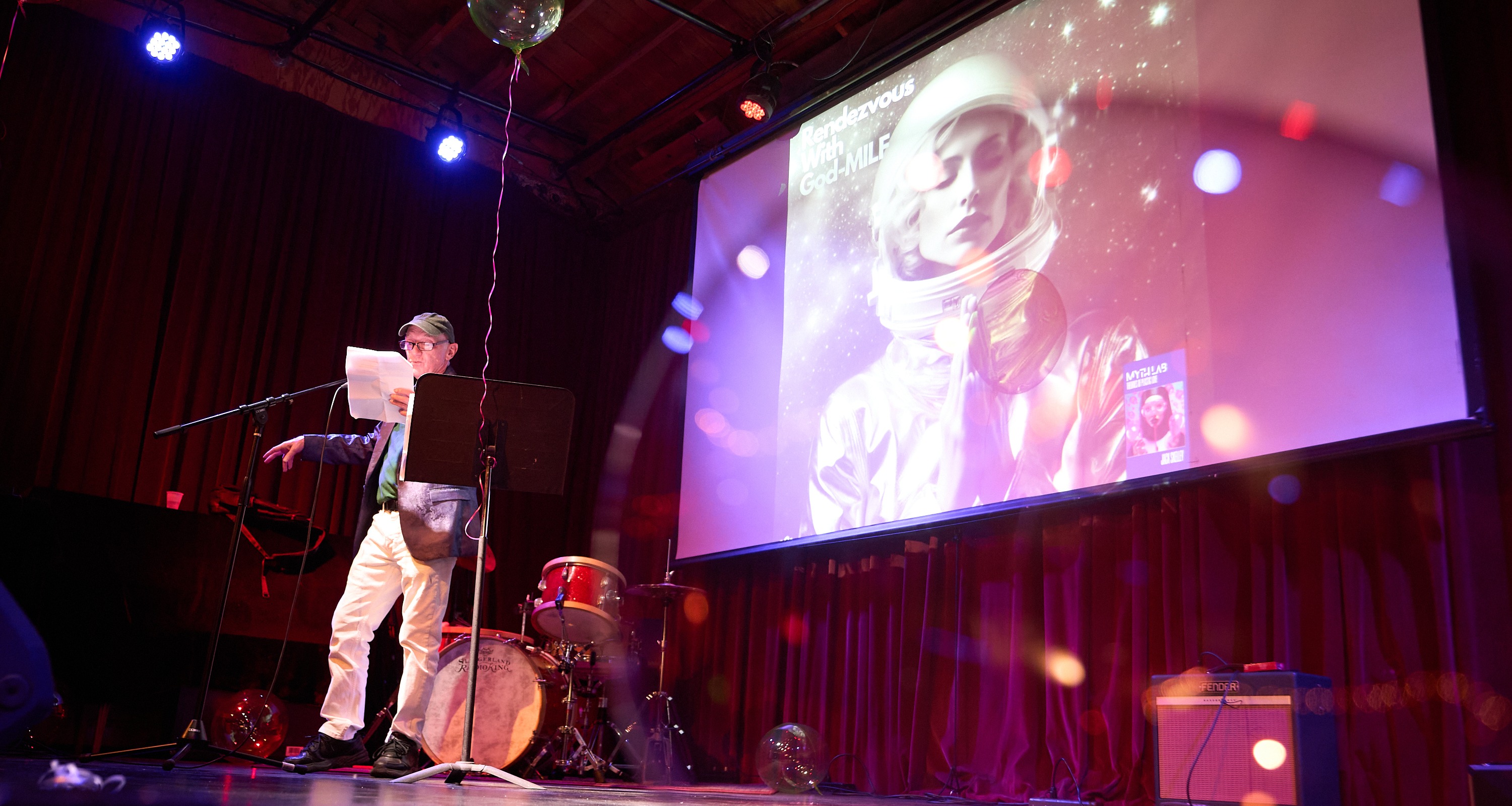
Jack Skelley, author of The Complete Fear of Kathy Acker (2023) and Myth Lab: Theories of Plastic Love (2024), held the L.A. launches of those books at 2220 Arts’ PRB. He also considers himself a faithful audience member. “There are precious few venues in Los Angeles,” he said, “that offer both common ground for the whole community and the highest levels of curation and professionalism. 2220 Arts — and especially its Poetic Research Bureau entity — is among the absolute best and most valuable.
“Many other people in the book scene or the literary scene,” he added, “also hold their launches or readings there. They have a great theater with this beautiful, raked seating, [so] the heightened register of the performance space enhances your performance. You’re upping your game just to be there.”
After Skelley’s launch of his Kathy Acker book — she died in 1997 at age 50 after having been exiled from the mainstream literary world — he said that the Acker estate donated her desk to PRB/2220 Arts. “Then they had an event surrounding that donation and around the launch of that particular book [Eat Your Mind: The Radical Life and Work of Kathy Acker], too,” Skelley recalled.
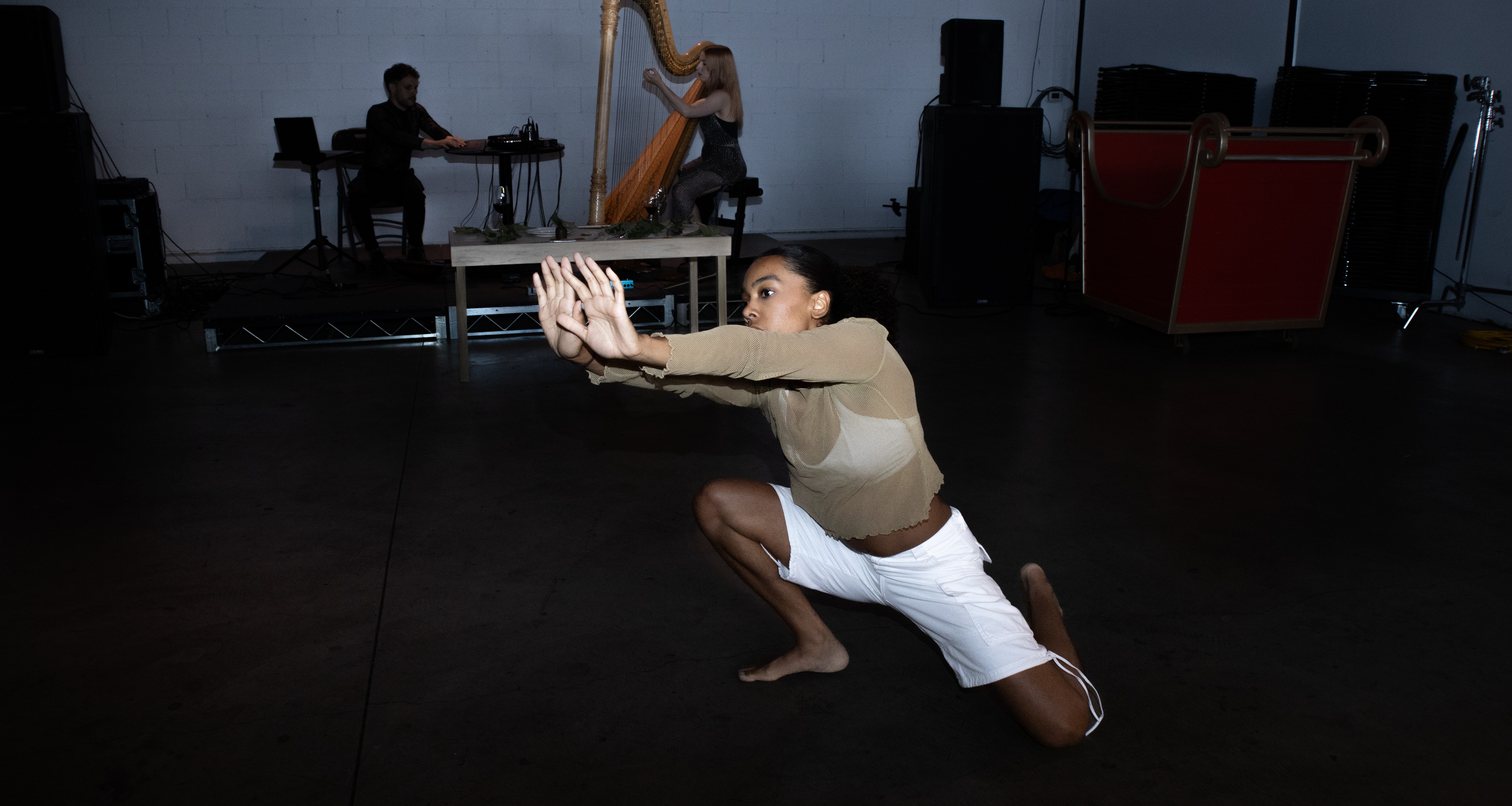
Of the occasional movement-based or dance performances, Volta Collective’s memorable Salt, presented in 2023, was a reimagining of the tale of Medea. The hour-long work featured live music and food served at stations, where audience members chowed down on oysters, foraged loquats, and fire-roasted mushrooms.
It was a notable evening on many counts, one being that the power had gone out an hour before. The performance couldn’t begin until a generator arrived. Maxwell, who’d been on site, recalled that due to a windstorm, “the entire neighborhood went out. I’d say that’s happened three or four times in the past five years.”
Furthering the occupational hazard motif, the curator agrees that L.A. presents challenges for independent cultural spaces. “Obviously, it’s one of most expensive places in the world for real estate. But I do think it’s hard for L.A. to keep its eye on every subterranean space here. And that’s one of the reasons why they’ve flourished to a large degree.
Besides heavy energy costs, tax and insurance payments are also high. But it’s worth it for Maxwell. “If you don’t own your space, you have to program opportunistically. For 25 years, I didn’t own my art spaces. For the PRB, I was paying rent every month in a storefront. In L.A., the more adventurous work has come out of museum and university series, largely capitalized institutions.”
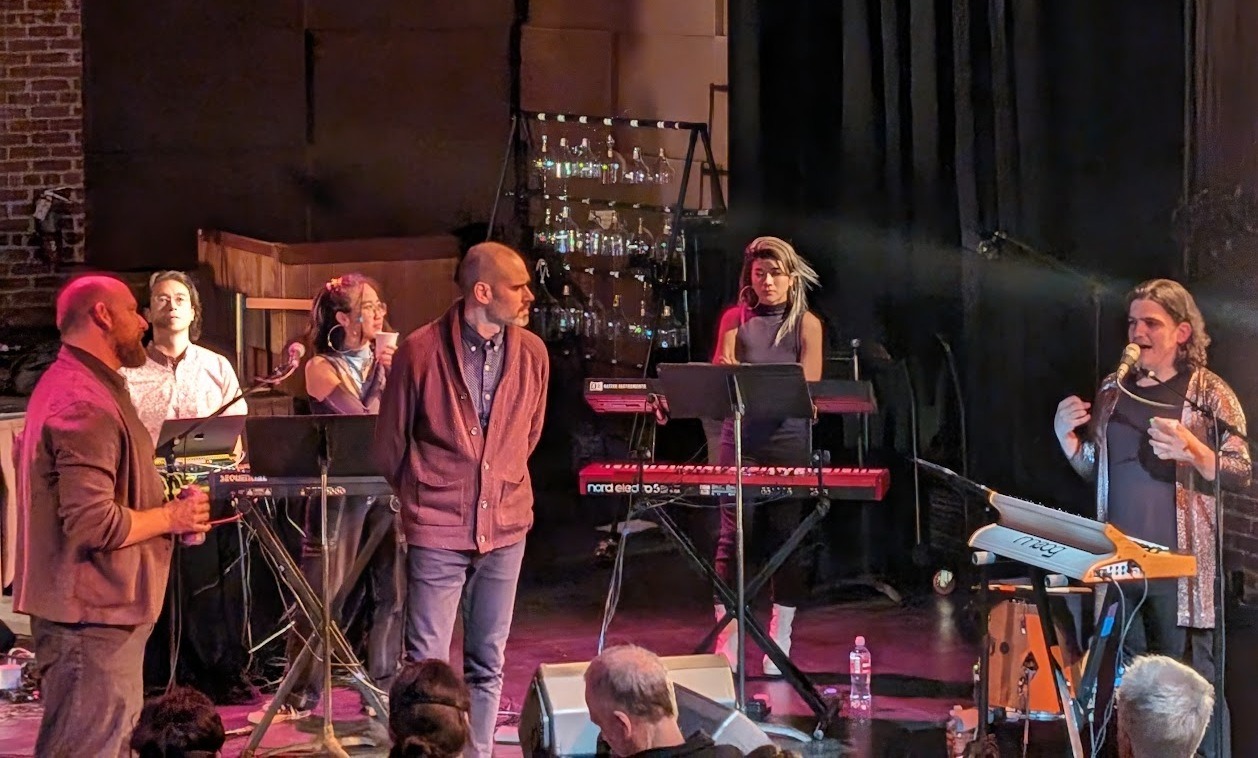
But Maxwell is doing as much as he can to change that, with some of his favorite programming having included Wild Up playing Julius Eastman’s Buddha, a 14-hour dawn-to-dusk performance from 2022, and Milton Nascimento’s concert performed with esperanza spalding last year.
The curator also sees a welcome backlash to the isolation of social media and an increasingly digital world. “Actually, I’m very bullish on both live, in-person performances and physical media. People want to be together in a physical space. They’re infuriated and exhausted by streaming platforms. You have Deerhoof pulling their entire catalog off Spotify and focusing on performing in front of people and giving physical objects to people to listen with friends at home. We all see how fragile the world is, [so] I value theatrical performance.”
Although he’s live-streamed music festivals and archived them on YouTube, Maxwell has misgivings about the format. “I don’t want people to be siloed at home on their devices, but I do want to make the [events] available to people in the future. L.A. is a node in a global network, and that’s important.”
In the interim, the curator wants to “sustain the velocity we have now for the next five years. It’s really just keeping the doors open. One of the things we learned with the PRB was that if you open every week and night, and it’s a place that people know, the people keep coming and they value the community.”