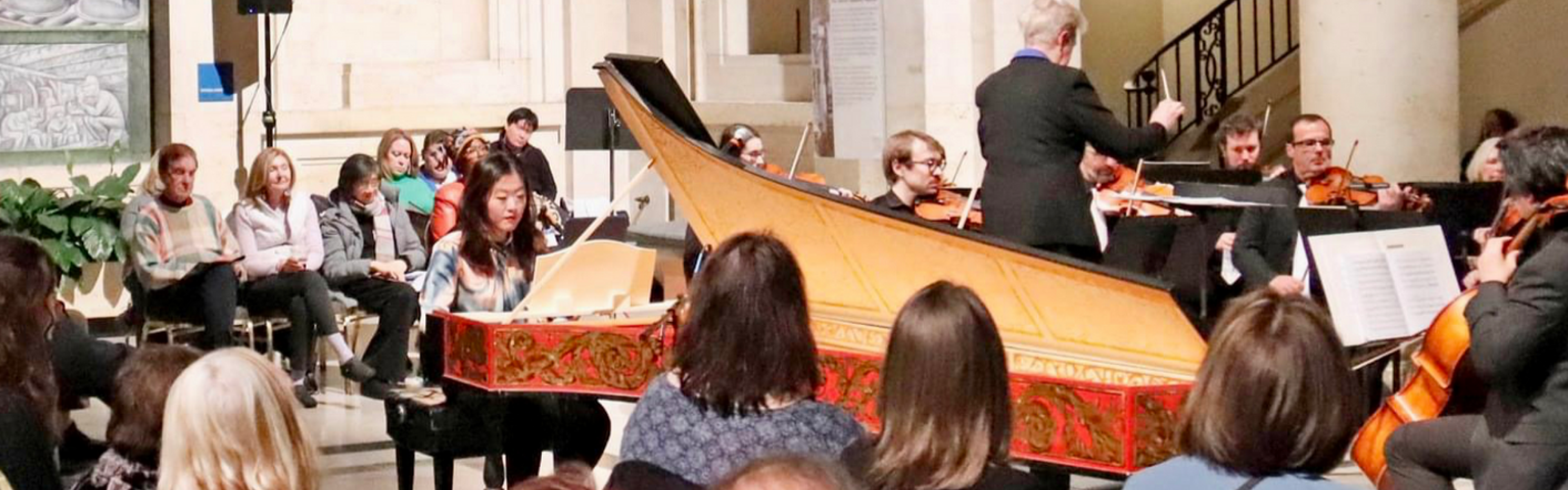
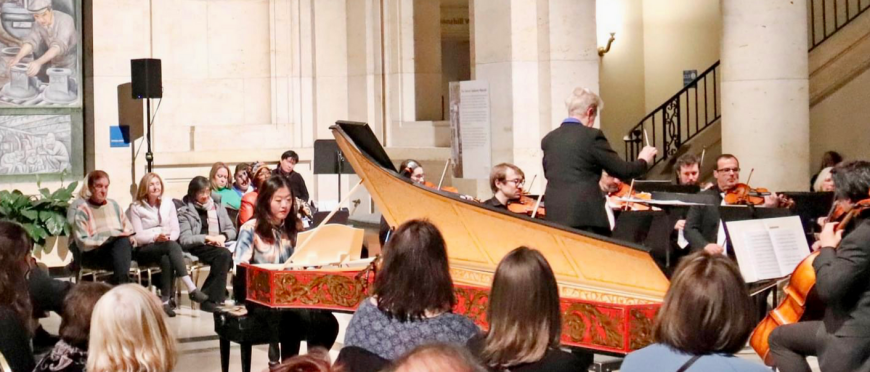
Returning to La Jolla Music Society's SummerFest, American pianist and educator Angie Zhang presents Unmuting Masterworks at the Evolving Keyboard on Aug. 11 at the Baker-Baum Concert Hall. part of the Conrad Prebys Performing Arts Center in La Jolla. Zhang, the first and only American to win a top prize at the International Chopin Competition on Period Instruments, is widely recognized as one of the leading period-instrument specialists of the 21stcentury.
New York-based Zhang created the lecture-recital specifically for SummerFest, which La Jolla Music Society founded in 1986 and which runs July 31 – Aug. 29 under Music Director Inon Barnatan. This year's edition marks the festival's 40th anniversary. Zhang explained that she will perform on three distinct instruments: what LJMS bills as the world's most ornate Viennese fortepiano reproduction, an original Broadwood piano from Beethoven’s era, and the modern concert grand, in this case a Hamburg Steinway.
“These instruments will be on full display. It’s not about me,” explained Zhang. “I just wanted to bring these masterpieces to life for people on these three instruments. What I'm basically doing is like a wine tasting. I’ll play the first movement of [Beethoven’s] ‘Moonlight’ Sonata on all three, and I also want audience involvement. I like to break the hidden wall between the stage and the audience.”
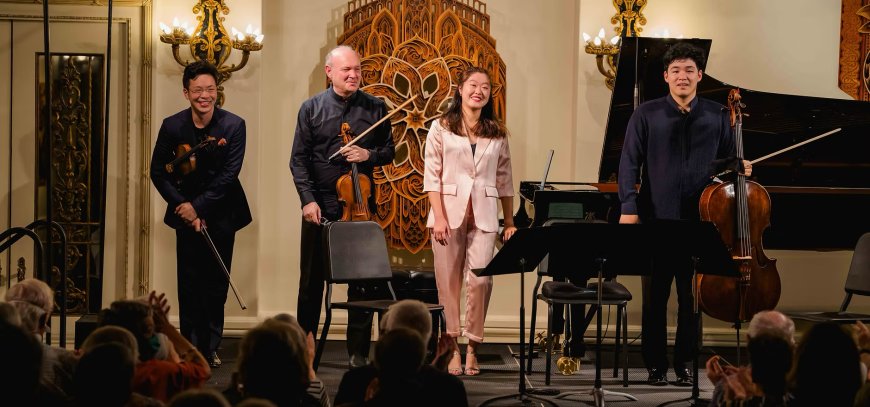
Zhang recalled that when she first sat down at the Viennese reproduction piano, she was "astounded. This is exactly the sound world I’d been dreaming of in my head. It opens up the universe. It’s like seeing a piece of music in black and white on [a] modern piano, which is great, but then playing it on the instrument it was written for is like seeing something in color for the first time.”
Zhang knows her modern concert grands: she's in high demand as a soloist and chamber musician, having performed with orchestras including the National Symphony Orchestra of the Dominican Republic, the Indianapolis Chamber Orchestra, the Indianapolis Symphony Orchestra, and the Missouri Symphony Orchestra. She’s also worked with such conductors as Jeffrey Kahane, JoAnn Falletta, and Fabio Luisi.
But there’s something about these period instruments that has captured her heart. “I don’t think of it as I’m looking back and want to do some historical practice thing, it’s more that I fully understand each of these instruments,” she said, “and when I go to them, I’m trying to create something new.”
“Technically, we do not have recordings of a Haydn premiere. I will never say, ‘I’m a historical practice expert,’ because I don’t vibe with that. I don’t have proof of what they did.”
“But I think when people hear it, and when they say, ‘Why is this so beautiful?’ It just is,” added the musician. “People get it. People cry when they hear the ‘Moonlight’ Sonata on the [Broadwood]. It’s life-changing.”
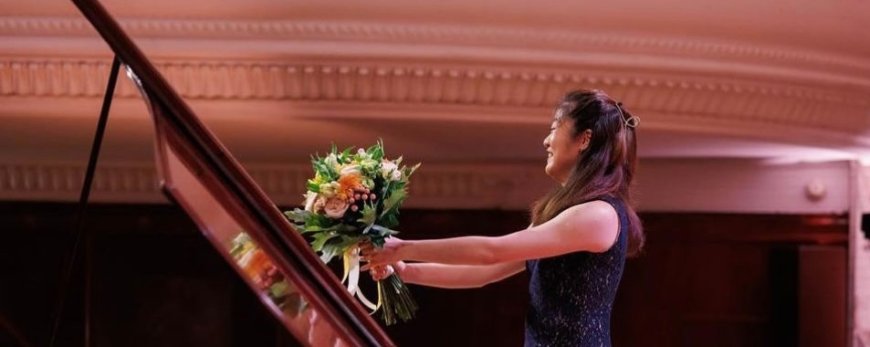
The Broadwood piano, Zhang noted, was purchased from a family in La Jolla. “They didn’t want it anymore. Somebody in the family [once] loved it, and now it wasn’t being loved, so they decided to sell it to someone who would love it.”
That someone was the Los Angeles-based collector and early-keyboard specialist Charles Metz, who with his partner, Howard Schreiber, has a period-instrument collection that could, according to Zhang, "rival the Metropolitan Museum of Art's."
As for that particular piano, Zhang said, "Beethoven was experimenting. He was telling piano makers, 'Give me more keys. Give me bigger keyboards. Give me another pedal.' I'm thinking of all these things when I play this piece — that this note is the last note on this piano. That meant something."
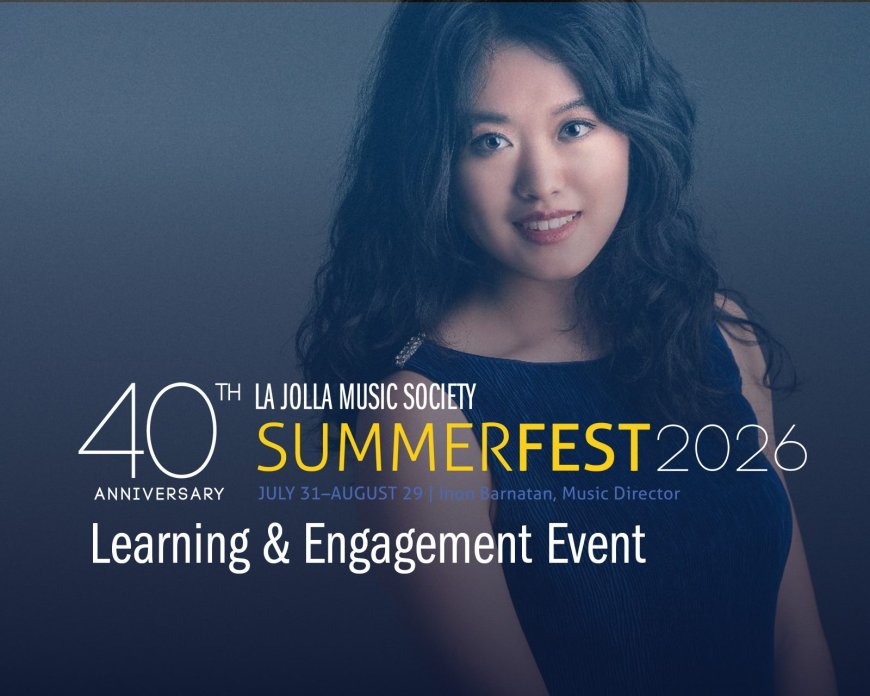
Zhang also performs music by Frédéric Chopin, Felix Mendelssohn, Franz Schubert … and Philip Glass. “I played Glass on these early instruments, and it sounded amazing. I’m going to go back and forth between the three pianos, because the point of this is not to say one instrument is better than the other. I get that question a lot. My question is, ‘Do you prefer coffee or tea?’ You need all of it.”
Indeed, Zhang added that while her area of expertise might be considered niche, she nevertheless “finds beauty in every one of these instruments.” She goes on to say, “The modern piano is actually a compromise where you play pieces from all different centuries, but it’s a compromise. When you hear a piece on the instrument it was written for, you understand why the composer wrote what he or she did.”
As she moves from piano to piano, Zhang expects the audience to take it all in — and, not surprisingly, she thinks of the instruments as people. "They have souls, these pianos, and they speak to me."