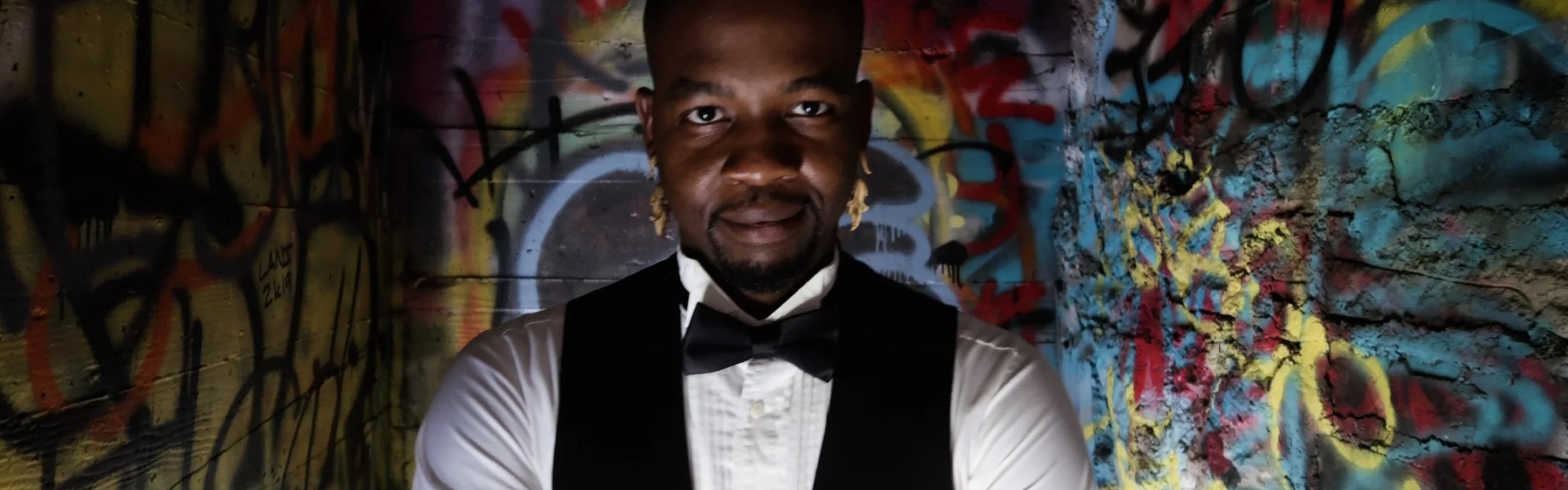
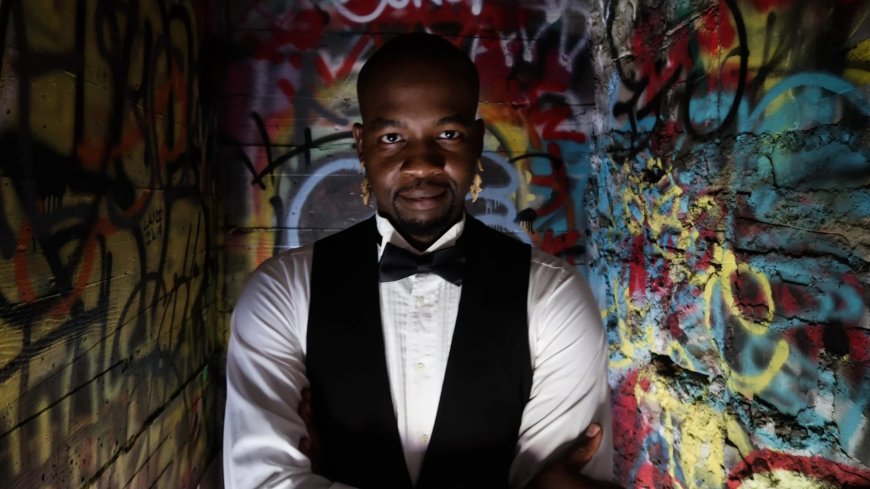
Babatunde Akinboboye, the Nigerian-American baritone, is a vocal pioneer. By fusing his love of classical opera with hip-hop, he’s the purveyor of a new genre: Hip Hopera.
Akinboboye went viral in 2018 for blending Rossini’s “Largo al Factotum” aria with Kendrick Lamar’s “HUMBLE.” The baritone’s video amassed more than 10 million views, redefining opera for a 21st century audience. The mash-up was featured on Time.com, Classic FM.com, and MSN.com, and a new kind of star was born.
Akinboboye will fuse the art forms at Sierra Madre Playhouse on Aug. 28-29. He has already brought his talents to Los Angeles Opera, Opera Santa Barbara, and Long Beach Opera, among others.
“There was no music in my family. They’re not even really big into listening to music,” the 42-year-old explained.
“I single-handedly grew up a big fan of hip-hop on my own [and] was almost obsessive about it at a time where most of my colleagues were listening to hip-hop and rhythm and blues. By the time I was 16 and got into classical music, I was kind of learning that through a lens of hip-hop.”
With more than half a million followers on Instagram, the baritone enjoys getting to “connect with the audience and hear their feedback in the comments section.”
“That’s one area I don’t think opera or the classical music industry has done a great job of what I think their goal is — entertaining the people,” he said. “I think they’ve done a good job of telling people what they should like and what they should enjoy, and not so much being eager to find out what that is.”
That said, Akinboboye believes that this new genre will have meaning in the cultural landscape a decade from now. “I hope that people in Hip Hopera find an avenue to classical music that they might not have been able to find before. I hope it gives classical musicians — be they vocalists or instrumentalists — permission to enjoy their instrument in a way that feels fun for them, or resonates for them.”
At Sierra Madre, Akinboboye will perform such favorites as Bizet’s “Toreador” song, Luigi Denza’s traditional Neapolitan tune, "Funiculì, Funiculà" and Verdi’s “Di Provenza” from La Traviata. He noted that storytelling is the key part of a performance for him.
“With any good story, I think it’s important that energy, emotions, and setting be conveyed in a way that the audience can respond to it. Once you’re incorporating music, it’s important to make it accessible for the audience, so they don’t have that extra barrier or one extra hurdle to relate to the piece and can feel the emotions of the story.
“In Nigeria, we have such a strong culture of storytelling, and within our stories, they’re not complete if they don’t have a song in it. I remember when I was younger and first started playing classical music, my mom’s question was, ‘How do you dance to this?’ That’s because there’s the understanding for her that music is supposed to physically move you, and you’re supposed to dance to it. Left to my devices, I also like being able to dance.”
Once Akinboboye has the story and the melody, he then finds a beat. “The melody and emotion dictate what the beat will be. To speak technically, I’m much more punctuated about rhythm, the beat of the song, in my performance of the text, whereas, in traditional operatic style, you’ll want to sing legato, and make sure that it feels like an even line that just swoops up and down through the phrase.
“With mine, it feels more punchy, and some of the cut-offs are sharper, abrupt and more accented than in traditional operatic singing. I allow myself to sound ugly sometimes, in order to convey a certain emotion, so I will sacrifice beautiful tone for the purpose of making someone feel sadness or rage, and I might do some things that, to be honest, some voice teachers might actually frown upon.”
“It doesn’t have to be, quote, unquote, the correct way, [but] that it encourages more people to do the same thing — share that with the public and find their audience and not necessarily seek approval of large organizations or holders of the keys.”