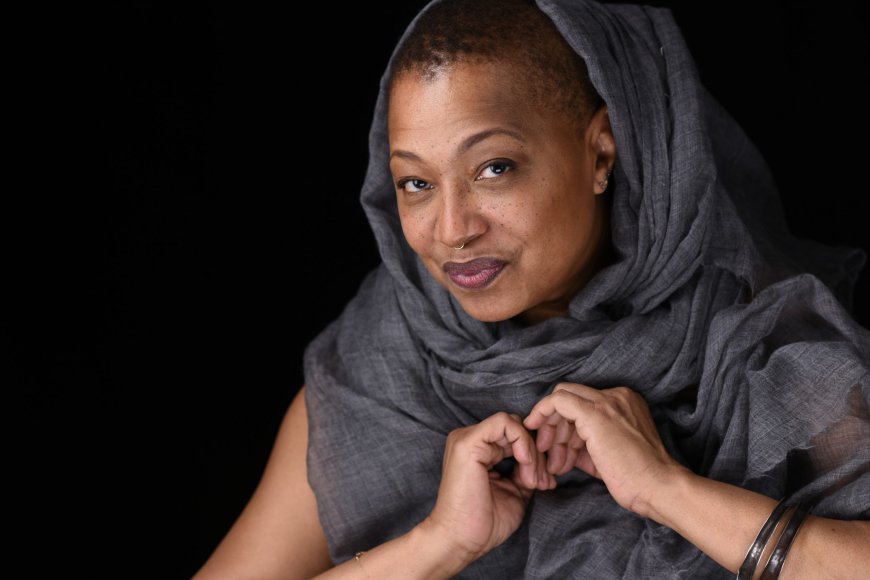
Lisa Fischer’s voice can feel like a force of nature, swelling from a quiet murmur to a gale-force roar within the space of a syllable. In many ways, Fischer’s career path is as singular as her voice, having led her on a singular journey marked by collaborations with the most formidable artists in rock, R&B, jazz, and beyond.
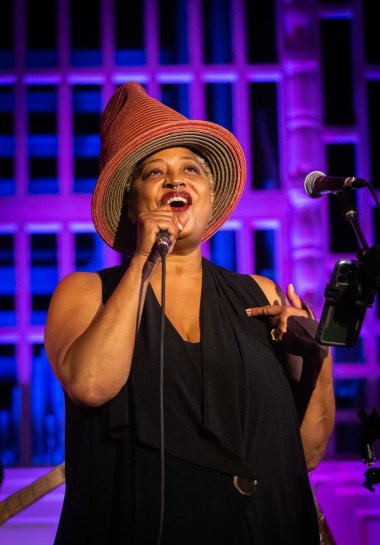
The latest chapter of her sojourn brings her back to the SFJAZZ Center for a four-night engagement with the Orrin Evans Trio Dec. 4–7 (and a Dec. 3 listening party with recently appointed SFJAZZ CEO Gabrielle Armand). She’s been a regular presence at the center in recent years, including with a riveting performance in June at the SFJAZZ Gala, where she delivered a slow-burning version of “Wild Horses,” (a song she’s carried with her after singing backup for the Rolling Stones on every tour from 1989 to now).
The Brooklyn native’s protean career began to unfurl when she scored a chart-topping R&B hit, “How Can I Ease the Pain,” and a Grammy Award for Best Female R&B Vocal Performance for her 1991 debut album So Intense (which was produced mostly by Narada Michael Walden and Luther Vandross). Most artists would use the burst of attention to pursue a solo career, but Fischer decided to focus on her already thriving practice supporting the world’s biggest acts, including Luther Vandross, Sting, Tina Turner, and Nine Inch Nails.
In a delightfully Fischerian twist, it was the breakout hit documentary film about backup singers, 20 Feet from Stardom, that inspired her to light out on her own. The Academy Award-winning 2013 movie offered her a chance to pause and reflect on her dependence on other acts for work. “I was always looking at the next tour, the next gig, and the film made me realize it could all be gone in a flash,” she said.
Seizing the moment to rediscover herself, Fischer embarked on a journey of musical self-discovery. Her first partners were the Caribbean world-rockers Grand Baton, led by string wizard and arranger JC Maillard from the French island of Guadeloupe. Capable of following or leading her in just about any musical direction, the group honed Fischer’s repertoire, which focused on songs gleaned from her backup work.
She’s still deeply engaged with Maillard, but many of her other creative commitments have connected her with the Bay Area, like her intimate, improvisation-laced duo with Menlo Park-reared jazz piano maestro Taylor Eigsti (a partnership launched at the 2016 Stanford Jazz Festival). She’s also worked extensively with Alonzo King LINES Ballet, creating luminous soundscapes for his choreography and often performing with the company onstage.
Fischer met Evans, a brilliant jazz pianist from Philadelphia who has earned Grammy Award nominations with his Captain Black Big Band, when she stepped in at the last minute to perform with the band at the 2023 Charlie Parker Jazz Festival in New York City. NEA Jazz Master Dianne Reeves canceled a week before the gig.
Evans knew her powerhouse reputation but associated her more with rock and R&B. Seeing her headlining at jazz festivals and leading jazz clubs seemed strange “because I’d never had the opportunity to see her in those situations,” he said. “The first time we jumped on the bandstand at the Charlie Parker festival, and here we go doing Nina Simone and Sarah Vaughan pieces, oh shit! She learned all the music for the big band in three days. I didn’t know how bad she was. I knew what I knew.”
They connected again on the recent Echoes of an Era project, which played the main stage at the Monterey Jazz Festival this past September. Originally conceived in the early 1980s to feature funk great Chaka Khan singing jazz standards, the Echoes album was produced by drummer Lenny White and featured an all-star cast including pianist Chick Corea, trumpeter Freddie Hubbard, and bassist Stanley Clarke.
Reassembled by tenor saxophonist Javon Jackson, who used to be Fischer’s neighbor in Brooklyn, the echo of Echoes featured a new cast of players (with Lenny White) and Fischer singing standards. It was an opportunity to perform in a jazz setting, and though Fischer was “nervous and scared to death,” she soared, remaking standards like “I Hear Music” and “Take the ‘A’ Train” in her own style.
“They were so positive and supportive,” she said, while noting the project will reassemble for gigs in 2026. “I really enjoyed riding through the melodies, like painting in the air with them.”
For the SFJAZZ run, Evans’s trio features bassist Bob Hurst, one of jazz’s most widely admired accompanists and a founding member of the SFJAZZ Collective, and drummer Mark Whitfield Jr. Though the set list was still a work in progress a few weeks before showtime, Fischer and Evans have been sending lists of songs back and forth, focusing on Philly’s deep catalog of soul and R&B hits.
“He’s a Philly guy,” Fischer said. “I was trying some of the songs around, like you try on a beautiful pair of glass slippers. With Philly soul I think about the classiness and looking to capture that feeling. I think about their sensitivity, not overdoing stuff. It’s exciting, the way Orrin approaches everything from such a soulful place, but also with his jazz sensibility. Jazz has so many levels, these other aspects of music. For me, the more spices the merrier.”