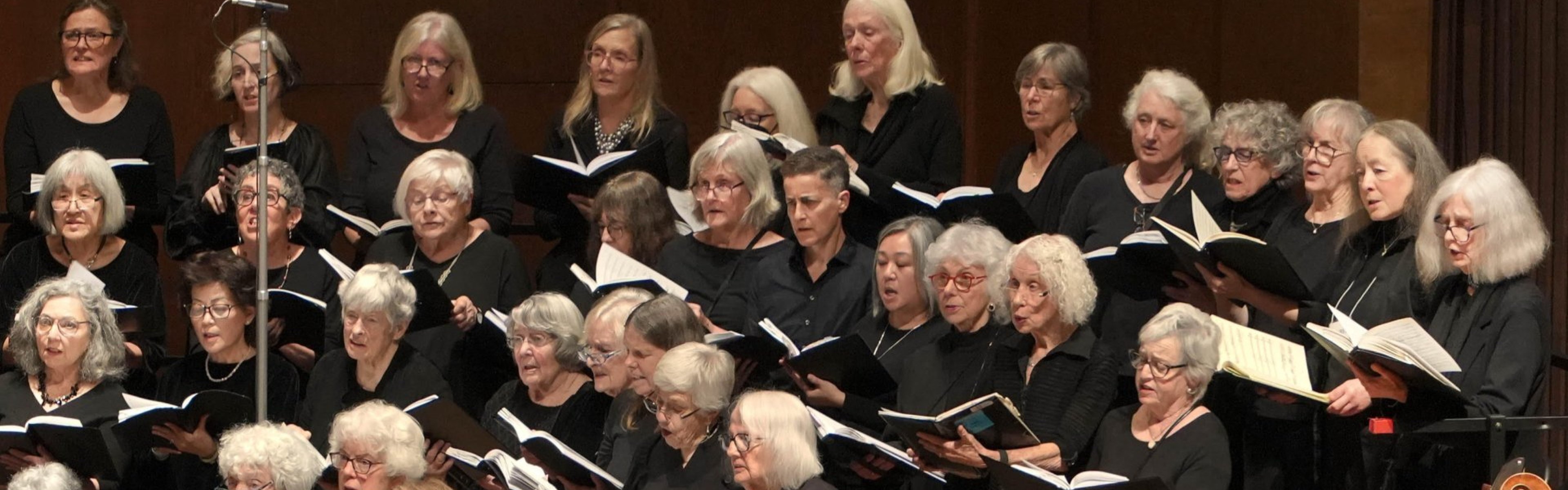
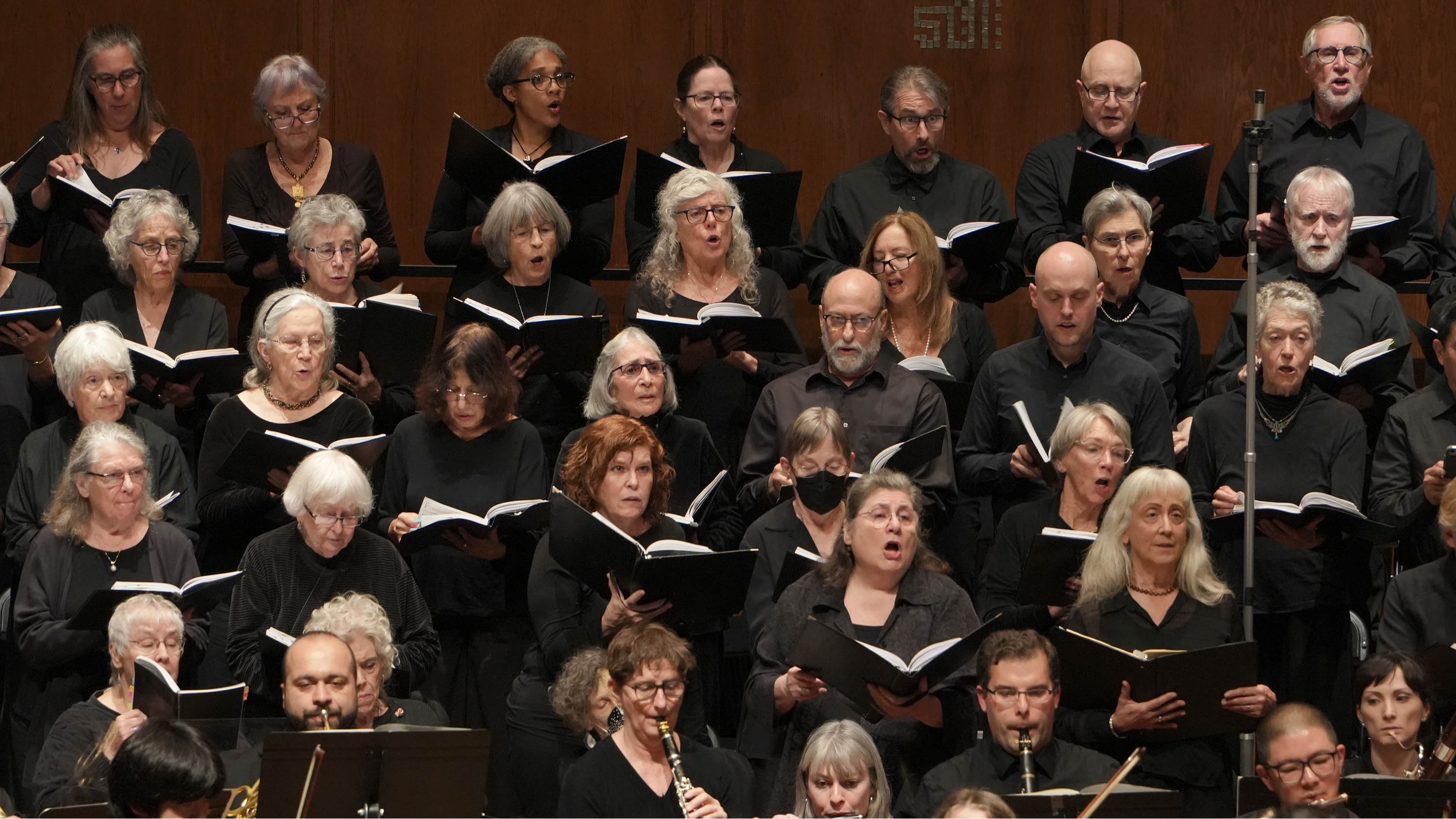
“Unique” is an absolute adjective, hard to validate. So let’s say that of the country’s approximately 250,000 choral groups, the Berkeley Community Chorus & Orchestra (BCCO) is only one of the most distinguished.
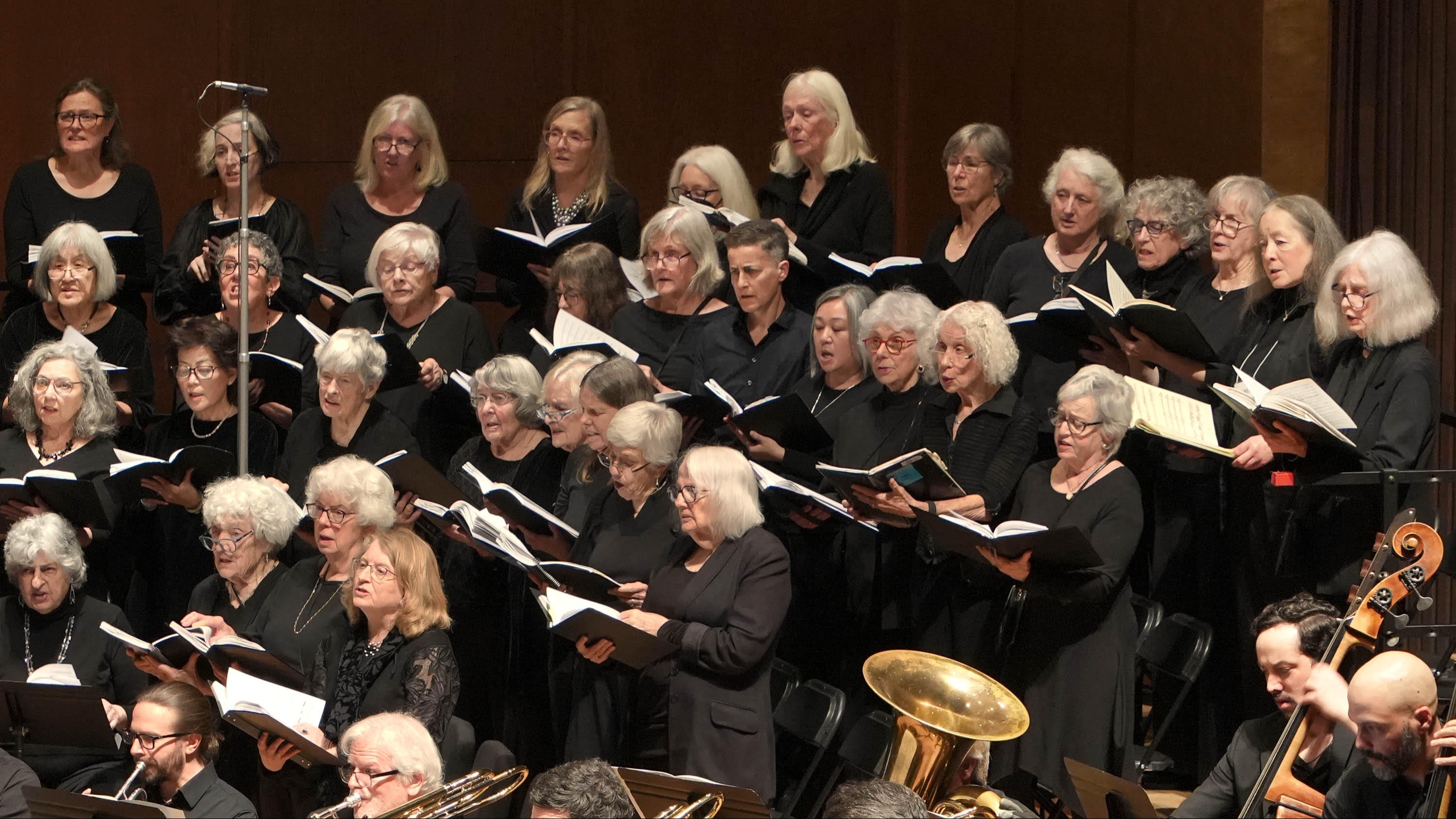
The 60-year-old chorus has 240 unauditioned members, with 160 onstage for each of BCCO’s series of three concerts, singers taking their turn so everybody gets to perform.
The policy of not auditioning singers came from Eugene Jones, who founded the group two years after Berkeley’s Free Speech Movement, with the goal of “making participation open, free, and inclusive.”
BCCO concerts, all of them free to the public, present mighty oratorios, rarely heard music, and new works, some commissioned by BCCO.
The concerts are enthusiastically received and reviewed, and such is BCCO’s fame that those who want to join this community of singers, paying tuition, have to wait until somebody leaves. Currently, the alto waiting list is temporarily closed, soprano, tenor, and bass waiting lists are open. While waiting for a BCCO position to open, the Berkeley Women’s Community Chorus is open to all.
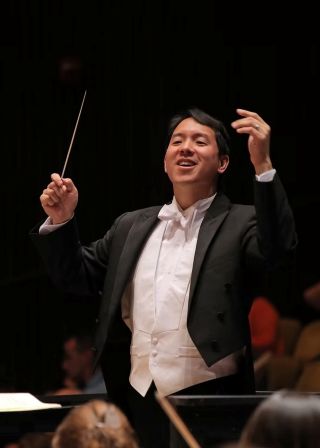
BCCO’s next concert — June 12–14 in Berkeley’s First Presbyterian Church — is very much in line with the chorus’ profile. Music Director Ming Luke will conduct Haydn’s 1799 Theresienmesse, and the world premiere of Michael Schachter’s Terezín Requiem. Free reservations are required. (Saturday & Sunday concerts are presently sold-out. More tickets may be released after June 5.)
The BCCO-commissioned work honors the memory of the prisoners and victims of the World War II concentration camp, including 15,000 children, of whom less than 150 survived. The composer has family connections with Terezín victims.
Schachter told the chorus at a rehearsal that he wanted the piece to be specific to Terezín but also hoped the music “would speak to people who knew nothing about Terezín, in an ecumenical, humanitarian way to be about a community of people coming together in extreme circumstances.”
The texts of the Terezín Requiem reflect the multilingual reality of Terezín’s population: Hebrew, Aramaic (Kaddish), German (Heinrich Heine), Yiddish, Latin (requiem texts), and Czech (poems by children imprisoned in the camp). The opening and closing movements draw from Psalm 144 and the El Malei Rachamim (God, full of compassion), the Memorial Prayer for the Departed.
“Singing the Requiem in its many languages is like being inside the heads of all the players in this unimaginable drama. The piece is profoundly moving to sing, and we hope that the audience can enter into this experience with us,” bass Rick Diamond told SF Classical Voice.
BCCO is planning to perform the Terezin Requiem in the Netherlands, Prague, and at Terezin in the summer of 2027. Singers will cover most of their costs during the tour. The organization is arranging for the travel of the conductor and soloists Ronit Widmann-Levy (soprano) and Simon Barrad (baritone). Donations are solicited.
“It's both thrilling and humbling to know that we are premiering a work of such transcendent beauty,” said alto Ellen Rosenfield.
BCCO’s future programs are:
January 8–10, 2027
William Walton, Belshazzar’s Feast; Francis Poulenc, Gloria
May 28–30, 2027
Gabriela Lena Frank, Conquest Requiem; Mozart, Requiem in D Minor (in Robert Levin’s completion)
Music Director Luke comments on his programming philosophy:
“Nowadays, exploring a new work is not only an exploration of what the composer is saying, but also how they say it. It’s learning their musical language, and how that musical language affects what they create.
“I dig into new works with relish, since contemporary composers have such a wealth of experiences from which to draw. They’re influenced by Bach, Beethoven, but also Metallica and Duke Ellington.”
Alto Ellen Rosenfield says “The next concert is unusually rich. The Haydn Theresienmesse is full of joy, sprightly fugues, and tuneful choruses. Schachter gives us gorgeous chords, Gregorian chants, and hints of ancient Hebrew prayers.ּ”