The party was over. The capacity Hollywood Bowl crowds who gave New York City-bound Gustavo Dudamel a tumultuous, multicultural, four-evening-long sendoff over the previous four nights had gone home. Things settled down on Aug. 25 to something resembling a normal Classical Tuesday at the Bowl on a hot August night. The usual sequence of events—brief curtain-raiser of new or new-ish music, concerto, symphony—regained its hold on the programming
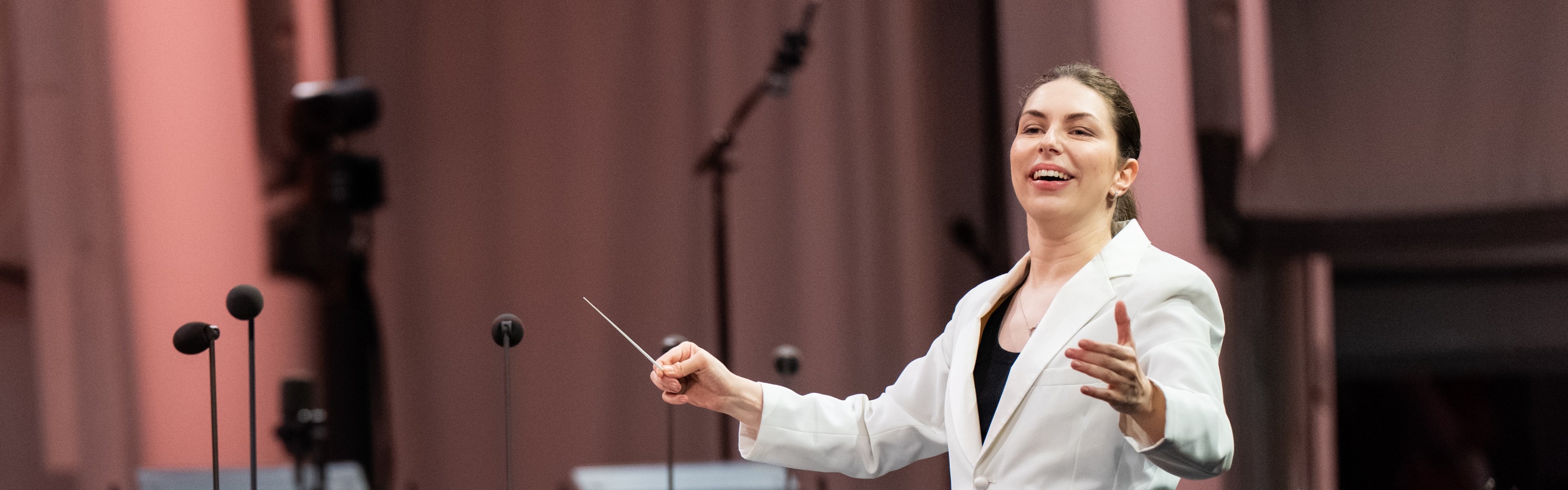
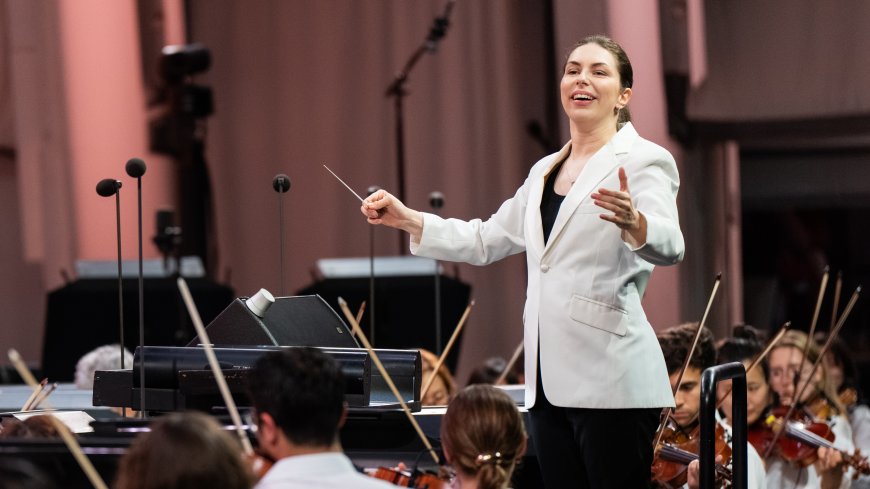
Yet there was something notably symbolic about this concert—the absent Dudamel passing the baton, as it were, to the youngest member of the team slated to run the Los Angeles Philharmonic. It marked the first LA Phil appearance by German-Colombian conductor Anna Handler, 30, since she was named conductor-in-residence in April, a post that will have her spending three weeks per season with the orchestra and YOLA. She comes to the Phil from the Boston Symphony (a reversal of the usual direction of personnel from L.A. to Boston these days), where she completed a term as assistant conductor this summer.
I wouldn’t call it a make-or-break demonstration of Handler’s capabilities since it was held under the peculiar, limited-rehearsal-time, electronically amplified conditions of the Bowl. It did allow Handler to present a brief U.S. premiere, that of Ablaze the Moon by British composer Grace-Evangeline Mason. With delicate lines in the winds, a briefly sneering buzz from the trombones, a somewhat inchoate mass of sound late in the piece that fades into a quiet sheen of impressionistic string harmonies, Ablaze twinkles and shines for all of five minutes. In a welcome gesture, Mason gave an engaging onstage talk about her new piece before it was played—and lo, the real moon appeared over the trees at intermission in belated affirmation.
From this point onward, it was all-Beethoven time, but not always the usual Beethoven since the concerto on tap was the underrated, not-often-played Triple Concerto for violin, cello and piano. The reason it isn’t done more often may have more to do with the task of finding the right personnel than with any defects in the music. Rounding up three superstar soloists can get expensive, assuming they can coexist. The best choice can be an established chamber group like the dear departed Beaux Arts Trio, which made two acclaimed recordings of it.
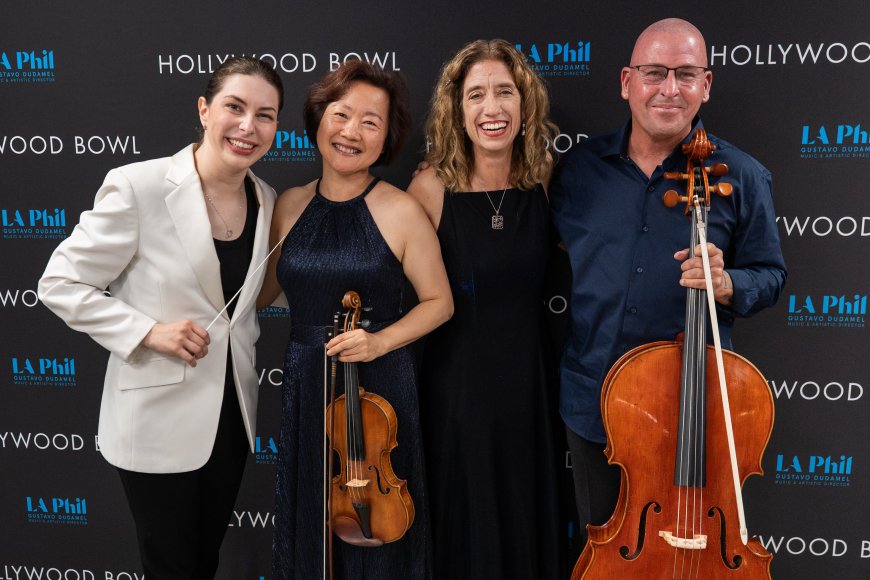
The LA Phil made the easiest choice—turn three of its own loose on the Beethoven Triple. So acting concertmaster Bing Wang, principal cellist Robert deMaine, and pianist Joanne Pearce Martin—none of whom has overwhelming sonic personalities to get in each other’s way—took it on. Wang’s tone had a bit of an edge—as has that of most violinists I’ve heard through the Bowl’s loud new sound system—deMaine’s tone started to bloom midway through the first movement and stayed that way for the rest of the piece. Martin’s keyboard work was crisp and precise, as was Handler’s conducting. There was good balance and good teamwork under these conditions, though the performance didn’t catch real fire until the last four minutes of the finale.
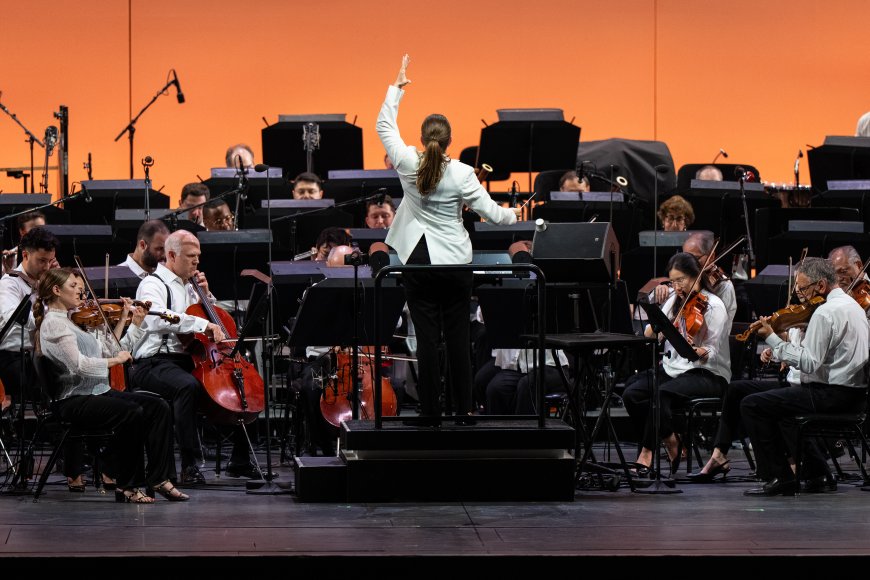
Beethoven’s Symphony No. 5 got sole possession of the headline announcing the concert in the Bowl brochure, and it was the most opportune place to get a glimpse of Handler’s work. She was less metronomic in her right-hand gestures than in the previous pieces, employing sweeping motions with her left arm. The performance went conventionally for the first three movements—elemental rage slightly softened in the famous opening movement, an extroverted march through the slow movement, a playful opening tempo for the Scherzo—and then came a surprise move. Coming out of the mysterious transition to the finale, instead of letting those three big opening chords stand by themselves at the summit, Handler rammed straight through them at a fast clip without breaking stride—and the flexible LA Phil followed right along.
After the symphony concluded with a very swift coda, Handler addressed the crowd, praised the orchestra, and signed off with, “Thank you for not leaving after Ta-Ta-Ta Taaaaah!” I liked that blast of irreverence.