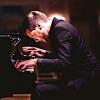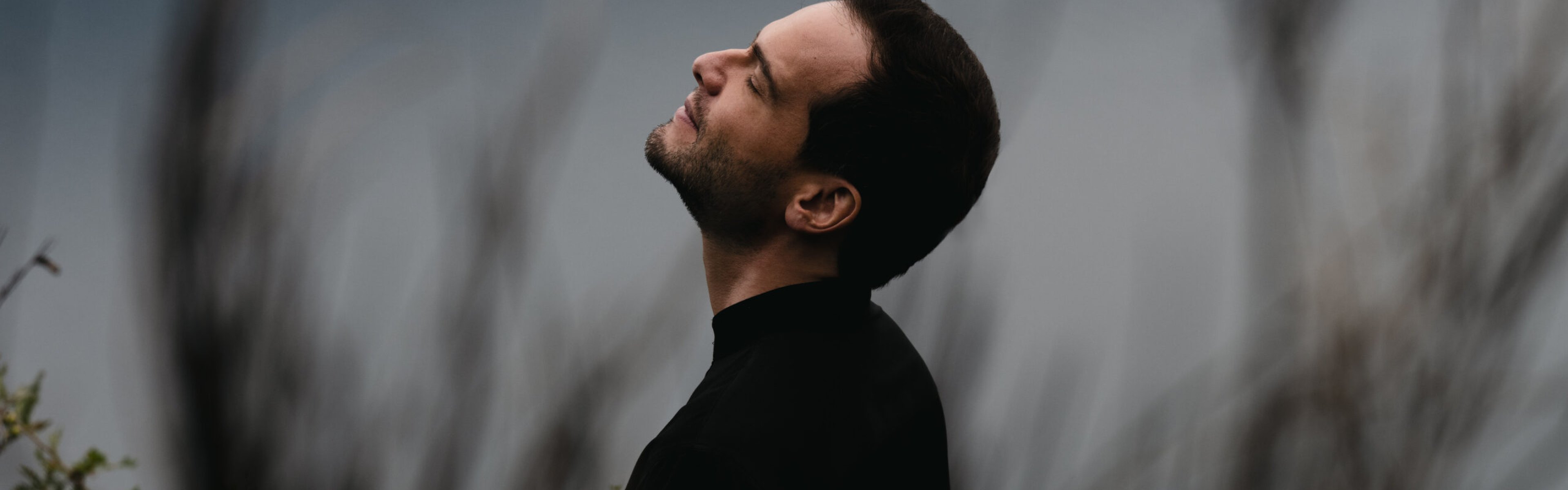
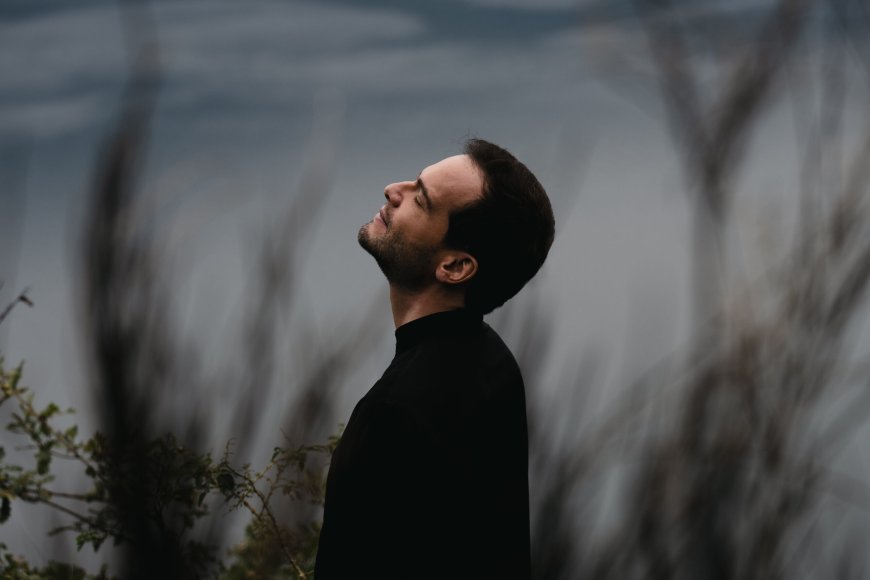
Two decades and 20 recordings after early prestige-competition wins put him on the map, Swiss pianist Francesco Piemontesi has more than earned his place alongside German violinist Augustin Hadelich.
The pianist and the violinist will join forces in this spring’s recital tour of mostly French works. They will make four stops across the Western United States before continuing on in Canada and Europe.
This weekend, the pair will perform at San Francisco’s Herbst Theatre on Mar. 20 with SF Performances, and La Jolla’s Baker-Baum Concert Hall on Mar. 21 with La Jolla Music Society.
Piemontesi’s talent speaks for itself. But serendipity has also played a decisive role in his success. First, he had the good fortune to be born into a family that, while musical, was not professionally so.
“My father played the flute as an amateur, and my mother sang as an amateur,” 42-year-old Piemontesi shared with SF Classical Voice from his Berlin home. “Maybe this was my big luck. I wasn't forced to do anything. But they had a huge collection of records, so I could actually discover so many things. I was always listening to recordings by [Alfred] Cortot and by Annie Fischer, Lili Kraus, and later on [Tatiana] Nikolayeva and [Wilhelm] Kempff and Samson François. It's such a source of inspiration; it was back then, and it is now.”
Second, geography ensured he grew up multicultural and multilingual. Descended from Italians with roots on the southern end of Lake Maggiore, Piemontesi imbibed Switzerland’s “melting pot of cultures,” with influences from Italian, French, and German traditions.
Piemontesi’s cultural fluency is reflected not only in the range of his recorded output — from the Central European, Russian, and French core canon to George Gershwin, Benjamin Britten, Arnold Schoenberg, and Olivier Messiaen — but in his easy rapport with the many pianistic elders he interviews in the 2024 documentary Alchemy of the Piano, directed by Jan Schmidt-Garre and with Piemontesi as its central subject.
But Piemontesi’s most serendipitous encounter of all was the email he received from legendary Austrian pianist Alfred Brendel in 2008 saying he’d like to connect after hearing a recording of Piemontesi on the radio.
“I never dared asked him, but he saw probably that I was searching for things in sound and style that he was searching for himself,” Piemontesi said. “He said that in certain pieces, he felt that we were very much on the same wavelength.”
Over the years, Piemontesi and Brendel’s mentoring relationship evolved into a true friendship, going on outings together when in the same area. They remained close until Brendel’s passing at age 94 in June, 2025.
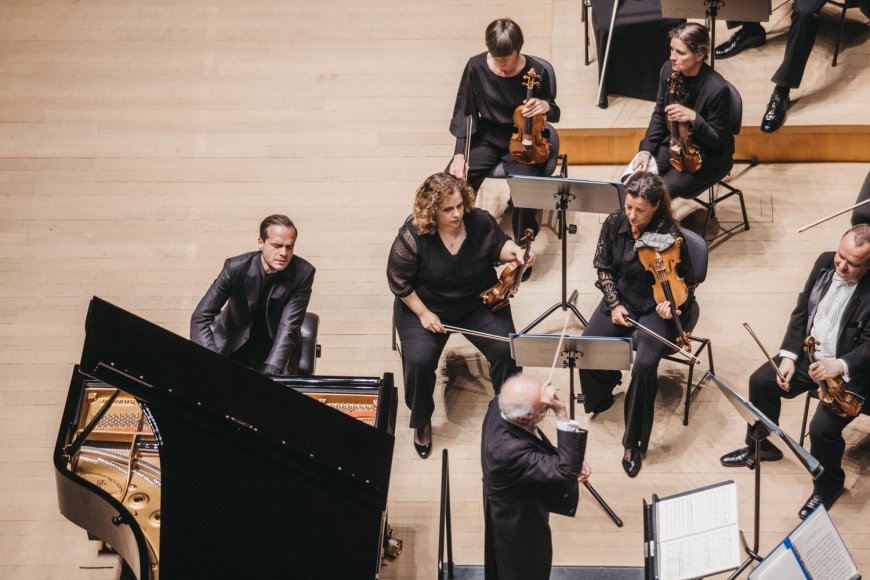
Though less career-inflecting, Piemontesi’s relationship with Augustin Hadelich displays the same intangible synergy. They first met in 2017 at Switzerland’s second-oldest festival, Settimane Musicali di Ascona, which Piemontesi directed from 2012 to last year. There, they performed some of the same repertoire they’ll play in Aspen, Seattle, San Francisco, and La Jolla this month.
The tried-and-true — the violin sonatas of César Franck, Debussy, and Francis Poulenc — dovetail with the rarer “Tre Pezzi” of György Kurtág, “La Boucon” from Jean-Phillipe Rameau’s Deuxième Concert, and “Récit du chant de l’hymne precedent,” by Nicolas de Grigny, with the latter two pieces arranged by Piemontesi himself.
“It's something I like doing,” he said of transcription. “When you’re trained as a professional musician, sometimes you don't have the pace or the inner peace to [really] look at the score. And this is what happens when you write or transcribe.”
In addition to transcriptions, Piemontesi has written cadenzas for some Mozart concerti. “When I was a kid, just for my pleasure, I was composing quite a few pieces that nobody will ever hear,” he said. “But for me, you also learn about music by doing it, by writing it.”
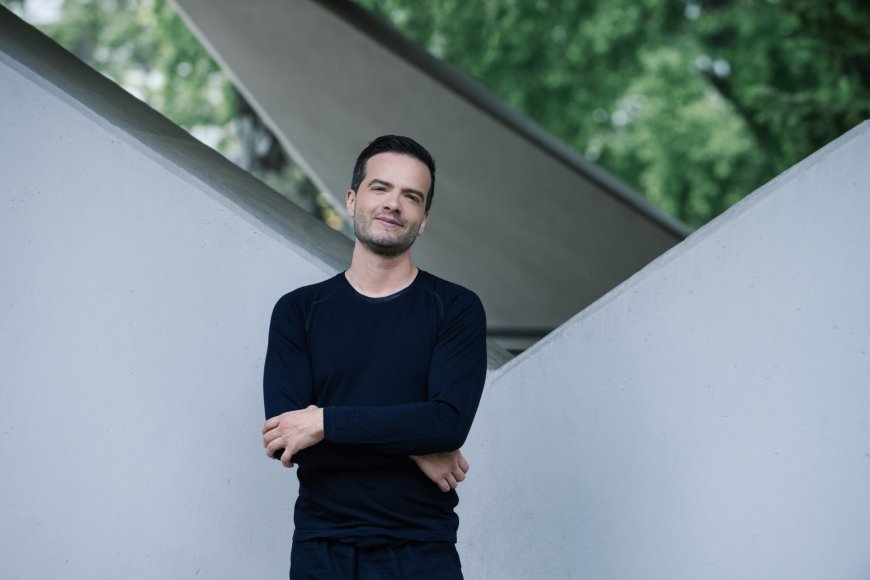
At career mid-stride, Piemontesi is busy. Last September, he premiered the second piano concerto of Swiss composer Beat Furrer with Orchestra de la Suisse Romande (“I'm so proud that it was dedicated to me. He's in my opinion the greatest living Swiss composer”). This September, Pentatone is set to release the sequel to Piemontesi’s 2025 multiple-award-winning recording of Brahms’ second piano concerto with The Leipzig Gewandhaus Orchestra under Manfred Honeck.
2027 sees Piemontesi performing the Brahms second concerto with the San Francisco Symphony under Donald Runnicles as well as a stop in Southern California. A double album of Schubert piano sonatas is due in 2028, and a recording with Hadelich of this spring’s French-flavored touring program is under consideration.
Though Piemontesi enjoyed the “many nice human situations” arising from his Ascona festival leadership, he’s in no hurry to try more artistic directorships.
“Brendel told me, ‘Look, between 40 and 60, these are the best years for a pianist, because you've learned really how to play an instrument and you still have the strength, the power and the endurance,’” he said.
“I want to use these years to do just that. I prefer to be free, and I'm very grateful to life that I can spend these years being free and being on stage.”