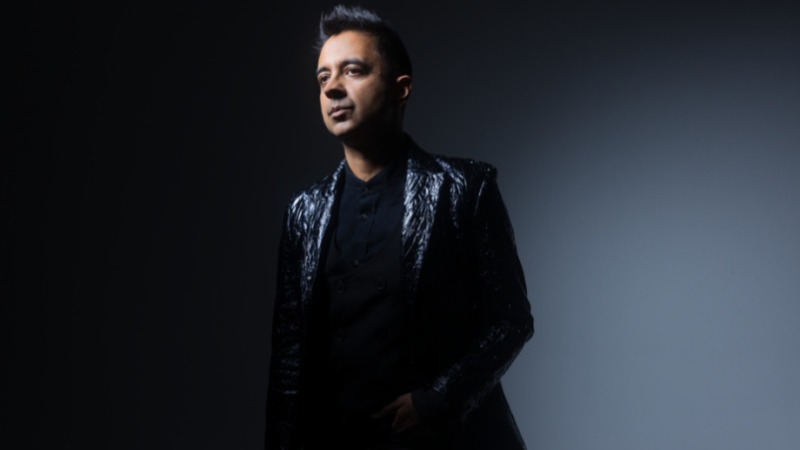
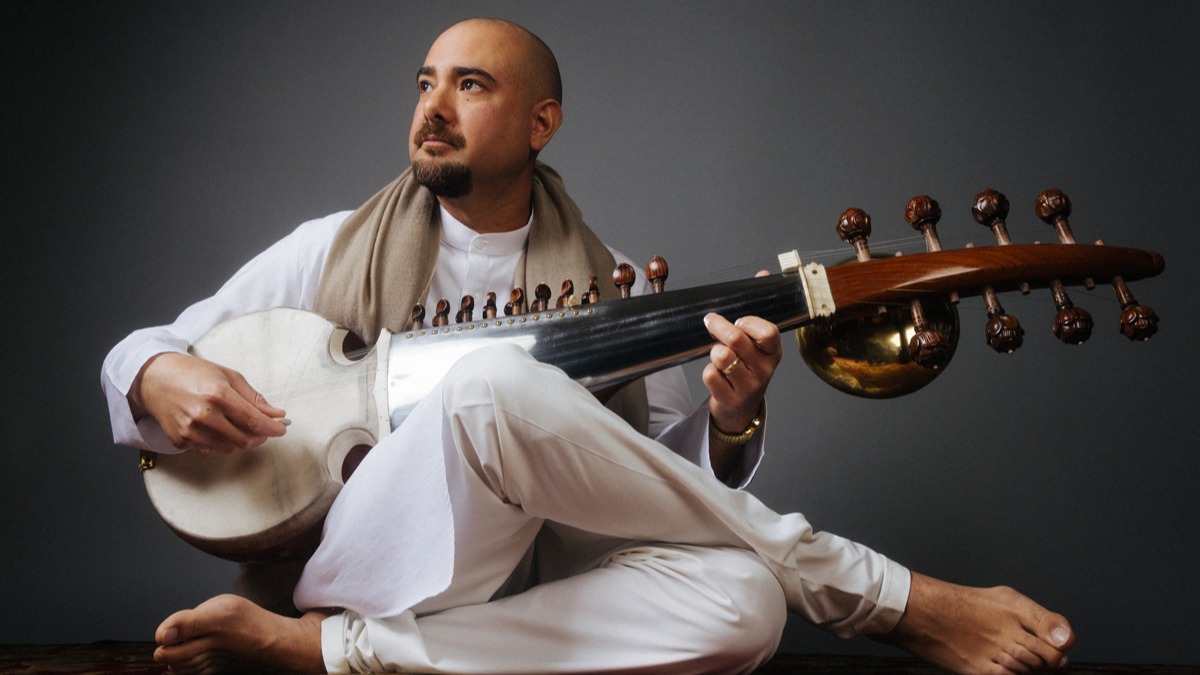
When improvisation is the heart of a live musical collaboration, the results are often both surprising and extraordinary. And that's what happened when three friends — acclaimed pianist and composer Vijay Iyer, sarod player Alam Khan (the head of Indian classical instrumental classes at the Ali Akbar College of Music in Berkeley and son of late legendary sarod player Ali Akbar Khan), and tabla player Nitin Mitta — played together for the first time.
“From the first breath of it, it felt really beautiful,” Iyer said. “We felt like there was something substantive, and it was way more than what we expected.”
What Iyer calls "a collaborative project among members of the South Asian diaspora," came about, he explained, a little more than a year ago, when Iyer was visiting the Bay Area and had some spare time for an exploratory session. He had worked with Mitta in the past and had known Khan (who had also previously worked with Mitta) for a long time. Luckily, Khan had a friend with a recording studio that already had a piano in it and was not in use.
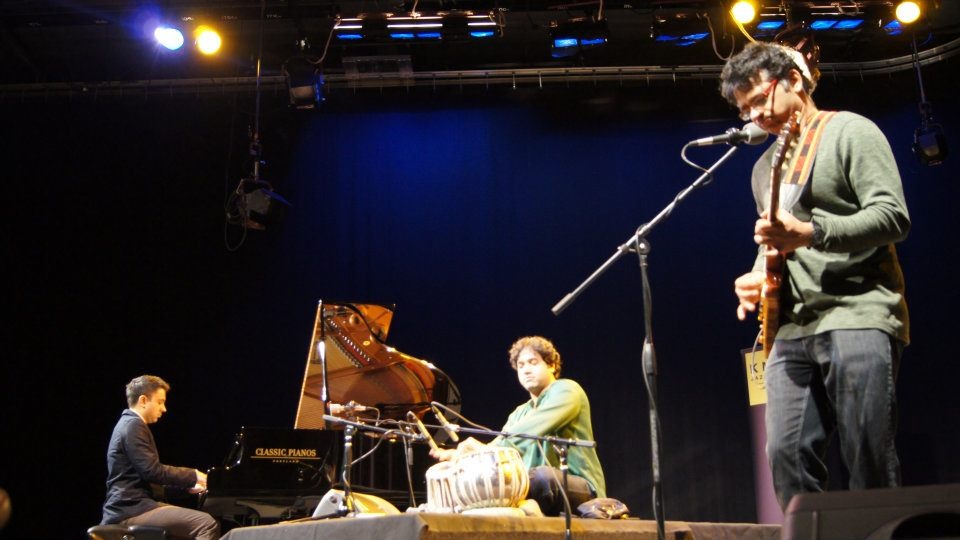
They fortuitously decided to record the session, and were so pleased with the music that they decided to put out an EP which was recently released. Then they decided to do a tour, the first stop of which is set to be at the Freight & Salvage in Berkeley on Saturday, Dec. 13 at 8:00 p.m.
Iyer has played with musicians from other cultures throughout his career, including for an album with Mitta and Carnatic singer and guitarist Ramaswamy Prasana called Tirtha in 2011, and for Love in Exile in 2023 with Pakistani singer Arooj Aftab and multi-instrumentalist Shahzad Ismaily, which he says helped prepare him for this collaboration.
“When I started trying to play with South Asian percussionists, both Hindustani and Carnatic, I was thinking about that feeling of piano as a percussion instrument, and tabla as a melodic instrument, because they have all these resonances and overtones and this surprising musicality to them,” Iyer said.
Many of the pieces the trio play are based on ragas, and are created by the rhythm and character of each raga, and by listening carefully to each other — something he calls “live composing.”
“It kind of came out of nowhere and had sort of a strength to it because we weren't just fishing, we all came at it with an intention.” Iyer explained, “and were able to hear the details of what each other were doing, so we could lock with, and respond or support each other.”
The pianist feels that the trio’s music is different from his previous collaborations.
“The sound of the sarod and the piano is a new sound to me, and it stretches me in a different way,” he revealed. “It's almost more like playing with a singer. And because it has these sympathetic strings, it resonates in a way that I actually want to leave space for, so I end up just playing less. I tend to focus more on support and helping to stabilize the music rather than trying to get in the middle of it. It feels comfortable to do that.”
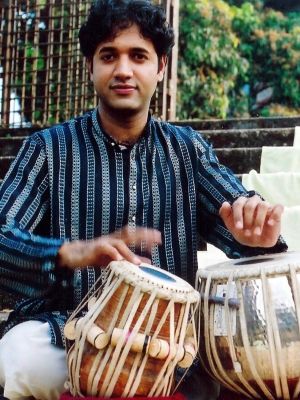
Although it is common to hear a sarod and tabla together, the addition of the piano, as heard on the upcoming EP, gives the music a stunning ethereal dimension.
If the trio goes on to make a full album, Iyer said they would be much more intentional about it. But for now, their next gig is at Carnegie Hall as part of a tribute to Zakir Hussain on Friday, March 6, the eve of what would have been his 75th birthday.
“I would like to play more concerts and let things develop that way, cause a lot happens live,” Iyer said. “This recording was literally our first moments together, and I would like to see what happens if we get to have a life out there and see how the music evolves.”
Iyer lived in the East Bay from 1992–1998, pursuing a Ph.D. of his own design (Technology and the Arts). He said these were very formative years for him, because it was during that period when he decided to change his career path and pursue music professionally — so he is happy to be performing at the Freight, he said.
“The Bay Area in the 90s was a really fertile and inspiring culture, and that sort of made me who I am today," Iyer said. “It opened a lot of doors for me, not just professionally speaking, but really in terms of what I understood to be possible in the world, what I understood about music, and what mattered to me. So, it always feels good to come back.