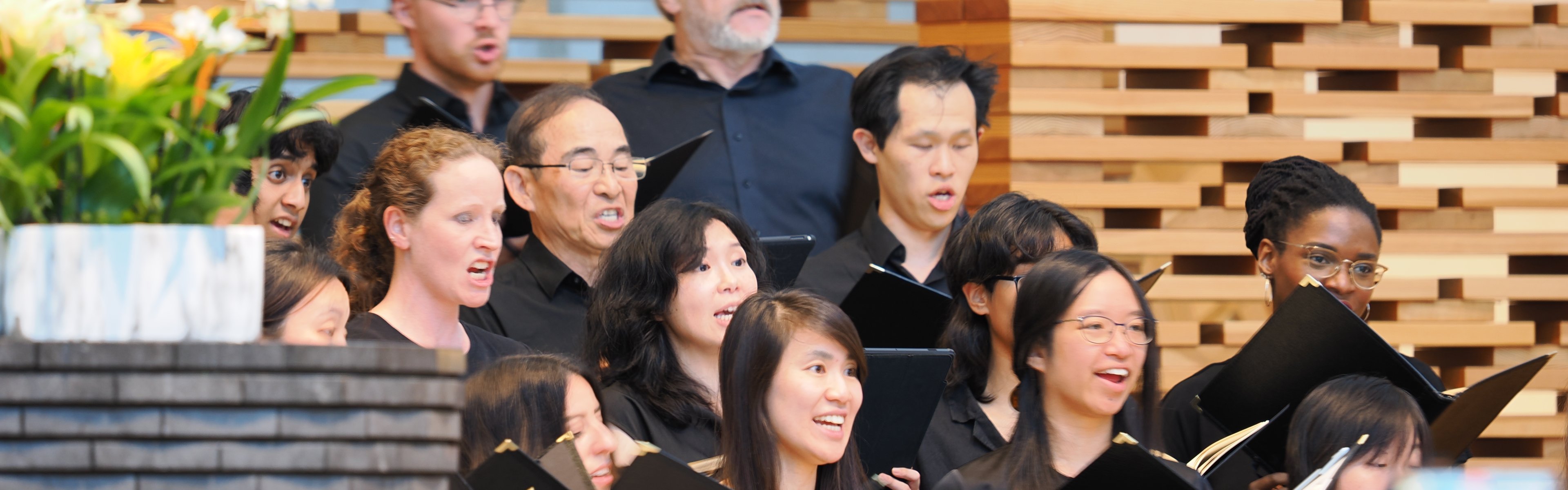
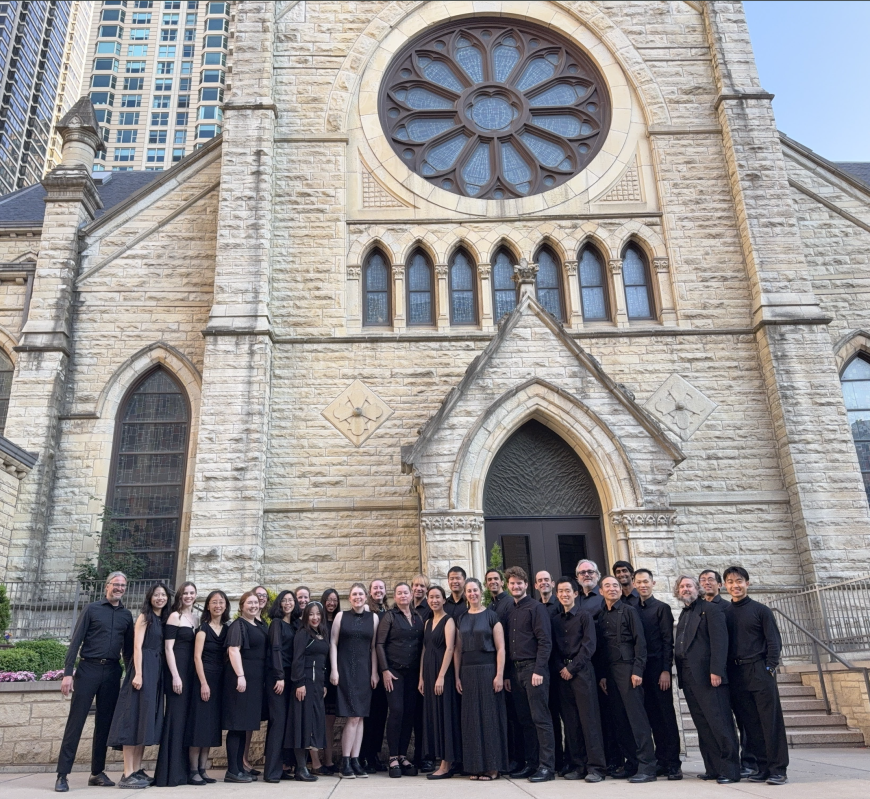
The Bay Area’s choral scene is experiencing a new crop of exciting ensembles. And it’s not just the professionals who get to have all the fun: Ensemble Continuo, a Palo Alto-based choir founded in 2023, has an intergenerational roster of amateur singers ranging from 14 to 65, singing repertoire that punches well above their weight.
Continuo’s June 27th concert at The Cathedral of Christ the Light in Oakland exemplified this. The first half consisted of motets, both modern and classic. The flagship work on the latter half was Frank Martin’s challenging and rarely performed Mass for Double Choir, a melancholy, dramatic setting of the Mass Ordinary that reimagines plainchant in a modern, quasi-cinematic musical language.
The evening opened with Frank Ticheli’s “Earth Song,” a beloved contemporary classic with a cinematic air all its own. Continuo’s warm, bright sound was reminiscent of studio choirs from video game or TV soundtracks, while the stereophonic acoustics of the cathedral carried the choir’s tone beautifully in this initial offering.
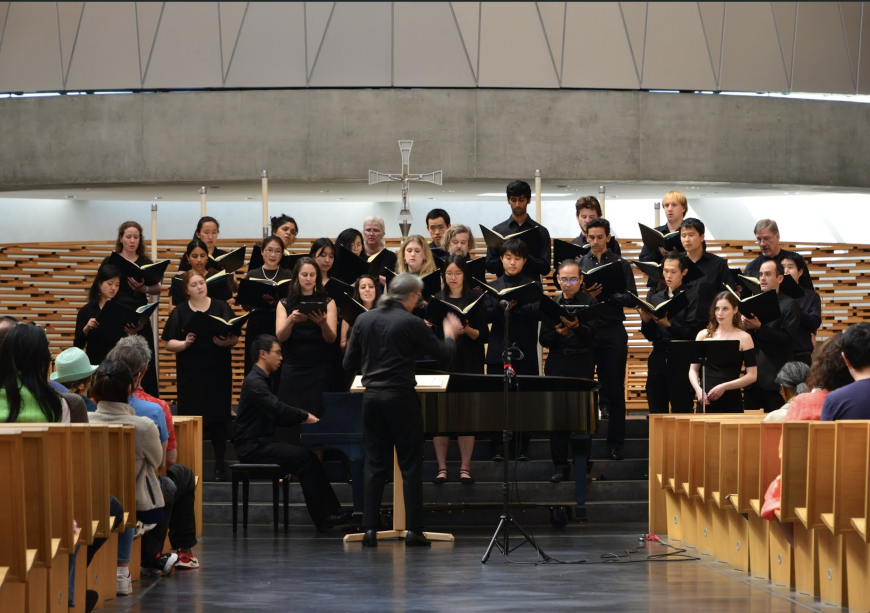
Next followed more canonical selections from Rachmaninoff and Palestrina, which the ensemble handled with impressive dynamics and stylistic contrast. Higher passages in pieces like Bruckner’s “Os justi” suffered some from less-than-optimal intonation, but even professional choirs find such passages perilous. There was no lack of enthusiasm and spirit from these singers.
The first half concluded with an organ solo from Continuo’s founder and director Christopher Pluntke: Philip Glass’s “Mad Rush” for organ. Thrilling and virtuosic, it built from quiet hemiola textures to booming climactic sextuplets, with the same brooding essence as Glass's iconic organ works for film, such as his main title themes for Koyaanisqatsi (1982) and Candyman (1992).
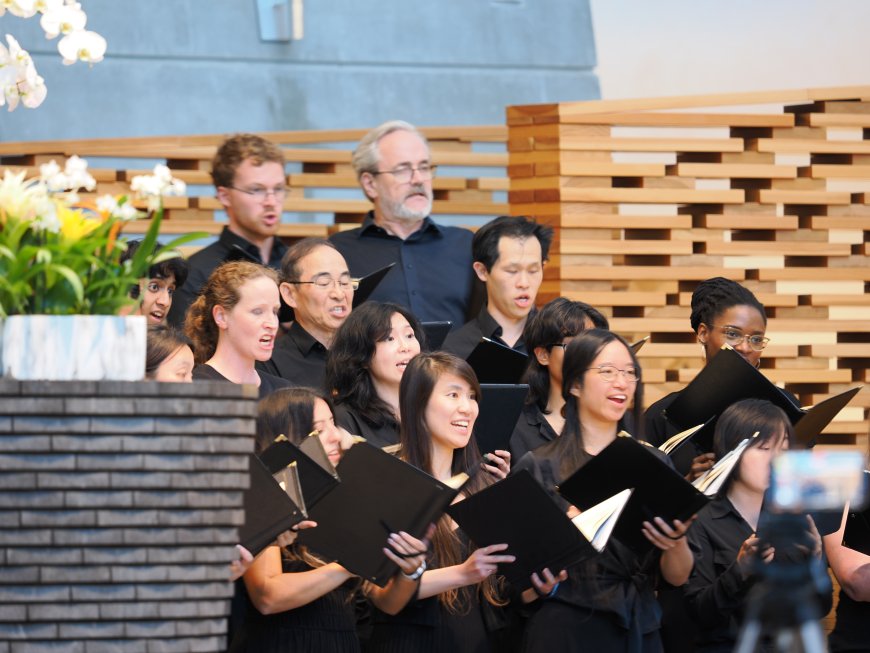
The Martin mass began with beautiful phrasing from the trebles in the opening chant-like melismas of the Kyrie. Martin’s mass setting has an air of solemn desperation that grows more insistent over time. The choir navigated these contrasts admirably. The cascading opening chords of the Gloria were a touch loud, but the vocal clarity in the imitative section, the low bass organum during the Domine Deus, and the delicate serenity of the final amen more than compensated.
The Credo saw the choir more energized, now properly warmed up into this difficult piece, tackling the dense counterpoint of the rapid fugato section on Et resurrexit with uncommon speed, energy, and accuracy. The dreamy, cloud-like chords of the Sanctus gave the lower voices a chance to shine, these harmonies building in intensity into perhaps the most exciting imitative section of the entire work, the 5/8 fugato in the Hosanna which seems to anticipate works like Bernstein’s Mass by several decades.
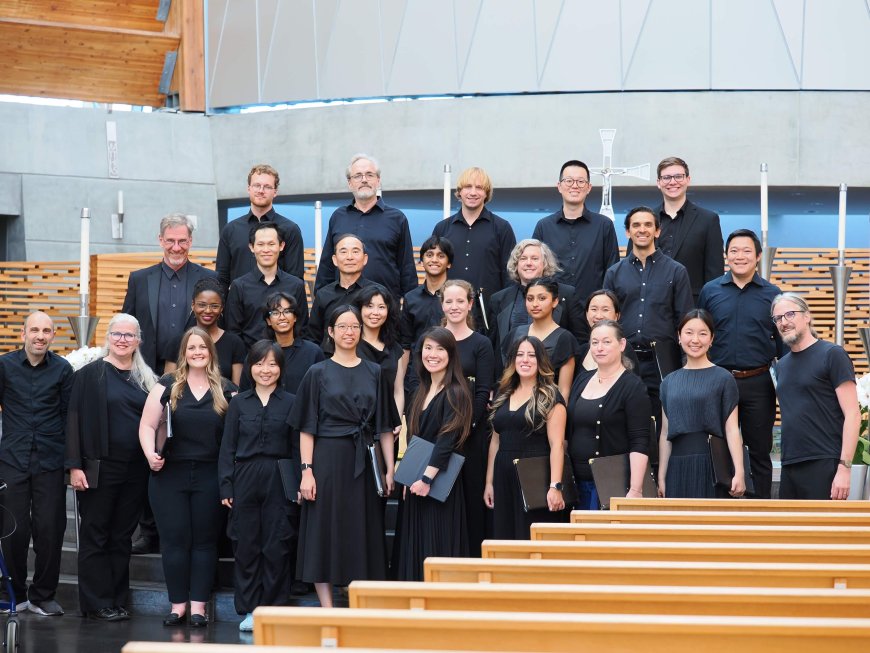
Finally, the work ended with the iconic Agnus Dei, which sees the split chorus utilized like an ersatz piano: one choir sings a melody in unison, the other provides a dense chordal accompaniment. The harmonies lacked the clarity one would expect from more seasoned performers. But the overall effect came across, complete with a beautifully serene concluding Dona nobis pacem. The choir presented a fitting encore from another composer steeped in plainchant, the French organist Maurice Duruflé: “Ubi caritas.”
It is rare to hear a performance of such artistry from a community choir. While naturally there was not quite the level of polish one would expect from professionals, Continuo demonstrated genuine skill and passion that had been honed into disciplined interpretation. It is delightful to hear seldom-performed works like the Martin, and even more delightful that performing such works can be made more accessible to those who would otherwise never get the opportunity to sing such gems. Let us hope we hear many more from Continuo.