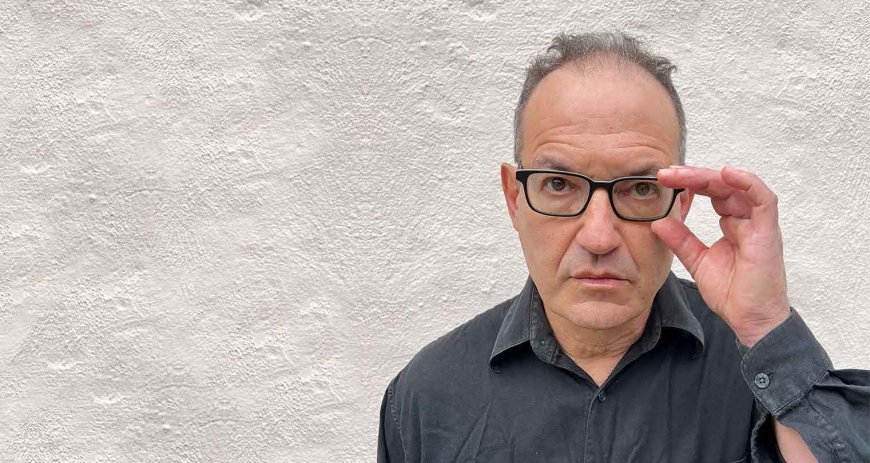
Like a dance that starts with a slow and stately shuffle, gradually gaining momentum until it crests with an ecstatic, swirling wave of undulating limbs, the second night of the Ben Goldberg Festival of Music unfurled like a celebratory ritual.
Presented by RootStock Arts with the support of a Zellerbach Family Foundation community grant, Goldberg, a prolific and influential Berkeley-based clarinetist and composer, took over the West Oakland performance space Wyldflowr Arts for a three-night residency from Oct. 23–25, presenting two different bands and a solo opening set each night.
Friday’s Oct. 24 program opened with a 20-minute piece by percussionist Jordan Glenn, who admitted he rarely plays unaccompanied because the solo spotlight makes him anxious. Making judicious use of space and using sundry percussion items and a variety of implements on his trap set, including sticks, mallets, and a bow, he developed a quietly enchanting improvisation marked by an irregular bass pulse and the contrasting metallic cadences of cymbals and brass bowl.
Goldberg’s first set featured Things That Move, a general moniker he applies to his multifarious collaboration with electric bassist Nate Brunner (co-founder of the acclaimed alt-pop band Tune-Yards). They were joined at Wyldflowr by drummers Tim Bulkley and Hamir Atwal, and Michael Coleman on synthesizer.
With the two drummers accompanying them, Things That Move picked up where Glenn left off, levitating on a matrix of interlocking rhythms. Sticking with b-flat clarinet throughout the evening, Goldberg led the quintet through three flâneur-jazz excursions, strolling without an apparent destination while sharply observing every passing note. Restraint and close listening guided the way, with Brenner’s bass taking on an incantatory groove. The set seemed to end mid-stride with the sudden halt of Coleman’s accelerating electronic whooshes.
But the sojourn continued apace with Archimedes Lullaby, a group that added Glenn, guitarist Andrew Conklin, alto saxophonist Kasey Knudsen, and percussionist Deseray Beach — a last-minute addition — to Things That Move. In other hands, the percussion-laden group could have easily overwhelmed the intimate space, but a sense of balance and loose-limbed order prevailed.
Opening with the stately “Introduction,” a tune from Goldberg’s 2020 sextet album Symphony No. 9, the group embraced his folky side. A ravishing version of Bob Dylan’s “What Good Am I?” imbued that anguished question with careful, soul-searching beauty floating on the breeze of Atwal’s and Bulkley’s brushes.
Knudsen is one of Goldberg’s most reliably inspired collaborators, and on the theme of Goldberg’s “February 18 2021” from his Covid-era project Plague Diary, they converged, blended, and commented on each other’s lines with serpentine responsiveness. With Coleman playing a near montuno figure on the piano, the ensemble plunged into another Plague Diary piece, “April 18 2020 - Two Spots of Salt,” ramping up the density as every player became part of the rhythm section.
The concert ended with “Dumpling’s Revenge,” a repurposed track from Goldberg’s and Coleman’s score for the 2017 animated film A Sibling Mystery. Cascading rhythmic lines filled the space with cyclonic energy as Knudsen carved through the mix with a solo that condensed the brief theme to essentials.
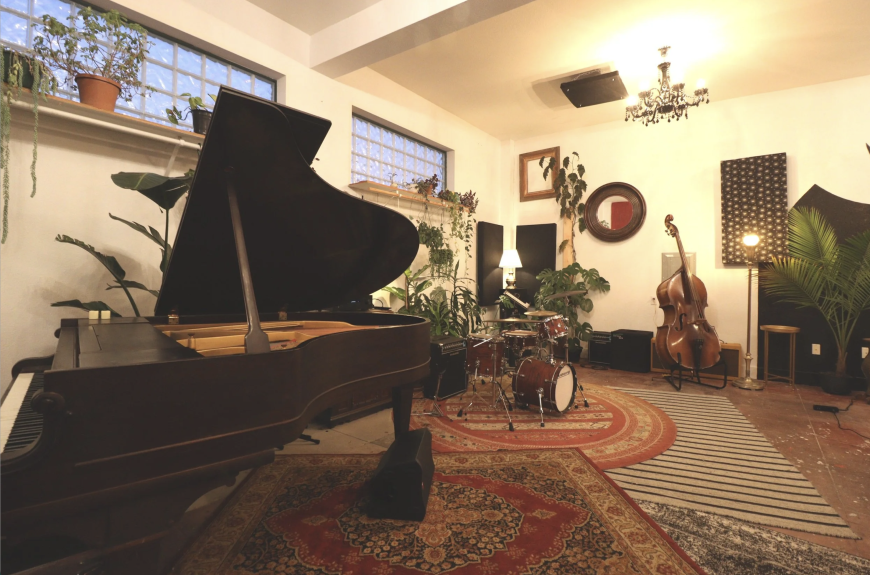
Spending much of his time in New York these days, Goldberg doesn’t get many opportunities to convene several ensembles in one space. Wyldflowr Arts isn’t the only East Bay venue that could have hosted the festival (the Paul Dresher Ensemble Studios and Temescal Art Center are also dedicated to presenting a similar spectrum of jazz and improvised music). But with its living room vibe, Wyldflowr was an ideal forum for music that welcomed listeners with both arms open wide.