If singing is good for you, then the Bay Area’s profusion of choral groups must keep a lot of people healthy. Amid the abundance of amateur groups singing the famed masterworks of choral literature, Berkeley’s Chora Nova stands out for consistently seeking the unusual and the rare.
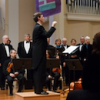
The chorus began its 20th anniversary season last weekend, presenting a Te Deum from 1825 by Beethoven’s contemporary and childhood friend, Anton Reicha. The work may only have had one U.S. performance prior to this one. Attracting a substantial audience to First Church Berkeley UCC, the group, led by Artistic Director John Kendall Bailey, gave a rousing performance of the 40-minute work, with strong soloists and the participation of the Mozart to Mendelssohn Orchestra.

It's often said that the Czech-born Reicha (1770-1836) couldn’t escape Beethoven’s shadow, but that’s not how it would have seemed to him. Reicha wrote a ton of music but apparently was lackadaisical or uninterested in getting it performed. In Paris, where he spent the last half of his life, he became a noted composition teacher (Hector Berlioz, Franz Liszt, Louise Farrenc, Charles Gounod, even a young Cesar Franck studied with him.) He authored several well-respected theory texts and ended up with a teaching position at the Paris Conservatoire and was made a Chevalier of the Legion d’Honneur in 1835. He was an ideas man, unconventional in his thinking and unafraid to challenge convention in his music.
Reicha’s Te Deum, while not exhibiting his most forward-thinking ideas, bears no trace of anxiety over Beethoven or anyone else. It’s a celebratory piece that begins and ends triumphantly, with trumpet fanfares and an expansive, 11-movement layout. The work shows the composer’s love of fugue, including a double fugue in the “Tu Rex gloriae” fourth movement. Reicha writes gratefully for voice, and his music is unfailingly harmonically interesting.
The 46-member Chora Nova was well-drilled in the music and sang confidently, making me appreciate a work I had never heard before. They sounded best in the full chordal passages and weakest in the places where individual sections were spotlighted. Like many choruses, they need a couple more tenors and more cohesiveness among the individual singers.
Bailey assembled a strong team of soloists, including soprano Gabrielle Goozée-Nichols who sang her aria “Tu ergo quaesumus” (We beseech Thee) beautifully, mezzo-soprano Shauna Fallihee, redoubtable tenor Joseph Meyers, and bass Sepp Hammer whose lyrical interpretation of the aria “Te per orbem terrarium” was a high point, despite woodwind accompaniment that was simply too loud.

The Mozart to Mendelssohn Orchestra, part of the SF Civic Music Association and also directed by Bailey, were up to the task of performing Reicha's colorful orchestration, though details were lacking.
Like many amateur orchestras, balances and blend between sections could be stronger, and the dynamic range was restricted. This was less of a problem in the big choral work than in Felix Mendelssohn’s Meeresstille und glückliche Fahrt (Calm sea and prosperous voyage) overture, which opened the concert. Aside from the opening measures, the orchestra needed a truer pianissimo to render the ocean swells written into the music. And the winds were a little shrill and obstreperous.
On the other hand, the string section tone did have a center and the ending sounded great, and beautifully balanced. Bailey’s reading brought out the overture’s drama. All in all, this Mendelssohn was pretty easy on the ears.
In the first half, the chorus sang Mendelssohn’s short setting of “Verleih uns Frieden” (the Lutheran version of the “Dona nobis pacem” prayer) and Beethoven’s Elegiac Song. Then they gave us Beethoven’s version of Meerestille, which came off as well as the Reicha.
If you’re thinking of seeing this worthy chorus’s next outing, it’s “An American Choral Journey,” March 7, 2026, also in Berkeley.