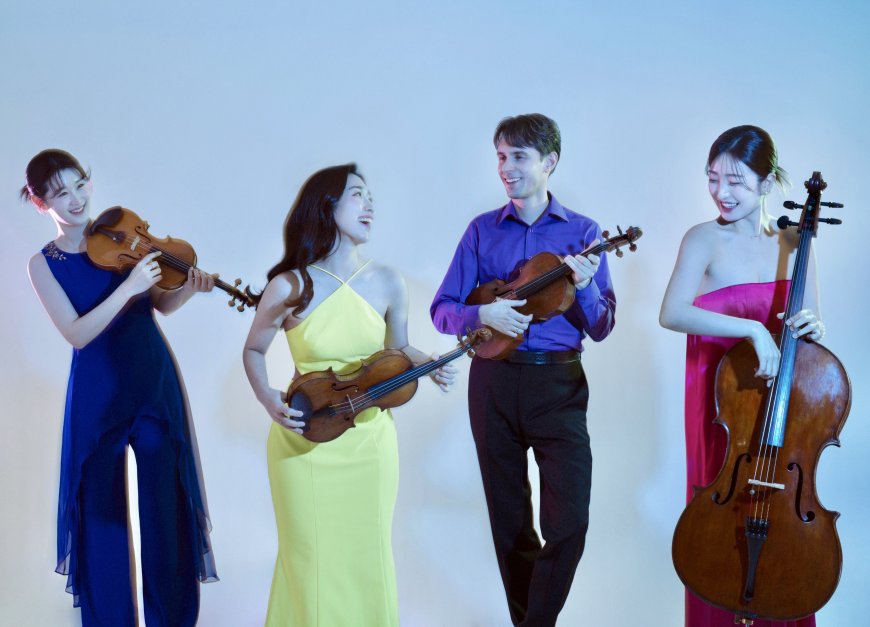
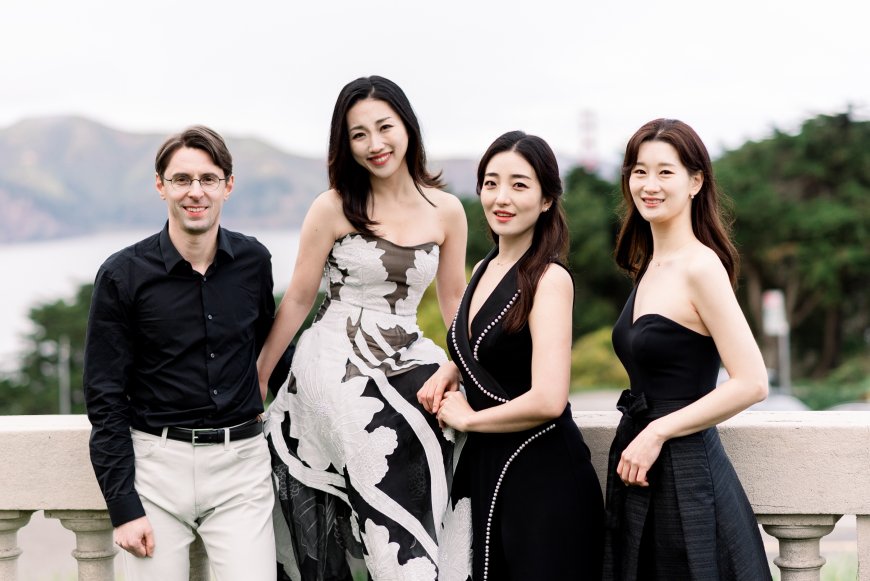
The Esmé Quartet is the new string quartet in town.
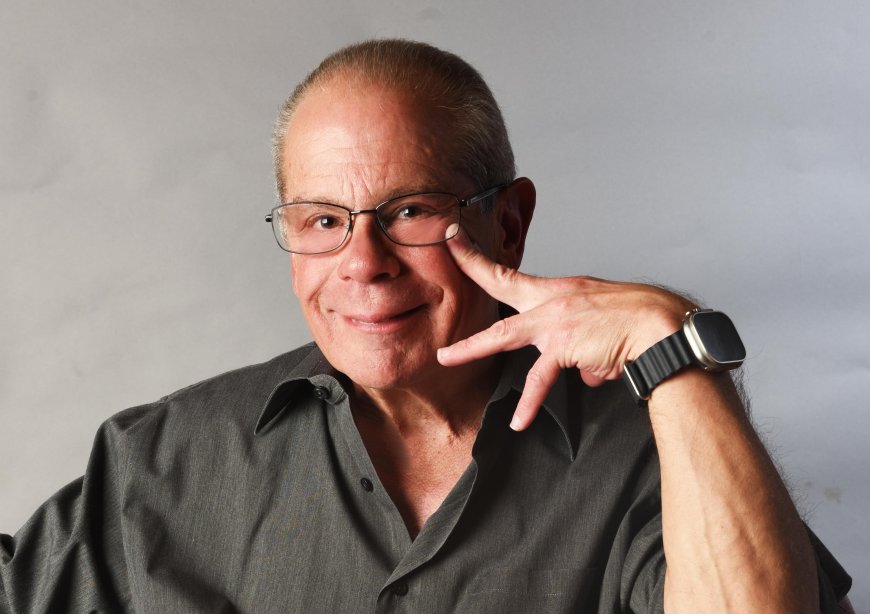
As of this season, they’re the resident ensemble for SF Performances, which presents Saturday morning concerts that include an introductory talk by resident music historian Robert Greenberg. They succeed the Alexander String Quartet, who filled this position for many years before retiring in Spring, 2025.
This fall, the Esmé Quartet commenced a cycle of Franz Schubert’s string quartets, playing Nos. 13 to 15 and the String Quintet in C major, D. 956 over four programs. Cellist Paul Wiancko of the Kronos Quartet (and other chamber ensembles) joined them for the performance of the String Quintet on Dec. 13 at Herbst Theatre in San Francisco, taking the second cello part.
Greenberg’s talk at the Dec. 13 performance was both informative and entertaining, providing context for the creation of the String Quintet, one of four major works –– the others are Schubert’s last three piano sonatas –– that the composer completed in a span of just three weeks not long before his death in 1828 at age 31. Throughout the fall series, Greenberg has discussed the influence of Beethoven on Schubert (and everyone else in Vienna), and at this concert he explored the conflicting and inconclusive evidence as to whether the two had ever met. Alas, we will never know for sure.
The String Quintet, an enormous work nearly an hour in length, received a wonderful performance from the Esmé Quartet and Wiancko. Their overall approach was light and transparent, a strategy that worked well for nearly the entire quintet.
There was only one spot where I thought it didn’t work out: the sublime second theme of the first movement, stated first by the cellos, then by the violins, could have been more expansive if given more weight, more warmth. Also, the accompanying pizzicatos could have had more presence.
Other than this single unconvincing moment, the entire performance was nearly flawless. The second time through the first movement exposition –– they thankfully took all the repeats –– was marvelously delicate, and they leaned wonderfully into the rush to the second theme.
The Esmé’s lightness paid off magnificently in their perfectly proportioned second movement, where serene outer sections frame a turbulent, anguished, minor-key middle section. The outer sections floated as if barely moored to the earth; here first violinist Wonhee Bae’s filigreed phrases and Wiancko’s pizzicatos wove breathtakingly around the long-breathed melody in the middle voices.
The third movement is eccentrically structured: the hurtling scherzo, full of hunting-horn harmonies, whizzes along in the expected triple meter, only to give way to a much slower, rather melancholy trio in 4/4. Here, the Esmé and Wiancko were beautifully sustained and lyrical, with a wonderful transition back to the scherzo.
The last movement is a rondo, but, like the scherzo, its structure isn’t typical. Instead of a single theme that repeats with contrasting music between, Schubert gives us two themes: the first with a wild folkish air, the second a more elegant, redolent of sitting rooms and afternoon visits which Greenberg called the “Viennese theme.”
Each time the first theme repeats, it’s varied, giving Schubert a chance to show off his uncanny ability to seemingly toss off new melodies at will, all the while taking you to some truly wild harmonic places. The musicians played with increasing ferocity as the movement built to its enormous climax, all the while maintaining their poise and focus.
All in all, it was a terrific performance that made you look forward to more Schubert and whatever other works the Esmé brings to San Francisco.