This spring, the Smuin Contemporary Ballet tours the Bay Area with Future Forward, a motley mix of contemporary and classical pieces. Seen on April 26 at the Cowell Theater at Fort Mason, the program is inspired by the theme of “roots and wings,” in which roots are the grounding connection to lineage and wings are the force of dreams, flight, and exploration. The wings of the show are delightful, but the roots are shakier.
The program features four highly varied works: one by company founder Michael Smuin, and the rest by contemporary choreographers, including standout pieces by the company’s artistic director Amy Seiwert and choreographer Andi Schermoly.
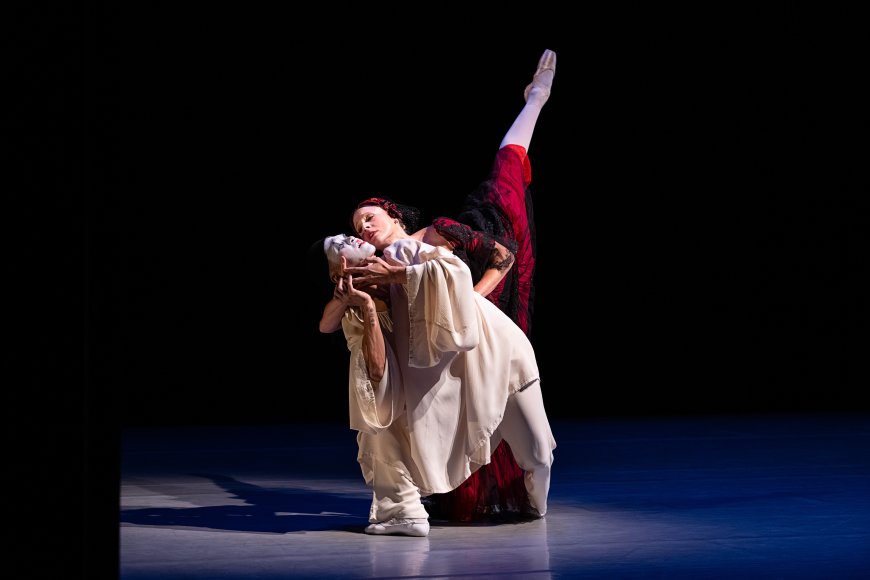
Michael Smuin’s vaudevillian duet, Hearts Suite (1986), set to music by Edith Piaf, forms the “roots” of the show. While Tessa Barbour and AL Abraham are sharp in their roles, the piece appears to age poorly. This strange pas de deux features a mime chasing an ingenue; he pursues her passionately even as she denies his advances.
A generous reading of this piece requires digging many layers into its history: Rachel Bitton, who conceived the scenario for the piece, was inspired by Edith Piaf’s song “Le Ballet des cœurs” (The ballet of the hearts), which tells the story of Children of Paradise, a film by Marcel Carné in which a French prostitute is loved by many men and ends up leaving all of them when their love threatens entrapment. The social criticism in this story is missed in the balletic retelling.
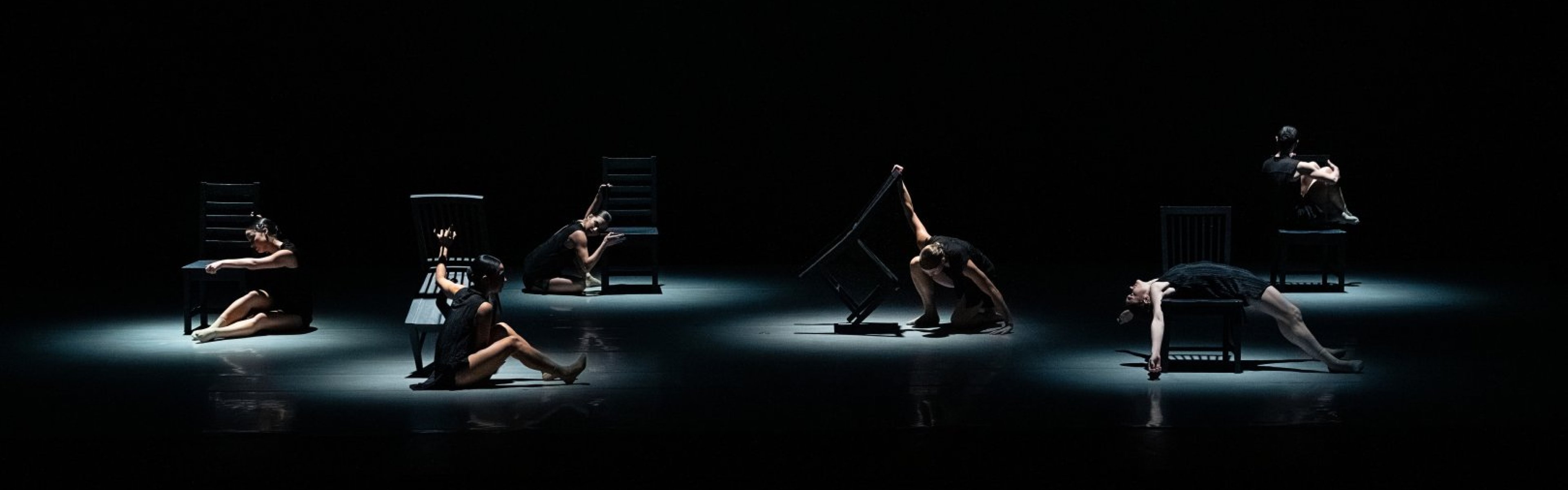
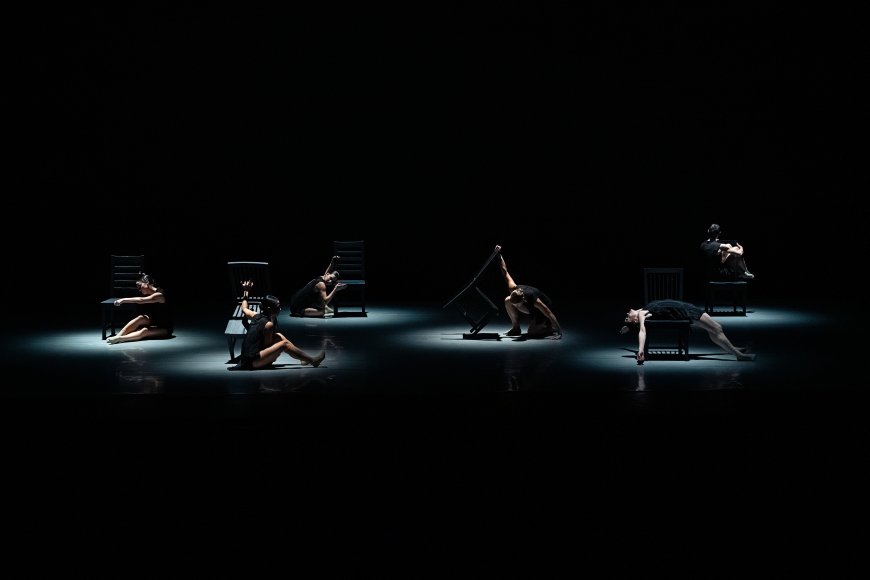
Hearts Suite makes sense as a prelude to the next piece, a world premiere of Andi Schermoly’s Jane Doe, about the patriarchal violence that locks women in abusive relationships. It’s set to a wide-ranging, sometimes abrupt soundscape featuring music by Beth Anderson, Anna Meredith, Marco Rosano, Gioachino Rossini, and Antonio Vivaldi, with Rosano’s Stabat Mater sung by countertenor Andreas Scholl. The piece opens with a stage full of women laboring under the weight of wooden chairs. These simple props evoke the image of a cage while hinting at the domesticity of relationship violence.
The plight of the women becomes evident in the context of their relationships with men, who hit and twist them in their duets. Each pair on stage dances simultaneously but with a different abusive movement pattern, suggesting the many forms that violence can take while creating panoramic feelings of being trapped, muffled, and restless.
A later vignette of men in skirts hitting their partners leaves the audience wondering what the skirts have to do with it. Regardless, at a time when our national politics is marked by the unchecked power of abusive men, the overall message of Jane Doe is powerful, if heavy-handed.
The final piece, Still Falling, choreographed by Amy Seiwert, is a superb world premiere, not least because of the Brahms underscoring played live by pianist John Wilson at select San Francisco performances. Wilson’s gorgeous interpretation sets the mood for a work of great musical sensitivity.
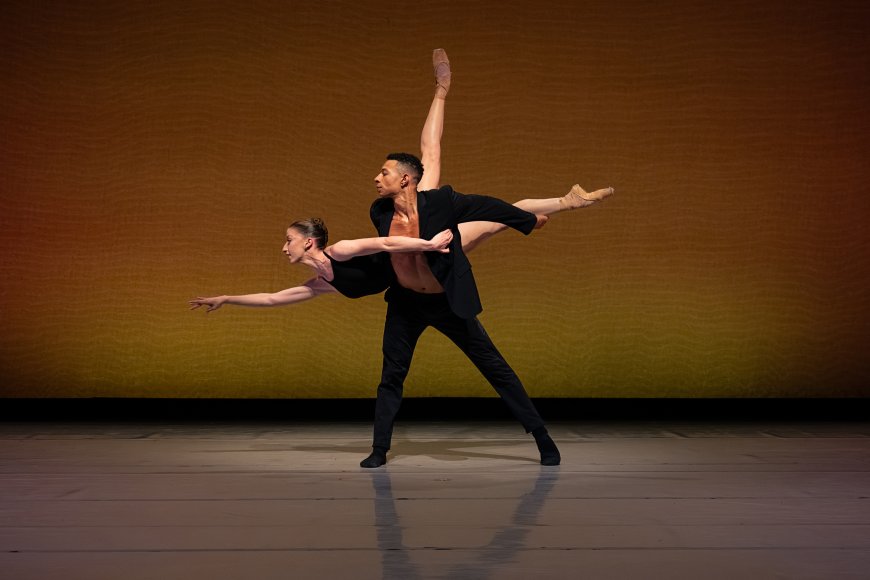
Still Falling sources its ideas from Falling Up, a piece Seiwert began choreographing in 2007 under the mentorship of Michael Smuin, but he died before she could finish the piece. As a tribute to Smuin, Still Falling captures with exquisite lightness the feeling of floating upward.
Standout moments include ensemble trust falls and partnered lifts. A pas de deux between two men toward the end of the piece hints at levity but lacks chemistry. Still, this piece is the right one to close the show. The dancing is so elegant that it needs no narrative justification.
Maggie Carey deserves a shout-out for her effortless performance in the first work of the show, Sextette, with choreography by Katarzyna Skarpetowska and music by Bach. This highly technical piece reveals the virtuosity of the whole ensemble, but Carey’s purposeful gaze is particularly captivating. Gender-neutral costumes by Susan Roemer also sparkle in their simplicity.
Future Forward will visit Walnut Creek May 1–2 and Mountain View May 14–17 after the conclusion of its San Francisco run on April 26.